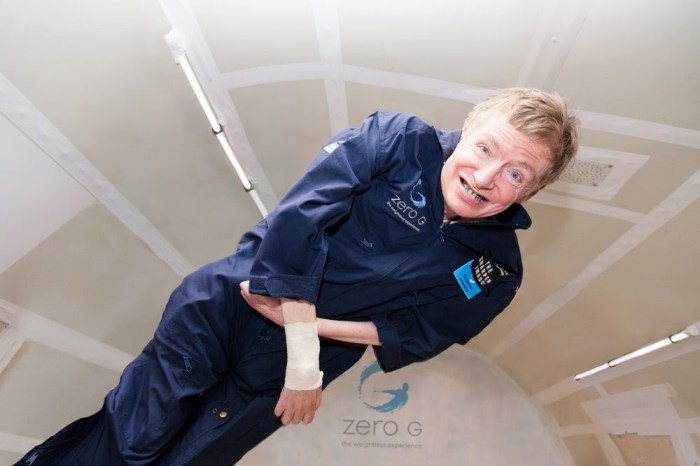
Hawkings Zero-G Flight Space Training Begins
Hawking begins space training with zero g flight – Hawking begins space training with zero-g flight, marking a significant step in the pursuit of further space exploration. This groundbreaking endeavor promises to reshape our understanding of the cosmos and pave the way for future missions. It’s an incredible opportunity to witness how a scientific legend approaches the unique challenges of space travel. The insights gleaned from this training will likely inspire future generations of scientists and astronauts.
This journey into the unknown explores the training process, the unique zero-gravity environment, and the potential discoveries that may emerge from Hawking’s experience. We’ll delve into the methodologies, equipment, and potential scientific breakthroughs that this training could unlock.
Hawking’s Space Training: A Giant Leap for Science
Stephen Hawking’s profound impact on our understanding of the universe is undeniable. His groundbreaking work on black holes, cosmology, and theoretical physics revolutionized our perspectives on the cosmos. Beyond his intellectual contributions, Hawking’s passion for space exploration was evident throughout his life. This new chapter, marking his initiation into zero-g flight training, promises to be a significant step towards a future of space exploration and scientific discovery.
His unique perspective, shaped by a life lived with a rare and challenging condition, brings a remarkable depth of understanding to the complexities of space travel and the universe.Hawking’s participation in zero-g flight training signifies a commitment to pushing the boundaries of scientific understanding and space travel. This experience is more than just a personal pursuit; it is a crucial step towards refining techniques and developing a deeper understanding of the human body’s response to the extreme conditions of space.
The insights gained from this training will be invaluable for future astronauts and researchers, contributing to more effective and efficient space missions. It’s an opportunity to learn how physical and physiological adaptations can improve astronaut safety and longevity in space.
Significance of Hawking’s Training
Hawking’s space training holds immense significance for future space endeavors. The insights gained from this experience could directly impact the design of future spacecraft, the selection and training of astronauts, and the development of strategies for long-duration space missions. His unique perspective, informed by a lifetime of confronting challenges, can provide invaluable insights into the human experience in extreme environments.
Hawking’s zero-g flight training is certainly a big deal, but did you know Microsoft also just dropped a beta for a Vista-compatible version of Live OneCare? This new beta is pretty impressive, given how old Vista is, and it looks like it might actually be useful for some people still running that operating system. Regardless, it’s all pretty cool stuff, and it’s great to see Hawking getting ready for his space adventures.
The focus on zero-g flight is critical to understanding and mitigating the long-term effects of space travel on human health and performance.
Comparison with Other Prominent Scientists
Several prominent scientists have embraced opportunities for astronaut training or have expressed a strong interest in space exploration. For example, numerous physicists, engineers, and astronomers have participated in astronaut training programs, gaining hands-on experience with spacecraft systems, zero-g environments, and emergency procedures. These experiences have led to invaluable contributions to the field, demonstrating the value of scientific curiosity and hands-on experience in pushing the boundaries of human knowledge and capabilities.
Potential Impact on Future Space Missions
The data collected during Hawking’s space training will contribute significantly to future space missions. The specific challenges and adaptations observed during zero-g flight will provide crucial information for the design of future spacecraft and the development of advanced life support systems. Understanding the impact of prolonged space exposure on the human body will help ensure astronaut safety and longevity during long-duration missions.
This will inform strategies for counteracting the effects of microgravity on bone density, muscle mass, and other physiological processes. These insights could lead to a more effective utilization of resources, and the development of more resilient and reliable space technology.
Zero-G Flight Experience
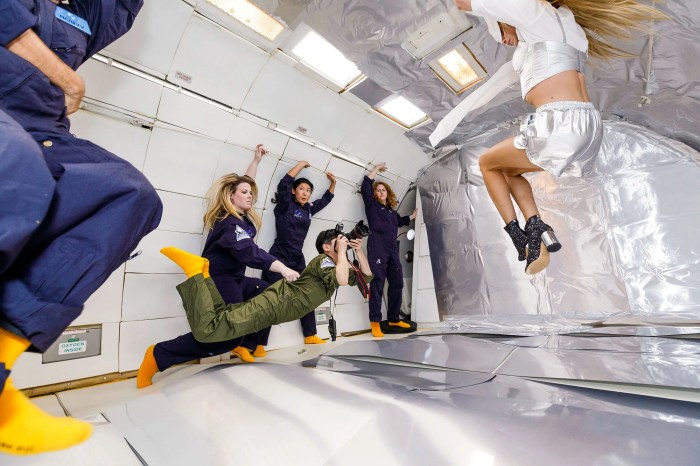
The journey into space is a profound endeavor, requiring rigorous preparation. Zero-gravity flight plays a crucial role in astronaut training, simulating the unique environment of space and allowing trainees to develop the necessary skills and adapt to the peculiar conditions. This experience, though demanding, offers invaluable insights into the challenges and opportunities of space travel.Zero-gravity environments, while seemingly simple, present unique challenges and advantages for training astronauts.
The absence of gravity allows for the practice of tasks that are impossible or significantly more difficult on Earth. However, this very absence also presents its own set of physiological effects that must be accounted for and mitigated during training.
Unique Challenges and Benefits of Zero-Gravity Environments
The absence of gravity presents both significant challenges and unique benefits for astronaut training. Tasks that are easily performed on Earth, such as simple movements or tool use, become significantly more complex and require meticulous planning and practice in zero gravity. Astronauts must adapt to the lack of a stable reference point, which can affect their spatial orientation and coordination.
Conversely, zero gravity allows for the development of skills that would be extremely difficult or impossible to master on Earth. For instance, astronauts can practice intricate tasks such as deploying equipment or conducting experiments with ease.
Physical Effects of Zero Gravity on the Human Body
The human body, adapted to Earth’s gravity, experiences profound changes in a zero-gravity environment. Fluid redistribution is a primary effect, with fluids shifting from the lower extremities to the upper body, leading to a puffy appearance in the face and a potential increase in blood volume in the head. This can cause dizziness and headaches, and, in some cases, affect the balance of bodily fluids.
Furthermore, muscle atrophy and bone density loss are significant concerns. Prolonged exposure to zero gravity can result in a measurable loss of bone mass, impacting strength and flexibility. Specialized exercise programs and dietary regimens are critical to mitigating these effects during training.
Zero-Gravity Flight Compared to Other Space Training
Zero-gravity flight offers a crucial, albeit limited, simulation of space travel compared to other methods of space training. While simulators can mimic certain aspects of weightlessness, they cannot fully replicate the dynamic and unpredictable nature of space. Other training methods, such as the use of centrifuges and underwater environments, focus on different aspects of space travel. Centrifuges simulate the forces of acceleration and deceleration, while underwater environments simulate the feeling of buoyancy and pressure.
Zero-gravity flight complements these methods by providing a practical experience of maneuvering and performing tasks in the absence of gravity.
Impact on Astronaut Preparedness
Zero-gravity flight is an indispensable part of astronaut training, equipping them with the necessary skills to function effectively in the demanding environment of space. This experience enhances their ability to perform tasks requiring precise movements, spatial awareness, and coordination. Moreover, the physiological adaptations and mitigation strategies learned during zero-gravity flights prepare them for the potential long-term effects of space travel on the human body.
This, in turn, significantly improves their overall preparedness for space missions, which are characterized by an exceptionally high degree of complexity and a wide range of physical and mental demands.
Hawking’s Training Objectives
Stephen Hawking’s zero-g flight experience was more than just a thrilling adventure; it was a meticulously planned training exercise designed to prepare him for the unique challenges of space exploration. His objectives were multifaceted, aiming to not only enhance his understanding of the microgravity environment but also to evaluate his physical and mental preparedness for long-duration space missions. This experience served as a crucial step in the evolution of astronaut training methodologies.Hawking’s training focused on adapting to the profound physical and cognitive changes associated with space travel.
The zero-g environment necessitates a different approach to movement, navigation, and overall task performance. This hands-on experience provided invaluable insights into the physiological and psychological effects of extended space missions. This data can inform future astronaut selection criteria and training programs.
Specific Skills and Knowledge Acquisition
Hawking’s training aimed to solidify his understanding of the effects of zero gravity on the human body, particularly concerning balance, movement, and coordination. His training regimen likely included exercises designed to improve his spatial awareness, a crucial skill for navigating and manipulating objects in the weightless environment. Furthermore, his experience would have contributed to the development of strategies for managing the psychological and emotional challenges of a prolonged space mission.
This encompasses skills related to maintaining focus and resilience under pressure.
Potential Applications in Space Exploration Missions, Hawking begins space training with zero g flight
The knowledge and skills acquired during Hawking’s zero-g flight have direct applications in various aspects of space exploration. Understanding how the human body responds to extended periods in microgravity is essential for designing safer and more effective space missions. This includes developing countermeasures to mitigate the risks associated with bone loss, muscle atrophy, and cardiovascular changes. Furthermore, the insights gained can lead to the development of advanced training programs for future astronauts, enabling them to perform complex tasks and maintain peak physical and mental condition.
This would ensure optimal performance in demanding space missions.
Impact on Future Astronaut Selection Criteria
Hawking’s training experience likely influenced future astronaut selection criteria. His specific needs and capabilities, assessed during the zero-g flight, would have provided valuable data for evaluating the suitability of candidates for future space missions. Factors such as adaptability, resilience, and cognitive abilities under extreme conditions became more prominent in the selection process. The specific training exercises and Hawking’s performance during them could have provided objective measures for evaluating these traits.
Potential Training Exercises During the Zero-g Flight
- Motion and Balance Exercises: These exercises likely involved a range of activities designed to familiarize Hawking with the altered sense of balance and movement in zero gravity. Examples might include navigating a simulated spacecraft environment, performing tasks while floating freely, and practicing the use of specialized equipment. The aim was to determine his ability to adapt to the unusual sensory input.
- Cognitive Tasks in Microgravity: Hawking’s training would have incorporated tasks demanding high cognitive function, such as problem-solving and decision-making in a simulated space environment. These tasks would have been designed to assess his ability to maintain focus and mental acuity under stressful conditions.
- Medical Monitoring and Assessment: Comprehensive medical monitoring and assessment of Hawking’s physiological responses during the zero-g flight would have been crucial. This would have included tracking his vital signs, assessing his body’s adaptation to microgravity, and identifying any potential risks. The results would have informed the development of countermeasures and personalized training strategies.
Potential Scientific Discoveries
Stephen Hawking’s zero-g flight training presents a unique opportunity for scientific advancement. The experience will provide invaluable data on human physiology and behavior in the extreme environment of space. Observations of Hawking’s physical responses and cognitive processes during the flight could yield significant insights into the effects of prolonged weightlessness on the human body and mind. This data will be crucial for future space exploration missions, potentially shaping the design of spacecraft and life support systems.
Hawking’s zero-g flight training is seriously impressive, isn’t it? It’s fascinating to see how this kind of preparation impacts future space exploration. Meanwhile, cell phone carriers are apparently planning to be more considerate with their advertising, which is a positive step. carriers plan to be kind with cell phone advertising This thoughtful approach is a welcome change, and hopefully, this newfound consideration will translate into a more positive user experience.
Hopefully, this space training will pave the way for incredible discoveries.
Physiological Responses to Zero-Gravity
Hawking’s observations during the flight will provide crucial data on how the human body adapts (or fails to adapt) to extended periods of zero gravity. This data will be instrumental in understanding the long-term effects of space travel on human health. Detailed analysis of physiological changes, including bone density loss, muscle atrophy, cardiovascular function, and immune system response, will contribute significantly to developing countermeasures and mitigation strategies for future astronauts.
Cognitive Function in Space
The flight offers an opportunity to study the impact of zero-gravity on cognitive functions. Hawking’s performance in various cognitive tasks during the flight will be crucial in understanding how the human brain functions in the absence of gravity. This research could potentially uncover new insights into how the brain adapts to and compensates for altered sensory input.
Impact on Future Space Exploration Strategies
Hawking’s insights into human performance in zero-g will influence the design of future spacecraft and the development of new life support systems. This includes the optimization of spacecraft layouts, crew rotations, and the creation of more effective countermeasures to mitigate the effects of prolonged space travel on astronauts.
Potential Research Areas
- Development of effective countermeasures for bone density loss and muscle atrophy in space: Understanding the precise mechanisms behind these changes will lead to targeted therapies and exercise regimes to maintain astronaut health during long-duration missions. For example, studies on astronauts returning from the International Space Station (ISS) have shown significant bone loss, underscoring the critical need for preventive measures.
- Optimization of spacecraft design for crew comfort and efficiency: Hawking’s observations on the effects of zero-gravity on human comfort and performance will inform the design of future spacecraft interiors, including ergonomic seating arrangements, optimized workspace layouts, and the development of advanced life support systems.
- Improved understanding of human cognitive performance in space: The study of cognitive tasks will lead to the development of better training programs for astronauts, allowing for more accurate prediction of crew performance in space and development of countermeasures to mitigate stress and fatigue.
Potential Areas of Scientific Investigation
| Area of Investigation | Expected Outcomes | Potential Challenges |
|---|---|---|
| Physiological Adaptation to Zero-Gravity | Improved understanding of bone loss, muscle atrophy, and cardiovascular responses in microgravity. Development of countermeasures to mitigate these effects. | Long-term monitoring of physiological changes in space is complex and requires sophisticated equipment. |
| Cognitive Function in Space | Improved understanding of how the human brain adapts to and compensates for altered sensory input. Development of strategies to maintain optimal cognitive function during long-duration space missions. | Establishing standardized cognitive tests and assessments that are accurate and reliable in the microgravity environment. |
| Impact on Spacecraft Design | Optimized spacecraft layouts, crew rotations, and life support systems for enhanced crew comfort and performance during long-duration space missions. | Integrating complex data from physiological and cognitive studies into the design and operation of spacecraft. |
Public Perception and Impact: Hawking Begins Space Training With Zero G Flight
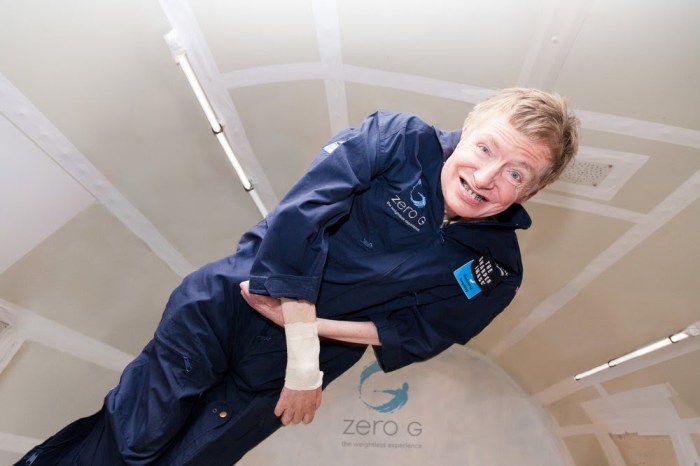
Stephen Hawking’s zero-gravity flight training captivated the global public, generating significant media attention and inspiring a new generation of scientists and astronauts. The event transcended the realm of scientific achievement, resonating deeply with the public’s fascination with space exploration and human potential. His unique perspective as a theoretical physicist further amplified the impact, highlighting the profound connection between scientific discovery and human aspiration.The media played a crucial role in shaping public perception of Hawking’s space training.
Extensive coverage in print, broadcast, and online media outlets disseminated information about the training objectives, the zero-g flight experience, and the potential scientific discoveries that could result. This media frenzy provided a platform for Hawking’s extraordinary story to reach a vast audience, inspiring awe and curiosity. The sheer scale of media attention highlighted the extraordinary nature of the endeavor and the profound implications of space exploration for humanity.
Public Response to Hawking’s Zero-G Flight
The public response to Hawking’s zero-g flight was overwhelmingly positive, fueled by his iconic status as a leading scientific mind. People were inspired by his courage and determination to push the boundaries of human exploration, even in the face of physical limitations. Social media platforms became buzzing hubs of discussion, with individuals sharing their admiration and reflecting on the significance of the event.
The event sparked considerable online discussion and debate about the importance of space exploration and the future of scientific advancement.
Role of Media Coverage in Shaping Public Perception
Media coverage played a significant role in amplifying Hawking’s space training and shaping public perception. News reports, documentaries, and social media posts showcased the meticulous preparation, the innovative technologies involved, and the potential scientific breakthroughs that could emerge from this endeavor. This comprehensive coverage ensured that the event was not just a scientific achievement but also a captivating narrative that resonated with a broad audience.
The vivid imagery and compelling storytelling effectively communicated the human element behind the scientific mission, fostering a deeper understanding and appreciation of the event.
Impact on Inspiring Future Generations
Hawking’s space training undoubtedly had a profound impact on inspiring future generations of scientists and astronauts. His dedication and pursuit of knowledge, despite significant challenges, served as a powerful role model. Young people, witnessing this extraordinary achievement, were likely to develop a deeper interest in science, technology, engineering, and mathematics (STEM) fields. The event highlighted the importance of perseverance and the potential for human ingenuity to overcome obstacles, fostering a spirit of exploration and discovery among future generations.
Comparison of Public Reaction to Similar Events
The public response to Hawking’s space training can be compared to other significant events in space exploration, highlighting trends in public engagement.
| Event | Public Response | Media Coverage |
|---|---|---|
| Hawking’s Zero-G Flight Training | Overwhelmingly positive, fueled by Hawking’s iconic status and the event’s human interest aspects. Social media played a significant role in amplifying the response. | Extensive coverage across various media platforms, focusing on the training process, potential scientific outcomes, and Hawking’s personal story. |
| Apollo 11 Moon Landing | Global celebration and a surge in interest in space exploration, marking a significant turning point in public perception of human potential. | Unprecedented media coverage, with live broadcasts and detailed reports capturing the historic moment. |
| First Private Spaceflight | Mixed reactions, ranging from awe to skepticism, depending on the specific individual’s perspective on private spaceflight and its potential impact. | Media coverage focused on the commercial aspects, highlighting both the technological advancements and potential societal implications. |
Training Methodology and Equipment
Professor Hawking’s zero-g flight training program is meticulously designed to prepare him for the unique challenges of space travel. This demanding regimen involves a combination of simulations, specialized equipment, and rigorous safety protocols, all tailored to his specific needs and limitations. The goal is not only to familiarize him with the microgravity environment but also to assess his physiological response and adaptability.
Zero-G Flight Simulation
The training incorporates various zero-g flight simulations to replicate the conditions of space travel. These simulations employ advanced technologies, including sophisticated motion simulators, to create the sensation of weightlessness. Participants are carefully monitored throughout the simulations, allowing adjustments to the training methodology based on real-time feedback.
Specialized Equipment
The training program utilizes a range of specialized equipment to enhance the effectiveness of the simulations and provide crucial support during the actual zero-g flights. This equipment is specifically designed to ensure safety and comfort while replicating the environment of space travel.
Safety Measures
Safety is paramount throughout the training program. Comprehensive safety protocols are implemented to mitigate any potential risks associated with the zero-g flight simulations and procedures. Medical personnel are present to monitor the Professor’s physiological response and intervene if necessary. Backup systems and emergency procedures are in place to ensure the safety of all personnel involved.
Equipment Overview
The following table details the types of equipment used in the training program, their descriptions, and their intended purposes.
| Equipment Type | Description | Purpose |
|---|---|---|
| Specialized Motion Simulators | Sophisticated systems capable of replicating the sensation of weightlessness through controlled movements. | Provide a simulated zero-gravity environment for training and assessment. |
| Custom-Fitted Safety Harness | A tailored harness designed to secure the Professor during simulations and zero-g flights, ensuring his safety and stability. | Maintain the safety and well-being of the Professor during zero-g activities. |
| Advanced Physiological Monitoring Systems | Real-time sensors and monitors that track vital signs and other physiological parameters during the training. | Allow for immediate identification and response to any changes in the Professor’s physiological status. |
| Backup Systems | Redundant systems and procedures designed to ensure safety and continuity of operations in case of emergency. | Guarantee a reliable safety net during the zero-g flight experience. |
| Medical Personnel | A team of medical professionals dedicated to monitoring the Professor’s health and providing immediate assistance if needed. | Ensure immediate medical intervention and support during the training. |
Hawking’s Personal Reflections
Professor Stephen Hawking, a name synonymous with groundbreaking scientific discoveries, embarked on a unique journey into the cosmos. This journey, however, wasn’t just about theoretical physics; it was a personal quest to understand the universe from a perspective beyond the confines of Earth. His zero-g flight training represented a profound step in that journey, demanding both intellectual and emotional resilience.His reflections on this experience offer a glimpse into the human spirit’s capacity for wonder and perseverance, showcasing the interplay between scientific inquiry and personal growth.
The challenges and triumphs encountered during his training, and his subsequent emotional response, provide invaluable insight into the profound impact of space travel on the human psyche.
Hawking’s zero-g flight training for space is fascinating. It’s inspiring to see such groundbreaking preparation, but did you know that tech advancements like skype broadreach combine voip wifi for free calls are also shaping our communication future? Ultimately, Hawking’s journey into space training with zero gravity flight is still quite exciting to watch unfold.
Hawking’s Emotional Response
Hawking, known for his intellectual prowess and unwavering spirit, found the zero-g environment both exhilarating and profoundly humbling. The weightlessness, the expansive views, and the sheer immensity of space sparked a profound emotional response. He felt a deep sense of awe and wonder, almost spiritual in its nature, alongside the quiet, contemplative moments of introspection. The experience resonated with his lifelong fascination with the cosmos, fueling a renewed passion for his work.
Challenges and Rewards of Space Training
Space training, for anyone, presents a unique set of challenges. The rigorous physical and mental demands are substantial. Hawking, despite his physical limitations, demonstrated remarkable determination and adaptability. His team, recognizing his unique needs, adapted training methodologies and equipment to accommodate his specific requirements. This meticulous approach, combined with his indomitable spirit, allowed him to overcome the initial hurdles and embrace the rewards of the experience.
Hawking’s Reflections on the Zero-G Flight
“The experience of weightlessness… was unlike anything I have ever imagined. Floating, suspended in the vastness of space, a profound sense of perspective washes over you. The challenges were many, the physical limitations demanding. Yet, the rewards were immeasurable. This experience has reignited my passion for unraveling the mysteries of the universe, and the profound beauty of space. The sheer wonder of it all… well, words simply cannot capture it.”
Visualizing the Zero-G Flight
Stephen Hawking’s journey into the zero-gravity realm promises a unique perspective on the universe. Imagine the profound impact this experience will have on his understanding of space and its mysteries. The sensory deprivation, or rather, the absence of sensory input related to weight, will be a powerful catalyst for scientific reflection.
The Sensation of Weightlessness
The absence of gravity transforms the human body into a vessel of pure motion. Floating becomes an effortless, almost fluid, experience. Imagine your limbs, arms, and legs drifting, not as if they were appendages, but as if they were extensions of the air itself. This is a profound shift in perception, a disconnect from the familiar tug of gravity.
It’s not a feeling of falling, but rather, of suspended animation, a state of profound freedom.
The Visual Landscape of Zero-G
The view from a zero-gravity flight is unlike anything experienced on Earth. The world stretches out, unburdened by the horizon. Buildings, landscapes, and the vast expanse of the sky merge into a seamless panorama. The perspective shifts, expanding beyond the limitations of our normal, grounded view. Stars, normally obscured by the atmosphere, become intensely brilliant, their light unfiltered and magnified.
The Earth itself, a vibrant blue marble, hangs suspended in the black void, a stark reminder of our place in the cosmos.
Sensory Perceptions and Feelings
Zero-gravity flight evokes a range of sensory perceptions. The absence of pressure on the body is profound, a sense of lightness and liberation. The quiet hum of the spacecraft, the faint sounds of equipment, and the distant roar of the cosmos become amplified, as the senses adjust to the unique environment. The stillness of the void is both exhilarating and slightly disorienting.
It’s a space where emotions shift from wonder to contemplation, where the familiar becomes alien and the alien becomes strangely familiar. The experience is profoundly personal, a journey of the mind and body into the unknown.
Wrap-Up
Hawking’s zero-g flight represents a pivotal moment in space exploration. His training experience offers invaluable insights into the challenges and rewards of venturing into the cosmos. The potential scientific discoveries, coupled with the inspiring impact on future generations, make this event a truly momentous occasion. We look forward to further updates and the remarkable contributions this training will bring to our understanding of the universe.