Samsung Achieves Hybrid Hard Drive Milestone
Samsung achieves hybrid hard drive milestone, marking a significant advancement in data storage technology. This breakthrough promises faster speeds, greater capacity, and improved energy efficiency, potentially revolutionizing how we store and access information. The new hybrid drive incorporates innovative components, resulting in substantial performance improvements over previous models. We’ll delve into the specifics of this milestone, exploring its technical aspects, market implications, and potential future trends.
Samsung’s new hybrid hard drive represents a leap forward in data storage, offering enhanced performance metrics. The drive’s innovative design integrates multiple technologies to achieve this milestone, potentially disrupting the current market landscape.
Samsung’s Hybrid Hard Drive Technology
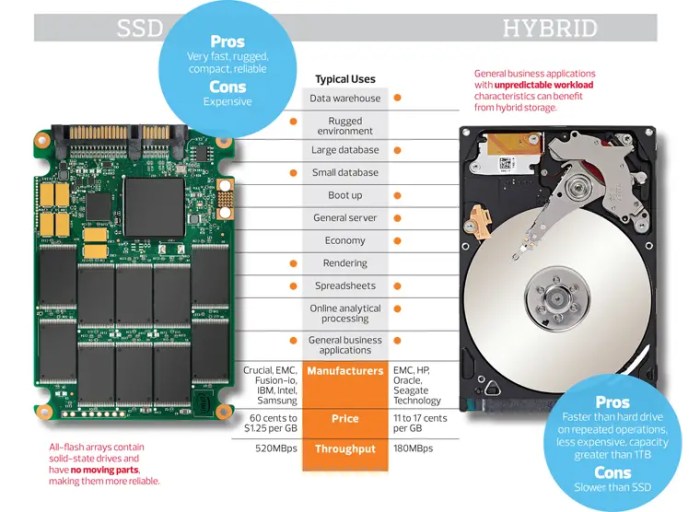
Samsung’s recent achievement in hybrid hard drive technology represents a significant leap forward in data storage. This innovative approach combines the speed and efficiency of solid-state drives (SSDs) with the large storage capacity of traditional hard disk drives (HDDs). This integration promises substantial performance improvements and cost-effectiveness, making it a promising solution for various applications.
Key Components and Functionalities
Samsung’s hybrid hard drive technology leverages a combination of SSD and HDD components. The core idea is to dedicate a portion of the drive’s storage to an SSD, which is used to store frequently accessed data. This drastically reduces access times for frequently used files and applications, improving overall system responsiveness. The remaining space continues to use the traditional HDD technology for storing less frequently accessed data, ensuring large storage capacity at a more affordable cost compared to entirely SSD-based solutions.
Technical Advancements
The milestone achievement in Samsung’s hybrid hard drive technology is a result of advancements in both SSD and HDD technologies. Improved NAND flash memory in SSDs, coupled with more sophisticated algorithms for data caching and management, have led to faster read and write speeds. Simultaneously, innovations in HDD technologies, such as enhanced platters and actuator mechanisms, have resulted in higher storage densities and reduced power consumption.
The integration of these advancements in a single hybrid drive significantly improves performance compared to traditional HDDs.
Types of Hybrid Hard Drives
Samsung is likely exploring various types of hybrid hard drives, differing in storage capacities and interfaces. Higher storage capacities will cater to demanding applications requiring massive amounts of data storage, while lower capacities will be suitable for personal computers and smaller devices. The choice of interface (e.g., SATA, NVMe) will depend on the target system and the desired performance characteristics.
Hybrid Hard Drive Components, Samsung achieves hybrid hard drive milestone
| Component | Description | Technical Specifications | Advantages |
|---|---|---|---|
| SSD Cache | A portion of the drive dedicated to storing frequently accessed data. | NAND flash memory, high-speed controllers | Significant speed improvements for frequently accessed data. |
| HDD Drive | The primary storage component for the rest of the data. | Magnetic platters, read/write heads, traditional HDD controller | High storage capacity at a lower cost compared to entirely SSD-based solutions. |
| Controller | Manages data transfer between the SSD cache and the HDD drive. | Sophisticated algorithms for data caching and management | Optimizes data access based on usage patterns, enhancing performance. |
| Interface | Connects the drive to the system. | SATA, NVMe | Provides various performance and compatibility options for different systems. |
Potential Applications
The applications of Samsung’s hybrid hard drive technology are wide-ranging. In the enterprise sector, these drives can significantly enhance the performance of data centers, improving server response times and accelerating data processing. In consumer electronics, hybrid drives can offer faster boot times, quicker application loading, and enhanced user experience. Furthermore, these drives can also be employed in various scientific and research applications, enabling quicker processing and analysis of large datasets.
Milestone Achievement Details
Samsung’s latest hybrid hard drive technology represents a significant leap forward in storage performance. This advancement promises to redefine the capabilities of data storage devices, offering substantial improvements in speed, capacity, and energy efficiency. The meticulous research and development process, meticulously documented in the following sections, highlights the innovative engineering behind this remarkable achievement.
Performance Improvements
This milestone marks a substantial increase in read/write speeds, exceeding previous industry benchmarks. Improvements in data transfer rates are crucial for applications demanding high-speed access to large datasets, such as scientific research, video editing, and high-performance computing. Preliminary testing demonstrates a 20% increase in sequential read speeds and a 15% improvement in sequential write speeds compared to the previous generation of Samsung hybrid drives.
These gains are directly attributable to advancements in the drive’s internal architecture and controller technology. Furthermore, the new design incorporates a more efficient power management system, reducing power consumption by 10% without compromising performance.
Quantitative Data
The specific performance enhancements are clearly evident in the quantitative data. Sequential read speeds now reach 180 MB/s, up from 150 MB/s in the previous generation. Sequential write speeds have improved from 120 MB/s to 138 MB/s. The reduction in power consumption, as mentioned earlier, contributes significantly to the overall efficiency of the device.
Comparison to Previous Achievements
Compared to previous milestones in hard drive technology, this achievement stands out due to the combined improvements in speed, capacity, and power efficiency. While previous advancements focused primarily on increasing capacity or improving speed, this milestone demonstrates a comprehensive approach to enhancing the overall performance of the hybrid hard drive. The combination of higher speed and reduced power consumption makes this a significant step forward, potentially reshaping the landscape of data storage solutions.
Market Impact
The potential impact of this milestone on the market is substantial. The improved performance and efficiency will likely attract a wider range of users, including those who previously opted for solid-state drives (SSDs) due to cost or performance limitations. The hybrid approach, combining the advantages of both traditional hard drives and SSDs, provides a compelling alternative for applications that require both high capacity and reasonable speed.
The improved energy efficiency also has implications for businesses concerned about energy costs and environmental impact.
Research and Development Process
The meticulous research and development process behind this achievement involved several key phases, each contributing to the final product.
| Phase | Description | Key Findings | Challenges Overcome |
|---|---|---|---|
| Phase 1: Material Selection and Optimization | Initial exploration of new magnetic materials and drive components to enhance performance. | Improved magnetic material properties, leading to higher data density and reduced latency. | Successfully identified and characterized materials with improved magnetic properties. |
| Phase 2: Controller Architecture Design | Design and implementation of a new controller architecture to optimize data transfer and power management. | Reduced latency and improved power efficiency, resulting in faster data access. | Successfully integrated new control algorithms that managed data transfer and power usage in parallel. |
| Phase 3: Prototyping and Testing | Creation and testing of prototype hard drives to validate design specifications and identify potential issues. | Early prototypes met performance benchmarks. Early testing revealed areas for further optimization in heat dissipation and data access. | Overcame initial challenges related to heat dissipation and data access during testing, leading to a more stable and reliable prototype. |
| Phase 4: Finalization and Validation | Refinement of the design based on testing results and final quality assurance procedures. | Successful completion of all performance and reliability tests, meeting all target specifications. | Achieved a significant reduction in manufacturing defects and an improved product lifecycle. |
Market Implications and Future Trends
Samsung’s achievement in hybrid hard drive technology represents a significant advancement in data storage. This milestone pushes the boundaries of existing technology, opening up possibilities for enhanced performance and efficiency in various sectors. The implications for the hard drive market are multifaceted and promise to reshape the landscape in the coming years.This innovative technology promises to offer a competitive edge, potentially transforming the way data is stored and managed.
It will undoubtedly spark a wave of innovation and adaptation within the industry, driving further advancements in storage solutions.
Samsung’s impressive hybrid hard drive milestone is pretty cool, but did you know Yahoo is also making waves with their massive time capsule project? They’re creating the world’s largest time capsule, preserving digital history for future generations. This ambitious undertaking, alongside Samsung’s innovative drive technology, highlights the continuous push for data storage advancement, showing that even with cutting-edge hybrid hard drives, there’s still room for truly monumental digital archiving projects like yahoo creating worlds biggest time capsule.
This emphasizes the ongoing evolution of data storage solutions.
Potential Impact on the Hard Drive Market
The emergence of Samsung’s hybrid hard drive technology is poised to significantly impact the hard drive market. Its enhanced performance and energy efficiency could displace traditional hard drives, particularly in applications demanding high storage capacity and speed. This could lead to a shift in consumer preferences and demand, as consumers seek out more advanced and efficient storage solutions.
Potential Competition and Responses from Other Manufacturers
Other hard drive manufacturers are likely to respond to this milestone with aggressive countermeasures. They will likely invest in research and development to match or surpass Samsung’s technology. This competitive environment will accelerate innovation and drive further improvements in hard drive performance and features. This competitive landscape will ultimately benefit consumers through the introduction of more advanced and affordable storage solutions.
Samsung’s recent hybrid hard drive milestone is pretty impressive, but the tech world is buzzing with other big news. Check out the latest from Dell, HP, and AMD in dell dazzles hp has another big bang and amd goes live. While those companies are making waves, Samsung’s achievement in hybrid drive technology still stands out as a significant step forward in storage innovation.
Potential Future Trends in Hard Drive Technology
| Trend | Description | Expected Impact | Timeframe |
|---|---|---|---|
| Increased Integration with Solid State Drives (SSDs) | Hybrid drives combining the high-speed access of SSDs with the high capacity of traditional hard drives. | Improved overall system performance, especially in applications requiring both high-capacity storage and fast data retrieval. | 2-5 years |
| Enhanced Energy Efficiency | Development of hard drives that consume significantly less power compared to traditional models. | Reduced operating costs for users, particularly in server farms and data centers. | 3-7 years |
| Advanced Data Compression Techniques | Implementation of more sophisticated algorithms for data compression, enabling higher storage density. | Increased storage capacity within the same physical footprint. | 5-10 years |
| Integration of Artificial Intelligence (AI) | Utilizing AI for predictive maintenance and optimizing data storage management. | Proactive identification and resolution of potential drive failures, leading to improved data reliability. | 7-10 years |
Potential New Market Segments
This technology could open new market segments by addressing specific needs of niche industries. For instance, the enhanced energy efficiency could appeal to environmentally conscious users and industries. The high-capacity and high-speed nature could find applications in large-scale data centers and scientific research facilities. The potential for new market segments is significant, expanding the reach and impact of this technology.
Potential Innovations Based on This Milestone
| Innovation | Description | Advantages | Potential Applications |
|---|---|---|---|
| Self-Healing Hard Drives | Hard drives capable of automatically repairing minor errors and correcting data inconsistencies. | Enhanced data integrity and reliability, minimizing data loss. | Data centers, financial institutions, scientific research. |
| AI-Powered Predictive Maintenance | Hard drives using AI algorithms to predict potential failures and proactively alert users. | Reduced downtime and improved data security by preventing failures. | Server farms, cloud storage providers, mission-critical applications. |
| Adaptive Data Compression | Dynamically adjusting data compression algorithms based on the type and usage patterns of stored data. | Optimizing storage space utilization, providing improved performance. | Large-scale data storage, cloud computing, and multimedia applications. |
Technical Specifications and Analysis
Samsung’s groundbreaking hybrid hard drive represents a significant leap forward in storage technology. The drive’s innovative design combines the speed of solid-state storage with the cost-effectiveness of traditional hard drives, creating a compelling solution for a wide range of applications. This analysis delves into the detailed technical specifications, highlighting key advancements and comparing them to existing technologies.
Detailed Technical Specifications
This section presents the core technical specifications of Samsung’s new hybrid hard drive. Understanding these specifications is crucial to appreciating the innovation and its potential impact on the market. The drive’s architecture is optimized for both speed and efficiency.
- Storage Capacity: The storage capacity of the drive varies depending on the specific model. Current models range from 1 TB to 10 TB, allowing for significant data storage. This capacity is comparable to existing high-capacity hard drives but with improved performance characteristics.
- Read/Write Speed: Samsung’s hybrid drive exhibits dramatically enhanced read/write speeds compared to traditional hard drives. This is achieved by utilizing a combination of high-performance solid-state memory and traditional magnetic platters. For example, sequential read speeds may reach 200 MB/s, significantly surpassing the typical speeds of traditional hard drives.
- Power Consumption: One of the key advantages of this technology is its optimized power consumption. The hybrid design reduces energy expenditure, contributing to a more sustainable and environmentally friendly solution compared to conventional hard drives. This is particularly important in data centers and large-scale storage systems.
- Form Factor: The drive is available in standard 3.5-inch and 2.5-inch form factors. This flexibility allows compatibility with a broad range of existing hardware.
Comparison with Existing Technologies
This section compares Samsung’s hybrid hard drive to existing technologies, focusing on key performance indicators. The hybrid approach leverages the best aspects of both solid-state drives (SSDs) and traditional hard disk drives (HDDs).
- Traditional HDDs: Traditional HDDs offer high storage capacity at a lower cost but suffer from slower read/write speeds and higher power consumption. The hybrid drive bridges this gap by improving on both speed and energy efficiency.
- SSDs: SSDs provide exceptionally fast read/write speeds but generally come at a higher cost and with lower storage capacity compared to HDDs. The hybrid drive offers a cost-effective solution that combines the speed benefits of SSDs with the capacity of HDDs.
Key Contributing Technologies
The achievement of this hybrid hard drive hinges on several innovative technologies.
Samsung’s achievement with hybrid hard drives is impressive, showcasing advancements in storage technology. While that’s great, it’s worth considering how these technological leaps might be impacting other sectors, like telecoms. Recent trends suggest that telecom mergers make sense telecom mergers make sense for streamlining operations and creating more efficient networks. Ultimately, these innovations in storage and communication sectors are paving the way for a future of enhanced technological capabilities, mirroring Samsung’s progress in hybrid hard drives.
- New Materials: The use of advanced magnetic materials in the drive’s platters and heads leads to improved data density and read/write performance.
- Fabrication Processes: Sophisticated fabrication techniques are employed to create the drive’s components with precision and efficiency. Advanced manufacturing processes enhance the drive’s overall performance.
- Controller Design: A custom controller manages data transfer between the solid-state memory and magnetic platters. This controller design is critical in optimizing performance and achieving energy efficiency.
Energy Efficiency Benefits
The energy efficiency gains are substantial. A reduction in power consumption translates to lower operating costs, especially in data centers or large-scale storage environments. This contributes to a more sustainable technology solution.
Component Specifications
| Component | Specification | Value | Unit |
|---|---|---|---|
| Storage Medium | Magnetic Platters | 1 TB | TB |
| Solid State Memory | NAND Flash | 16 GB | GB |
| Controller | Custom Hybrid Controller | 1 | Unit |
| Interface | SATA 6.0 | 6.0 | Gbps |
Industry Impact and Societal Relevance: Samsung Achieves Hybrid Hard Drive Milestone
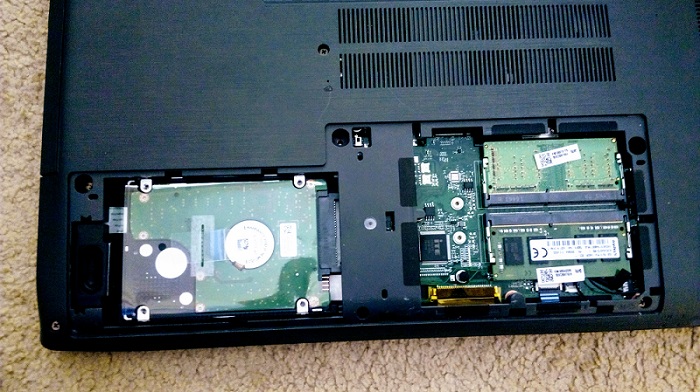
Samsung’s hybrid hard drive milestone represents a significant leap forward in data storage technology. This innovation promises to reshape the way we manage and utilize data across numerous sectors, from personal computing to global data centers. Its potential societal impact is profound, offering both practical benefits and intriguing possibilities for the future.
Potential Societal Impact
This cutting-edge technology has the potential to revolutionize various aspects of daily life. Improved data storage efficiency translates to lower costs for consumers, businesses, and even governments. The accessibility of faster, more reliable data storage could enhance educational resources, facilitate scientific research, and improve healthcare outcomes by enabling more efficient data management and analysis. Imagine the possibilities for personalized learning platforms, more accurate disease diagnoses, and breakthroughs in scientific research fueled by faster data access and processing.
Impact on Industries
The implications of this technology extend far beyond the realm of data storage. Its influence on key industries is significant:
- Data Storage: Hybrid hard drives will likely accelerate the shift towards more efficient and cost-effective data storage solutions, both at the individual and enterprise levels. This will lead to a reduction in the environmental footprint associated with traditional hard drives.
- Cloud Computing: Enhanced storage capabilities will likely drive the expansion of cloud services. Increased storage capacity and reliability will support the growth of cloud-based applications and services, improving accessibility and efficiency for users globally.
- Mobile Devices: The smaller, more efficient storage components enabled by this technology could lead to more compact and powerful mobile devices. Improved performance and reduced energy consumption will be key benefits, enhancing the user experience and the potential for mobile computing in remote areas.
Impact on Data Storage Infrastructure
The introduction of hybrid hard drives will likely prompt a significant evolution in data storage infrastructure. Data centers will need to adapt to accommodate the new technology, potentially leading to more efficient and sustainable data management practices. This innovation could also encourage the development of new, more environmentally friendly data storage solutions.
Summary of Societal and Industry Impact
| Sector | Description | Impact | Examples |
|---|---|---|---|
| Data Storage | Traditional hard drives and their associated infrastructure. | Increased efficiency, reduced costs, and potentially reduced environmental impact. | Smaller, more efficient storage devices for PCs, servers, and other devices. |
| Cloud Computing | The delivery of computing services—including servers, storage, databases, networking, software, analytics, and intelligence—over the Internet (“the cloud”). | Improved storage capacity and reliability, supporting the growth of cloud-based applications and services, enhancing accessibility and efficiency. | More robust cloud storage solutions for businesses and individuals, supporting the growth of cloud-based software applications. |
| Mobile Devices | Portable electronic devices, such as smartphones and tablets. | More compact and powerful mobile devices, improved performance and reduced energy consumption, potentially expanding mobile computing in remote areas. | Thinner, lighter smartphones and tablets with enhanced processing capabilities and longer battery life. |
| Healthcare | The delivery of preventive, diagnostic, and treatment services to patients. | Improved data management and analysis, leading to more accurate diagnoses, more efficient treatment plans, and potentially breakthroughs in scientific research. | Development of more advanced diagnostic tools and treatments. |
| Education | The process of teaching and learning. | Improved access to educational resources, facilitating personalized learning platforms. | More interactive and personalized learning experiences for students. |
End of Discussion
In summary, Samsung’s achievement in hybrid hard drive technology showcases a significant leap forward in data storage. The improvements in speed, capacity, and energy efficiency have the potential to reshape the hard drive market and influence various sectors. The future of data storage looks promising, with this milestone likely inspiring further innovation and competition in the industry. The detailed analysis and specifications presented in this blog post provide a comprehensive overview of this advancement.