MySpace Aims to Impact Presidential Race
MySpace aims to impact presidential race, re-emerging as a potential player in the modern political landscape. This article delves into the platform’s historical context, its current relevance, and how it might be leveraged in a presidential campaign. We’ll explore the potential advantages and disadvantages of using MySpace for political campaigning, considering its reach and engagement with various demographics.
We’ll also examine successful and unsuccessful social media strategies in past elections, drawing parallels to see if MySpace might offer a unique approach.
MySpace, once a dominant force in online social networking, has a rich history and a unique user base. Its current state, including recent updates and user activity, will be discussed to understand its viability in the current political climate. Comparing MySpace to modern platforms will highlight its strengths and weaknesses. We’ll also look at how MySpace might be used to reach specific demographics, and examine potential campaign strategies that leverage its distinctive features.
Illustrative examples will provide concrete images of how a candidate might interact with users and conduct a campaign on the platform.
Historical Context of MySpace
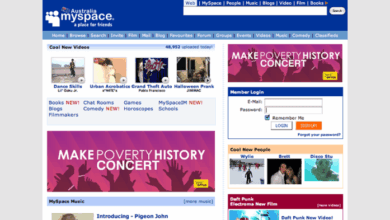
MySpace, once a dominant force in online social networking, holds a unique place in American cultural history. Its meteoric rise and subsequent decline offer valuable insights into the evolution of social media and its impact on communication. The platform’s story is one of innovation, rapid growth, and the inherent challenges of adapting to a rapidly changing technological landscape.The platform profoundly influenced how Americans interacted online.
It was a pioneer in connecting individuals through profiles, friend networks, and shared interests. Its popularity, fueled by ease of use and a vibrant community, made it a critical part of the early 2000s online experience.
MySpace’s Rise to Prominence
MySpace emerged as a social networking powerhouse in the early 2000s, quickly capturing the attention of users. Its visually engaging profiles and the ability to connect with others through shared interests were major draws. The platform’s unique aesthetic and emphasis on user-generated content fostered a sense of community and individuality. The website’s design encouraged personalization and self-expression, allowing users to curate their online identities through music, photos, and videos.
This customization aspect set it apart from other online platforms.
Myspace is reportedly aiming to play a significant role in the upcoming presidential race, leveraging its platform to reach potential voters. Interestingly, this social media strategy seems to be somewhat inspired by the work of a desktop encryption developer currently focused on VoIP security. This developer, working on solutions like desktop encryption developer at work on voip security , might offer a glimpse into the kinds of innovative approaches that could shape the digital landscape of the election campaign.
Ultimately, Myspace’s efforts to engage with voters could bring a fresh perspective to the race.
Peak Popularity and User Engagement
MySpace’s popularity reached its zenith around 2006, boasting millions of active users. Its user base was diverse, encompassing various demographics and interests. The platform was more than just a social network; it became a hub for music, entertainment, and social interaction. The engagement was particularly strong among young adults and teenagers, who embraced the platform as a central part of their social lives.
Many bands and artists used MySpace as a crucial tool for promoting their work, fostering direct connections with fans.
Myspace is reportedly aiming to shake up the presidential race, potentially using its platform to reach a younger demographic. Meanwhile, tech giants like Intel are pushing the boundaries of wireless technology with faster standards, like those featured in intel pushes faster wireless standard to market. This could provide a powerful tool for campaigns to reach voters, especially if Myspace can leverage the new tech to optimize their strategies.
Subsequent Decline and Shifting Landscape
MySpace’s popularity began to wane around 2008. Several factors contributed to this decline, including the rise of competing platforms like Facebook. Facebook’s simpler interface and broader user base made it more attractive to a wider range of users. MySpace struggled to adapt to these changing technological and social trends. The platform’s complex design and evolving feature set, though initially innovative, proved less user-friendly as the online landscape shifted.
Evolution of the Platform and its Impact
MySpace’s evolution reflects the dynamic nature of social media. The platform’s initial emphasis on music and personalization gave way to more general social interaction. MySpace’s influence on communication and social interaction is undeniable. It fostered online communities, facilitated the discovery of new music and artists, and created a space for self-expression.
Historical Significance in Online Social Networks
MySpace’s historical significance lies in its role as a pioneering social networking site. It paved the way for the social media giants of today. The platform’s innovative features and user-friendly approach, combined with its unique aesthetic, attracted millions of users and shaped the early online social experience. Its impact is visible in the social media landscape we see today, demonstrating its influence on the development of modern social networking.
MySpace’s Current State and Relevance
MySpace, once a dominant force in social networking, now occupies a different space on the internet. Its legacy is undeniable, yet its current state requires careful consideration. Understanding its current presence, ongoing activity, and user base is key to evaluating its relevance in the modern social media landscape. It’s a fascinating case study of a platform that rose to prominence and then adapted, or perhaps failed to adapt, to the ever-evolving digital world.MySpace’s current presence is less about active daily usage and more about a dedicated community maintaining its historical value.
While not a platform for mainstream social interactions, it continues to exist as a repository of user-generated content, a space for niche communities, and a source of nostalgia for many. Its current relevance is tied to its historical significance and ongoing activity, rather than a vibrant, present-day user base.
Current Presence and Activity
MySpace remains an online platform, accessible through its website. It continues to host user profiles, though its activity level is significantly lower than during its peak years. Recent updates have focused on maintaining the platform and ensuring accessibility for existing users. There is no evidence of substantial user growth or major interface changes, suggesting a more static existence than a dynamic social media platform.
Community and User Base
A dedicated community of users maintains an active presence on MySpace. These users are often enthusiasts or collectors of past content, engaging in discussions and sharing memories associated with the platform. Notably, there are niche communities revolving around specific interests, such as music, photography, or particular periods of online history. This community is largely defined by shared nostalgia and a desire to preserve the platform’s history.
These communities, though smaller than those found on contemporary social media platforms, remain vibrant and engaged.
Comparison with Modern Platforms
MySpace’s current state differs significantly from modern social media platforms like Facebook, Instagram, and Twitter. These platforms prioritize real-time communication, constant content updates, and visual engagement. MySpace, on the other hand, focuses on preserving its historical content and community. The core features and user experience have not evolved to accommodate modern trends in user interaction.
Features Comparison
| Feature | MySpace | ||
|---|---|---|---|
| User Interface | Classic, early social media design; potentially less intuitive for modern users. | Intuitive, visually appealing, constantly updated design | Simple, text-based design, prioritizing quick updates and information dissemination. |
| User Base | Dedicated, niche community focused on preserving history and shared experiences; significantly smaller than contemporary platforms. | Massive, global user base engaging in diverse interactions | Large user base, focused on real-time information and updates. |
| Content Sharing | Primarily text-based, with an emphasis on user profiles and online communities. | Diverse content sharing, including photos, videos, and status updates. | Microblogging, focused on concise updates and links. |
| Community Engagement | Predominantly based on discussions within specific groups or interests. | Extensive community engagement through groups, events, and interactions. | Real-time discussions, updates, and engagement through hashtags and direct messaging. |
Potential Impact on Presidential Campaigns
MySpace, once a dominant social media platform, now faces a unique opportunity to re-emerge as a tool for political campaigning. Its nostalgic appeal, coupled with the potential for targeted outreach, presents both intriguing possibilities and significant challenges for modern presidential campaigns. While the platform’s current user base is likely different from its peak, the historical significance of MySpace as a social space for youth and its influence on communication styles warrants further exploration.Understanding MySpace’s potential impact on modern presidential campaigns requires examining how its unique features can be leveraged to connect with voters and shape candidate narratives.
This involves considering not just the platform’s technical capabilities but also the evolving political landscape and the demographics it might reach. This analysis will explore the potential advantages and disadvantages of using MySpace, its potential reach, and the obstacles to its effective use in contemporary politics.
Potential Influence on Campaign Strategies
MySpace’s potential for influencing modern presidential campaigns lies in its ability to reach specific demographics and foster a sense of community. Its historical role in shaping online communication styles could be relevant to candidates aiming for a specific tone.
| Aspect | Potential Impact | Example |
|---|---|---|
| Campaign outreach | Reaching niche audiences, particularly those who might not engage with mainstream social media platforms. | A candidate could create a MySpace page specifically targeting young voters or those interested in independent/alternative politics, allowing for more tailored messaging. |
| Candidate branding | Building a unique brand identity, particularly in areas with a strong MySpace presence. | Using MySpace to showcase the candidate’s personality, values, and positions through interactive content, creating a distinct image in comparison to traditional campaign efforts. |
| Voter engagement | Encouraging interaction and fostering a sense of community amongst voters. | Hosting virtual events, polls, and discussions on MySpace, creating opportunities for voters to connect with the candidate and each other. |
Advantages of Using MySpace for Political Campaigns
The potential advantages of using MySpace for campaigning stem from its ability to connect with specific demographics and foster community engagement. While a smaller platform compared to today’s giants, MySpace offers a certain level of personalized interaction that larger platforms may lack.
- Reaching niche audiences: MySpace might attract voters who aren’t active on other social media platforms, creating opportunities for tailored communication.
- Cost-effectiveness: Compared to other digital campaigns, MySpace may offer a lower cost per engagement, potentially benefiting campaigns with limited budgets.
- Authenticity and community building: MySpace’s historical emphasis on personal connection could allow candidates to project an image of authenticity, facilitating the creation of a unique online community.
Disadvantages of Using MySpace for Political Campaigns
MySpace’s current state presents significant disadvantages compared to contemporary platforms. Its limited user base and lack of widespread engagement with younger generations are key concerns.
- Limited reach: MySpace’s smaller user base compared to other platforms limits the potential for broad voter engagement.
- Lack of familiarity with younger generations: The platform might not resonate with younger voters, who are more accustomed to newer social media trends.
- Potential for negative campaigning: The platform’s potential for spreading misinformation or negativity needs to be carefully considered and mitigated.
Platform’s Reach and Engagement with Demographics
Assessing MySpace’s potential reach requires considering its user demographics. While its user base is significantly smaller than contemporary platforms, it still potentially has a loyal following among specific age groups and interests.
- Nostalgia factor: For voters who experienced MySpace in its prime, the platform may hold significant sentimental value, impacting their engagement with campaign content.
- Targeted outreach: Campaigns can tailor their messaging to specific demographic groups on MySpace, ensuring more relevant communication.
- Engagement with specific communities: MySpace might have a strong presence within particular communities, allowing campaigns to engage with these groups directly.
Candidate Communication on MySpace
Candidate communication on MySpace must be tailored to the platform’s unique characteristics. This includes considering the tone and style of communication that resonates best with MySpace users.
- Authenticity: Candidates can use MySpace to project a more personal image, engaging directly with users in a way that might be less possible on larger platforms.
- Visual appeal: Integrating visual elements, such as photos and videos, is crucial for engagement on MySpace, similar to its past usage.
- Interactive content: Hosting polls, Q&As, and discussions on MySpace can foster a sense of community and allow candidates to interact directly with voters.
Obstacles and Limitations
Several obstacles limit MySpace’s effectiveness as a modern campaigning tool. These limitations need careful consideration by potential users.
- Competition from other platforms: MySpace faces intense competition from other social media platforms, making it harder to gain traction.
- Potential for misinformation: The platform’s history and smaller user base could increase the risk of misinformation or negative campaigning.
- Technological limitations: Maintaining an active presence on an older platform may require significant technological resources and expertise.
Analyzing Past Political Campaigns and Social Media
Social media has become an undeniable force in modern political campaigns. Understanding how past campaigns leveraged these platforms, and the nuances of their successes and failures, offers valuable insights for any prospective campaign, including one potentially utilizing MySpace. Examining strategies employed in previous elections provides a blueprint for effective engagement, and also highlights potential pitfalls.Past presidential campaigns have utilized social media platforms to varying degrees of effectiveness.
From the early days of Twitter and Facebook to more recent platforms, the methods and strategies employed have evolved considerably. A retrospective analysis of these strategies reveals key trends and patterns, providing a context for evaluating the potential impact of a MySpace-based campaign.
Summary of Past Presidential Campaigns Using Social Media
Prior presidential campaigns have increasingly relied on social media for voter engagement. Early adopters experimented with different approaches, from simple updates to sophisticated targeting strategies. Candidates and campaigns have utilized various platforms to communicate directly with voters, share campaign messages, and build a sense of community. These efforts ranged from building online communities to organizing grassroots movements.
These platforms allowed for a more direct and instantaneous connection with voters, compared to traditional methods.
Comparison of MySpace Usage to Earlier Platforms
MySpace, with its unique features and user base, presents a distinct opportunity compared to earlier social media platforms. While Facebook and Twitter focused on real-time updates and direct messaging, MySpace offered a more comprehensive platform for content creation and community building. This allowed for a more engaging and interactive experience, potentially facilitating a deeper connection with voters. The ability to create personalized profiles and engage with various user groups could be instrumental.
However, MySpace’s decline in popularity needs to be considered, potentially influencing campaign reach and engagement.
Examples of Successful and Unsuccessful Social Media Strategies
Numerous campaigns have leveraged social media with varying results. Successful campaigns often centered on authentic engagement, building a strong online community, and utilizing targeted advertising. Conversely, unsuccessful strategies often fell short on consistency, lacked a clear strategy, or failed to adapt to the evolving social media landscape. For instance, a campaign focusing solely on posting campaign updates without actively engaging with followers is unlikely to yield meaningful results.
Likewise, a strategy that fails to adapt to the changing dynamics of the platform could lose traction and relevance quickly. Campaign messages must be concise and impactful, as voters often scan through information quickly.
Key Lessons Learned from Past Social Media Campaigns
Past campaigns offer valuable lessons for future endeavors. Successful campaigns often prioritize authenticity and direct communication with voters. Understanding the target audience and tailoring messaging accordingly is crucial. Building a strong online community through active engagement and interactive content is essential. Finally, adapting to the evolving social media landscape and maintaining consistency are key to long-term success.
Campaign messaging should be tailored to the specific platform and its characteristics. This ensures relevance and maximizes impact.
Table of Social Media Platforms and Their Usage in Past Campaigns
| Platform | Campaign | Success/Failure | Reasoning |
|---|---|---|---|
| [Candidate A, 2016] | Success | Targeted advertising and community building were successful. | |
| [Candidate B, 2012] | Mixed | Real-time updates were effective, but consistency was an issue. | |
| MySpace | [Hypothetical, 2004] | [To be determined] | Potential for community building, but platform decline must be considered. |
Potential for Unique Strategies
MySpace, despite its current state, retains a unique potential for reaching specific demographics and fostering engagement in a way that other platforms might struggle to replicate. Its nostalgic appeal and community-focused design could be harnessed in innovative ways to create a distinct approach to campaigning. This approach goes beyond simply posting content; it’s about building genuine connections and fostering a sense of community around a candidate.Leveraging MySpace’s platform in a modern presidential campaign requires a thoughtful strategy, moving beyond the limitations of a purely broadcast approach.
A key element is understanding how MySpace’s community structure can be used to cultivate a deeper connection with voters. This is not about simply replicating old tactics but about adapting them to the modern context.
Myspace’s foray into the presidential race is intriguing. They’re clearly hoping to leverage social media’s power, but how this will translate into tangible results remains to be seen. Perhaps their innovative approach will be similar to how IBM and Intel are revolutionizing server technology with the ibm intel open blade server platform , which could potentially offer new ways to reach voters.
Regardless, Myspace’s strategy could offer a fresh perspective on campaigning and voter engagement.
Innovative Approaches for Leveraging MySpace
A modern campaign can use MySpace to cultivate a unique and interactive experience for users. This includes using features like user-generated content, personalized messaging, and targeted advertising campaigns to create a deeper connection with the audience. It’s about moving beyond simple broadcast-style communication to engaging with voters on a more personal level.
- Targeted Content Formats: Creating specific content for different demographics or interests. For instance, a candidate could produce music videos tailored to a specific musical genre or age group that resonate with that community’s values and interests, or develop interactive games to engage users while sharing policy positions. This can be achieved by recognizing that MySpace’s platform caters to diverse communities and interests.
A campaign can create content that resonates specifically with those communities.
- Interactive Campaigns: Implementing interactive features like polls, forums, or Q&A sessions allows voters to directly engage with the candidate. This is crucial to building a sense of community and allowing voters to see themselves as active participants in the campaign, not just passive recipients of information. For instance, a live chat session with the candidate could be held, fostering direct interaction and addressing specific concerns.
- Niche Marketing Strategies: Recognizing that MySpace has a particular user base with specific interests, a candidate could use targeted advertising to reach particular demographics. This goes beyond broad demographics and focuses on sub-groups and passions, like targeting individuals interested in environmental issues, or specific artistic groups. By understanding the user base and identifying common interests, the campaign can better tailor their messaging and engagement strategies.
- Community Building: Fostering a sense of community through groups, forums, or collaborative projects could encourage discussions and build a strong connection between the candidate and their supporters. This approach moves beyond a purely transactional relationship and creates a community around shared values and interests. For example, organizing discussion forums on topics relevant to different demographics would allow for direct engagement with voters.
Potential for Unique Content Formats, Myspace aims to impact presidential race
MySpace’s visual nature can be leveraged to create unique content formats that engage users in ways that other platforms might not allow. Visual elements, such as music videos, personalized profiles, and interactive elements, can be used to showcase the candidate’s personality and policies in a dynamic and engaging manner.
- Music Videos and Audio Content: Creating original music videos or audio content that showcase a candidate’s personality, policy positions, or values. These could be tailored to resonate with specific musical genres or demographics. This can be a creative and effective way to communicate a message in an engaging and memorable way.
- Interactive Games: Developing interactive games, quizzes, or simulations that teach about the candidate’s policies or engage voters on a deeper level. For instance, a game that tests voter knowledge on current issues could be developed, fostering engagement and demonstrating policy positions in a dynamic manner.
- Personalized Profiles: Allowing users to create personalized profiles with information about themselves and their interests, allowing for tailored messaging and targeted engagement. This can be a unique way to foster a sense of community and shared values.
Potential to Target Specific Demographics
MySpace’s user base might have specific demographic profiles that can be targeted through tailored content and campaigns. Recognizing the unique interests and needs of these demographics allows for the development of strategies that resonate with them on a personal level. This approach goes beyond broad demographics and focuses on specific sub-groups and interests.
- Targeting Specific Interests: Identifying specific interests within the MySpace community and tailoring content and interactions to resonate with those interests. This could involve focusing on niche topics like music, art, or technology, and creating content around those areas to reach particular groups. For example, a candidate might produce content about environmental issues for the segment of the MySpace population interested in that topic.
- Utilizing MySpace Groups: Utilizing MySpace groups to target specific interests or communities. These groups can be leveraged for targeted advertising, discussion forums, or other interactive features. This can provide a unique channel for engaging with specific groups.
Illustrative Examples of MySpace Interactions: Myspace Aims To Impact Presidential Race
MySpace, though a relic of the past, holds a unique position in the history of online social interaction. Understanding how a candidate might have utilized its features offers valuable insights into campaigning strategies of a bygone era, and how those strategies might translate to the current social media landscape. This section explores hypothetical interactions a candidate could have had with MySpace users.MySpace’s interactive features, including personal profiles, groups, and forums, offered unprecedented opportunities for direct engagement with constituents.
A candidate’s presence on MySpace could have been crucial in connecting with voters in a manner that predated the ubiquitous use of Facebook and Twitter.
Hypothetical Candidate Interactions
A hypothetical candidate, let’s call them “Candidate X,” could have maintained a vibrant MySpace profile. The profile would showcase not only their political stances but also their personal interests and values. This was crucial to building a connection beyond just political rhetoric. Candidate X might post updates on local events, share personal anecdotes, and respond to user comments.
This engagement would establish a sense of personal connection and build trust.
User-Generated Content and Interactions
MySpace facilitated user-generated content, allowing voters to directly participate in the campaign. Candidate X could have hosted online discussions about key policy issues, encouraging users to share their perspectives and contribute to the campaign’s dialogue. They might even run polls to gauge public opinion on various topics, showcasing responsiveness and demonstrating engagement with voters. This would have transformed the campaign from a one-way broadcast into a two-way conversation.
Leveraging MySpace Groups and Forums
MySpace groups and forums could have served as crucial hubs for campaign organization and communication. Candidate X could have created groups centered around specific issues, allowing supporters to discuss those issues and mobilize for action. Forums could have been dedicated to specific geographic areas, enabling local outreach and targeted messaging. This approach would have empowered grassroots engagement, fostering a sense of community around the campaign.
Hypothetical MySpace Campaign Ad
Candidate X’s MySpace campaign ad would feature a short, engaging video highlighting their vision for the country. The ad would likely be accompanied by a captivating image and catchy music to maximize viewer engagement. The ad would emphasize Candidate X’s core values and promises to voters, presented in a concise and accessible format. It would likely include a call to action, encouraging viewers to visit the campaign website or join the campaign’s groups.
MySpace Campaign Page Layout
A visual representation of Candidate X’s MySpace campaign page would include a prominent banner image showcasing the candidate’s face and campaign slogan. The page would be divided into sections, including a news feed, a blog, a photo gallery, and a section dedicated to campaign events. The page would also incorporate a user-friendly navigation system and prominent links to other campaign resources.
The layout would emphasize a clean, modern design, making the page easy to navigate and visually appealing.
| Section | Description |
|---|---|
| Banner | A prominent display of candidate’s image and campaign slogan. |
| News Feed | Updates on campaign events, policy positions, and interactions with users. |
| Blog | Detailed discussions on key policy issues and candidate’s viewpoints. |
| Photo Gallery | Visual representation of campaign events and candidate’s public appearances. |
| Events | Calendar of campaign events, allowing users to RSVP and attend. |
Conclusive Thoughts

In conclusion, MySpace’s potential impact on the presidential race is intriguing. While its past success and current relevance offer intriguing possibilities, potential obstacles and limitations must be carefully considered. The platform’s unique features and targeted approach could prove advantageous in reaching specific demographics. However, past campaign experiences on other social media platforms will provide a valuable perspective on whether MySpace can effectively engage voters in a modern presidential race.
Ultimately, the success of a MySpace campaign hinges on a deep understanding of the platform’s strengths and limitations, coupled with a nuanced approach to reaching voters.