MySpace Users Decide News on Print
MySpace users decide what news is fit to print, a fascinating glimpse into a bygone era of online news dissemination. This exploration dives deep into how users shaped narratives, from personal experiences to gossip, and examines the accuracy, reliability, and impact of this user-generated content on public discourse. We’ll uncover the dynamics behind these choices, the motivations of those sharing news, and how the platform’s design facilitated this unique approach to news.
Imagine a world where the internet’s early days saw social media platforms as a news hub. MySpace, with its unique community features, offered a platform for users to share news, creating a decentralized, and often chaotic, news environment. This analysis compares MySpace’s user-generated news to traditional news reporting, highlighting the similarities and stark differences in speed, accuracy, and reach.
Understanding User-Generated News: Myspace Users Decide What News Is Fit To Print
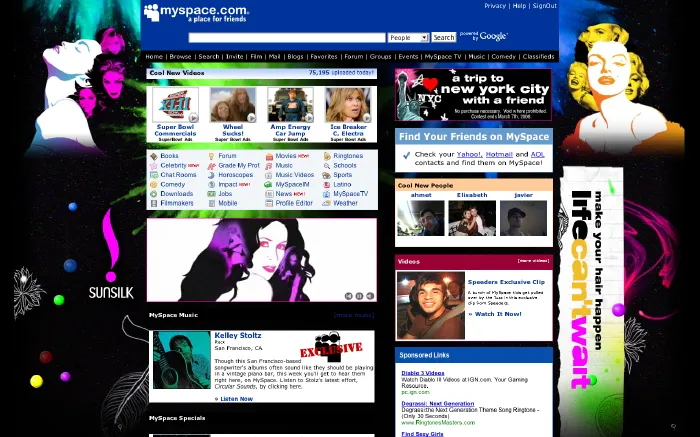
The digital age has democratized information, allowing individuals to share and disseminate news in unprecedented ways. MySpace, a social networking platform popular in the early 2000s, became a fertile ground for user-generated news. Users weren’t just passive consumers; they actively shaped narratives, creating a unique ecosystem of information sharing. This exploration delves into the characteristics of user-generated news on MySpace, contrasting it with traditional news reporting and highlighting the types of content that resonated with the platform’s users.User-generated content on MySpace, unlike traditional news outlets, was often immediate and personal.
Remember those days when MySpace users essentially decided what news was worth sharing? It’s a bit like that now, but with tech giants like Dell weighing in. Dell’s recent warning to Intel about potentially using AMD processors in their products highlights how market forces can dictate the news cycle. This dynamic reminds me of the old days when the collective voice of MySpace users, however informal, shaped the news.
It’s a fascinating parallel to the current situation where, similar to those early days of social media, industry moves like dell warns intel with talk of amd inside have the power to influence the narrative.
It reflected the perspectives and experiences of everyday people, not just established journalists. This immediacy sometimes led to the rapid spread of information, often before professional verification, and fostered a sense of community engagement. Users played a crucial role in determining what news was considered important and worthy of sharing.
User-Generated Content on MySpace
MySpace users created a vibrant landscape of news sharing, driven by personal experiences, local events, and celebrity gossip. This platform facilitated a wide range of news content, including updates on school events, band performances, personal achievements, and even political discussions. Users often documented their daily lives, creating a form of “citizen journalism” that reflected their immediate surroundings and interests.
News Narratives Shaped by Users
Users significantly influenced news narratives on MySpace. For example, the rapid spread of gossip about celebrity breakups or band controversies, often started by users sharing their own perspectives or rumors, shaped public perception. Local news, such as school events or community gatherings, often gained traction through user-generated posts, shaping local discussions and influencing the flow of information.
Characteristics of Important News
Users considered news important based on its personal relevance, emotional impact, or local significance. Personal stories, especially those with an emotional element, often garnered significant attention. For instance, a user sharing their struggle with a personal challenge could generate significant engagement and discussion. Furthermore, local events, like school dances or athletic achievements, were considered important because they directly impacted the user’s immediate community.
Comparison with Traditional News Reporting
Traditional news reporting, typically conducted by professional journalists, prioritized objectivity, verification, and factual accuracy. User-generated news on MySpace, in contrast, often lacked these elements, relying more on personal accounts and perspectives. This difference in approach led to both the rapid dissemination of information and the potential for misinformation. The immediacy and personal touch of user-generated content contrasted with the more formal and often delayed nature of traditional news reporting.
Types of News Shared on MySpace
MySpace fostered a diverse range of news categories, catering to different interests and communities. A significant portion of shared news related to music, with users discussing new releases, band activities, and concerts. Additionally, personal events, like graduations, or local community happenings, constituted a substantial part of shared news. There was also a notable presence of news regarding pop culture, encompassing celebrity gossip, movie reviews, and TV shows.
| Category | Description |
|---|---|
| Music | News related to musical artists, concerts, and music releases. |
| Personal Events | Announcements about graduations, celebrations, or personal achievements. |
| Local News | Updates on school events, community gatherings, or local happenings. |
| Pop Culture | News about celebrities, movies, TV shows, and other pop culture trends. |
The Dynamics of MySpace News
MySpace, a once-dominant social networking platform, fostered a unique ecosystem for news dissemination. Users, acting as both consumers and producers of information, shaped the flow of news through their choices and interactions. This dynamic environment, driven by personal connections and social pressures, created a distinct news landscape compared to traditional media.Understanding the factors influencing user choices regarding news on MySpace is crucial to grasping the platform’s impact on information sharing.
The motivations behind selecting specific news items, the role of community in shaping narratives, and the speed and reach of news dissemination are all key aspects of this complex system.
User Motivations for Sharing News
Users were motivated by a range of factors when deciding what news to share on MySpace. Emotional connections to the news played a significant role, as did the desire to maintain or build social capital. Sharing news that reflected their personal values or experiences was common, often creating a sense of community among like-minded individuals.
Community and News Flow
MySpace’s strong sense of community significantly impacted the news flow. Users often shared news items relevant to their social circles, creating a network effect where information spread rapidly within groups. News items that were widely discussed and commented on within a community often gained more traction and visibility.
Speed and Reach of MySpace News
News dissemination on MySpace was often rapid, leveraging the platform’s real-time communication features. The speed of news propagation depended heavily on the user base’s engagement and the prominence of the shared content within the network. This contrasts with the more structured and slower pace of traditional news outlets.
Sources of Shared News
| Source | Description |
|---|---|
| Personal Experiences | First-hand accounts of events or observations. |
| Gossip | Unverified or partially verified information, often spread through social connections. |
| Rumors | Speculative accounts lacking concrete evidence. |
| Verified Reports | Information from reputable sources or individuals with established credibility within the community. |
| Celebrity News | Information regarding the lives of popular figures, often disseminated through fan pages or groups. |
The table above illustrates the diverse range of sources that contributed to the news flow on MySpace. The varying degrees of reliability and accuracy of these sources played a key role in the platform’s overall news environment.
Accuracy and Reliability of User-Generated News

MySpace, a social networking platform of the early 2000s, fostered a unique environment where users generated and shared news. This user-generated content, while offering a dynamic perspective, presented significant challenges in terms of accuracy and reliability. The ease of posting and the lack of stringent fact-checking mechanisms created an atmosphere ripe for misinformation. This made discerning trustworthy information from unsubstantiated claims a crucial skill for users navigating the platform.The act of verifying user-generated news is inherently difficult.
Remember Myspace, where users practically decided what news was worth sharing? It’s fascinating how the power dynamic shifted from user-generated content to, say, Amazon Tivo partnering for direct-to-TV downloads. Amazon Tivo partner for direct to TV downloads is a huge deal. But even with streaming services, the core idea of user-driven content selection still feels relevant, echoing the old Myspace days in a modern context.
It’s all about how the audience defines and consumes information, isn’t it?
Unlike traditional news outlets, user-generated content lacks the same rigorous fact-checking processes. This absence of editorial oversight leaves the information vulnerable to errors, intentional misrepresentation, or the spread of rumors. The speed at which news traveled on MySpace compounded the problem, often making it challenging to distinguish between credible reports and fabricated stories.
Challenges of Verifying Accuracy
Determining the accuracy of user-generated news is fraught with difficulties. Anonymity, or the perceived anonymity of some accounts, plays a significant role. Without clear identification, it’s hard to assess the source’s credibility and motivation. Moreover, the lack of established journalistic standards on MySpace allowed for a proliferation of unsubstantiated claims. The platform’s structure, focused on interpersonal communication rather than formal reporting, contributed to this challenge.
Examples of Inaccurate User-Generated News, Myspace users decide what news is fit to print
Numerous examples exist of inaccurate or misleading user-generated news on MySpace. Rumors about celebrity relationships, school events, or local happenings frequently circulated. These rumors, often started by one user and rapidly disseminated, could quickly gain traction and be accepted as truth within the MySpace community. Verification was left to the users, often with limited resources and no established framework for fact-checking.
The lack of context or supporting evidence further complicated matters. One example involved a fabricated story about a school shooting, which spread rapidly and caused anxiety among students. Another example included a false report about a celebrity’s death.
Mechanisms for Assessing Credibility
MySpace users developed their own informal mechanisms for assessing the credibility of information. Some users relied on the perceived trustworthiness of the poster. Reputation and past behavior served as proxies for credibility. Others checked for corroborating evidence from multiple sources. The popularity of a post, in some instances, served as a signal of credibility, though this correlation was not always reliable.
Sometimes, users looked for consistency with other information known to be true.
Impact of Unreliable News on Public Opinion
The spread of unreliable news on MySpace had a real-world impact on public opinion. Misinformation could influence perceptions about events and individuals. False rumors about individuals or events could lead to social ostracization or even violence. The rapid dissemination of false information on the platform fostered an environment of anxiety and distrust.
Comparison of Verified vs. User-Generated News
| Characteristic | Verified News | User-Generated News (MySpace) |
|---|---|---|
| Source | Reputable news organizations, journalists | Individual users, often anonymous |
| Verification Process | Rigorous fact-checking, multiple sources | Limited or nonexistent fact-checking |
| Bias | Potentially present, but mitigated by editorial oversight | Higher potential for bias due to personal perspectives and motivations |
| Accuracy | Generally higher accuracy due to fact-checking | Lower accuracy due to lack of verification |
| Impact | Influence on public opinion based on factual information | Influence on public opinion based on potentially false information |
Impact on Public Discourse
Myspace, a once-dominant social networking platform, fostered a unique landscape for user-generated news. This platform, unlike traditional media, allowed individuals to share information and opinions in real-time, directly influencing public discourse. This immediacy, combined with the platform’s vast user base, created a powerful echo chamber, shaping how the public perceived events and issues.The ability of users to disseminate information rapidly, often bypassing traditional gatekeepers, had a profound impact on how discussions unfolded.
This immediacy could, at times, lead to the spread of misinformation or biased perspectives, yet it also provided a platform for diverse voices and alternative viewpoints, which would have been limited or absent in traditional media alone. This shift in information dissemination created a complex dynamic, affecting not only the speed of information exchange but also the public’s perception of reality.
Influence on Public Perception of Specific Topics
User-generated news on MySpace often influenced public perception by amplifying certain narratives and perspectives. For instance, if a significant portion of MySpace users shared a specific viewpoint on a celebrity scandal, that perspective could become prominent in public discussions, potentially swaying public opinion. Conversely, opposing viewpoints might struggle to gain traction, potentially leading to a skewed or incomplete picture.
This effect was particularly evident in the early days of the platform when the rapid spread of information, combined with a lack of established fact-checking mechanisms, could significantly affect public opinion.
Examples of User-Generated News Influencing Discussions
MySpace users played a crucial role in shaping discussions about various events. The 2004 U.S. presidential election, for example, saw intense debate and speculation spread through MySpace. Users shared their views on candidates and policies, often in a format that was less structured than traditional news reporting. This resulted in an environment where public opinion was shaped by a mix of well-reasoned analysis and less credible claims.
The platform’s ability to amplify these perspectives, sometimes without sufficient context or fact-checking, demonstrates the potential for user-generated news to both inform and misinform.
Comparison with Traditional Media Influence
Traditional media outlets, with their established journalistic standards and fact-checking processes, typically exerted a more controlled influence on public discourse. They generally presented information in a more structured and comprehensive manner, providing context and potentially minimizing the spread of misinformation. However, MySpace user-generated news offered a unique counterpoint, allowing a wider range of voices and perspectives to be heard, even if not always vetted.
Remember those days when MySpace users essentially decided what news was worth sharing? It was a fascinating glimpse into the power of the internet’s grassroots. The rise of personal news outlets on social media foreshadowed the current digital landscape, a fascinating parallel to how Vista’s release, vista powers big boost in pc sales , was seen as a major turning point for PC sales at the time.
Even then, user-generated content held a surprising amount of influence, just as it does today, making MySpace a powerful microcosm of the internet’s evolution.
The influence of MySpace user-generated news, therefore, often existed in a tension with the more established authority of traditional media.
Evolution of a News Story: The Britney Spears Incident
| Date | MySpace Activity | Traditional Media Coverage | Public Perception |
|---|---|---|---|
| 2007 | Extensive speculation and rumors about Britney Spears’s behavior and mental state. Users shared images, videos, and stories, often without attribution or verification. | Limited initial coverage; more detailed reporting followed as the situation escalated. Traditional media outlets focused on fact-checking and providing context. | Public opinion was highly polarized, influenced by the intense speculation on MySpace. Some saw it as a mental health crisis; others as manufactured controversy. |
| 2008 | The volume of user-generated content about Britney Spears decreased as traditional media took over the narrative. Rumors and speculation continued, but with diminished impact. | Traditional media outlets provided more comprehensive reporting on the legal proceedings and potential mental health factors. | Public perception shifted as traditional media provided more context. |
The table illustrates how a single event (Britney Spears’s situation) unfolded across different media platforms. MySpace initially amplified rumors and speculation, shaping public opinion in the early stages. As traditional media outlets took over the narrative with verified information, public perception gradually changed, reflecting the contrasting strengths of each form of media.
Technological Context of MySpace News
MySpace, a social networking phenomenon of the early 2000s, offered a unique landscape for news dissemination. Unlike traditional media outlets, MySpace relied heavily on user-generated content, creating a platform where individuals could share information, opinions, and perspectives in real-time. This dynamic environment, however, came with its own set of technological limitations and opportunities.The platform’s design significantly impacted how news travelled.
MySpace’s core functionality revolved around profiles, blogs, and groups, each playing a unique role in the propagation of information. Users could post updates on their profiles, essentially creating mini-newsfeeds. These updates were visible to friends and connections, creating a viral loop for news dissemination. The platform also allowed for the creation of community forums and groups dedicated to specific interests, allowing users to gather and share information in a more targeted manner.
MySpace Profile Updates
MySpace profiles served as individual news outlets. Users could update their status, often sharing news, opinions, or events. These updates, though informal, were crucial in disseminating information within the user’s social circle. The limitations included the lack of verification or fact-checking, leading to the potential spread of misinformation. The scope was limited to the user’s connections, and the updates were transient, lacking long-term preservation or archiving.
News Propagation Through Social Networking Features
MySpace’s social networking features were central to news dissemination. “Friends” lists allowed information to travel rapidly through interconnected networks. Users could easily share links to articles, blog posts, or even create original content, fostering a sense of community and shared information. The limitation lay in the lack of robust moderation tools, which allowed rumors and unverified reports to spread alongside accurate news.
The potential for misinterpretations and inaccuracies was high.
MySpace Community Forums and Groups
MySpace’s community forums and groups played a significant role in news sharing. These platforms allowed for discussions and the exchange of information around specific interests. Users could congregate to discuss current events, share personal experiences, and collectively interpret news stories. The limitations were similar to the profile updates; lack of verification and potential for biased reporting existed. However, groups allowed for a deeper exploration of specific topics and often fostered discussions that went beyond simple news sharing.
User Comments on News Sharing
“I saw this on someone’s profile and thought it was pretty cool. Shared it with my friends!”
“This forum’s great for discussing the latest gossip. Everyone’s sharing their opinions.”
“Be careful what you share! There are some rumours going around, but they might not be true.”
“I found this article on a MySpace blog, and it sparked a great discussion with my friends.”
Comparison with Modern News Platforms
The rise of social media has fundamentally altered how news is shared and consumed. MySpace, a pioneering platform for user-generated content, offered a glimpse into this evolving landscape. Understanding the similarities and differences between MySpace’s approach to user-generated news and modern platforms provides valuable insights into the evolution of online information dissemination. This analysis will explore the key parallels and divergences, highlighting the impact of algorithms and curation on the flow of news today.Modern social media platforms have inherited the spirit of user-generated content, but with significant modifications.
MySpace, while a precursor, lacked the sophisticated algorithms and curated feeds that define today’s social media experience. This evolution has led to a nuanced approach to news dissemination, one that balances user-generated content with professional journalism and curated information.
Similarities in News Sharing and Consumption
Both MySpace and modern social media platforms rely on users to share and consume news. The fundamental principle of users acting as both content creators and consumers remains consistent. In both environments, news travels quickly through networks of interconnected users, often bypassing traditional gatekeepers. This decentralized model allows for rapid dissemination of information, even if its veracity is sometimes questionable.
Differences in News Sharing and Consumption
MySpace lacked the sophisticated algorithms that now dominate modern social media platforms. Platforms like Facebook, Twitter, and Instagram employ complex algorithms to personalize news feeds, prioritizing certain content and users over others. This personalization, while convenient, can also lead to filter bubbles and echo chambers, where users are primarily exposed to information confirming their existing beliefs. MySpace’s approach to news dissemination was less algorithmic, relying more on user interaction and network connections within the platform itself.
Evolution of User-Generated News Across Platforms
User-generated news has evolved significantly from MySpace’s era. MySpace allowed users to post news items and commentary, but lacked the diversity of content formats and verification mechanisms present in modern platforms. Modern platforms leverage multimedia formats like videos, images, and live streams, enhancing the experience of consuming user-generated content. Verification tools and fact-checking initiatives have also emerged to address the need for accuracy and reliability in the face of misinformation.
Role of Algorithms and Curation in Modern News Dissemination
Algorithms play a critical role in modern news dissemination. They personalize news feeds, influence user engagement, and often shape public discourse. Curation by both users and platform administrators also significantly impacts the flow of information. These factors are not present in the same way in MySpace, which relied more on organic user interactions.
Comparison Table: MySpace vs. Modern Social Media Platform
| Feature | MySpace | Modern Social Media Platform (e.g., Facebook) |
|---|---|---|
| News Sharing Format | Text-based updates, some images | Text, images, videos, live streams, stories |
| Verification/Fact-Checking | Limited; user reputation was key | Increasingly integrated tools; fact-checking initiatives |
| Content Curation | Less sophisticated; based on user network | Highly sophisticated algorithms; user-generated recommendations |
| Algorithm Influence | Minimal; largely organic interactions | Significant; personalization and prioritization of content |
| User Engagement | User-to-user interaction through comments and messaging | Diverse engagement options; comments, reactions, sharing, groups |
Last Point
MySpace’s unique approach to user-generated news offers a compelling case study in the evolution of online information sharing. While the platform has faded, its legacy in shaping online discourse remains. Comparing it to modern news platforms reveals both the limitations and opportunities of user-generated content, prompting reflection on how we consume and trust information in the digital age. The study of MySpace news reveals how community, social interaction, and technology all intersected to shape the flow of information.