
Presidential Stumpers to Spar in Cyberspace
Presidential stumpers to spar in cyberspace. This new digital arena for political debate promises both exciting opportunities and unique challenges. Imagine candidates engaging in real-time discussions with voters across the nation, bypassing traditional debate formats. How will this shift in approach affect voter engagement and candidate perception? What are the potential pitfalls and advantages of this virtual format?
The digital age is reshaping political discourse. This exploration delves into the evolving landscape of presidential debates, from historical precedents to the innovative potential of cyberspace. It examines the technical hurdles, strategies for candidates, and the public’s response to this emerging format. We’ll also analyze how visuals and interactivity can shape the online debate experience.
Presidential Debates in the Digital Age
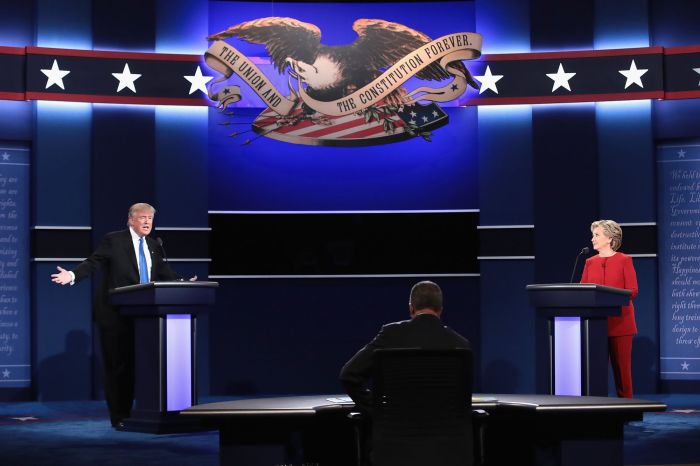
Presidential debates, a cornerstone of American democracy, have undergone significant transformations in the digital age. From the televised town hall meetings of the 1960s to the interactive online forums of today, these events reflect evolving public discourse and the changing landscape of political communication. The accessibility and immediacy of digital platforms present both opportunities and challenges for candidates and voters alike.The evolution of presidential debates has mirrored the broader technological advancements of the past few decades.
Early debates were primarily radio broadcasts, then transitioned to television, offering a visual dimension and expanding the reach of candidates. The rise of the internet and social media has further amplified the impact of these events, providing unprecedented opportunities for real-time engagement and feedback.
Presidential candidates are gearing up for online debates, a fascinating shift in campaigning. Imagine the potential for innovative strategies, like the one Bill Gates pioneered with his virtual earth search service, gates debuts virtual earth search service. This new approach promises to engage voters in a whole new way, potentially revolutionizing how presidential stumpers interact with the electorate in cyberspace.
Historical Overview of Presidential Debates
Early presidential debates, largely confined to radio broadcasts, were less visually engaging and had limited audience reach. The introduction of television in the 1960s revolutionized the format, allowing candidates to project their personalities and connect with a wider electorate. The televised debates became more accessible and impactful, influencing public perception and shaping voting choices. The subsequent integration of the internet and social media has further altered the landscape, enabling instant feedback and real-time engagement.
Evolution of Public Discourse Surrounding Presidential Elections
The public discourse surrounding presidential elections has become increasingly complex and multifaceted. The proliferation of information through various media outlets, including traditional news sources and social media platforms, has led to a wider range of perspectives and opinions. This heightened accessibility has empowered individuals to engage more directly with political discussions, fostering both informed participation and potentially divisive polarization.
The digital age has also facilitated the spread of misinformation and disinformation, requiring voters to be more discerning and critical in evaluating the information they encounter.
Comparison of Traditional and Virtual Formats
Traditional debates, typically held in a studio setting, offer a structured format with pre-determined questions and time limits. This allows for focused discussions on specific issues, facilitating in-depth analyses and comparisons of candidate positions. Virtual debates, while offering greater accessibility and potentially wider audience reach, present unique challenges. Maintaining a structured format and preventing disruptions can be difficult in a remote environment.
The lack of physical presence and face-to-face interaction may also affect candidate charisma and communication style. However, virtual formats allow for greater flexibility in terms of location, cost, and participant accessibility.
Potential Impact on Voter Engagement and Public Perception
Online debates have the potential to significantly impact voter engagement. Real-time interactions and feedback can heighten interest and involvement in the election process. Simultaneously, the immediacy and potential for misrepresentation inherent in online environments raise concerns about public perception of candidates. Negative comments and viral misinformation can quickly spread, potentially influencing voters’ choices. Successful virtual debates require a careful balance between engagement and control to ensure fair and unbiased presentations.
Stages of Presidential Debates (Across Formats)
| Stage | Traditional Debate | Virtual Debate |
|---|---|---|
| Announcement | Formal press releases, media announcements | Online postings, social media campaigns, press conferences |
| Preparation | Candidate strategizing, practice sessions | Virtual rehearsals, online practice debates |
| Debate | Live studio setting, moderator questions | Online platform, moderated discussion |
| Post-Debate Analysis | News coverage, expert analysis | Online news coverage, social media reactions, expert commentary |
| Results | Voter responses, election outcomes | Voter responses, election outcomes, social media trends |
Strengths and Weaknesses of Debate Formats
| Feature | Traditional Debate | Virtual Debate |
|---|---|---|
| Strengths | Structured format, focused discussion, direct candidate interaction | Wider audience reach, flexibility, potential for broader engagement |
| Weaknesses | Limited audience reach, potential for studio bias, less immediate feedback | Maintaining structure, controlling disruptions, potential for misrepresentation |
Challenges and Opportunities of Cyberspace Debates
Presidential debates, traditionally held in person, are increasingly migrating to the digital realm. This shift presents exciting opportunities for broader participation and accessibility, but also introduces novel challenges that require careful consideration. The digital environment, while offering unprecedented potential, also presents vulnerabilities that must be addressed to ensure fairness and transparency.
Technical Challenges in Hosting Secure and Accessible Virtual Debates
The successful execution of online debates hinges on robust technical infrastructure. Issues like ensuring reliable internet connectivity for all participants, especially those in areas with limited access, must be proactively addressed. Furthermore, the technical requirements for simultaneous translation and captioning, crucial for inclusivity, need to be carefully considered and implemented. Ensuring high-quality video and audio transmission, mitigating potential lag and buffering issues, and providing accessible formats for viewers with disabilities are essential aspects of a successful online debate.
These are critical elements that must be considered and meticulously planned to ensure a seamless and accessible virtual debate experience.
Potential for Misinformation and Manipulation in Online Debate Forums
The online environment provides fertile ground for the spread of misinformation and manipulation. Sophisticated algorithms can be used to amplify false narratives and target specific demographics, thereby creating a distorted perception of the debate and potentially swaying public opinion. Automated bots and trolls can also create a hostile or disruptive environment, making it difficult for candidates to engage in meaningful dialogue.
Furthermore, the ease of creating and disseminating fabricated content through social media and other online platforms necessitates robust measures to verify information and counter disinformation campaigns.
Presidential candidates are gearing up for online debates, and it’s shaping up to be quite the digital showdown. Meanwhile, the tech world’s also buzzing with legal battles, like the recent patent suit filed by net2phone against Skype, net2phone goes after skype with new patent suit. This could impact future video conferencing services, but back to the presidential hopefuls – will these online forums actually shape public opinion, or just be another digital echo chamber?
Strategies for Mitigating Risks and Ensuring a Fair and Transparent Digital Space
Implementing stringent fact-checking mechanisms, partnering with reputable organizations specializing in media literacy, and actively promoting critical thinking are crucial strategies. Providing clear guidelines and protocols for online behavior and interactions will help to maintain a civil discourse and discourage disruptive tactics. Transparency in the debate’s moderation and decision-making processes is essential to build trust and ensure impartiality. The use of trusted third-party platforms and moderators with expertise in digital safety and moderation is vital.
Strategies for Maintaining Decorum and Respectful Discourse
Establishing clear ground rules for online conduct is paramount. These rules should emphasize respectful communication, avoiding personal attacks, and adhering to established norms of ethical discourse. Moderators should actively intervene to address violations and ensure a safe and productive debate environment. Encouraging active participation from all candidates and fostering a culture of mutual respect are essential elements.
Potential for Increased Accessibility and Inclusivity of Online Debates
Virtual debates offer the potential to transcend geographical limitations, reaching a broader audience and fostering greater inclusivity. Live captioning, real-time translation, and accessible formats for viewers with disabilities will ensure that a diverse range of individuals can participate and engage in the debate. The use of interactive features, such as polls and Q&A sessions, can enhance audience engagement and provide additional avenues for participation.
Presidential candidates are gearing up for online debates, a fascinating digital showdown. Meanwhile, a monumental achievement in space exploration, like the recent historic private space flight succeeds, historic private space flight succeeds , reminds us of humanity’s incredible potential. This certainly adds another layer of intrigue to the upcoming cyberspace debates, where policy platforms will clash in a virtual arena.
Table of Potential Technical Issues and Proposed Solutions for Online Debates
| Potential Technical Issue | Proposed Solution |
|---|---|
| Reliable Internet Connectivity | Prioritize participants in areas with limited access by using multiple network providers and providing alternative connection methods. |
| High-Quality Video and Audio | Use high-bandwidth connections, employ professional-grade equipment for streaming, and implement robust buffering mechanisms. |
| Simultaneous Translation and Captioning | Partner with language service providers and use advanced captioning software to ensure accuracy and timeliness. |
| Lag and Buffering Issues | Employ high-speed servers, utilize optimized streaming protocols, and provide alternative access options. |
| Accessibility for Disabled Viewers | Use closed captions, real-time transcripts, and alternative formats to ensure inclusivity. |
Strategies for Candidates in Virtual Debates
Navigating the digital sphere for presidential candidates presents unique challenges and opportunities. Effective communication, audience engagement, and crisis management are paramount in this new format. Virtual debates demand a shift in strategy, requiring candidates to adapt their communication styles and leverage the platform’s capabilities to their advantage.
Effective Communication and Response Strategies
Candidates must craft clear, concise, and compelling messages tailored for the virtual format. Visual aids, interactive elements, and real-time responses are crucial to maintain audience engagement. Employing a conversational tone, while maintaining professional decorum, can foster a connection with viewers. Precise responses to opponents’ arguments, backed by factual data, are essential to establish credibility and command attention.
Audience Engagement and Building Online Support
Building online support in a virtual debate environment requires a proactive approach. Candidates should leverage social media platforms to interact with viewers directly. Encouraging questions and real-time feedback can foster a sense of community and involvement. Utilizing polls, quizzes, and interactive Q&A sessions can actively engage viewers. Furthermore, incorporating live chat features can provide instantaneous feedback and adapt responses in real-time.
Managing Unexpected Issues and Maintaining Composure
Technical difficulties, unexpected interruptions, or controversial moments are inherent in virtual events. Candidates should pre-emptively prepare for potential problems and have a backup plan for internet connectivity and audio/video issues. Maintaining composure and professionalism during unexpected situations is crucial. Reframing a technical glitch as an opportunity for a brief moment of humor or a genuine acknowledgement of the challenge can diffuse tension.
The ability to respond to difficult questions or attacks with measured and well-reasoned responses is vital.
Leveraging Social Media During and After the Debate
Candidates should leverage social media platforms during the debate to engage with the audience and respond to immediate reactions. Real-time responses to key points or opponent’s statements will boost engagement and show responsiveness. Following the debate, candidates should utilize social media to thank viewers, share key takeaways, and answer questions. This sustained engagement solidifies the candidate’s presence and strengthens their online support base.
Using Visual Aids and Interactive Elements
Visual aids and interactive elements can significantly enhance engagement and comprehension in a virtual debate setting. Employing clear and concise slides, infographics, or short videos can reinforce key arguments and maintain viewer attention. Live polls or quizzes can gauge audience reactions and adapt the debate accordingly. Utilizing interactive maps or charts can illustrate complex data points effectively.
These strategies are not just about visually appealing presentation; they’re about enhancing understanding.
Candidate Communication Styles for Virtual Debates, Presidential stumpers to spar in cyberspace
| Candidate | Visual Style | Textual Style | Example |
|---|---|---|---|
| Candidate A | Concise slides with bullet points, use of animations | Clear, direct language, concise statements | Explaining a policy proposal using simple, animated charts. |
| Candidate B | Informative videos and infographics, engaging imagery | Passionate, conversational tone, use of storytelling | Illustrating a policy’s impact through a short video. |
| Candidate C | Simple slides with a consistent design, interactive polls | Formal, persuasive language, clear articulation of ideas | Employing live polls to gauge audience feedback on key issues. |
Public Response to Virtual Debates: Presidential Stumpers To Spar In Cyberspace

Virtual presidential debates offer unprecedented opportunities for public engagement, transcending geographical limitations and fostering a more interactive experience. This new paradigm shifts the traditional debate format, demanding a re-evaluation of how audiences react and participate. The potential for real-time feedback and increased citizen involvement is significant, potentially transforming the very nature of political discourse.
Potential for Public Participation
Public participation in virtual debates can be significantly enhanced through interactive elements. Q&A sessions, facilitated by moderators, allow citizens to directly engage with candidates, posing questions and receiving immediate responses. Live polls can provide instantaneous feedback on candidate stances and public opinion on key issues. This immediacy fosters a sense of direct participation and responsiveness.
Public Engagement with Candidates and Messages
The online space allows for diverse and nuanced forms of engagement. Social media platforms become crucial battlegrounds for candidate messaging. Tweets, posts, and comments offer immediate reactions to candidate statements and policy proposals. Online forums and discussion groups facilitate in-depth analysis and dialogue, offering a platform for citizens to dissect and debate the candidates’ arguments. Candidates can directly address specific concerns raised by the public in real time.
Increased Citizen Engagement and Civic Participation
Virtual debates, by their very nature, lower barriers to participation. Geographical limitations are removed, allowing individuals from all corners of the country to engage. The immediacy of the online environment can encourage a sense of urgency, prompting greater engagement and potentially driving civic participation. This can be especially effective in reaching younger demographics who may be less inclined to engage in traditional forms of political participation.
The immediate feedback loop can create a sense of influence and agency.
Comparison of Public Reactions to Traditional and Virtual Debates
Traditional debates, while significant, often lack the immediacy and widespread reach of virtual debates. Traditional debates rely on pre-planned questions and a limited timeframe for audience interaction. Virtual debates allow for continuous interaction, offering a dynamic platform for real-time responses to evolving issues and concerns. The ability to immediately analyze public sentiment via social media and online forums provides unprecedented insight into the effectiveness of candidate messaging.
Measuring Public Sentiment and Engagement During Online Debates
Public sentiment and engagement during virtual debates can be measured through various online tools. Social media analytics tools can track the volume and tone of online conversations related to the debate. Website traffic and forum activity provide additional metrics for assessing public interest. Polling platforms can offer real-time insights into public opinion. By analyzing the language used in online comments, sentiment analysis tools can gauge public reactions to candidates’ statements and proposals.
Ways the Public Can Participate in Virtual Debates
| Participation Method | Description |
|---|---|
| Q&A Sessions | Citizens submit questions to moderators, who then pose them to the candidates. |
| Live Polls | Real-time polls on specific issues allow for immediate feedback on public opinion. |
| Social Media Engagement | Citizens can express opinions on candidates and issues through tweets, posts, and comments. |
| Online Forums and Discussion Groups | Platforms for in-depth analysis, discussions, and debates on candidates and policies. |
| Livestream Comments and Chat | Real-time interaction with candidates and moderators through comments and chat. |
Visual and Interactive Elements in Cyberspace Debates
Presidential debates in the digital age demand innovative approaches to engage audiences and foster deeper understanding. Visuals and interactive elements offer a powerful means to enhance the virtual debate experience, transcending the limitations of traditional formats. They can transform a passive viewing experience into an active learning process, fostering greater audience engagement and comprehension.Visuals and interactive elements can move beyond simply presenting information.
They can be used to create a dynamic and immersive environment that allows audiences to actively participate in the debate. This interactive element can encourage critical thinking and promote a deeper understanding of the issues at stake. The use of real-time data and visualizations can make complex issues more accessible and understandable to a broader audience.
Examples of Visual Enhancements
Visual aids, such as animated charts, interactive maps, and real-time data visualizations, can bring abstract concepts to life. For example, an animated chart illustrating the projected impact of a policy on unemployment rates could make the debate more impactful than simply stating figures. Similarly, an interactive map highlighting areas disproportionately affected by a proposed infrastructure project could facilitate a nuanced discussion about its potential consequences.
These tools can not only illustrate points but also foster greater audience engagement.
Engaging Diverse Audiences
Different audiences have varying preferences for engaging with information. Utilizing a variety of visual and interactive tools can cater to diverse learning styles and preferences. For example, using different colors and designs for various groups on a demographic map could make it easier to understand data. A debate about environmental policy could include an interactive poll to allow participants to express their opinions on different policy options, thus fostering engagement.
Real-Time Data and Visualizations
Integrating real-time data and visualizations allows candidates to illustrate their points with tangible evidence. A candidate discussing economic policy could display live GDP figures or unemployment rates alongside their arguments. Real-time polling results can provide immediate feedback on audience reactions and allow candidates to adapt their strategies in real-time. This can create a more dynamic and responsive debate experience.
Clarifying Complex Issues with Interactive Features
Interactive features can simplify complex issues by providing a tangible and interactive medium for understanding them. For instance, a candidate outlining a complex regulatory framework could use an interactive flow chart to demonstrate the steps involved. This approach makes the information more digestible and less intimidating for viewers. Using interactive elements to illustrate the potential consequences of a policy decision can foster a deeper understanding of its implications.
Gauging Public Opinion and Responding to Feedback
Real-time polls and interactive Q&A sessions can allow candidates to gauge public opinion and respond to feedback immediately. This dynamic exchange can provide a more authentic and engaging experience for the audience. By using live polling and interactive chat features, candidates can receive immediate feedback on their arguments and adapt their strategies accordingly.
Table of Visual Aids and Uses
| Visual Aid | Use in Virtual Debate |
|---|---|
| Animated Charts | Illustrating trends, comparing data points, and projecting future outcomes. |
| Interactive Maps | Highlighting geographical impacts of policies, demonstrating regional disparities, and illustrating data distribution across regions. |
| Real-Time Data Visualizations | Displaying live statistics, providing immediate evidence for claims, and illustrating the dynamic nature of issues. |
| Interactive Polls | Gathering audience feedback on specific issues, fostering discussion, and demonstrating the importance of public opinion. |
| Interactive Flow Charts | Illustrating complex processes, clarifying steps in policy proposals, and showcasing the logical sequence of ideas. |
Final Summary
In conclusion, the shift to virtual presidential debates presents a compelling blend of opportunities and challenges. While traditional debates offer a certain level of face-to-face interaction, online forums provide unparalleled accessibility and engagement potential. The key will be to balance these benefits with robust measures to prevent misinformation and ensure a fair and respectful dialogue. The future of presidential debates is clearly intertwined with the evolution of cyberspace, and this analysis provides a framework for understanding this crucial shift.