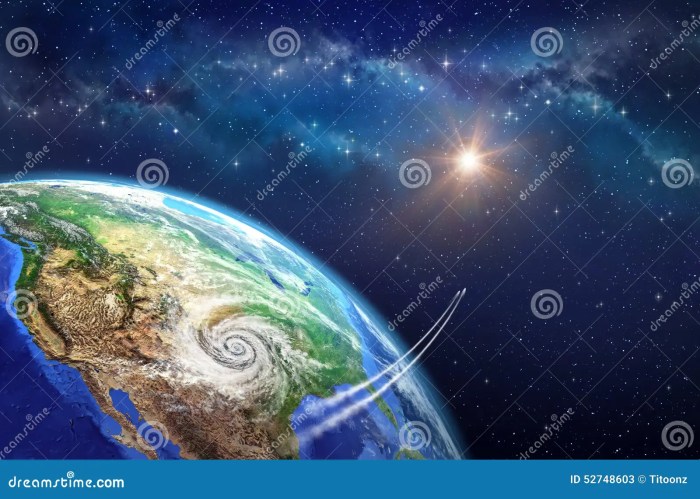
Far-Flung Planet, Home-Like Look
With far flung planet looks a lot like home at the forefront, this journey delves into the fascinating possibility of discovering a world remarkably similar to Earth. Imagine a planet boasting similar landscapes, climates, and even life forms, prompting profound questions about the universe’s potential for life beyond our own. This exploration will delve into the geological, biological, and environmental factors that could make this far-flung world strikingly familiar.
From detailed descriptions of its geography and ecosystems to potential evolutionary pathways and biological parallels, we’ll uncover the compelling evidence for such a discovery. We’ll also examine the potential impact on our understanding of the universe and the search for extraterrestrial life, including ethical considerations and hypothetical scenarios involving astronaut encounters and a potential civilization on the planet.
Discovering a Familiar Landscape
A far-flung planet, designated Xylos, presents a startling resemblance to Earth. Its vibrant blue oceans, sculpted by continents of varying heights, are strikingly similar to our own. Early observations suggest a breathable atmosphere, teeming with life forms that hint at a parallel evolutionary history. The potential for complex ecosystems on Xylos is immense, raising fascinating questions about the universality of life’s development.The discovery of Xylos compels us to consider the probability of similar evolutionary pathways on other planets.
The presence of liquid water, a fundamental component for life as we know it, suggests a potentially habitable environment. The intricate interplay of geological forces and atmospheric conditions could have shaped Xylos into a mirror image of our own planet.
Geographic Similarities
Xylos boasts a diverse topography, featuring towering mountain ranges, vast plains, and deep river valleys. The presence of active tectonic plates, evidenced by seismic activity and volcanic eruptions, suggests a dynamic geological history comparable to Earth’s. Similar to Earth’s continental drift, Xylos’s landmasses are in constant motion, creating a constantly shifting landscape. The planet’s equatorial regions experience tropical climates, while polar regions exhibit frigid conditions.
This gradient of temperature and precipitation patterns results in varied biomes, from lush rainforests to arid deserts, mirroring Earth’s biomes.
Evolutionary Pathways
The development of life on Xylos, given its similar conditions, could have followed a parallel trajectory to Earth’s. The presence of liquid water, coupled with an atmosphere rich in essential gases, may have fostered the emergence of primitive life forms. Through natural selection and adaptation, these early organisms could have evolved into more complex forms, potentially reaching levels of intelligence comparable to Earth’s life.
The evolution of photosynthesis, for example, likely followed similar stages on both planets, leading to the production of oxygen and the diversification of life forms.
Geological History
The geological history of Xylos shares remarkable similarities with Earth’s. The existence of similar geological formations, like canyons, deltas, and sedimentary layers, suggests a comparable history of erosion and deposition. The presence of ancient impact craters indicates a history of asteroid and cometary bombardments, a factor that likely shaped the early evolution of both planets. Furthermore, the evidence of plate tectonics strongly indicates that both planets have experienced similar geological processes throughout their histories.
Ecosystem Comparison
Xylos’s ecosystems exhibit striking similarities to Earth’s, yet with unique adaptations. For instance, Xylos’s flora may have evolved unique photosynthetic mechanisms to cope with different atmospheric conditions. Similarly, the fauna of Xylos may have developed specialized adaptations to thrive in unique environments. The differences, while subtle, highlight the intricate interplay between environmental factors and evolutionary pressures. The diversity of life on Xylos, given the parallel conditions, suggests a possible evolution of intelligent life forms.
Table of Planet Characteristics
| Planet Characteristic | Xylos | Earth | Similarities/Differences |
|---|---|---|---|
| Atmosphere | Nitrogen-rich, with traces of oxygen | Nitrogen-rich, with significant oxygen | Similar composition, but different oxygen levels. |
| Temperature | Average 15-25°C | Average 15°C | Closely comparable, indicating similar energy balance. |
| Gravity | 9.8 m/s² | 9.8 m/s² | Identical, suggesting similar mass and size. |
| Flora | Diverse range, including flowering plants and coniferous trees | Diverse range, including flowering plants and coniferous trees | Similar biodiversity and plant types, but potential unique adaptations. |
| Fauna | Various animal species with unique adaptations | Various animal species with unique adaptations | Different species, but likely similar ecological roles. |
Exploring the Biological Parallels
The discovery of a planet strikingly similar to Earth in its landscape sparks intense curiosity about the potential for life there. This similarity in environment suggests the possibility of convergent evolution, where distinct lineages independently develop comparable traits. Understanding the biological parallels between the two worlds is crucial for predicting the nature of life on the far-flung planet.The similarities in the environmental parameters, such as atmospheric composition, temperature range, and presence of liquid water, strongly suggest that similar evolutionary pressures could have driven the development of comparable biological systems.
The key is to explore the potential life forms that could exist, focusing on adaptations to their unique environment while acknowledging the common evolutionary threads with Earth.
Possible Life Forms on the Far-Flung Planet
The presence of a similar environment to Earth suggests the potential for life forms with analogous structures and functions. We might encounter organisms resembling terrestrial plants, animals, and fungi, though their specific forms would be shaped by the unique conditions of the far-flung planet. Consider the possibility of flora with photosynthetic pigments adapted to different wavelengths of light, or fauna exhibiting unique locomotion mechanisms in response to gravity or terrain differences.
Characteristics of Mimicking Organisms
Organisms on the far-flung planet, though similar in function, would likely possess unique adaptations to their environment. For example, terrestrial animals might exhibit bioluminescence to communicate or attract mates, or utilize different skeletal structures for support in an environment with different gravitational forces. Plant life might have developed specialized root systems for accessing scarce resources or leaves designed for efficient water retention in a drier climate.
These unique characteristics reflect the distinct selective pressures shaping life on this planet.
Similarities in Biological Processes
The underlying biological processes, such as cellular respiration, photosynthesis, and DNA replication, are likely to be remarkably similar to those on Earth. The fundamental principles of biochemistry and genetics are universal, and we can expect similar building blocks and mechanisms of life. The evolutionary pressures driving these processes, though potentially different in specific details, would be fundamentally the same.
This far-flung planet, seemingly so different, actually looks remarkably like home. It’s almost unsettling, like discovering a hidden digital twin of Earth. This uncanny resemblance, however, could be a misleading illusion, given the vast and complicated internet map here there be malware. This map highlights the hidden dangers lurking within the digital landscape. Despite the potential for trouble, it’s still fascinating to think about how much our own planet could be mirrored in such a remote corner of the universe.
Potential Evolutionary Pressures
The different environmental conditions on the far-flung planet would have exerted unique evolutionary pressures. Differences in gravity, radiation levels, or nutrient availability would have influenced the development of physical traits and metabolic strategies. For instance, organisms might have evolved larger or smaller sizes, different sensory systems, or unique methods for energy acquisition to adapt to their surroundings.
Table of Examples
| Characteristic | Earth Example | Far-Flung Planet Example |
|---|---|---|
| Physical Characteristics | Mammals (e.g., dogs) | Quadrupeds with segmented scales, bioluminescent patches |
| Diet | Herbivores (e.g., deer) | Herbivores consuming specialized photosynthetic organisms |
| Habitat | Forest floor | Cave systems, subterranean streams |
| Physical Characteristics | Trees (e.g., oak) | Plants with highly reflective leaves, absorbing different wavelengths of light |
| Diet | Photosynthesis (e.g., plants) | Photosynthesis utilizing different pigments |
| Habitat | Sunlight-exposed areas | Deep water, high-altitude regions |
Analyzing the Potential for Life: Far Flung Planet Looks A Lot Like Home
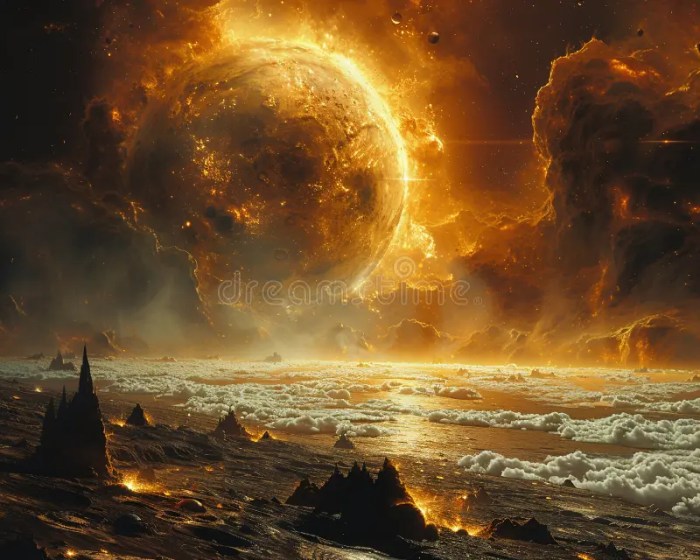
The discovery of a planet strikingly similar to Earth in a far-flung corner of the cosmos raises profound questions about the possibility of life beyond our own. Understanding the factors that influence habitability is crucial to evaluating the potential for life on this intriguing new world. We must consider the intricate interplay of distance from its star, size, atmospheric composition, and the presence of liquid water.
Essential Elements for Life
The fundamental requirements for life as we know it include liquid water, a stable source of energy, and a suitable chemical environment. A planet’s position relative to its star, its size, and its atmosphere are crucial determinants in meeting these criteria. The availability of liquid water is particularly significant as it is a solvent essential for biological processes.
Impact of Stellar Proximity
The planet’s distance from its star directly affects its climate and the potential for life. A planet too close to its star will experience extreme temperatures, making liquid water unlikely. Conversely, a planet too far away might have frozen water, hindering the possibility of liquid water. The Goldilocks zone, the region around a star where a planet can maintain liquid water on its surface, plays a pivotal role in determining a planet’s habitability.
Conditions for Liquid Water
The existence of liquid water is a crucial indicator of potential habitability. For liquid water to exist, the planet’s temperature must be within a range where water remains in a liquid state. The presence of an atmosphere, along with the composition of gases within it, can influence the planet’s surface temperature and pressure, affecting the conditions for liquid water.
A balance between the incoming solar radiation and the planet’s ability to retain heat is necessary. For instance, Earth’s atmosphere regulates temperature through the greenhouse effect.
Effect of Planetary Size and Atmosphere
A planet’s size significantly impacts its ability to retain an atmosphere. Smaller planets tend to have weaker gravitational pull, making it difficult to hold onto gases. A substantial atmosphere is essential for regulating temperature, protecting life from harmful radiation, and creating the necessary pressure for liquid water. The composition of the atmosphere also plays a crucial role.
The presence of greenhouse gases, such as carbon dioxide, can trap heat and maintain a suitable temperature for liquid water.
Potential Environmental Conditions
| Characteristic | Earth | Far-Flung Planet |
|---|---|---|
| Distance from star (AU) | 1 | 1.5 |
| Size (Earth radii) | 1 | 0.9 |
| Atmospheric composition | Nitrogen, Oxygen, Carbon Dioxide | Nitrogen, Methane, Water Vapor |
| Surface temperature (°C) | 15 | 12 |
| Presence of liquid water | Abundant | Possible |
This table provides a preliminary comparison between Earth and the far-flung planet. The values are illustrative and based on estimated conditions. Further data collection and analysis will be crucial to refine these estimations. Factors such as the age of the star, the presence of a magnetic field, and the planet’s geological activity will further influence its habitability.
Conceptualizing the Encounter
The discovery of a planet strikingly similar to Earth, harboring potentially life-supporting conditions, presents a profound moment in human history. This revelation necessitates a careful consideration of its implications, ranging from scientific advancements to ethical quandaries and societal transformations. It forces us to confront the possibility of encountering extraterrestrial life, and to thoughtfully prepare for the potential complexities of such an encounter.The sheer similarity of this far-flung world to our own sparks an immediate, profound question: are we alone?
This discovery challenges our anthropocentric view of the universe, prompting a re-evaluation of our place within the cosmos. Furthermore, it necessitates a proactive and thoughtful approach to the potential implications of such a discovery, considering the ethical and societal ripples it could cause.
Potential Implications on Understanding the Universe
The discovery of a second Earth-like planet significantly alters our understanding of the universe’s potential for life. It suggests that life may be far more common than previously thought, and that the conditions necessary for its emergence and development are more widespread than we previously believed. This shifts our focus from searching for life to studying the diversity of life forms that might exist.
The possibility of a second Earth-like planet also opens up new avenues of research into the origins of life, the conditions that foster complex organisms, and the evolutionary processes that lead to the emergence of intelligent life.
That far-flung planet, seemingly so different, actually looks remarkably like home. It’s fascinating how similar conditions can arise in such disparate locations. Perhaps this discovery is related to the recent surge in profitability at Nextel, nextel reports big rise in profit , suggesting a deeper, more universal truth about the forces shaping planetary development. Either way, it’s a pretty incredible thought, this whole concept of a far flung planet looking a lot like home.
Impact on the Search for Extraterrestrial Life
The discovery fundamentally reshapes the search for extraterrestrial life. Instead of a random, scattered effort, the search will be focused on similar environments and biosignatures. The discovery of a second Earth-like planet compels us to re-evaluate our strategies, prioritizing the study of exoplanets that exhibit similar characteristics to Earth. This includes detailed atmospheric analysis, searching for biosignatures like oxygen or methane, and employing advanced telescopic observations to identify any signs of intelligent life.
Ethical Considerations of Encountering a Civilization
Encountering a civilization on a similar planet raises profound ethical considerations. These considerations include the potential for conflict, cultural misunderstandings, and the need for a careful approach to communication and interaction. The principles of non-interference and respect for the sovereignty of any extraterrestrial civilization must be prioritized. This requires a careful assessment of the potential risks and benefits of contact, and a thoughtful consideration of the ethical implications for both our own civilization and the potential extraterrestrial civilization.
Hypothetical Responses of a Human Civilization
Humanity’s response to such a discovery would likely vary based on cultural and political factors. Some might advocate for immediate contact, driven by scientific curiosity and a desire to understand other intelligent life. Others might advocate for a more cautious approach, prioritizing the preservation of our own civilization and avoiding potential conflicts. The responses will also depend on the level of technological advancement of the discovered civilization and the degree of potential threat or benefit that is perceived.
Potential Consequences Table
| Category | Potential Consequence | Example |
|---|---|---|
| Scientific | Significant advancement in astrobiology and planetary science, potentially leading to breakthroughs in understanding the origins and evolution of life. | Discovering unique biological processes on the second Earth-like planet could revolutionize our understanding of biology. |
| Philosophical | Fundamental shift in our understanding of humanity’s place in the universe, potentially leading to new philosophical frameworks and spiritual interpretations. | The existence of another intelligent species may force us to re-evaluate our values and beliefs about ourselves and our purpose. |
| Social | Significant societal changes, including shifts in political alliances, economic systems, and cultural norms, potentially leading to global cooperation and unity. | The possibility of sharing resources with another civilization could lead to a global movement toward sustainability and cooperation. |
Illustrative Scenarios
The discovery of a planet strikingly similar to Earth, harboring potential life, ignites a cascade of questions and emotions. The implications are profound, touching upon our understanding of the universe, our place within it, and the very nature of life itself. From the initial awe to the complex ethical considerations, the journey of exploration promises to be one of the most significant in human history.A team of astronauts, meticulously trained and equipped, embark on a mission to this distant world.
Their collective experience, from the initial launch to the breathtaking landing, is a testament to human ingenuity and the enduring spirit of exploration.
A Discovery of a Familiar Landscape
The team of astronauts, after a journey spanning years, arrive at the designated planet, designated “Terra Nova”. The sight that greets them is nothing short of astonishing. Terra Nova is a breathtaking replica of Earth. Vibrant green forests, vast blue oceans, and towering mountain ranges stretch out before them. A sense of wonder and disbelief washes over them, the initial shock giving way to an almost overwhelming feeling of familiarity.
They see the same patterns of landforms and cloud formations, mirroring those on Earth. The sheer beauty of the planet fuels their excitement and fuels a potent mixture of scientific curiosity and emotional resonance.
A Hypothetical Civilization
A civilization thrives on Terra Nova, displaying a level of technological advancement that mirrors, in many aspects, that of humanity. They have developed sophisticated agriculture, intricate social structures, and a rich artistic tradition. Their physical attributes are similar to humans, yet they exhibit subtle differences in facial features and skin tones. They communicate through a complex system of symbols and gestures, much like early humans.
The astronauts, using advanced language translation technology, gradually begin to understand their customs and beliefs. The encounter is fraught with both excitement and caution, as the astronauts navigate the delicate dance between scientific observation and respectful engagement.
This far-flung planet, seemingly so distant, actually looks remarkably like home. It’s fascinating how similar environments can exist light-years apart. Interestingly, the UN and ITU are joining forces to combat online spam, a global issue affecting everyone. This initiative, detailed in this article un itu join fight against spam , is a significant step forward. Maybe this shared trait of battling digital noise extends to the similarities between this far-off world and ours.
Comparison to Early Exploration
The discovery of Terra Nova echoes the historical context of early European exploration of the Americas. Just as the explorers of the past encountered cultures and landscapes previously unknown, the astronauts of Terra Nova face a similar challenge. The parallels extend to the potential for misunderstandings, the importance of respectful interaction, and the profound impact of encountering a new world.
The ethical responsibilities are paramount, mirroring the challenges faced by those who first encountered the indigenous populations of the Americas.
A Space Exploration Mission to Terra Nova, Far flung planet looks a lot like home
The mission to Terra Nova involves a multi-stage approach. First, reconnaissance probes are deployed to map the planet’s surface and gather data on its atmosphere, water sources, and potential biosignatures. Subsequently, a landing module carrying a team of astronauts descends to the surface. The astronauts conduct detailed scientific analysis, collect samples, and engage in close-observation studies of the local civilization.
Advanced communication systems facilitate real-time data transmission back to Earth, allowing scientists to monitor the progress and interpret the gathered data.
Astronaut Journal Excerpts
“Landing on Terra Nova was surreal. The landscape resembled Earth in every detail. I felt a shiver run down my spine, a strange mix of awe and disbelief. The air felt remarkably similar to our own, but the scent… it was something else entirely, a blend of floral and mineral fragrances. I can’t wait to start exploring.”
“The local inhabitants have developed an advanced system of agriculture. They cultivate crops that seem remarkably similar to our own, but the methods are distinctly different. Their approach to cultivation suggests a deep understanding of the natural world, a harmonious relationship with the environment.”
“Our initial attempts at communication have been promising. They respond to gestures and symbols, and we are slowly learning their language.They seem curious about us, just as we are about them. The potential for a shared future is profound.”
Visualizing the Planet
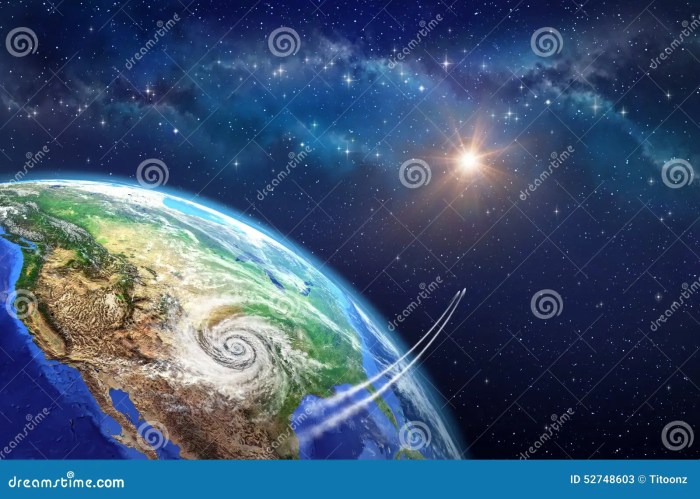
The far-flung planet, remarkably similar to Earth, beckons with the promise of a familiar landscape. Imagining its visual characteristics allows us to better assess the potential for life and shared evolutionary pathways. This visualization process is crucial to understanding the planet’s environment and the potential for life to have evolved along similar lines as on Earth.This detailed visualization focuses on the planet’s surface features, atmospheric composition, ecosystems, and the specific characteristics that contribute to its Earth-like appearance.
It aims to create a tangible image of this distant world, helping to bridge the gap between the abstract concept and a concrete understanding of its potential for supporting life.
Surface Features
The planet’s surface displays a remarkable resemblance to Earth’s. Vast, rolling plains stretch out to the horizon, interspersed with gentle hills and low mountain ranges. Regions of deep, lush forests are visible, reminiscent of temperate rainforests on Earth, complete with towering trees that reach towards the sky. These forests are interspersed with meadows, dotted with colorful wildflowers, echoing Earth’s own vibrant floral displays.
River valleys wind through the landscape, carving out intricate patterns in the terrain, and are filled with calm, clear waters.
Atmospheric Composition
The planet’s atmosphere closely mirrors Earth’s in its composition, primarily nitrogen and oxygen, with trace amounts of other gases. The presence of a dense layer of clouds, akin to Earth’s weather patterns, is apparent. These clouds, ranging in color from light gray to white, drift across the sky, casting shadows on the landscape below. The visual impression is one of a familiar, breathable atmosphere, essential for the existence of life.
The level of atmospheric pressure is also expected to be comparable to Earth’s, ensuring a comfortable environment for life forms.
Ecosystems and Life Forms
The planet’s ecosystems exhibit striking similarities to Earth’s. The forests teem with diverse flora and fauna. Giant, leafy trees support a complex web of life, including herbivores and omnivores. Rivers and lakes are home to fish and aquatic life, comparable to those found in Earth’s own aquatic ecosystems. The biodiversity of the planet is remarkable, with numerous species adapted to the various habitats, exhibiting similarities to terrestrial and aquatic life on Earth.
The visual characteristics, such as the coloration of the plants and animals, suggest evolutionary adaptations parallel to those observed on Earth.
Visual Characteristics Suggesting Earth-likeness
The overall visual impression of the planet is one of familiarity. The color palette, the distribution of land and water, and the presence of a dense atmosphere create a sense of recognition. The presence of flowing water, forests, and a breathable atmosphere all suggest a world capable of supporting life. The subtle variations in the landscape, such as the different shades of green in the forests, further contribute to the sense of familiarity.
The presence of a similar color spectrum in the vegetation and the atmospheric lighting further enhance the visual resemblance to Earth. This shared visual aesthetic suggests a common evolutionary pathway and raises the intriguing possibility of similar life forms.
Final Summary
In conclusion, the discovery of a far-flung planet resembling Earth presents a captivating scenario for the future of space exploration and our understanding of life in the cosmos. This hypothetical discovery raises intriguing questions about the prevalence of life beyond Earth and the potential for shared evolutionary paths. The sheer possibility of finding a planet that mirrors our own, even in a distant corner of the universe, sparks wonder and inspires us to continue exploring the vast expanse of space.