A sophisticated cyber-espionage campaign, attributed to the China-based Advanced Persistent Threat (APT) group TA423 (also known as Red Ladon), has been observed leveraging watering hole attacks to distribute the potent ScanBox JavaScript-based reconnaissance tool. This recent wave of attacks, active from April to mid-June 2022, primarily targeted domestic Australian organizations and critical offshore energy firms operating in the highly contested South China Sea region, according to a detailed report published by Proofpoint’s Threat Research Team and PwC’s Threat Intelligence team. The findings underscore the persistent and evolving threat posed by state-sponsored actors engaged in intelligence gathering vital to national strategic interests.
The primary method of compromise involved highly tailored phishing emails that lured victims to seemingly legitimate Australian news websites. These deceptive lures served as the "watering holes," where the ScanBox framework was discreetly deployed to gather extensive reconnaissance data from unsuspecting visitors. The meticulous targeting and advanced toolkit employed by TA423 highlight a concerted effort to acquire sensitive information related to geopolitical dynamics and economic activities within a strategically crucial geographical area.
The Resurgence of ScanBox: A Covert Reconnaissance Tool
The cornerstone of TA423’s recent campaign is the ScanBox framework, a customizable and multifunctional JavaScript-based tool renowned for its ability to conduct covert reconnaissance without the need for traditional malware deployment to a target’s system. ScanBox has been a staple in the arsenal of various threat actors for nearly a decade, distinguishing itself by its capacity to collect valuable intelligence directly through a victim’s web browser.
What makes ScanBox particularly insidious is its "malware-less" nature. Unlike conventional attacks that rely on executable files being installed on a user’s machine, ScanBox operates entirely within the browser environment. This significantly reduces the chances of detection by traditional endpoint security solutions that primarily scan for known malicious files on disk. As PwC researchers previously noted in reference to similar campaigns, "ScanBox is particularly dangerous as it doesn’t require malware to be successfully deployed to disk in order to steal information – the keylogging functionality simply requires the JavaScript code to be executed by a web browser." This means that merely visiting a compromised website can expose a user to information theft, including keystrokes, without any visible signs of infection.
In the context of a watering hole attack, adversaries strategically compromise legitimate or specially crafted look-alike websites frequented by their targets. Once a target visits such a site, the malicious JavaScript code for ScanBox is loaded and executed by their web browser. This script then acts as a sophisticated keylogger and information-gathering agent, capturing typed activity, browser details, and system configurations directly from the user’s session on the infected site. This approach is highly effective for initial reconnaissance, providing threat actors with crucial insights into potential victims before escalating to more intrusive stages of an attack.
Campaign Chronology and Attack Vector Analysis
The cyber-espionage campaigns attributed to TA423 commenced in April 2022 and sustained activity through mid-June 2022. The initial phase of these attacks typically involved carefully crafted phishing emails designed to entice targets. These emails often bore innocuous-sounding subject lines such as "Sick Leave," "User Research," or "Request Cooperation," lending them an air of legitimacy. A notable tactic involved emails purporting to originate from an employee of a fictional entity named "Australian Morning News," imploring recipients to visit their "humble news website," australianmorningnews[.]com.
Upon clicking these deceptive links, targets were redirected to web pages that meticulously mimicked content from actual reputable news outlets, such as the BBC and Sky News, to further enhance credibility and reduce suspicion. Critically, during this redirection and content loading process, the ScanBox framework was silently delivered and executed within the victim’s web browser. This seamless integration of malicious code within seemingly benign web content is a hallmark of sophisticated watering hole attacks.
The data harvested by the ScanBox keylogger from these watering holes forms a critical component of a multi-stage attack methodology. This initial reconnaissance phase, often referred to as browser fingerprinting, provides attackers with a wealth of information about their targets, enabling them to refine future attack strategies. The primary script of ScanBox meticulously collects details about the target computer, including the operating system, language settings, and the version of Adobe Flash installed. Furthermore, ScanBox performs comprehensive checks for browser extensions, plugins, and components like WebRTC.
Technical Deep Dive: WebRTC, STUN, and ICE for Advanced Reconnaissance
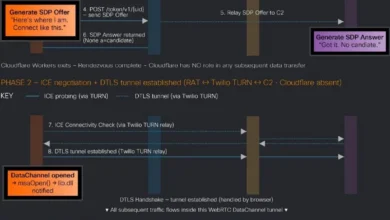
A particularly advanced aspect of ScanBox’s capabilities lies in its sophisticated use of WebRTC (Web Real-Time Communication), STUN (Session Traversal Utilities for NAT), and ICE (Interactive Connectivity Establishment) protocols. These technologies, typically used for real-time communication in web browsers and mobile applications, are repurposed by ScanBox for enhanced reconnaissance and network traversal.
WebRTC is a free and open-source technology supported across all major browsers, allowing applications to perform real-time communication over application programming interfaces (APIs). In the hands of ScanBox, this module allows the framework to connect to a set of pre-configured targets, acting as a powerful information conduit. Researchers explained that "The module implements WebRTC… This allows ScanBox to connect to a set of pre-configured targets."
To overcome the challenges posed by Network Address Translators (NATs) and firewalls, ScanBox leverages STUN. STUN is a standardized set of methods and a network protocol that enables interactive communications to traverse NAT gateways. This is crucial because many corporate and home networks use NATs, which hide internal IP addresses and make direct communication difficult from outside. By using a third-party STUN server located on the Internet, ScanBox can discover the presence of a NAT and, more importantly, ascertain the mapped IP address and port number that the NAT has allocated for the application’s User Datagram Protocol (UDP) flows to remote hosts. This external IP address can be a critical piece of information for attackers, allowing them to uniquely identify and potentially target a victim’s network.
This NAT traversal capability is integrated into ScanBox via Interactive Connectivity Establishment (ICE). ICE is a peer-to-peer communication method designed to enable clients to communicate as directly as possible, circumventing NATs, firewalls, or other network impediments. The researchers detailed, "ScanBox implements NAT traversal using STUN servers as part of Interactive Connectivity Establishment (ICE), a peer-to-peer communication method used for clients to communicate as directly as possible, avoiding having to communicate through NATs, firewalls, or other solutions." This means that the ScanBox module can establish ICE communications to STUN servers, effectively enabling it to communicate with victim machines even when they are situated behind NATs, thereby significantly enhancing its reconnaissance reach and persistence. The ability to bypass common network security barriers without deploying traditional malware demonstrates the advanced technical proficiency of TA423.
TA423 / Red Ladon: A State-Sponsored Cyber Espionage Unit
The attribution of these sophisticated attacks to TA423, also known as Red Ladon, is significant. This group is widely believed to be a China-based APT, with strong indications of operating out of Hainan Island, China. Multiple reports from cybersecurity firms like Mandiant and official government alerts, such as those issued by CISA, have consistently linked TA423 (also known by other aliases like APT40, Leviathan, and Periscope) to state-sponsored cyber espionage activities.
A 2021 indictment by the US Department of Justice provided a critical piece of the puzzle, assessing that TA423 / Red Ladon provides long-running support to the Hainan Province Ministry of State Security (MSS). The MSS is China’s civilian intelligence, security, and cyber police agency, responsible for a broad spectrum of activities including counter-intelligence, foreign intelligence, political security, and is heavily implicated in industrial and cyber espionage efforts on behalf of the People’s Republic of China. This direct linkage to a powerful state intelligence apparatus underscores the strategic imperative behind TA423’s operations.
Sherrod DeGrippo, vice president of threat research and detection at Proofpoint, emphasized the geopolitical motivations driving TA423’s activities. "The threat actors support the Chinese government in matters related to the South China Sea, including during the recent tensions in Taiwan," DeGrippo stated. "This group specifically wants to know who is active in the region and, while we can’t say for certain, their focus on naval issues is likely to remain a constant priority in places like Malaysia, Singapore, Taiwan, and Australia." This assessment aligns with China’s long-term strategic objectives in asserting its claims over the South China Sea, a region rich in natural resources and critical maritime trade routes.
The group’s operational scope, however, extends far beyond Australasia. The July 2021 Department of Justice indictment detailed a global reach, accusing the group of having "stolen trade secrets and confidential business information" from victims in a wide array of countries, including the United States, Austria, Cambodia, Canada, Germany, Indonesia, Malaysia, Norway, Saudi Arabia, South Africa, Switzerland, and the United Kingdom. Targeted industries were diverse, encompassing aviation, defense, education, government, health care, biopharmaceutical, and maritime sectors. This broad targeting spectrum indicates a comprehensive intelligence-gathering mandate, aiming to bolster China’s economic, military, and technological capabilities on a global scale.
Broader Implications and Ongoing Threat
Despite the public indictment by the US Department of Justice, analysts have observed no distinct disruption in TA423’s operational tempo. This resilience suggests that public exposure and legal actions, while important for attribution, do not always deter state-sponsored APT groups from continuing their missions. Cybersecurity experts collectively expect TA423 / Red Ladon to persist in its intelligence-gathering and espionage activities, particularly in regions of strategic interest to the Chinese government.
The continuous targeting of offshore energy firms in the South China Sea highlights the critical importance of energy security and resource control in regional power dynamics. Information regarding operational capacities, logistical chains, and strategic planning of these firms could provide significant advantages in ongoing geopolitical disputes. Similarly, intelligence gathered from Australian organizations could offer insights into policy-making, defense capabilities, and diplomatic stances relevant to China’s regional ambitions.
The use of "malware-less" reconnaissance tools like ScanBox represents an evolving challenge for cybersecurity defense. Traditional perimeter defenses and signature-based detection mechanisms may struggle to identify such covert operations, placing a greater emphasis on advanced threat intelligence, behavioral analysis, and robust user awareness training. Organizations operating in sensitive sectors or regions frequently targeted by state-sponsored actors must adopt a proactive and adaptive cybersecurity posture, continuously monitoring for unusual network activity and educating employees about sophisticated social engineering tactics.
The campaign by TA423 serves as a stark reminder of the persistent and increasingly sophisticated nature of state-sponsored cyber espionage. As geopolitical tensions continue to simmer in vital regions like the South China Sea, the digital battleground remains a crucial domain for intelligence gathering, with profound implications for national security, economic competitiveness, and international relations.
Related posts: