The Next Frontier of Enterprise AI Infrastructure: Moving Beyond Isolated Tasks to Agentic Systems


The landscape of artificial intelligence is undergoing a profound structural shift as the industry moves beyond simple chatbots and single-step automation toward "agentic" systems. These autonomous agents are capable of executing long-running, multi-step strategic work—from complex code validation and inventory management to orchestrating cross-system business processes. Unlike previous iterations of AI that served as decision-support tools, these new agents are reshaping the execution of business workflows, requiring a fundamental reimagining of cloud infrastructure to sustain their unpredictable, resource-intensive lifecycles.
This evolution marks a departure from traditional cloud-native application patterns, which have historically relied on predictable request-and-response architectures. To support the shift toward agents, cloud providers and enterprise IT departments are now forced to co-design silicon, compute, storage, and networking as a singular, unified system.
A Chronology of the Agentic Shift
The trajectory of AI adoption in the enterprise can be segmented into three distinct phases. In the early 2010s, the focus was on data consolidation and the migration of legacy workloads to the cloud. By the early 2020s, the rise of Large Language Models (LLMs) introduced the "generative" era, characterized by experimental API integrations and standalone chatbot deployments.
As of late 2024, the industry has entered the "Agentic Era." This shift is defined by the transition from static, human-prompted AI to systems that maintain state over extended periods. These agents act as persistent workers that can navigate complex logic, trigger external tools, and handle error recovery without constant human intervention. The critical challenge for organizations today is that these agents operate differently than traditional software; they require high-burst compute for reasoning, massive data throughput for retrieval, and persistent storage to resume tasks after pauses or multi-day execution cycles.
Supporting Data and Technical Realities
The transition to agentic workflows is necessitated by the complexity of modern business environments. According to recent industry benchmarks, enterprise organizations that integrate AI agents into their supply chain and code-generation pipelines have reported an average efficiency gain of 25 to 40 percent in throughput for routine operational tasks.

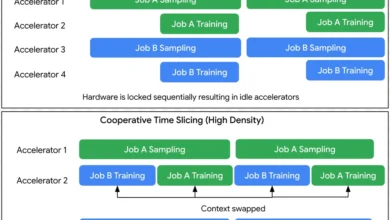
However, the infrastructure required to sustain this is significant. Traditional virtual machines or standard container clusters are often insufficient for the "ebb and flow" of agentic work. An agent might idle for hours while awaiting a data pull, only to require massive GPU acceleration for a reasoning task. This oscillation creates "fragmentation" in cloud resource utilization.
Technical analysts note that the bottleneck for AI at scale is no longer just the model size or the number of GPUs available. Instead, it is the "data tax"—the latency between the storage layer and the compute layer. If an agent’s reasoning is delayed by slow data retrieval, the entire chain of execution collapses. Consequently, infrastructure providers are now focusing on low-latency, high-bandwidth interconnects that allow models to access massive enterprise data lakes in real-time, effectively blurring the lines between memory, storage, and processing.
Case Study: Levi Strauss & Co. and the Super Agent
One of the most prominent examples of this infrastructure transformation is the ongoing collaboration between Levi Strauss & Co. and Microsoft. The apparel giant’s journey began with a foundational "digital backbone" project, which included the consolidation of disparate ERP (Enterprise Resource Planning) systems and the unification of data within a governed, real-time environment.
By moving these critical operations to the Azure cloud, the company established the necessary prerequisites for what it now terms a "super agent"—a management layer designed to orchestrate more than 1,000 domain-specific agents. This architecture allows the company to balance local, specific tasks (such as regional inventory management) with high-level business strategy. The lesson for the broader enterprise sector is clear: before deploying advanced agents, an organization must ensure its data is clean, unified, and accessible. Without this foundational work, agents remain siloed, disconnected, and ultimately ineffective.
Infrastructure as a System: The New Operational Paradigm
The operational implication of this shift is that IT teams can no longer manage components in isolation. Tuning a network firewall or optimizing a database independently provides diminishing returns when the primary workload—the agent—requires a holistic environment.
This necessitates a "system-wide" operational view. Modern enterprise dashboards must now provide visibility into "AI economics," which includes the cost of token generation, the cost of data egress during model training or retrieval, and the operational cost of the idle time associated with persistent agents. By integrating these metrics, companies can move away from manual "tuning" and toward automated, platform-driven optimization.

Fact-Based Analysis of Future Implications
The shift to agentic AI introduces three primary risks that leaders must navigate:
- Complexity Inflation: As agents become more capable, the systems they interact with grow more complex. Without an integrated platform, companies risk creating a "spaghetti" architecture where agent communication protocols become the next major technical debt.
- Resource Volatility: Because agents are dynamic, they are inherently more expensive to run than static APIs. CFOs and CTOs must align on a new financial model that treats AI compute as a variable, performance-linked expenditure rather than a fixed infrastructure cost.
- The "Frontier" Requirement: The technology is moving faster than the standard hardware refresh cycle. Organizations that rely on legacy, on-premises data centers will struggle to match the performance of companies leveraging cloud-native, AI-optimized infrastructure, as the latter can access the latest silicon and networking innovations as they are released.
A Framework for Technical Readiness
To prepare for the next decade of autonomous computing, technical leadership must address three core questions:
- The Infrastructure Baseline: Does the current stack possess the high-performance networking required for agents to move data between models and tools in milliseconds? If the platform was built for the web-application era, it is likely insufficient for the agentic era.
- Operational Flexibility: Can the platform support a diverse ecosystem of models? Organizations should avoid vendor lock-in that restricts them to a single model architecture, as the "best" model for a specific task will change frequently over the coming years.
- Self-Operating Platforms: The ultimate goal is to reach a stage where agents are used to manage the infrastructure itself—predicting traffic spikes, rebalancing workloads, and proactively resolving incidents before they impact the user.
Building for the Next Decade
The next ten years of the digital economy will not be defined by a single model breakthrough, but by the maturity of the underlying infrastructure that allows agents to function reliably. Microsoft’s investment in its Azure platform serves as a case study for this approach, emphasizing that the "Frontier" is not a destination but a continuous process of integrating advances in silicon and software into a cohesive operational whole.
As organizations move forward, the competitive advantage will go to those that view infrastructure as a strategic asset rather than a commodity. By building durable, flexible, and integrated platforms, enterprises can ensure they are prepared not only for the agents of today but for the autonomous systems of tomorrow. The era of "Frontier Transformation" requires a commitment to a unified architecture, where every layer—from the underlying silicon to the high-level agentic orchestration—is designed to work as one.
Related posts: