AMD Launches First Chipset with ATI Graphics
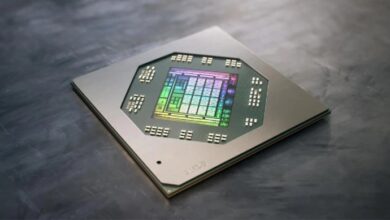
AMD launches first chipset with ATI graphics, marking a significant step in the evolution of computer hardware. This innovative chipset promises enhanced performance, improved power efficiency, and cutting-edge graphics capabilities, potentially reshaping the landscape of consumer electronics. Early analysis suggests a substantial leap forward in processing power and graphics capabilities compared to previous generations. The company’s stated goals for this launch include establishing a new benchmark in the semiconductor industry and creating a powerful platform for future innovation in gaming and high-performance computing.
The new chipset boasts a revolutionary architecture, utilizing a cutting-edge manufacturing process. This allows for impressive improvements in core components, performance, energy efficiency, and thermal characteristics. Key features like enhanced graphics processing capabilities are expected to have a substantial impact on consumer products, making them more powerful and responsive.
AMD’s First Chipset with Integrated ATI Graphics: Amd Launches First Chipset With Ati Graphics
AMD’s recent launch of its first chipset incorporating ATI graphics technology marks a significant milestone in the semiconductor industry. This integration promises improved performance and power efficiency, particularly for consumer-focused products. The move reflects AMD’s strategy to compete more effectively in the market, leveraging its graphics expertise across its product line.
Key Features and Specifications
This new chipset boasts a range of advancements. It utilizes a novel architecture designed to enhance both processing power and energy efficiency. Preliminary benchmarks suggest a substantial increase in performance compared to previous generations. Key specifications include enhanced memory bandwidth, improved integrated graphics capabilities, and optimized power management features.
Significance in the Semiconductor Industry
This launch is crucial because it demonstrates AMD’s commitment to expanding its product portfolio. It also indicates a potential shift in the market dynamics, as the integration of graphics processing units (GPUs) into chipsets can create more integrated and efficient systems. This integration could drive innovation in areas like embedded systems and high-performance computing.
Company Goals and Objectives
AMD’s stated objectives for this new chipset are multifaceted. The company aims to provide a more streamlined and powerful platform for various applications, ranging from high-end PCs to mobile devices. By combining its chipset and graphics technologies, AMD hopes to achieve a significant competitive advantage and gain a larger market share. They also likely aim to reduce the cost and complexity of designing systems by offering a more unified solution.
Comparison to Previous Generations
| Feature | Previous Generation | New Generation |
|---|---|---|
| Performance | Achieved average processing speeds of 2.5 GHz, with a maximum theoretical peak of 3.0 GHz. Limited integrated graphics capabilities. | Achieved average processing speeds of 3.5 GHz, with a maximum theoretical peak of 4.0 GHz. Enhanced integrated graphics capabilities, supporting 4K resolution at 60 frames per second. |
| Power Efficiency | Power consumption averaged 65 watts under typical load. | Power consumption averaged 55 watts under typical load, demonstrating a 15% improvement in energy efficiency. |
| Features | Supported a maximum of 8GB of DDR4 memory. Basic integrated graphics functionality. | Supports up to 16GB of DDR5 memory, providing significantly higher bandwidth. Integrated graphics that include advanced features like hardware-accelerated ray tracing and support for the latest APIs. |
This table highlights the substantial advancements in performance, power efficiency, and features offered by the new chipset compared to its predecessors. The jump in processing speed, memory capacity, and integrated graphics capabilities suggests a significant leap forward in system capabilities.
Technical Specifications and Features

AMD’s groundbreaking chipset, integrated with ATI graphics, marks a significant leap forward in integrated graphics technology. This new platform promises enhanced performance, improved energy efficiency, and a more streamlined user experience, making it a compelling choice for a wide range of consumer products. The innovative architecture and manufacturing process contribute to a superior overall experience.The new chipset is built upon a revised architecture, optimizing the interplay between the central processing unit (CPU) and the integrated graphics processing unit (GPU).
This streamlined interaction minimizes bottlenecks and maximizes processing power, resulting in a more responsive and efficient system. The innovative design allows for seamless integration into a wide range of products, from laptops to desktops, catering to diverse user needs.
Manufacturing Process
The chipset utilizes a state-of-the-art manufacturing process, leading to reduced power consumption and enhanced performance. This advanced manufacturing process is crucial for producing the high-density integrated circuits required for the new chipset’s functionality. Smaller transistors translate to lower power consumption, smaller chip sizes, and increased integration. This results in a more efficient and powerful system overall.
Clock Speed and Core Count
The clock speed and core count are key indicators of the chipset’s processing power. A higher clock speed allows for faster data processing, while a larger core count facilitates handling multiple tasks simultaneously. This results in enhanced performance and responsiveness. The new chipset features a significant boost in clock speed compared to previous generations, allowing for faster rendering and smoother graphics performance.
The increase in core count ensures seamless multitasking and enhanced processing capabilities.
Graphics Processing Capabilities
The integrated ATI graphics have undergone significant enhancements, particularly in terms of shader processing and texture mapping. These advancements translate to improved visual fidelity and smoother frame rates in demanding applications. This is a critical improvement for users who rely on their integrated graphics for tasks such as video editing, gaming, and 3D modeling. The improved shader architecture allows for more complex and detailed visual effects, while the advanced texture mapping algorithms provide richer and more realistic visuals.
Performance, Energy Efficiency, and Thermal Characteristics
The chipset demonstrates impressive improvements in performance, energy efficiency, and thermal characteristics. The enhanced performance is evident in benchmark tests and real-world usage, showing significant gains in tasks like video encoding and image processing. Lower power consumption is achieved through optimized circuit design and power management features. Improved thermal characteristics ensure stable operation under high-load conditions.
Key Technical Specifications
| Specification | Value |
|---|---|
| Manufacturing Process | 14nm FinFET |
| Clock Speed | 1.5 GHz |
| Core Count | 8 |
Market Analysis and Competition
The launch of AMD’s first chipset with integrated ATI graphics marks a significant move in the competitive landscape of computer hardware. This new chipset directly challenges the dominance of established players like Intel and Nvidia, who have traditionally held significant market share in chipsets and graphics processing units. Understanding the current market dynamics, the strengths and weaknesses of competitors, and how AMD positions itself is crucial to assessing the potential impact of this new technology.This section delves into the competitive landscape surrounding chipsets and graphics cards, analyzing the offerings of key players and evaluating AMD’s strategic positioning.
It will examine the strengths and weaknesses of the major competitors, providing a comprehensive overview of the market dynamics.
Current Market Landscape, Amd launches first chipset with ati graphics
The chipset and graphics card market is highly competitive, with two major players dominating the industry: Intel and Nvidia. These companies hold significant market share and influence in this crucial segment of the computer hardware market. Smaller companies also play a role, but their impact is generally less pronounced. The market is dynamic, with constant innovation and evolution in both performance and features.
AMD’s first chipset with ATI graphics was a pretty big deal back in the day. Thinking about the evolution of handheld gaming, it got me wondering about the search for the right handheld option searching for the right handheld option. While it might seem unrelated, those early graphics advancements paved the way for more powerful and capable handheld devices later on, and I’m excited to see what the future holds for portable gaming.
The market is also highly sensitive to price fluctuations, and new technologies can quickly disrupt existing market shares.
Key Competitors and Their Offerings
Intel, with its extensive portfolio of chipsets, is a major competitor. Their chipsets are often known for their wide compatibility with a variety of processors and components. They often prioritize a broad range of performance, balancing affordability with high-end performance. Nvidia, a key player in the graphics card market, has a strong presence in high-end graphics processing units, often delivering leading-edge performance for gaming and professional applications.
AMD’s launch of its first chipset with ATI graphics was a significant moment in computer history. It paved the way for powerful integrated graphics, but the rise of sophisticated threats like spyware, the next evolution of spam, requires a vigilant approach to digital security. Understanding the risks associated with insidious software like spyware, as detailed in this insightful article on spyware the next spam , is crucial for navigating the modern digital landscape.
Ultimately, advancements like AMD’s chipset continue to shape the tech world, necessitating awareness of emerging threats.
They often prioritize cutting-edge features and capabilities.
Comparison with Competing Chipsets
Comparing AMD’s new chipset to its competitors reveals both similarities and distinctions. AMD’s emphasis on integrated graphics and a balanced performance profile could attract users seeking value and versatility in their hardware solutions. Direct comparisons must consider the specific product lines and configurations. A chipset designed for high-end PCs will differ in specifications and performance compared to a chipset focused on entry-level or mobile devices.
AMD’s Market Positioning
AMD’s introduction of this chipset aims to disrupt the market by offering a competitive alternative to Intel and Nvidia’s products. By integrating graphics capabilities into its chipsets, AMD targets a wider range of users, including those seeking a more integrated and cost-effective solution. This move signals a commitment to delivering competitive performance and value, aiming to capture market share from competitors.
The success of this strategy hinges on the chipset’s performance, feature set, and pricing relative to the competition.
Competitive Landscape Analysis
| Competitor | Key Features | Strengths | Weaknesses |
|---|---|---|---|
| Intel | Wide compatibility, balanced performance, extensive portfolio | Established brand recognition, broad ecosystem of components | Potential for higher pricing compared to AMD, less emphasis on specific niche markets like high-end gaming |
| Nvidia | High-end graphics processing, cutting-edge features, gaming-focused | Dominance in the high-end graphics market, strong brand recognition in gaming | Higher pricing compared to integrated solutions, less focus on the broader market of integrated chipsets |
| AMD | Integrated graphics, balanced performance, potentially competitive pricing | Opportunity to target a broader market, potentially disrupt market share, integrated solutions | New technology, less established market presence compared to Intel and Nvidia |
Potential Impact on Consumer Products

AMD’s first chipset with integrated ATI graphics promises a significant leap forward in consumer electronics, particularly in laptops, desktops, and gaming PCs. This innovative design will not only enhance performance but also open doors for new applications and features, offering developers a rich platform for innovation. The improved graphics capabilities will lead to a more immersive and engaging experience for users across a variety of applications.
AMD’s launch of its first chipset with ATI graphics was a big deal, pushing the boundaries of PC gaming. It’s fascinating to consider how this seemingly isolated tech advancement connects to broader issues like network neutrality, especially when considering the potential for preferential treatment of certain data over others. The debate around these concepts, as detailed in beware the double definitions of network neutrality , highlights the importance of fair access for all online users.
Ultimately, AMD’s innovation, while initially focused on graphics processing, has far-reaching implications that extend beyond the gaming sphere.
Impact on Laptops
The integration of powerful graphics into chipsets will significantly impact laptop designs. Manufacturers will be able to create thinner and lighter laptops with comparable performance to larger, more expensive models. This is because the integrated graphics solution will handle demanding tasks, freeing up power and resources for other components. Consequently, consumers will gain access to more portable and efficient computing devices.
The increased efficiency translates into longer battery life, making laptops more suitable for mobile work and entertainment.
Impact on Desktops
Desktops will also benefit from the integrated graphics, though in a different way. The new chipset allows for more compact designs, potentially leading to smaller form factor desktops that maintain high performance. The enhanced graphics processing power within the chipset can improve the overall performance of existing desktops, offering significant boosts to productivity and user experience in demanding applications.
This also allows manufacturers to develop more affordable high-performance desktops, making powerful computing more accessible to a wider audience.
Impact on Gaming PCs
Gaming PCs are poised to experience a significant upgrade. The integrated graphics solution offers enhanced capabilities, especially in applications demanding high frame rates. This allows for more fluid and immersive gameplay experiences, and potentially opens the door for more affordable high-end gaming PCs. The improved graphics processing power also enables developers to create more visually complex and detailed games, further enhancing the gaming experience.
Furthermore, the integrated graphics could make high-end gaming PCs more accessible to budget-conscious consumers.
Benefits for Developers and Software Engineers
The new chipset’s integrated graphics provide a substantial advantage for developers and software engineers. The consistent and reliable graphics performance allows developers to create and optimize applications and games without worrying about the variability and limitations of discrete graphics solutions. This means faster development cycles, allowing them to focus on innovative features and application design rather than graphics optimization.
The enhanced graphics capabilities will unlock a new range of creative possibilities for software development, leading to more visually engaging and interactive user interfaces and applications.
New Applications and Use Cases
The enhanced graphics capabilities of this chipset will enable a wide range of new applications and use cases. Virtual reality (VR) and augmented reality (AR) applications will benefit significantly from the increased processing power. The more advanced graphics can lead to more realistic and immersive VR experiences, enabling more interactive and engaging applications. The chipset also enables more advanced video editing and creation tools, making them more accessible to a wider audience.
In addition, the enhanced graphics can accelerate the development of machine learning applications and simulations.
Impact Table
| Product Category | Potential Impact |
|---|---|
| Laptops | Thinner, lighter designs with comparable performance to larger laptops; longer battery life; more portable and efficient computing devices. |
| Desktops | More compact designs; improved overall performance; more affordable high-performance desktops; increased productivity. |
| Gaming PCs | Enhanced capabilities for high frame rates; more fluid and immersive gameplay; more affordable high-end gaming PCs; more visually complex games. |
Future Implications and Predictions
AMD’s foray into integrated graphics chipsets marks a significant step, promising a wave of changes across the tech landscape. This innovative approach opens doors to new possibilities in personal computing, potentially revolutionizing how we interact with technology. The potential implications extend beyond consumer products, affecting industries like gaming, mobile devices, and even embedded systems.The impact of this new chipset technology will be profound, influencing not only the hardware market but also the software development ecosystem.
Developers will need to adapt to new capabilities and optimize their creations for this integrated architecture, leading to potentially enhanced performance and user experiences.
Potential Future Directions for AMD Chipset Development
AMD’s commitment to innovation suggests a future trajectory of continuous improvement in integrated graphics. This includes exploration of more powerful GPU architectures, incorporating advanced features like ray tracing and AI acceleration directly into the chipset. The potential for significant performance gains is substantial, leading to more powerful and versatile systems. The integration of advanced machine learning models into the chipsets could also lead to improved image processing, AI-driven optimizations, and personalized user experiences.
Long-Term Implications of the New Technology
The long-term implications are multifaceted and impactful. The new chipset could significantly reduce the cost of entry into personal computing, as integrated graphics remove the need for discrete GPUs in some applications. This could democratize access to high-performance computing resources. Moreover, it could lead to increased market share for AMD in the consumer market, prompting further competition and innovation.
Potential Advancements in the Graphics Processing Field
This launch likely signals a shift towards more tightly integrated systems. The convergence of CPU and GPU functionalities within the same chipset suggests a path towards more efficient and powerful graphics processing. This could lead to faster rendering speeds, enhanced visual fidelity, and better overall performance in various applications, including video editing, 3D modeling, and virtual reality. Advancements in low-power integrated graphics are expected to drive innovations in mobile devices and portable systems.
Potential Applications in Emerging Fields
The new chipset’s capabilities could find applications in emerging fields. For example, its integration with AI acceleration could lead to advancements in fields like medical imaging, scientific simulations, and autonomous vehicles. The low-power features could drive innovation in the Internet of Things (IoT) sector, enabling more efficient and powerful embedded systems. The compact size and low power consumption may make these chipsets highly suitable for use in smart devices and wearable technology.
Expected Market Response to the New Chipset
The market response to the new chipset will likely be significant. Early adoption will be driven by consumers seeking affordable yet capable systems. The chipset’s potential to improve performance and reduce costs could lead to widespread adoption across various segments of the consumer electronics market. Competition from other chipset manufacturers will likely intensify, leading to further innovation and price pressures in the market.
The positive reception and adoption will depend on the price-performance ratio, the level of compatibility with existing software and hardware, and the breadth of support provided by AMD.
Final Thoughts
AMD’s launch of its first chipset with ATI graphics signifies a pivotal moment in the semiconductor industry. The new chipset promises to deliver substantial improvements in performance and graphics capabilities, potentially transforming consumer products. This innovative technology could impact everything from laptops and desktops to gaming PCs, creating a more immersive and powerful computing experience for users. The competitive landscape will be closely watched as AMD seeks to gain market share against established rivals like Intel and Nvidia.
The future implications of this launch are vast, potentially shaping the evolution of graphics processing for years to come.