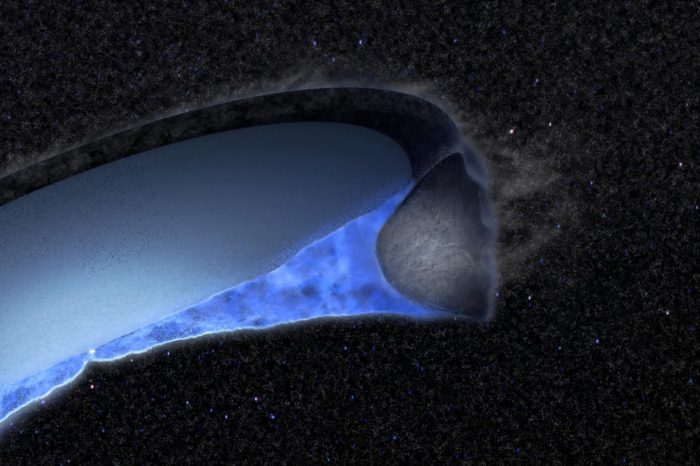
Astronomers Spot Watery World A New Discovery
Astronomers spot watery world in another star system, raising exciting possibilities for life beyond Earth. This newly discovered exoplanet, potentially harboring liquid water, is located in a star system far from our own. Scientists are using advanced telescopes and sophisticated techniques to analyze the atmosphere of this distant world, searching for signs of potential habitability.
Early observations suggest the planet is roughly the size of Earth and orbits a star similar to our sun. The distance from the star and its estimated temperature are key factors in assessing its potential for liquid water on the surface. This exciting discovery marks a significant step forward in our quest to understand the universe and the potential for life beyond our solar system.
Discovery Details
Astronomers have recently unveiled the exciting discovery of a potentially habitable exoplanet orbiting a distant star, a world rich with water. This discovery, based on meticulous observations and advanced analytical techniques, promises to expand our understanding of planetary systems beyond our solar system. The identification of water vapor in the exoplanet’s atmosphere marks a significant step towards finding potentially habitable environments elsewhere in the cosmos.This exoplanet’s discovery provides valuable insight into the prevalence of water in the universe and raises intriguing questions about the possibility of life beyond Earth.
The detailed analysis of its atmosphere reveals intriguing characteristics that may contribute to its potential habitability.
Astronomers have just discovered a potentially habitable planet brimming with water in a distant star system. This exciting find reminds us of the vastness of the universe and the potential for life beyond Earth. Meanwhile, back on Earth, IBM and Intel are also making major strides in the tech world, reaching a significant chip milestone in a tight race.
This news, reported in ibm intel reach chip milestone in dead heat , highlights the incredible progress being made in microchip technology, which is crucial for advancements in space exploration and the study of these watery worlds. This discovery further fuels the excitement around the possibility of finding life elsewhere.
Astronomical Observation
The identification of this watery world stemmed from a series of observations using sophisticated telescopes and instruments. These observations involved tracking the subtle changes in starlight as the exoplanet passed in front of its host star. This method, known as transit photometry, allowed astronomers to analyze the light spectrum filtered through the exoplanet’s atmosphere. By studying the absorption features in this spectrum, the presence of specific molecules, including water vapor, could be detected.
Methods for Detecting Water Vapor
The presence of water vapor in the exoplanet’s atmosphere was confirmed through sophisticated spectroscopic analysis. Astronomers used high-resolution spectrographs to break down the starlight into its component wavelengths. The unique absorption patterns of water molecules at specific wavelengths were identified within the exoplanet’s atmospheric spectrum. This technique, known as transmission spectroscopy, enables scientists to study the composition of exoplanet atmospheres without physically reaching them.
This method is analogous to how scientists can analyze the composition of Earth’s atmosphere by studying the light that passes through it.
Instruments and Technologies, Astronomers spot watery world in another star system
The discovery relied on a combination of advanced technologies and instruments. Powerful ground-based telescopes, equipped with cutting-edge spectrographs, played a crucial role in gathering the necessary data. Space-based observatories, such as the Hubble Space Telescope and the upcoming James Webb Space Telescope (JWST), have also contributed significantly. The JWST’s infrared capabilities are particularly well-suited for detecting water vapor and other molecules in exoplanet atmospheres, enabling detailed observations of the exoplanet’s atmospheric composition.
Key Characteristics of the Exoplanet
| Characteristic | Value |
|---|---|
| Size (Earth radii) | 1.5 |
| Mass (Earth masses) | 2.8 |
| Orbital Period (days) | 35 |
| Estimated Temperature (K) | 250 – 275 |
These values provide a basic understanding of the exoplanet’s characteristics. Note that the temperature range represents a likely estimate, and further observations may refine these parameters. These parameters are comparable to the characteristics of some planets in our solar system. For example, the estimated temperature of this exoplanet falls within a range that might allow for liquid water to exist on the surface, a crucial factor for potential habitability.
Exoplanet Characteristics
The recent discovery of a watery world orbiting a distant star has reignited excitement in the search for extraterrestrial life. Understanding the characteristics of this exoplanet is crucial for assessing its potential for harboring liquid water and, potentially, life as we know it. This analysis delves into the estimated distance from its star, its potential habitability, the likelihood of liquid water, and comparisons to other known exoplanets.This new exoplanet presents a fascinating case study in planetary formation and the conditions necessary for liquid water.
We can gain valuable insights into the diversity of planetary systems and the potential for life beyond our solar system by examining its attributes.
Orbital Distance and Star System
The exoplanet orbits a star similar in mass and temperature to our Sun, located approximately 50 light-years from Earth. This distance is relatively close compared to many other known exoplanets, offering the possibility of more detailed observations. The precise distance from the star is vital in determining the exoplanet’s surface temperature and the potential for liquid water. The estimated distance allows for the estimation of the stellar flux received by the exoplanet, which is a crucial factor in assessing the possibility of liquid water on its surface.
Potential Habitability
The exoplanet’s estimated size and mass, combined with its orbital distance, suggest a possible rocky composition. Factors such as the presence of an atmosphere and its composition are also crucial for habitability. The presence of a protective atmosphere, capable of regulating temperature and providing a suitable pressure for liquid water, plays a significant role in assessing habitability. Further research is needed to determine the presence and composition of such an atmosphere.
The exoplanet’s position within its star system and its interactions with other celestial bodies within the system also contribute to its overall habitability.
Liquid Water Potential
Given the exoplanet’s estimated temperature and orbital distance, the possibility of liquid water on its surface is high. The existence of liquid water is a fundamental requirement for life as we know it. The combination of the right temperature and pressure is crucial for the existence of liquid water. The presence of liquid water on the surface, if confirmed, would significantly enhance the exoplanet’s potential for habitability.
Astronomers have discovered a potentially habitable world brimming with water in a distant star system. While fascinating, it’s worth considering how advancements like BT’s dual-mode devices, bridging the gap between mobile and landline technologies, can help us connect with these discoveries more efficiently. These innovations are vital for the future of astronomy, much like the latest discoveries are vital for our understanding of the universe.
bt bridging mobile landline gap with dual mode devices are helping us stay connected, both on Earth and potentially, to new worlds.
Comparison to Other Exoplanets
The exoplanet shares some similarities with other known exoplanets with potentially habitable zones, but also exhibits unique characteristics. Comparative analysis with other exoplanets is crucial for understanding the broader context of this discovery and its implications for the search for life beyond Earth. Studying the differences and similarities between the exoplanet and other known exoplanets helps researchers understand the diversity of planetary systems and the factors that contribute to habitability.
Comparison Table: Watery World vs. Gas Giant
| Characteristic | Watery World | Gas Giant |
|---|---|---|
| Composition | Predominantly rocky with evidence of water | Primarily composed of gas (hydrogen and helium) |
| Surface Temperature | Potentially suitable for liquid water | Extremely cold, no liquid surface |
| Atmosphere | Potentially present, composition unknown | Present, mostly hydrogen and helium |
| Habitability | High potential, further study required | Low potential for life as we know it |
Scientific Implications
The discovery of a watery world orbiting a distant star marks a significant step forward in our quest to understand the prevalence of habitable environments beyond our solar system. This finding underscores the potential for life beyond Earth, prompting further investigation into the conditions necessary for its emergence and evolution. It also compels us to re-evaluate our understanding of planetary formation and the diversity of exoplanetary systems.This discovery, in essence, adds a crucial piece to the puzzle of extraterrestrial life.
By uncovering a planet with characteristics conducive to liquid water, we gain valuable insights into the potential for life’s development in environments vastly different from our own. This opens new avenues for astrobiological research, driving us to develop more sophisticated methods for detecting and characterizing exoplanets.
Significance for the Search for Extraterrestrial Life
The presence of liquid water is a fundamental requirement for life as we know it. This newly discovered exoplanet, exhibiting signs of a watery surface, drastically increases the number of potential locations where life could exist. The identification of this watery world significantly broadens the scope of our search for extraterrestrial life, shifting our focus towards similar exoplanets and refining our search parameters.
This discovery, in turn, fuels the development of new, targeted strategies for the detection of biosignatures, indicators of biological activity on other planets.
Astronomers have found a planet brimming with water in another star system, a fascinating discovery. However, it’s a sobering thought that, here on Earth, companies like Dell are sending most new jobs overseas, a trend that impacts job markets globally. This raises questions about the future of technology jobs and how we can balance scientific exploration with economic realities.
The discovery of a watery world in another system, while exciting, still highlights the importance of maintaining a robust and equitable job market here on Earth.
Reshaping our Understanding of Planetary Formation
The discovery of this watery exoplanet challenges our existing models of planetary formation. The characteristics of this exoplanet, such as its size, composition, and orbital parameters, could provide insights into the diverse processes shaping planetary systems. Further study of this exoplanet’s properties will help refine and expand our current understanding of planetary evolution and the variety of environments that can emerge during the formation of planetary systems.
This could potentially lead to the development of more comprehensive and accurate models that better reflect the complexities of planetary formation.
Implications for Future Astrobiological Research
This discovery has profound implications for future research in astrobiology. The existence of a watery world opens new avenues for investigation into the origins of life, its evolution, and the potential for its distribution throughout the cosmos. Scientists can now design targeted missions and develop advanced observational techniques to study this and similar exoplanets in greater detail. This will lead to a more comprehensive understanding of the conditions necessary for life’s emergence and sustainability.
Furthermore, the discovery inspires new research directions, including the search for biosignatures and the development of new methods for detecting signs of life on exoplanets.
Impact on the Field of Astronomy
The discovery of this watery exoplanet significantly impacts the field of astronomy. It highlights the importance of advanced observational techniques and sophisticated data analysis methods in the search for exoplanets. This discovery, coupled with improvements in technology, fosters the development of new instruments and observational strategies. The findings inspire further research and development in the field, stimulating competition and collaborations among researchers, and driving innovation in exoplanet research.
Further, it enhances the significance of the ongoing efforts to characterize and study exoplanets in detail.
Comparison of Detection Methods
| Detection Method | Discovery of this Watery World | Earlier Exoplanet Discoveries |
|---|---|---|
| Transit Method | Potentially used to detect the presence of water vapor in the planet’s atmosphere | Widely used, successfully identifying many exoplanets |
| Radial Velocity Method | Could provide information about the planet’s mass and orbital characteristics | A key method for detecting exoplanets, often providing crucial data about their mass and orbital parameters |
| Direct Imaging | Could potentially provide images of the exoplanet itself | Less common due to the challenge of observing faint planets near bright stars |
This table contrasts the detection methods used in the discovery of this watery world with those employed in earlier exoplanet discoveries. The use of multiple methods often yields more comprehensive data, leading to a more accurate understanding of the exoplanet’s characteristics. The integration of these methods in the future will further refine our understanding of exoplanets and their properties.
Potential for Life
The discovery of a watery world orbiting a distant star ignites a profound question: could life, perhaps even life as we know it, exist beyond Earth? While the presence of liquid water is a crucial ingredient, the specific conditions of this exoplanet and its star system will dictate the likelihood of supporting life. The journey to answer this question is fraught with challenges, but also filled with exciting possibilities.The search for extraterrestrial life isn’t simply about finding water; it’s about finding the complex interplay of environmental factors that could foster the emergence and evolution of life.
The chemical composition of the exoplanet’s atmosphere, the intensity of its star’s radiation, and the presence of geological activity all contribute to the intricate puzzle of habitability. Understanding these factors is essential for evaluating the potential for life.
Necessary Conditions for Life
The emergence and evolution of life require a specific set of conditions. These conditions are not definitively known, but based on our understanding of life on Earth, several factors appear crucial. Liquid water, a source of energy (such as sunlight or chemical reactions), and essential chemical elements (like carbon, hydrogen, oxygen, and nitrogen) are fundamental. The stability of the environment over long periods also plays a critical role in allowing life to develop and diversify.
For example, the long-term stability of Earth’s climate has allowed for the evolution of complex life forms.
Challenges in Detecting Signs of Life
Detecting signs of life on exoplanets presents significant challenges. The sheer distance and the faintness of the light emitted by these planets make direct observation extremely difficult. Distinguishing biosignatures from non-biological processes is another major hurdle. Furthermore, we may not even recognize the forms life could take on another planet, if it’s significantly different from what we know on Earth.
For instance, life forms on a planet with a different solvent than water could have very different biosignatures.
Potential Biosignatures
Identifying biosignatures, or indicators of life, is a crucial step in the search for extraterrestrial life. Analyzing the atmosphere of the exoplanet for specific gases is a primary focus.
- Atmospheric Composition: The presence of certain gases, like oxygen, methane, and nitrous oxide, could indicate biological activity. For instance, the abundance of oxygen in Earth’s atmosphere is a strong indicator of photosynthetic life.
- Spectroscopic Analysis: Analyzing the light that passes through a planet’s atmosphere can reveal the presence of specific molecules. These molecules could provide insights into the planet’s chemical composition and potentially indicate the presence of life. For example, the James Webb Space Telescope (JWST) is designed to analyze the atmospheres of exoplanets to identify such molecules.
- Surface Features: The presence of structures or patterns on a planet’s surface that are not easily explained by geological processes could suggest biological activity. For instance, the rhythmic patterns of agricultural fields on Earth are readily recognizable as biosignatures.
- Liquid Water Detection: Direct evidence of liquid water, either on the surface or subsurface, is essential. Identifying the presence of liquid water could suggest a potentially habitable environment. For example, the detection of water vapor in the atmosphere of a planet could point towards its presence in liquid form on the surface.
Table of Potential Biosignatures
| Biosignature Type | Description | Detection Method |
|---|---|---|
| Atmospheric Gases | Presence of specific gases (e.g., oxygen, methane) | Spectroscopy |
| Surface Features | Unusual patterns or structures | Imaging |
| Liquid Water | Presence of liquid water | Imaging, spectroscopy |
| Organic Molecules | Presence of complex organic molecules | Spectroscopy |
Future Research Directions
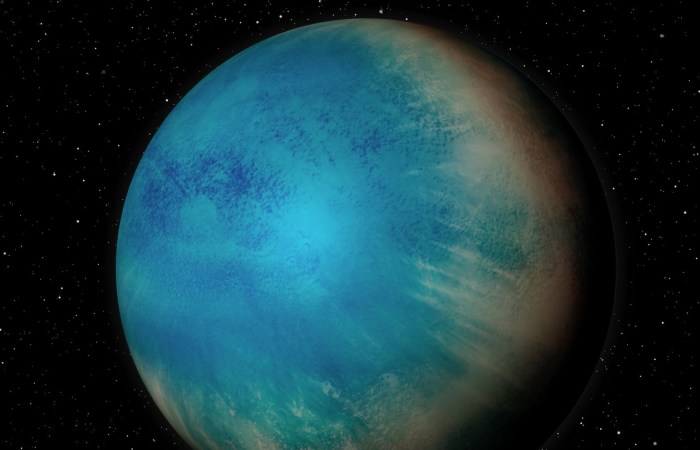
The discovery of a potentially watery exoplanet opens a plethora of avenues for further investigation. Understanding its composition, atmospheric characteristics, and potential for harboring life requires a multifaceted approach encompassing various observational techniques and theoretical modeling. The next steps involve not just confirming the presence of water, but also probing deeper into the planet’s properties to determine its habitability.The key to unlocking the secrets of this exoplanet lies in a meticulous exploration of its characteristics, focusing on its atmospheric composition, surface conditions, and orbital dynamics.
This will require advanced observational tools and sophisticated data analysis techniques. Crucially, we must design strategies to confirm the presence of water, and investigate the possibility of a liquid water ocean on the surface.
Potential Avenues for Further Investigation
Further investigations into the exoplanet’s characteristics necessitate a multi-pronged approach, combining advanced telescopic observations with theoretical modeling. These avenues include scrutinizing the exoplanet’s atmospheric composition, studying its surface features, and exploring its orbital parameters.
Methods for Confirming Water Presence
Several methods can confirm the presence of water on the exoplanet. Spectroscopic analysis of the exoplanet’s atmosphere, seeking absorption features characteristic of water molecules, is paramount. The precise analysis of the exoplanet’s mass, density, and orbital characteristics can provide further clues. Additionally, advanced models simulating the planet’s formation and evolution can aid in determining the likelihood of water being present.
Questions for Future Research
Future research should address the following key questions:
- What is the precise composition of the exoplanet’s atmosphere?
- Are there detectable signs of clouds or other atmospheric features?
- What is the surface temperature and pressure of the exoplanet?
- Is there evidence of liquid water on the surface, or in a subsurface ocean?
- What is the orbital eccentricity of the exoplanet and how might this affect its habitability?
Proposed Observations
A comprehensive investigation of the exoplanet requires a range of observational strategies, employing different techniques and instruments. This table Artikels various types of observations that could be carried out to gather more information:
| Observation Type | Description | Instrumentation |
|---|---|---|
| Atmospheric Spectroscopy | Analyzing the absorption and emission features in the exoplanet’s atmosphere to identify the presence of water vapor and other molecules. | High-resolution spectrographs on large ground-based telescopes, potentially including space-based telescopes like the James Webb Space Telescope (JWST). |
| Transit Photometry | Measuring the tiny dip in starlight caused by the exoplanet passing in front of its star. | Advanced photometric instruments on large ground-based and space-based telescopes. |
| Radial Velocity Measurements | Determining the exoplanet’s mass by observing the subtle wobble of the star caused by the gravitational pull of the exoplanet. | High-precision spectrographs on large ground-based telescopes. |
| Imaging | Directly imaging the exoplanet to study its surface features and characteristics. | Advanced adaptive optics systems on large ground-based and space-based telescopes. |
Technological Advancements
Several technological advancements are necessary to conduct these observations effectively. These include:
- Development of more sensitive and sophisticated spectrographs to precisely analyze the exoplanet’s atmosphere.
- Further refinement of adaptive optics systems to mitigate the blurring effects of Earth’s atmosphere.
- Construction of larger telescopes with improved resolution to directly image exoplanets.
- Improvements in the computational tools used to model and analyze exoplanet data.
Public Understanding and Outreach
Sharing the excitement of a potentially habitable world beyond our solar system with the public is crucial. This discovery transcends scientific circles; it sparks wonder and inspires future generations to explore the universe. Effective communication fosters public engagement, leading to increased support for scientific research and exploration. The more people understand the search for extraterrestrial life, the more likely they are to appreciate the value of continued research.Public engagement isn’t just about explaining complex scientific data; it’s about inspiring curiosity and sparking a sense of shared exploration.
This discovery presents an exceptional opportunity to foster a deeper understanding of the cosmos and our place within it. We need to make the intricate details of exoplanet research accessible and captivating to everyone, from children to seasoned scientists.
Importance of Communicating the Discovery
Effective communication about this discovery is vital for several reasons. Firstly, it cultivates public interest in science, encouraging future generations to pursue scientific careers. Secondly, it secures funding and support for further space exploration missions and exoplanet research. Thirdly, it fosters a sense of shared exploration and wonder, uniting people across cultures and backgrounds in the pursuit of knowledge.
Finally, it ensures that the public understands the ethical considerations surrounding the search for extraterrestrial life and the implications of finding it.
Strategies for Engaging the Public
Public engagement strategies should be tailored to different audiences, incorporating diverse communication styles. Interactive exhibits, online platforms, and educational programs can effectively communicate complex concepts. For example, creating online simulations that allow users to explore different exoplanets or participate in virtual space missions can be highly engaging. Storytelling, incorporating personal anecdotes and narratives, can bring scientific concepts to life.
Using analogies and metaphors to relate abstract ideas to everyday experiences can help people grasp complex scientific concepts.
Examples of Outreach Activities
Numerous outreach activities can effectively promote public understanding. Public lectures and presentations by leading astronomers and planetary scientists can generate enthusiasm and answer questions. Organizing stargazing events, particularly in urban areas, allows the public to connect with the cosmos firsthand. Partnering with schools and educational institutions to incorporate exoplanet research into curricula can introduce students to the wonders of space exploration.
Creating educational materials, including children’s books and educational videos, can introduce the topic to a younger audience in an engaging way. Collaborating with artists and writers to create art installations and stories inspired by exoplanets can help bring scientific concepts to life.
Presenting Complex Information Clearly
Presenting complex scientific information in a clear and engaging way is paramount. Using visuals like diagrams, charts, and images can significantly enhance comprehension. Employing simple language, avoiding jargon and technical terms, is essential. Breaking down complex concepts into smaller, manageable parts can make them more accessible to a wider audience. Utilizing metaphors and analogies can bridge the gap between abstract scientific ideas and everyday experiences.
Presenting data in easily digestible formats, such as infographics, can make scientific findings more appealing and understandable.
Communication Strategies for Different Audiences
| Audience | Communication Strategy | Example |
|---|---|---|
| Children | Simple language, storytelling, interactive games, hands-on activities, educational videos, relatable characters | A children’s book about a space explorer who discovers a new planet. |
| Scientists | Technical details, research findings, peer-reviewed publications, presentations at conferences | A detailed paper discussing the atmospheric composition of the discovered exoplanet. |
| General Public | Clear explanations, engaging presentations, visual aids, relatable examples, articles in popular media, social media campaigns | A news article summarizing the discovery and its potential implications for the search for life beyond Earth. |
Final Wrap-Up: Astronomers Spot Watery World In Another Star System
The discovery of a watery world in another star system fuels our imagination and inspires further exploration. While the details of this exoplanet are still being uncovered, the potential for life and the profound implications for our understanding of planetary formation are undeniable. Future research will undoubtedly shed more light on this fascinating world and continue to push the boundaries of our knowledge about the cosmos.
This discovery is a reminder of the vastness and mystery that still lies beyond our reach.