Blu-ray HD DVD Stew Thickens A Culinary Tech Dive
Blu ray hd dvd stew thickens – Blu-ray HD DVD stew thickens: exploring the fascinating intersection of high-definition video formats and the art of thickening stews. From the crisp visuals of Blu-ray to the rich textures of a perfectly thickened stew, this deep dive investigates the surprising connections between these seemingly disparate topics. We’ll compare Blu-ray and HD-DVD, dissect stew thickening techniques, and uncover how the quality of the visual medium might impact our expectations of the culinary one.
This exploration delves into the technical specifications of both Blu-ray and HD-DVD, comparing their resolutions and bitrates. We’ll then examine various thickening agents, from cornstarch to xanthan gum, and discuss their effectiveness in different stew recipes. Finally, we’ll connect the dots between the video formats and the culinary process, considering how visual expectations might influence the desired texture of a stew.
Blu-ray Disc Quality vs. HD-DVD Quality
The Blu-ray Disc and HD-DVD formats were locked in a fierce battle for supremacy in the high-definition home video market in the early 2000s. Ultimately, Blu-ray emerged victorious, but understanding the technical specifications of both formats offers insight into the evolution of home entertainment. This comparison examines the key differences in video and audio quality, delving into encoding and compression techniques, and the resulting impact on the viewer’s experience.The primary differentiator between Blu-ray and HD-DVD lies in their encoding and compression methods.
Blu-ray employed a more advanced video codec, offering improved picture quality and greater storage capacity. These factors played a significant role in its eventual market dominance.
Video Quality Comparison
Blu-ray’s superior video quality stems from its use of a more sophisticated encoding scheme. The format supports higher bitrates and resolutions, translating to sharper images with less compression artifacts. This leads to a richer color palette, improved detail in textures, and more lifelike imagery compared to HD-DVD.
Audio Quality Comparison
Blu-ray also offered enhanced audio capabilities. While both formats supported multi-channel audio, Blu-ray often featured higher bitrates for audio tracks, resulting in a more immersive and detailed soundstage. This difference, though not as immediately noticeable as video quality, contributed to the overall superior audio experience associated with Blu-ray discs.
Technical Differences in Encoding and Compression
Blu-ray utilizes a more advanced video codec, typically employing higher bitrates, resulting in less compression artifacting and loss of detail. HD-DVD, while high-definition, employed a slightly different codec with potentially less efficient compression. These differences directly influenced the level of detail and visual fidelity achievable on each format. For instance, fine details in textures or complex shading were often rendered with greater precision on Blu-ray.
Visual and Auditory Impacts
The differences in encoding and compression directly translate into visual and auditory experiences. Blu-ray’s higher bitrates resulted in sharper images, more accurate colors, and a wider range of dynamic contrasts. Auditory benefits included richer sound details and more immersive audio environments. The viewer’s experience was generally more engaging and refined on Blu-ray, with enhanced detail and realism in both visuals and audio.
Comparison Table
| Feature | Blu-ray | HD-DVD |
|---|---|---|
| Bitrate (Video) | Typically higher, often exceeding 30 Mbps | Generally lower, typically below 30 Mbps |
| Resolution | 1920×1080 pixels (Full HD) | 1920×1080 pixels (Full HD) |
| Frame Rate | 24, 30, or 60 frames per second (fps) | 24, 30, or 60 fps |
Stew Thickening Techniques
A well-thickened stew is a testament to culinary skill, transforming a simple dish into a comforting and satisfying experience. The key to achieving the perfect consistency lies in understanding and applying the right thickening techniques. This guide explores various methods, from the classic cornstarch slurry to the more modern approach of xanthan gum, providing insights into their effectiveness and appropriate uses.Stew thickening agents offer a wide range of possibilities, allowing chefs and home cooks to fine-tune the desired texture and richness of their creations.
Understanding the nuances of each method is essential to achieving optimal results. The right thickening agent, used correctly, can elevate a stew from good to exceptional.
Cornstarch
Cornstarch is a popular and readily available thickening agent. Its effectiveness stems from its ability to form a smooth, translucent gel when mixed with a liquid and heated. A crucial aspect of using cornstarch is the proper preparation of the slurry. This slurry, a mixture of cornstarch and cold liquid, must be thoroughly whisked to prevent lumps.
This ensures a smooth and even texture throughout the stew.
- Steps: Whisk 1 tablespoon of cornstarch with 2 tablespoons of cold water to create a smooth slurry. Gradually whisk the slurry into the simmering stew. Continue to stir until the desired thickness is achieved. Cook for a few more minutes to allow the starch to fully gelatinize.
- Ratio: Typically, 1 tablespoon of cornstarch to 2 tablespoons of cold water is sufficient for a small amount of stew. Adjust the ratio based on the desired thickness.
- Potential Issues and Solutions: Lumps are a common issue with cornstarch. Ensure the slurry is completely smooth before adding it to the stew. Overcooking can lead to a gummy texture. Stir constantly and remove from heat as soon as the desired thickness is reached.
- Pros: Readily available, inexpensive, and creates a smooth, translucent gel.
- Cons: Requires careful preparation to avoid lumps, and overcooking can lead to a gummy texture. Not suitable for all types of stews, especially those with high acidity.
Flour
Flour, another common thickening agent, works by absorbing moisture and creating a roux when cooked with fat. The roux is then incorporated into the stew. The consistency of the roux, whether light or dark, affects the final texture.
- Steps: In a separate pan, melt 1 tablespoon of butter or oil over medium heat. Whisk in 1 tablespoon of flour and cook for 1-2 minutes, stirring constantly, until a smooth paste (roux) forms. Gradually whisk the roux into the simmering stew, stirring constantly until thickened. Cook for a few more minutes to allow the flour to fully cook.
Ever wonder why that Blu-ray HD DVD stew sometimes thickens in unexpected ways? It’s a bit like the challenges of integrating cellular and wifi networks; the challenges of integrating cellular and wifi networks are complex, with different protocols and standards needing to work together seamlessly. Similarly, the interplay of various ingredients in the Blu-ray HD DVD stew can affect the final consistency, requiring precise adjustments for the perfect viewing experience.
- Ratio: 1 tablespoon of flour to 1 tablespoon of fat (butter or oil) is a common ratio for a roux. Adjust the ratio according to the desired thickness.
- Potential Issues and Solutions: Raw flour taste is a possible issue if the roux isn’t cooked properly. Stir constantly until the roux is a light golden color. If the stew becomes too thick, add a little broth or water to thin it out.
- Pros: Creates a rich, slightly nutty flavor, and is versatile for various stew types.
- Cons: Requires more preparation than cornstarch and requires careful monitoring to avoid burning.
Arrowroot
Arrowroot powder is a starch derived from a tropical plant. It offers a smooth, clear thickening without a starchy aftertaste, making it a good choice for delicate stews.
- Steps: Mix 1 teaspoon of arrowroot powder with 2 tablespoons of cold water to form a smooth slurry. Gradually whisk the slurry into the simmering stew. Stir constantly until the stew reaches the desired thickness. Cook for a few minutes to allow the arrowroot to fully gelatinize.
- Ratio: Typically, 1 teaspoon of arrowroot powder to 2 tablespoons of cold water. Adjust as needed.
- Potential Issues and Solutions: Similar to cornstarch, lumps can occur if the slurry isn’t properly mixed. Thoroughly whisk to avoid lumps. Overcooking can also lead to a gummy texture.
- Pros: Creates a smooth, clear gel with a neutral flavor. Excellent for delicate dishes or those with strong flavors.
- Cons: Less readily available than cornstarch or flour, but generally more expensive.
Xanthan Gum
Xanthan gum is a natural, non-starch-based thickening agent that’s particularly useful for stews with high acidity or when a more stable thickening is needed.
- Steps: Dissolve a small amount of xanthan gum in a small amount of cold water. Whisk the mixture until completely dissolved. Gradually add the dissolved xanthan gum to the simmering stew, stirring constantly. Adjust the consistency as needed.
- Ratio: A very small amount of xanthan gum (often a fraction of a teaspoon) is needed. Consult the xanthan gum package for precise instructions and ratios. Start with a very small amount and add more gradually.
- Potential Issues and Solutions: Too much xanthan gum can lead to a gummy or rubbery texture. Begin with a very small amount and gradually add more if needed. Don’t overheat the stew when using xanthan gum.
- Pros: Very effective for high-acid stews, and creates a very stable thickening.
- Cons: Can sometimes impart a slightly off flavor if not used carefully, and is more expensive than other thickening agents.
Appropriate Uses
| Thickening Agent | Appropriate Stew Types |
|---|---|
| Cornstarch | Mild-flavored stews, stews with low acidity |
| Flour | Most stew types, especially those with robust flavors |
| Arrowroot | Delicate stews, stews with high acidity |
| Xanthan Gum | High-acid stews, stews requiring a stable thickening, stews needing to be thickened with low heat |
Relationship Between Blu-ray and HD-DVD and Stew Thickening
The ongoing digital revolution, exemplified by the Blu-ray and HD-DVD formats, has had a profound impact on our expectations for visual clarity. While seemingly disparate, this technological evolution can offer intriguing parallels to the culinary art of stew thickening. Just as high-definition video showcases intricate details, meticulous stew thickening techniques bring forth nuanced textures and flavors.The differing levels of video quality offered by Blu-ray and HD-DVD might correlate to the desired textures in a stew.
High-definition video, akin to a perfectly thickened stew, reveals the subtleties and complexities within the dish. Conversely, lower-resolution video, similar to a thin, watery stew, may lack the same level of detail.Different cooking methods for stews significantly impact the thickening process. Slow-cooked stews, simmered over low heat, often develop a rich, complex flavor profile and a thicker consistency due to the prolonged interaction of ingredients.
Ever wonder why Blu-ray HD DVD stew thickens so strangely? It’s a bit like the New York City to GTA exodus, where everyone’s trying to get out of town. The constant influx of new technology and demand for improved visual quality is really affecting the way these formats are used. A lot of people are moving away from older Blu-ray HD DVD technology, and towards something else.
Ultimately, the Blu-ray HD DVD stew thickens as the market shifts. Check out this interesting article about the whole NYC to GTA get out of our town thing nyc to gta get out of our town to see how the market changes.
Faster methods, like pressure cooking, may result in a different texture and level of thickening.
Impact of Cooking Methods on Stew Thickness
The cooking method employed directly influences the final texture and thickness of a stew. Understanding these relationships allows cooks to tailor their techniques for the desired outcome.
| Cooking Method | Effect on Texture | Effect on Thickness |
|---|---|---|
| Slow Cooking (e.g., Dutch Oven) | Creates a tender, deeply flavored stew with a rich, velvety texture. | Leads to a thick, almost gravy-like consistency due to prolonged evaporation and the breakdown of starches. |
| Pressure Cooking | Produces a stew that is often quicker to prepare and has a slightly different texture than slow cooking. May result in a more concentrated flavor. | Can achieve a thicker stew, but the consistency might be slightly different due to the rapid cooking process. |
| Rapid/Stir-Fry Style Cooking | Preserves the texture of vegetables and protein more intact. | Usually produces a thinner stew as the cooking time is reduced. Might require additional thickening techniques. |
| Sautéing with a Roux | Allows for control over the final consistency. | Produces a very controlled thickness by using a roux, a mixture of flour and fat. |
Different cooking methods, just like different video formats, provide unique advantages and results. A chef must adapt the cooking method to the desired stew consistency, much like a videographer adjusts the settings for the best visual effect.
Historical Context of Blu-ray and HD-DVD: Blu Ray Hd Dvd Stew Thickens
The high-definition video disc format war between Blu-ray and HD-DVD was a pivotal moment in the history of home entertainment. This intense competition, driven by technological advancements and market forces, ultimately reshaped the consumer electronics landscape. The eventual victory of one format over the other had significant implications for the media industry, impacting production, distribution, and consumer choice.The development of both Blu-ray and HD-DVD formats was fueled by the desire to surpass the limitations of existing DVD technology, offering consumers a superior viewing experience with higher resolution and larger storage capacity.
This desire coincided with the increasing demand for high-definition content. The race to create a better high-definition format sparked innovation and investment, resulting in a period of intense competition between the two formats.
Development and Competition
The initial development of both Blu-ray and HD-DVD formats saw intense collaboration and investment from various companies. This competition drove significant advancements in optical disc technology. Early adopters and proponents of each format actively campaigned for their chosen standard, creating a climate of anticipation and uncertainty in the industry. The battle was not merely about technology, but also about market positioning and strategic alliances.
Factors Leading to Blu-ray’s Dominance
Several factors contributed to Blu-ray’s eventual victory over HD-DVD. A crucial factor was the support Blu-ray received from major Hollywood studios and leading electronics manufacturers. This strong backing provided Blu-ray with a significant advantage in terms of content availability and player production. Moreover, the sheer volume of titles released on Blu-ray further solidified its position in the market.
HD-DVD struggled to gain the same level of support, ultimately leading to its demise. This illustrates the importance of strong industry partnerships in the success of a new technology.
Implications on the Broader Media Industry
The Blu-ray vs. HD-DVD format war had several implications on the broader media industry. Firstly, the competition accelerated the development of high-definition video technology. The rivalry forced innovation and spurred improvements in both storage capacity and video encoding techniques. Secondly, the war highlighted the crucial role of strategic partnerships and industry alliances in shaping market outcomes.
The ability to secure support from major players proved pivotal in determining the format’s success. Lastly, the experience underscored the importance of content availability in driving adoption of a new technology. The abundance of high-definition titles available on Blu-ray played a key role in its popularity.
Timeline of Key Events, Blu ray hd dvd stew thickens
| Year | Event |
|---|---|
| 2000s | Early development and testing of both Blu-ray and HD-DVD technologies begin. |
| 2006 | Blu-ray Disc Association and HD DVD Forum launch their respective formats for consumer use. |
| 2008 | HD DVD format officially ceases production due to lack of industry support. |
| 2009 | Blu-ray becomes the dominant high-definition video format. |
Cooking Methods for Thickening Stews

From delicate simmering to robust braising, the method you choose to cook your stew profoundly impacts its final texture and richness. Understanding the interplay between heat, liquid reduction, and ingredients is key to achieving a perfectly thickened stew that sings with flavor. Different methods yield varying results, so choosing the right approach is essential for a satisfying culinary experience.The primary methods for thickening stews revolve around controlling the rate of evaporation of liquid.
Braising, simmering, and stewing each create a unique environment, influencing the starch and protein interactions that ultimately determine the stew’s thickness. This section will explore these techniques, highlighting their effects on the final consistency and flavor profiles.
Braising
Braising involves searing ingredients to develop a rich crust, then cooking them slowly in a covered pot with a small amount of liquid. The slow, low heat allows for the gradual release of flavors and the thickening of the stew. The process of searing meat or vegetables develops a flavorful crust, while the subsequent simmering extracts those flavors and allows for the thickening of the stew.
Ever wondered why your Blu-ray HD DVD stew thickens? It’s a fascinating culinary mystery, but perhaps a bit less so than the recent news of AOL launching its OpenRide broadband client, which could revolutionize how we stream movies. aol launches openride broadband client might offer a faster, smoother experience for viewing high-definition content, even if it doesn’t explain the thickening in your stew.
Regardless, getting the perfect consistency in your Blu-ray HD DVD stew remains a culinary challenge.
The key is to maintain a gentle simmer, ensuring that the liquid doesn’t boil too vigorously. This controlled environment allows for a concentrated and complex flavor profile.
Simmering
Simmering is a gentler method than braising, characterized by a consistent, low to medium heat that keeps the liquid just below the boiling point. This gentle heat allows for a slow and even cooking process, ideal for delicate ingredients and for developing a rich flavor in the stew. The gentle simmering allows the liquid to reduce, concentrating the flavors and contributing to the stew’s thickness.
The crucial difference between simmering and boiling is the gentle movement of the liquid. The consistent, gentle bubbling is essential for extracting the most flavor and achieving the perfect thickness.
Stewing
Stewing, often associated with longer cooking times, involves simmering ingredients in a significant amount of liquid for an extended period. This process allows the flavors of the ingredients to fully meld and create a richly textured and thick stew. The liquid, often containing aromatics, vegetables, and stock, becomes highly concentrated during the extended simmering process, resulting in a thick, deeply flavorful stew.
The longer cooking time helps break down connective tissues in meats, leading to a tender and flavorful dish.
Comparison of Cooking Methods
| Cooking Method | Heat Level | Liquid Amount | Cooking Time | Final Consistency |
|---|---|---|---|---|
| Braising | Low to medium | Minimal | Moderate | Thick, concentrated flavors; tender meat/vegetables |
| Simmering | Low to medium | Moderate | Moderate to long | Thick, rich flavors; delicate ingredients |
| Stewing | Low | Abundant | Long | Thick, flavorful, tender; often with significant liquid reduction |
Visualizing Stew Thickening
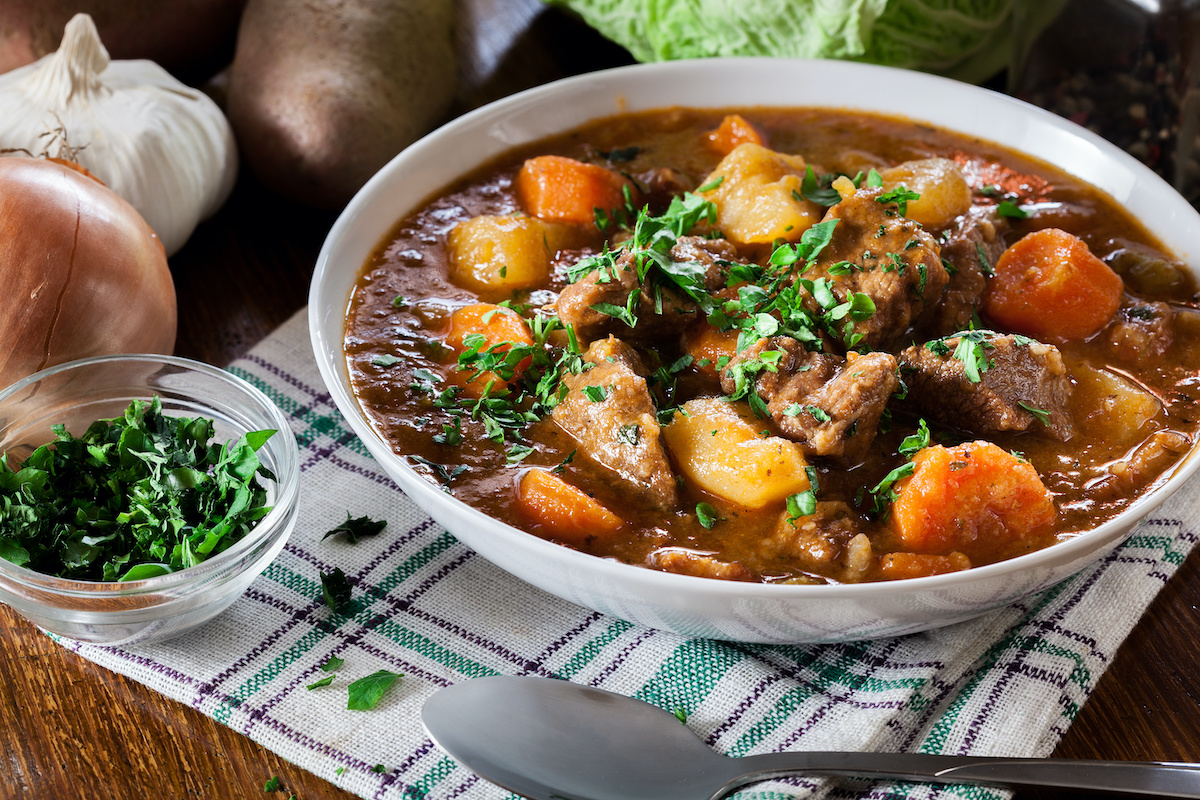
Watching a stew thicken is a fascinating culinary process. It’s not just about adding flour or cornstarch; it’s a dance of heat, time, and the interaction of ingredients. This transformation, from a thin, simmering liquid to a rich, velvety consistency, is visually compelling and reveals much about the chemistry at play.The visual changes are subtle yet significant. From the initial translucent broth, to the gradual clouding and thickening, the stew’s appearance progressively alters as the flavors meld and deepen.
This change in appearance is a direct result of the chemical reactions happening within the stew.
Visual Changes During Thickening
The initial appearance of a stew is typically a translucent or slightly opaque liquid, reflecting the ingredients suspended within. As the thickening process begins, the broth will show signs of clouding, a slight opacity that indicates the formation of a suspension of particles. This cloudiness is not just a visual cue; it signifies the increased concentration of dissolved solids.
The color of the stew may deepen, becoming richer and more intense as the flavors meld and the thickening agents work their magic.
Texture Changes During Thickening
The texture of the stew shifts dramatically as it thickens. Initially, the texture is smooth and watery, allowing the individual ingredients to be easily distinguished. As the stew thickens, the texture becomes more viscous and creamy, and the individual components become less discernible, merging into a unified whole. The consistency transitions from a free-flowing liquid to a more resistant, spoonable one.
The overall feel changes from light and airy to heavy and full-bodied.
Viscosity Changes During Thickening
Viscosity, a measure of a liquid’s resistance to flow, increases noticeably as the stew thickens. The initial viscosity is low, allowing the liquid to flow freely. As the stew thickens, the viscosity becomes higher, and the liquid’s resistance to flow increases. This change in viscosity is directly related to the concentration of the thickening agents and the resulting increase in the size and number of suspended particles.
The stew’s viscosity can range from a thin, runny consistency to a thick, almost pudding-like one, depending on the desired outcome.
The Role of Ingredients in Thickening
Different ingredients contribute uniquely to the stew’s thickening process. Starch-based ingredients, such as flour or cornstarch, are crucial thickening agents. They absorb liquid and form a gel-like structure when heated. Other ingredients, like vegetables and legumes, contribute to the stew’s overall density and texture, further influencing the thickening process. For example, root vegetables like carrots and potatoes, when cooked, release starches that aid in thickening.
Heat and Time in Thickening
Heat plays a vital role in the thickening process. The heat helps the thickening agents to dissolve and interact with the liquid, forming a gel-like network. A gradual and controlled heating process is crucial to avoid scorching or clumping. Time is also important. The longer the stew simmers, the more time the ingredients have to interact and the thicker the stew becomes.
Consistent stirring throughout the thickening process prevents lumps from forming.
Illustrative Image Description (Conceptual)
Imagine a series of images depicting a stew’s thickening process. The first image shows a clear, translucent stew, with vegetables and meat visibly separate. The second image shows the stew slightly clouding, with the vegetables beginning to soften and the broth becoming more opaque. The third image showcases the stew further thickened, with the ingredients melding together and the viscosity increasing.
The fourth image shows a rich, thick stew, with a creamy, velvety texture, the ingredients fully integrated, and the broth almost pudding-like in consistency. Each image would highlight the color, texture, and viscosity changes as the stew thickens, visually illustrating the progression of the thickening process.
Recipe Variations and Thickening Considerations
From hearty beef stews to delicate lentil creations, the world of stews offers a vast culinary landscape. Understanding how different ingredients and cooking methods impact thickening is key to achieving the perfect consistency for each unique dish. This exploration delves into recipe variations, highlighting the crucial role of ingredient selection and cooking techniques in achieving desired stew textures.The essence of a great stew lies not just in the ingredients but in the harmonious interplay of flavors and textures.
Different cuts of meat, vegetables, and spices contribute unique characteristics to the stew, influencing not only taste but also the thickening process. Understanding these interactions allows for strategic adaptation of thickening techniques to achieve the desired outcome for each dish.
Different Stew Recipes and Thickening Adaptations
Various stew recipes utilize different thickening methods. A hearty beef stew might benefit from a roux-based thickening, while a lighter vegetable stew might employ cornstarch or a puréed vegetable slurry. Understanding the recipe’s base is essential for selecting the appropriate thickening technique.
Impact of Ingredients and Spices on Consistency
The ingredients and spices used in a stew significantly influence its texture and thickening potential. For example, starchy vegetables like potatoes and carrots contribute to a thicker stew, while leaner cuts of meat may require a starch-based thickener to achieve the desired consistency. Spices like turmeric and ginger can also subtly impact the stew’s viscosity.
Influence of Meat and Vegetable Cuts on Thickening
Different cuts of meat and vegetables have varying effects on the stew’s thickening process. Tougher cuts of meat, like chuck roast, will release more gelatin during cooking, contributing to a richer, thicker stew. Conversely, leaner cuts might require a starch-based thickener to achieve the desired consistency. Similarly, vegetables with high water content, such as zucchini, will contribute less to thickening than root vegetables like sweet potatoes.
Diverse Stew Recipes and Thickening Techniques
| Recipe | Ingredients | Thickening Technique |
|---|---|---|
| Beef Stew with Red Wine | Beef chuck, red wine, onions, carrots, potatoes, tomato paste, flour | Roux made from flour and butter, simmered until thickened. |
| Lentil Stew with Vegetables | Lentils, carrots, celery, onions, garlic, vegetable broth, tomato paste, spices | Pureed vegetables, blended with a little broth, and added to the stew during the last part of cooking. |
| Chicken and Wild Rice Stew | Chicken pieces, wild rice, onions, celery, mushrooms, chicken broth, herbs | A slurry of cornstarch or arrowroot mixed with a little cold water, added to the stew during the last 10 minutes of cooking. |
| Hearty Vegetable Stew | Potatoes, carrots, turnips, celery, onions, garlic, vegetable broth, herbs, spices | A combination of pureed vegetables and a cornstarch slurry, added at the end of cooking. |
Each recipe above demonstrates a different approach to thickening. The choice of thickening technique is crucial to achieving the desired texture and flavor profile of the stew.
Outcome Summary
In conclusion, the seemingly unrelated worlds of high-definition video and stew thickening offer a fascinating opportunity for cross-disciplinary exploration. We’ve examined the technical aspects of Blu-ray and HD-DVD, delved into the culinary methods for thickening stews, and considered the surprising interplay between these two domains. Ultimately, this exploration highlights the unexpected connections between seemingly disparate fields and underscores the importance of understanding both the technical and the experiential elements of our everyday experiences.