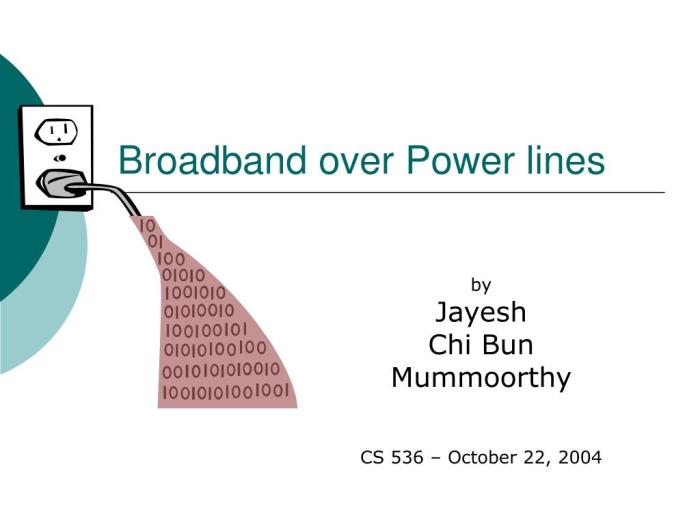
Broadband Over Power Lines Is It for Real?
Broadband over power lines is it for real? This exploration dives into the intriguing world of BPL technology, examining its potential, challenges, and current status. From its theoretical promise to practical implementations, we’ll uncover whether this innovative approach to broadband access can truly deliver on its promise. We’ll compare it to established technologies like fiber optics and DSL, and look at the technical aspects that make it unique.
Ultimately, we’ll investigate whether BPL is a viable solution for the future of broadband, especially in underserved areas.
The fundamental technology behind BPL leverages existing power lines to transmit data, offering a potentially cost-effective way to deliver broadband. However, this approach faces challenges, including signal attenuation and interference. This analysis will explore the technical details and examine the hurdles to widespread adoption, including regulatory considerations and the need for robust signal processing. We will investigate current implementations and successful cases, as well as the environmental impact and public perception of this emerging technology.
Broadband over Power Lines
Broadband over Power Lines (BPL) is a technology that utilizes the existing electrical power grid infrastructure to transmit broadband data signals. This method offers a potentially cost-effective way to deliver high-speed internet access to underserved areas, especially where fiber optic or DSL infrastructure is not readily available. The core principle involves modulating data onto the power line signals, allowing for communication over the same wires used for electricity.The technology relies on sophisticated signal processing techniques to differentiate the data signals from the electrical power signals.
This enables the transmission of data at speeds comparable to other broadband technologies. However, the inherent electrical characteristics of the power lines, including noise and interference, present challenges that need to be addressed for optimal performance.
Fundamental Technology
The core of BPL technology lies in the modulation of data signals onto the existing alternating current (AC) power lines. Specialized modems at both the transmitting and receiving ends are crucial for this process. These modems encode the digital data into specific frequencies or patterns within the power line signals. The data is then transmitted over the electrical wiring.
So, broadband over power lines – is it actually a viable option? While the technology is intriguing, its widespread adoption is still a bit of a question mark. There are definitely some exciting possibilities, but it’s worth keeping an eye on the progress. Speaking of progress, if you’re looking for a simple and effective way to make music, check out mixcraft music making made easy.
It’s a powerful tool that simplifies the process considerably, which is really useful for beginners and experienced musicians alike. Ultimately, whether broadband over power lines becomes a household reality remains to be seen.
Signal processing is employed to filter out noise and interference from the power lines to ensure clear transmission. This allows for the delivery of broadband internet over a widely distributed infrastructure.
Historical Context
The development of BPL has a rich history, dating back to the early days of telecommunications. Initial efforts focused on using power lines for voice communication, but the challenges associated with signal quality and interference limited their widespread adoption. Subsequent advancements in digital signal processing and modulation techniques have significantly improved the performance of BPL systems. Ongoing research continues to refine the technology, aiming to overcome the limitations and optimize the efficiency of BPL.
Theoretical Potential
The theoretical potential of BPL as a broadband solution is substantial. Its ability to leverage existing infrastructure, potentially eliminating the need for costly fiber optic cable installations, could lead to significant cost savings, particularly in areas with limited infrastructure. This could make high-speed internet access more accessible to rural and underserved communities. However, practical implementation often faces challenges related to interference and signal attenuation, which need careful consideration for optimal performance.
While the theoretical potential is promising, actual speeds and coverage areas might vary depending on several factors. A good example is the early adoption of wireless technologies; their potential was initially very high, but it took time for practical implementation and infrastructure development to fully realize the potential.
Comparison with Other Broadband Technologies
| Feature | Broadband over Power Lines (BPL) | Fiber Optics | DSL |
|---|---|---|---|
| Infrastructure | Existing power lines | Dedicated fiber optic cables | Existing telephone lines |
| Cost | Potentially lower initial cost | Higher initial cost | Potentially lower than fiber |
| Speed | Variable, can be competitive with DSL | Very high | Variable, often lower than fiber |
| Coverage | Potential for wider coverage in underserved areas | Limited to areas with fiber infrastructure | Limited by the condition of telephone lines |
| Reliability | Affected by power line conditions | Generally high | Affected by telephone line quality |
This table provides a concise comparison of key features for BPL, fiber optics, and DSL, highlighting the strengths and weaknesses of each technology in relation to infrastructure, cost, speed, coverage, and reliability.
Technical Aspects of BPL

Broadband over Power Lines (BPL) offers a compelling alternative for delivering high-speed internet access. However, the technical challenges inherent in using existing power lines for data transmission are significant. Understanding these challenges and the solutions employed is crucial for evaluating the viability and potential of BPL technology.The core technical aspects of BPL revolve around effectively modulating data onto the existing power line infrastructure, mitigating signal degradation, and dealing with the inherent electrical interference.
This involves intricate signal processing techniques, carefully chosen frequency bands, and sophisticated modulation methods to achieve reliable data transmission over these often noisy channels.
Modulation Techniques in BPL
Various modulation techniques are employed in BPL systems to transmit data over power lines. These techniques map digital data onto analog signals that can be transmitted over the power lines. A common approach is Orthogonal Frequency-Division Multiplexing (OFDM), which divides the available frequency spectrum into multiple sub-carriers. Each sub-carrier carries a portion of the data, allowing for more efficient use of the bandwidth and better resistance to noise.
Signal Attenuation and Noise in Power Lines
Power lines, being existing infrastructure, present significant challenges in terms of signal attenuation and noise. Electrical signals traveling through power lines experience attenuation, meaning the signal strength weakens as it propagates. This attenuation is a function of factors such as the length of the power line, the material used in the construction, and the frequency of the signal.
Additionally, noise, originating from various electrical sources, further degrades the quality of the transmitted signal. This noise can stem from industrial equipment, appliances, and even other communication systems sharing the same power lines.
Impact of Electrical Interference on BPL Performance
Electrical interference poses a major obstacle to reliable BPL communication. Interference from other electrical devices and systems can significantly distort the signal, leading to errors in data transmission. The nature and strength of interference vary considerably depending on the specific environment and the electrical equipment in use. Minimizing this interference requires careful filtering techniques and robust signal processing algorithms.
Frequency Bands Used for BPL
Different frequency bands are utilized for BPL communication, each with its own advantages and limitations. The choice of frequency band is crucial in balancing the need for sufficient bandwidth with the impact of signal attenuation and interference. Lower frequencies typically exhibit less attenuation but have limited bandwidth, while higher frequencies offer higher bandwidth but suffer greater attenuation. Selecting the optimal frequency band is a key design consideration in BPL systems.
Role of Signal Processing in BPL Systems
Signal processing plays a critical role in mitigating the challenges of BPL communication. Algorithms are employed to compensate for signal attenuation, reduce noise, and enhance the quality of the received signal. Signal processing techniques such as equalization, filtering, and error correction codes are essential for reliable data transmission over power lines.
Typical BPL System Block Diagram
A simplified block diagram illustrating a typical BPL system follows:
+-----------------+     +-----------------+
|  Data Source    |----->|  Modulator      |
+-----------------+     +-----------------+
|                  |     |                |
|                  |     |  Frequency      |
|                  |     |   Conversion   |
|                  |     +-----------------+
|                  |     |  Power Line     |
|                  |---->|   Interface    |
+-----------------+     +-----------------+
|                  |     |                |
|  Demodulator    |----->|  Signal        |
+-----------------+     |  Processing    |
|                  |     +-----------------+
|  Data Receiver  |     |                |
+-----------------+     |                |
The diagram depicts the essential components of a BPL system: a data source, modulator, power line interface, demodulator, and data receiver.
The modulator encodes the data onto the power line signal, while the demodulator extracts the data from the received signal. The power line interface handles the signal transmission over the power lines. The signal processing unit handles tasks like equalization and noise reduction.
Current Status and Challenges
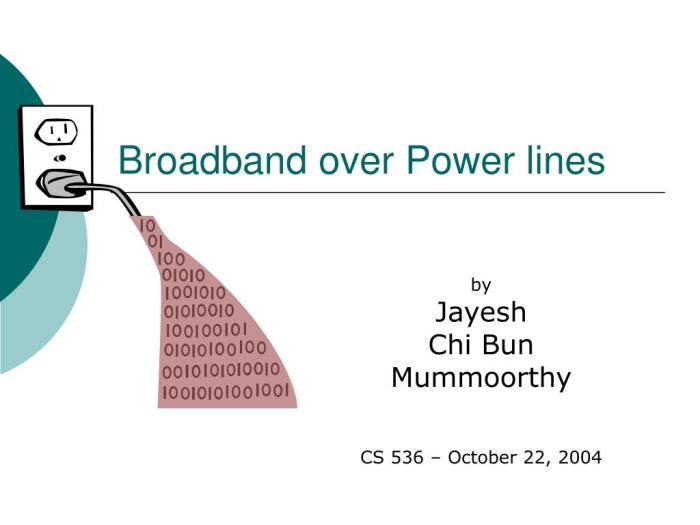
Broadband over Power Lines (BPL) technology, while promising, hasn’t achieved widespread adoption. Early enthusiasm for its potential to provide affordable and readily deployable internet access has been tempered by practical challenges. This section delves into the current status of BPL, examining the obstacles hindering wider implementation, and contrasting it with alternative technologies.BPL technology relies on existing power lines to transmit data.
Theoretically, this offers a low-cost infrastructure solution, but in practice, several factors have prevented widespread adoption. The existing infrastructure isn’t always ideal for high-speed data transmission, and the inherent interference on power lines poses a significant hurdle.
So, broadband over power lines – is it actually happening? While the technology is promising, the practical application is still a bit murky. But, recent advancements like Samsung beefing up storage capacity on 2.5-inch drives ( samsung beefs up storage capacity on 2 5 inch drives ) suggest a possible future where data transfer speeds are dramatically improved, which could potentially boost the feasibility of broadband over power lines.
Maybe one day it’ll be the way we all connect. But for now, it’s still a bit of a wait-and-see situation.
Current Adoption and Deployment
BPL technology has seen limited commercial deployment compared to fiber optic or cable-based solutions. Pilot projects and deployments in specific geographic areas have occurred, but full-scale nationwide rollouts remain rare. Success stories often hinge on specific local conditions, like existing power grid structures and user demand.
Obstacles to Wider Adoption
Several significant hurdles prevent broader BPL adoption. One primary obstacle is the inherent noise and interference on power lines. Existing power line infrastructure wasn’t designed for high-bandwidth data transmission, leading to signal degradation and reduced performance. Furthermore, regulatory uncertainties and lack of standardized protocols across regions hamper wider implementation.
Regulatory Environment
The regulatory landscape surrounding BPL deployment varies considerably across jurisdictions. Some regions lack clear regulations for BPL deployment, creating uncertainty for investors and hindering innovation. In other regions, existing regulations may be too restrictive, preventing the deployment of advanced BPL technologies.
Limitations of BPL Technology, Broadband over power lines is it for real
BPL technology has limitations in terms of speed and coverage. Achieving high-speed data transmission over power lines is difficult due to the inherent limitations of the transmission medium. Power line interference and signal attenuation over longer distances significantly reduce achievable speeds and coverage areas.
Comparison of Deployment Costs
Deployment costs for BPL networks are often lower than fiber optic solutions in areas with existing power infrastructure. However, the cost of implementing advanced signal processing and interference mitigation techniques can increase the overall deployment cost. Fiber optic deployments, while initially more expensive, often offer superior long-term performance and scalability.
Strengths and Weaknesses of BPL Technology
| Feature | Strengths | Weaknesses |
|---|---|---|
| Deployment Cost | Potentially lower than fiber optic in specific cases | Implementation of advanced signal processing can increase costs |
| Infrastructure | Leverages existing power lines, reducing initial infrastructure costs | Signal degradation and interference on power lines can be significant |
| Speed | Can achieve speeds suitable for basic internet access | Achieving high speeds over long distances is challenging |
| Coverage | Can reach areas with limited fiber optic infrastructure | Coverage is often limited by signal attenuation and interference |
| Scalability | Potentially scalable depending on the power line infrastructure | Scalability is limited by the limitations of the existing power infrastructure |
Potential Applications and Future Directions
Broadband over Power Lines (BPL) technology, while facing challenges, holds significant promise for expanding internet access, particularly in underserved areas. Its potential to integrate with existing infrastructure and support smart grid applications makes it a compelling solution for the future. This section explores the diverse potential of BPL, from rural broadband access to its role in the evolving smart home and smart grid landscapes.
Potential in Specific Geographic Areas
BPL technology offers a particularly attractive solution for areas with existing power grids. This is especially true for rural communities where laying down fiber optic cables can be expensive and time-consuming. In these regions, BPL can provide a cost-effective way to deliver high-speed internet access, connecting homes and businesses to the digital world. The existing infrastructure allows for a relatively quick deployment, and the cost-effectiveness of utilizing existing power lines can significantly reduce the overall project cost.
This is a significant advantage in areas with limited budgets and infrastructure.
Integration with Other Technologies
The future of BPL likely lies in its integration with other communication technologies. Combining BPL with fiber optic networks, for example, could create hybrid systems that leverage the strengths of both. Fiber optics could handle the high-bandwidth needs of data-intensive applications, while BPL could extend the reach and cost-effectiveness of the network to remote areas. Such hybrid systems could optimize bandwidth allocation and reduce network latency.
Role in Smart Grids and Smart Homes
BPL technology plays a crucial role in smart grids by facilitating communication between smart meters, grid infrastructure, and control centers. This allows for real-time monitoring and control of energy distribution, leading to greater efficiency and grid stability. In smart homes, BPL can connect various devices and appliances, enabling smart energy management, home automation, and enhanced security systems. The ability to transmit data and control signals through the existing power lines creates a seamless and integrated platform for managing energy usage and home functions.
Potential for Rural Broadband Access
Rural areas often face significant challenges in achieving broadband access. BPL offers a promising solution to this problem by utilizing existing power lines. The infrastructure is already in place, reducing the need for extensive and costly infrastructure development. BPL networks can deliver high-speed internet to remote locations, bridging the digital divide and fostering economic development in these areas.
This connectivity is vital for educational opportunities, remote work, and healthcare access.
Table Demonstrating Potential in Underserved Areas
| Geographic Area | Challenges | BPL Solution | Expected Outcomes |
|---|---|---|---|
| Rural Communities | Limited infrastructure, high deployment costs | Utilizes existing power lines, lower deployment costs | Increased access to high-speed internet, economic development |
| Remote Regions | Long distances, difficult terrain | Extends coverage to remote areas | Improved communication, access to educational and healthcare resources |
| Developing Nations | Limited resources, need for affordable solutions | Cost-effective solution | Bridging the digital divide, economic empowerment |
Innovative BPL Applications
One innovative application is the integration of BPL with Internet of Things (IoT) devices. By transmitting data from sensors and actuators through the power lines, BPL can facilitate the development of smart agriculture and environmental monitoring systems. Another application is the creation of dedicated BPL networks for specific industries, such as manufacturing or healthcare, providing high-speed data transmission for real-time applications and data analysis.
These specific applications are promising avenues for utilizing BPL in a wide variety of settings.
Illustrative Cases: Broadband Over Power Lines Is It For Real
Broadband over Power Lines (BPL) has seen periods of both enthusiasm and disillusionment. Understanding the successes and failures of past deployments is crucial for evaluating the technology’s viability in modern contexts. Analyzing the factors behind these outcomes helps identify areas for improvement and potential for future success. This section explores several implementations, highlighting key features, outcomes, and the lessons learned.
Successful BPL Deployments in Specific Countries
Several countries have undertaken BPL deployments, though widespread adoption has not materialized in all cases. Understanding the specifics of these deployments, the challenges encountered, and the solutions employed provides valuable insights.
- South Korea: A notable early adopter, South Korea explored BPL as a complementary technology for expanding broadband access in rural areas. Early trials demonstrated the potential of BPL, but scalability issues and the emergence of alternative technologies like fiber optics led to a tapering of the BPL program. This case highlights the need for careful consideration of competing technologies and the importance of long-term planning.
- Europe: Some European countries, particularly those with established power grid infrastructure, experimented with BPL deployments. These projects often focused on providing broadband access in underserved areas. Challenges included the limited capacity of the existing power lines and the need for extensive network upgrades. Lessons learned included the need for strategic planning and the importance of infrastructure compatibility.
- North America: Limited BPL deployments in North America have largely focused on niche applications, such as providing internet access in remote communities. Success often hinged on the specific characteristics of the power grid and the limited number of users served. This demonstrated the importance of local infrastructure analysis and a clear understanding of the market demand.
Lessons Learned from Previous Projects
Analyzing past BPL projects reveals key factors contributing to both success and failure. These lessons are crucial for future planning and implementation.
- Technological Limitations: Early BPL technologies often struggled with capacity limitations and susceptibility to interference from other electrical signals. Improvements in modulation techniques and signal processing have addressed some of these limitations, but ongoing research and development are necessary for consistent high-performance broadband transmission.
- Cost-Effectiveness: The cost of deploying and maintaining BPL networks has been a significant factor in project success. The high cost of infrastructure upgrades and equipment can outweigh the benefits of providing broadband access, particularly in areas with low population density or limited demand. Careful economic analysis, including cost-benefit assessments, is essential for ensuring financial viability.
- Regulatory Hurdles: Navigating the regulatory landscape related to power line use can be complex. Clear guidelines, policies, and standards are necessary to ensure the safe and efficient operation of BPL systems and to minimize interference with existing power grid operations. These regulations often vary by country or region.
Challenges and Solutions in BPL Implementation
Several challenges have hampered the widespread adoption of BPL. Successful implementations often depend on effectively addressing these challenges.
- Infrastructure Compatibility: Integrating BPL systems with existing power grids requires careful consideration of the electrical characteristics of the grid. Solutions often involve upgrading or modifying the existing infrastructure to accommodate the specific requirements of BPL transmission.
- Signal Interference: Noise and interference from other electrical signals can degrade the quality of BPL signals. Solutions involve advanced signal processing techniques and interference mitigation strategies to ensure reliable transmission. Sophisticated signal filtering and modulation are often required.
- Scalability and Coverage: Scaling BPL networks to serve a larger population and wider geographic areas can be challenging. Solutions involve optimizing the network architecture and deploying efficient transmission methods to ensure adequate bandwidth and coverage.
Key Features and Outcomes of Successful BPL Deployments (Illustrative Table)
| Deployment | Country | Key Features | Outcomes | Lessons Learned |
|---|---|---|---|---|
| Rural Broadband Access Project | South Korea (Example) | Limited deployment, focused on rural areas | Demonstrated potential, but scalability issues emerged | Prioritize scalability and cost-effectiveness |
| Urban Broadband Expansion Project | Europe (Example) | Targeted underserved urban areas | Improved connectivity in some regions, but limited success | Consider infrastructure compatibility, regulatory challenges |
| Remote Community Connectivity Project | North America (Example) | Focused on specific geographic areas | Successful in certain locations with low-density user bases | Analyze local infrastructure and market demand |
Public Perception and Consumer Adoption
Broadband over Power Lines (BPL) technology holds significant promise for expanding broadband access, particularly in underserved areas. However, its widespread adoption hinges critically on public perception and consumer acceptance. Successfully navigating this hurdle requires a multifaceted approach that goes beyond simply highlighting the technical advantages.Public perception of BPL is still largely shaped by the initial trials and setbacks experienced by some early deployments.
So, broadband over power lines – is it actually going to happen? It’s a fascinating concept, but the jury’s still out. Meanwhile, Nintendo’s recent announcement, nintendo chief confident in wiis long term success , suggests a similar level of optimism about the future of technology, despite the inherent challenges. Ultimately, the real question remains: will power line broadband deliver on its promise, or will it fizzle out like so many other promising technologies?
Concerns about signal quality, reliability, and interference with existing power systems have lingered, and these concerns need to be addressed directly and transparently to foster trust and confidence. Consumer adoption is not solely driven by technical specifications; it is also influenced by marketing efforts, perceived value, and the overall brand image associated with the provider.
Analyzing Public Perception
Public perception of BPL technology is a crucial factor influencing consumer adoption. Negative experiences with previous BPL deployments, or even misconceptions about the technology, can create resistance to its adoption. Careful analysis of existing perceptions is vital to understand the specific concerns and address them effectively.
Challenges in Educating Consumers
Educating consumers about BPL’s benefits, functionalities, and limitations requires a tailored approach. Technical jargon can be a significant barrier, and a clear, concise, and easily understandable explanation of the technology is essential. Understanding the diverse levels of technical literacy within the target audience is paramount, enabling the development of effective communication strategies. Furthermore, consumers need to be convinced of the reliability and stability of the technology.
Addressing concerns about potential power outages and interference is critical.
Strategies to Increase Consumer Awareness and Acceptance
Building consumer awareness and acceptance requires a multi-pronged approach. Transparency is key; clearly communicating the benefits and limitations of BPL will build trust. Partnerships with local communities and educational institutions can play a vital role in disseminating information. Engaging in public forums and demonstrations can allow potential users to experience the technology firsthand and address their concerns.
Finally, a concerted effort to dispel common myths and misconceptions is necessary to foster a positive image.
Marketing and Branding Aspects
Effective marketing and branding are crucial for BPL adoption. A clear and concise message highlighting the unique value proposition of BPL, such as improved accessibility and affordability, needs to be crafted. Emphasizing the speed, reliability, and cost-effectiveness of BPL can encourage consumer interest. The provider’s brand image needs to convey trustworthiness, reliability, and technical expertise. Strong brand recognition can be built by consistently showcasing the advantages of BPL in different contexts.
Factors Influencing Consumer Decisions
Consumer decisions regarding broadband providers are influenced by a complex interplay of factors. Price, speed, reliability, and customer service are key considerations. However, the perception of the provider’s commitment to the community and its reputation for innovation also plays a significant role. Furthermore, the availability of bundled services, such as internet, television, and phone, can significantly impact the consumer choice.
Consumers seek value for money and often prioritize providers that offer comprehensive packages.
Hypothetical Marketing Campaign
A hypothetical marketing campaign targeting BPL would emphasize the benefits of increased access to high-speed broadband in underserved areas. The campaign would showcase the technology’s potential to bridge the digital divide, focusing on the positive impacts on communities and individual lives. Demonstrations and interactive exhibits at community events would provide a hands-on experience with the technology. The campaign would target local businesses and schools to highlight the benefits of BPL for economic development and educational opportunities.
Furthermore, a clear, concise explanation of the technology’s limitations and how they are being addressed would enhance consumer trust.
Environmental Impact
Broadband over Power Lines (BPL) presents a compelling alternative to traditional broadband technologies. However, its environmental footprint deserves careful consideration. A thorough analysis of the environmental impact, encompassing deployment, operation, and lifecycle, is crucial for assessing its sustainability. This section will delve into the environmental aspects of BPL, including its impact on wildlife, energy efficiency, material choices, and a comparison with other broadband options.
Deployment Impacts
The initial deployment phase of BPL infrastructure, like any large-scale project, can generate environmental impacts. These impacts stem from the construction activities, which include land clearing, material transportation, and equipment usage. Minimizing these impacts requires careful planning and adherence to environmental regulations. For example, careful route selection and the use of environmentally friendly construction methods can significantly mitigate these effects.
Wildlife and Ecosystem Impacts
Potential impacts on wildlife and ecosystems from BPL deployment must be carefully evaluated. These potential impacts include habitat disruption, noise pollution, and electromagnetic field (EMF) exposure. The impact of EMF exposure on wildlife remains a subject of ongoing research. Careful consideration of these factors during planning and implementation phases can help mitigate potential harm to local ecosystems.
Energy Efficiency of BPL Systems
BPL systems’ energy efficiency is a critical factor in their environmental profile. The energy consumption of BPL modems and other associated equipment must be minimized to reduce the overall carbon footprint. Optimized signal transmission and modulation techniques are key to maximizing energy efficiency in BPL systems. Furthermore, the energy efficiency of the power grid itself plays a crucial role in determining the overall impact of BPL systems.
Sustainable Materials in BPL Infrastructure
The use of sustainable materials in BPL infrastructure can contribute to a more environmentally friendly solution. Recycled materials, renewable resources, and bio-based materials can be integrated into the construction and operation of BPL systems. The use of such materials minimizes the extraction of raw materials from the environment and reduces waste generation. For example, using recycled plastic in modem casings or bio-based components for transmission cables.
Lifecycle Assessment of BPL Technologies
A comprehensive lifecycle assessment (LCA) of BPL technologies is essential for evaluating its environmental impact from cradle to grave. This assessment considers the energy consumption during manufacturing, operation, maintenance, and end-of-life disposal. Comparing the energy consumption of various BPL technologies with alternative solutions is crucial for determining the most environmentally sound approach. For example, the LCA would assess the energy used to manufacture the components, operate the BPL system, and recycle the components at the end of their life.
Comparison with Other Broadband Options
Comparing BPL’s environmental impact with other broadband technologies is necessary for a holistic assessment. Factors such as energy consumption, material usage, and emissions during different stages of the technology’s life cycle should be considered. Fiber optic cables, for example, have a lower carbon footprint during operation and manufacturing, but require more material resources. Comparing different technologies using LCA methodologies can guide the choice of the most environmentally friendly broadband option.
Closing Summary
In conclusion, broadband over power lines presents a compelling alternative to traditional broadband technologies, particularly in specific scenarios. While challenges remain, particularly in areas like signal strength and regulatory hurdles, BPL’s potential for rural connectivity and cost-effectiveness warrants continued exploration. Ultimately, the success of BPL depends on addressing the technical obstacles and gaining public acceptance, which can be achieved through targeted marketing and clear communication of the benefits and limitations of the technology.