Building the Case for Biometrics A Comprehensive Guide
Building the case for biometrics is crucial in today’s world. This in-depth exploration dives into the intricacies of biometric authentication, from its fundamental principles to the evolving landscape of security considerations. We’ll examine the benefits across diverse sectors, analyze security concerns, and discuss the ethical and legal implications. Prepare to be amazed by the potential of biometrics and how it’s reshaping our future.
This comprehensive guide delves into the various aspects of biometric authentication, outlining the technology’s strengths and weaknesses, security protocols, and legal and ethical considerations. We’ll cover everything from the basics of facial recognition and fingerprint scanning to the practical implementation of biometric systems in different industries, including healthcare, finance, and security. We’ll explore the cost-benefit analysis, potential risks, and the future of biometrics.
Introduction to Biometric Authentication
Biometric authentication leverages unique physiological or behavioral characteristics to verify a person’s identity. This method offers a strong security layer, differentiating itself from traditional password-based systems by relying on inherent attributes that are difficult to replicate or steal. This significantly reduces the risk of unauthorized access, making it increasingly important in various sectors.Different biometric methods rely on distinct human traits, ranging from facial features to unique patterns in fingerprints.
The underlying principle in each technique is the uniqueness and relative permanence of these characteristics. This uniqueness allows for highly accurate identification, enabling a robust security measure for access control, transaction verification, and other applications.
Fundamental Principles of Biometric Methods
Biometric systems work on the principle of capturing and analyzing unique traits. This analysis compares the captured data to a template stored in a database. Matching the data to the template confirms identity. For example, facial recognition software captures facial features and compares them to a stored image of the authorized user. The degree of match determines the authentication outcome.
Types of Biometric Authentication
Various biometric methods exist, each with its own advantages and disadvantages. These methods leverage different human characteristics for identification.
- Facial Recognition: This method utilizes facial features to identify individuals. It relies on the unique arrangement of facial landmarks, such as the eyes, nose, and mouth, to create a template. Facial recognition systems can be found in smartphones, security systems, and even border control applications. Their use is becoming increasingly prevalent due to their ease of implementation and relatively high accuracy.
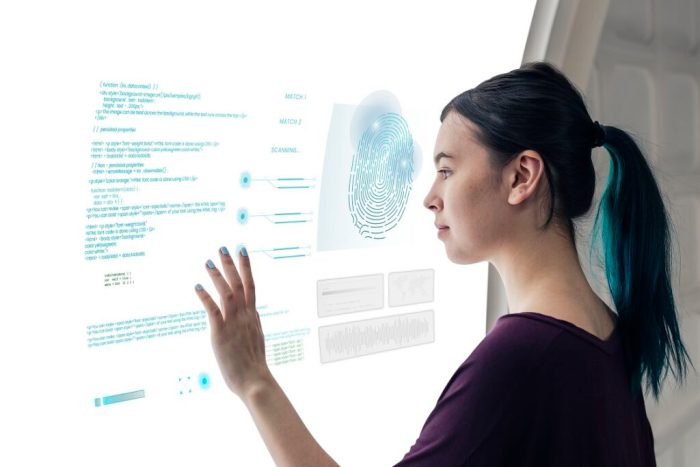
- Fingerprint Scanning: Fingerprint recognition analyzes the unique patterns and ridges on a person’s fingertips. The intricate details of these patterns are used to create a unique template. Fingerprint scanning is a common method for security in various applications, from personal devices to high-security facilities, due to the relatively high accuracy and ease of use.
- Iris Recognition: Iris recognition focuses on the intricate patterns within the iris of the eye. These patterns are unique to each individual, and this method is known for its high accuracy and resistance to spoofing attempts. It is often used in high-security applications due to its reliability.
- Voice Recognition: This method analyzes the unique characteristics of a person’s voice. Factors like tone, pitch, and cadence are used to create a unique acoustic signature. Voice recognition is used in phone systems for authentication and in security applications requiring voice verification.
Comparative Analysis of Biometric Methods
A comparison of various biometric methods is crucial for selecting the most suitable approach for a specific application. The table below highlights the strengths and weaknesses of different methods.
| Biometric Method | Accuracy | Cost | Ease of Use | Security |
|---|---|---|---|---|
| Facial Recognition | High | Medium | High | Moderate |
| Fingerprint Scanning | High | Low | Medium | High |
| Iris Recognition | Very High | High | Medium | Very High |
| Voice Recognition | Moderate | Low | High | Moderate |
Note: Accuracy is measured by the rate of correct identification, while cost considers the implementation and maintenance expenses. Ease of use refers to the user experience and complexity of operation. Security factors in the resistance to spoofing and the potential for data breaches.
Building the Case for Adoption: Building The Case For Biometrics

Biometric authentication is rapidly gaining traction across various sectors, promising a more secure and efficient future. Beyond the initial convenience of eliminating passwords and PINs, the benefits extend to enhanced security and streamlined processes, making it a compelling proposition for businesses and individuals alike. This section delves into the advantages of biometrics, highlighting its applications and the role of security in its implementation.The shift towards biometric authentication is driven by the inherent strengths of unique biological traits.
This technology surpasses traditional methods by offering a higher degree of accuracy and reliability, minimizing the risks of unauthorized access and fraud.
Building the case for biometrics is crucial, especially now that industry events like cebit latest victim of show woes highlight the challenges facing physical trade shows. The need for secure and reliable authentication methods is becoming increasingly clear, and biometrics offers a compelling solution. Ultimately, a robust case for biometrics relies on demonstrating its practical benefits in various applications.
Benefits Across Diverse Sectors
Biometric authentication offers substantial advantages across a range of sectors. In security, it enables highly accurate identification, reducing the possibility of impersonation. In finance, it bolsters the security of transactions, minimizing fraudulent activities and safeguarding sensitive financial data. Healthcare benefits from improved patient identification and access control, ensuring accurate record management and reducing errors.
Advantages Over Traditional Methods
Traditional methods of authentication, such as passwords and PINs, often suffer from vulnerabilities. They are prone to breaches due to password reuse, weak passwords, and social engineering. Biometric authentication, on the other hand, leverages unique, inherent traits that are difficult to replicate or compromise. This makes it a far more robust and secure approach, significantly reducing the risk of unauthorized access.
The inherent uniqueness of fingerprints, facial features, or iris patterns greatly enhances the accuracy and reliability of identification compared to the easily guessable or shared nature of passwords and PINs.
The Role of Security in Biometric Systems
Security is paramount in biometric systems. Robust encryption techniques are crucial to protect biometric data from unauthorized access and misuse. Data anonymization and secure storage protocols are essential to safeguard user privacy and prevent potential breaches. Thorough testing and validation procedures are necessary to ensure the accuracy and reliability of biometric systems. The development and implementation of sophisticated security measures are crucial to maintaining the integrity of the system.
Building the case for biometrics is crucial, especially with the rapid advancements in tech. Intel’s recent push for a faster wireless standard, like intel pushes faster wireless standard to market , highlights the importance of seamless and secure connections, which are directly relevant to biometric authentication. Ultimately, a strong case for biometrics relies on such innovation in related technologies.
Furthermore, stringent protocols for data handling, access control, and auditing must be implemented to ensure that biometric data remains secure.
Examples of Successful Implementations
Several real-world scenarios demonstrate the success of biometric authentication. Many airports now utilize biometric systems for expedited passenger processing, increasing efficiency and minimizing delays. Financial institutions employ biometrics to authenticate transactions, significantly reducing fraud and increasing the security of online banking. In healthcare, biometric systems verify patient identities, ensuring that the correct individuals receive the appropriate care, reducing errors and ensuring patient safety.
Key Security Considerations
| Security Consideration | Explanation |
|---|---|
| Data Encryption | Protecting biometric data at rest and in transit is critical using strong encryption algorithms. |
| Data Anonymization | Minimizing the amount of identifiable information in stored biometric data. |
| Access Control | Limiting access to biometric data to authorized personnel. |
| Auditing | Maintaining records of all access attempts and data modifications. |
| System Integrity | Ensuring the system’s hardware and software are secure and regularly updated. |
| Accuracy and Reliability | Validating that the system performs accurate identifications with minimal false positives and negatives. |
Addressing Security Concerns
Biometric authentication, while offering significant advantages, presents unique security challenges. Protecting sensitive biometric data is paramount to building trust and ensuring the responsible use of this technology. Robust security measures are crucial to prevent unauthorized access, misuse, and potential harm.Biometric data, including fingerprints, facial scans, and iris patterns, represents a highly sensitive and personal form of identification. Compromising this data can lead to identity theft, fraud, and other serious consequences.
Therefore, the security of these systems must be prioritized throughout the entire lifecycle, from data collection to verification. This section will delve into the potential risks associated with biometric data, strategies for data protection, and best practices for secure biometric systems.
Potential Security Risks
Biometric data, if not properly secured, is vulnerable to various threats. Compromised databases containing biometric templates can be exploited for unauthorized access to accounts and systems. Phishing attacks, social engineering tactics, and malware can be used to acquire biometric data. Furthermore, spoofing attacks using synthetic biometric data or fabricated physical attributes pose a serious risk. This is particularly concerning for facial recognition systems.
Data Privacy and Protection
Data privacy is a critical aspect of biometric authentication. Strict adherence to data privacy regulations, such as GDPR and CCPA, is essential. These regulations Artikel the rights of individuals regarding their biometric data, including the right to access, rectify, and erase their data. Data minimization, anonymization, and secure storage are crucial to limit potential risks. Furthermore, clear policies and procedures for handling biometric data must be established and consistently followed.
Ensuring Integrity and Confidentiality
The integrity and confidentiality of biometric data are paramount. Encryption techniques, like Advanced Encryption Standard (AES), are essential for protecting data during transmission and storage. Hashing algorithms can be employed to verify data integrity and detect any unauthorized modifications. Secure access controls, such as multi-factor authentication, are vital to restrict access to biometric templates. Access to biometric data should be limited to authorized personnel and only when necessary.
Best Practices for Securing Biometric Systems
Robust security practices are crucial for maintaining the integrity of biometric systems. Regular security audits and vulnerability assessments should be conducted to identify and mitigate potential risks. Systems should be designed with security in mind from the outset, incorporating security best practices at each stage of the system lifecycle. Utilizing strong passwords and employing multi-factor authentication are critical security measures.
Furthermore, thorough training for system administrators and users on security protocols is essential to promote awareness and responsible use.
Security Protocols in Biometric Systems
Secure biometric systems rely on a combination of protocols. Different approaches are employed depending on the specific type of biometric data and the security requirements of the system. Below is a table summarizing common security protocols:
| Protocol | Description | Strengths | Weaknesses |
|---|---|---|---|
| Encryption (AES, RSA) | Encrypts biometric data during transmission and storage. | Strong protection against unauthorized access. | Computational overhead; key management is crucial. |
| Hashing (SHA-256) | Generates unique fingerprints for data integrity verification. | Detects unauthorized modifications. | Vulnerable to collision attacks if not properly implemented. |
| Access Control (RBAC, ABAC) | Restricts access to biometric templates based on user roles and attributes. | Granular control over data access. | Complexity in implementation and maintenance. |
| Biometric Template Protection | Protects biometric templates against unauthorized access and tampering. | Ensures data integrity and prevents spoofing attacks. | Requires advanced techniques and robust algorithms. |
Legal and Ethical Implications
Biometric authentication, while offering significant security advantages, raises complex legal and ethical concerns. These concerns stem from the sensitive nature of biometric data, its potential for misuse, and the need to balance security with individual privacy rights. Careful consideration of these implications is crucial for responsible and ethical implementation.The collection and use of biometric data require a thorough understanding of legal frameworks and ethical principles.
Building the case for biometrics is crucial, especially as mobile technology advances. T-Mobile’s recent foray into the UK market with mobile phone browsing, as detailed in this article t mobile enters uk with mobile phone browsing , highlights the growing need for secure and convenient authentication methods. This underscores the importance of biometrics in streamlining user experiences while maintaining robust security protocols.
This includes obtaining informed consent, ensuring data security, and addressing potential biases in the systems. A proactive approach to these challenges is essential to prevent harm and maintain public trust.
Informed Consent for Biometric Data Collection
Obtaining informed consent is paramount when collecting biometric data. Individuals should be fully aware of how their data will be used, stored, and protected. This includes details about data retention periods, potential data breaches, and the purpose for which the data will be used. Transparency and clear communication are key elements in securing informed consent. Individuals must understand the implications of providing their biometric data and the potential consequences of refusal.
The consent process should be straightforward, easily understandable, and free of coercion.
Relevant Regulations and Standards
Numerous regulations and standards address the use of biometric data. These guidelines aim to protect individuals’ privacy and security while enabling legitimate uses of biometric technology. For example, the General Data Protection Regulation (GDPR) in Europe sets stringent rules for data processing, including biometric data. Other regions and jurisdictions have their own specific regulations. These regulations often cover data minimization, data security, and individual rights.
Compliance with these regulations is essential for organizations utilizing biometric authentication. Organizations must ensure their practices align with relevant regulations and standards. This involves careful assessment of potential legal risks and compliance strategies.
Legal and Ethical Considerations Across Sectors
The legal and ethical considerations surrounding biometric use vary across different sectors. A healthcare provider handling patient data has different obligations than a financial institution handling customer transactions.
- Healthcare: Healthcare organizations must prioritize patient privacy and data security. HIPAA regulations in the US, for instance, govern the handling of protected health information, which may include biometric data. The legal and ethical framework must consider the sensitivity of patient data and potential impacts on their privacy. Strict adherence to HIPAA guidelines and other relevant regulations is critical.
- Finance: Financial institutions using biometrics for customer authentication face legal and ethical obligations related to fraud prevention and data protection. Regulations like the Payment Card Industry Data Security Standard (PCI DSS) may apply, depending on the specific biometric implementation. Financial institutions must be particularly vigilant about maintaining the security of sensitive financial information and complying with relevant regulations.
- Law Enforcement: Law enforcement agencies face unique challenges regarding the ethical and legal use of biometrics for identification and surveillance. Balancing public safety with individual rights is crucial. Transparency and accountability in the use of biometric data are paramount. Strict guidelines regarding data collection, storage, and use are necessary.
Potential Biases in Biometric Systems and Mitigation Strategies
Biometric systems can exhibit biases based on factors such as race, gender, age, and ethnicity. These biases can lead to inaccurate or discriminatory outcomes. For instance, a facial recognition system trained predominantly on images of one demographic might perform poorly on images of another.
- Addressing Biases: Developing and training biometric systems on diverse datasets is essential to mitigate biases. Regular audits and assessments of system performance across various demographics are critical for identifying and rectifying potential biases.
- Data Collection: Data collection protocols should prioritize diverse representation. This ensures the system is trained on a wide range of biometric data, reducing the potential for biased outcomes.
- Algorithm Evaluation: Algorithms should be rigorously tested for bias across different populations to evaluate their performance and identify potential weaknesses.
Cost-Benefit Analysis
Biometric authentication offers significant advantages over traditional security methods, but the initial investment can be a concern. A comprehensive cost-benefit analysis is crucial to determine the long-term viability and ROI of adopting biometrics. This involves weighing the upfront costs against the projected savings and efficiency gains. Understanding the total cost of ownership (TCO) for both biometric and traditional systems is key to making an informed decision.
Initial Investment Costs
Traditional security methods, such as PINs and passwords, often have low initial costs. However, they may not adequately address modern security threats or provide the level of accuracy and convenience needed in today’s environments. Biometric systems, conversely, require a higher initial investment due to the need for specialized hardware, software, and integration with existing systems. This includes the cost of purchasing biometric scanners, servers, and potentially, the associated infrastructure upgrades.
Factors like the scale of implementation, the type of biometric technology used (e.g., fingerprint, facial recognition), and the complexity of integration play a critical role in determining the initial investment.
Long-Term Costs and Benefits
The long-term benefits of biometric systems often outweigh the initial investment. Biometric solutions can reduce fraud significantly, leading to substantial cost savings over time. For instance, a company could reduce unauthorized access attempts and associated financial losses. Increased efficiency is another major benefit. Automated processes and streamlined workflows can significantly improve productivity and reduce operational costs.
Return on Investment (ROI) Potential
The ROI potential for biometric solutions varies based on several factors. However, in many cases, the return is substantial. Reduced fraud, increased efficiency, and improved security can generate substantial savings, ultimately exceeding the initial investment. A strong ROI can be achieved by careful planning, accurate cost estimation, and realistic projections of long-term benefits. For example, a retail store implementing facial recognition for customer verification could see significant reductions in fraudulent returns and theft, translating into a substantial ROI.
Projected Cost Savings
| Biometric Solution | Initial Investment (USD) | Projected Savings per Year (USD) | ROI Timeframe (Years) |
|---|---|---|---|
| Fingerprint Scanners for Employee Time and Attendance | $25,000 | $15,000 | 2 |
| Facial Recognition System for Access Control | $50,000 | $30,000 | 2 |
| Iris Scanners for High-Security Access | $100,000 | $60,000 | 2 |
These figures are illustrative and represent potential savings, assuming realistic scenarios and considering factors like system maintenance, updates, and support. It’s crucial to conduct a thorough cost-benefit analysis for your specific use case to accurately predict ROI. The ROI timeframe is also heavily dependent on the specific implementation and scale of the project. Detailed analysis of existing security breaches, operational costs, and projected efficiency gains is crucial.
Integration and Implementation Strategies

Biometric authentication, while offering significant security advantages, requires careful planning and execution for successful integration. This phase involves meticulous consideration of existing infrastructure, user training, potential technical challenges, and a clear implementation roadmap. A well-structured approach ensures a smooth transition and maximizes the return on investment in biometric systems.
Integrating Biometric Systems into Existing Infrastructure
Integrating biometric systems seamlessly into existing infrastructure demands a phased approach. This involves careful assessment of existing security protocols, network configurations, and data management systems. Understanding the architecture of the current IT infrastructure is critical for selecting appropriate biometric solutions that can be integrated without disrupting existing workflows. This includes analyzing user authentication methods, authorization processes, and data flow within the organization.
Careful planning avoids conflicts and ensures compatibility between new biometric systems and legacy systems.
Step-by-Step Guide for Implementing Biometric Solutions
A structured implementation process is essential for a successful biometric rollout.
- Assessment and Planning: Thoroughly assess existing infrastructure, identify specific needs, and define clear project goals. Determine the scope of the project, budget constraints, and potential risks. This phase also includes defining success metrics and user roles.
- Selection of Biometric Technology: Choose biometric technology that aligns with security needs, user experience, and budgetary constraints. Factor in factors like the type of biometric data collected (e.g., fingerprints, facial recognition), the accuracy of the system, and scalability for future growth. Thorough research and vendor evaluation are key.
- System Design and Configuration: Design the integration process, outlining how the biometric system will interact with existing infrastructure. This includes defining data flow, security protocols, and user roles. Configure the biometric system to meet specific organizational requirements. Testing and validation are crucial at this stage.
- User Training and Adoption: Implement comprehensive training programs for all users. Demonstrate the benefits of the new system, address potential concerns, and highlight user-friendly aspects. This includes providing clear instructions on how to use the biometric system effectively and efficiently. Continuous feedback mechanisms for user input are beneficial.
- Testing and Validation: Rigorous testing is essential to ensure the system’s accuracy, reliability, and compatibility. This includes testing various scenarios, including user access attempts, system performance under load, and recovery procedures. Comprehensive testing helps to identify and rectify any issues before deployment.
- Deployment and Rollout: Deploy the biometric system according to the pre-defined plan, ensuring smooth transitions and minimal disruption to workflows. Monitor the system closely for any issues and promptly address them. This step requires close coordination between the IT team and end-users.
- Ongoing Maintenance and Support: Establish a robust maintenance and support program. This includes regular system updates, performance monitoring, and user assistance. Maintaining the system and ensuring its continued functionality are essential for long-term success.
Considerations for User Training and Adoption
User training is critical for successful biometric system adoption.
- Clear Communication: Communicate the benefits of the biometric system to all users. Explain how it enhances security and efficiency. Transparent communication addresses potential concerns and fosters understanding.
- Practical Training Sessions: Conduct hands-on training sessions to demonstrate the system’s use. Hands-on practice builds confidence and reduces the fear of the unknown.
- Phased Implementation: Pilot programs or phased implementation allow for feedback and adjustment. A phased approach minimizes risks and ensures smoother integration.
- User Feedback Mechanisms: Create mechanisms for users to provide feedback and suggestions. Gathering user input improves the system and ensures its continued effectiveness.
Addressing Technical Challenges in Integration
Addressing technical integration challenges requires proactive planning and expertise.
- Compatibility Issues: Ensure compatibility between the biometric system and existing hardware and software. Thorough testing and compatibility checks mitigate potential problems.
- Network Connectivity: Evaluate and address potential network bandwidth and latency issues. Optimize network infrastructure to ensure smooth biometric system operation.
- Data Security: Implement robust data security measures to protect biometric data. Encryption and access controls are critical for preventing unauthorized access and data breaches.
- Scalability: Design the system with future growth in mind. Scalability allows for increased user numbers and new features without significant system overhauls.
Flow Chart Illustrating Implementation Stages
[A detailed flow chart illustrating the typical implementation stages of a biometric system would be presented here. However, it is not possible to create a visual representation within this text-based format.]
Future Trends and Developments
Biometric authentication is rapidly evolving, driven by advancements in sensor technology, artificial intelligence, and data analysis. This evolution promises to reshape how we interact with technology and security systems in profound ways. The future of biometrics is not just about improved accuracy and speed, but also about expanding accessibility and incorporating ethical considerations.
Emerging Biometric Technologies
The field of biometrics is constantly expanding, incorporating new and innovative technologies. These technologies leverage unique human characteristics for identification and authentication, often in ways previously unimaginable. One notable area of growth is in multimodal biometrics, which combines multiple biometric traits to enhance accuracy and security. This approach, incorporating various forms of data like fingerprints, facial recognition, and even behavioral patterns, mitigates the risks of spoofing or false identifications.
Potential Applications of Future Biometrics
Biometrics is poised to revolutionize numerous industries. In healthcare, it promises improved patient identification and data management, while in finance, it can enhance the security of transactions and reduce fraud. Retail applications are also gaining traction, with potential for personalized shopping experiences and streamlined checkout processes. Imagine a world where your purchase is authenticated through a quick eye scan, providing a frictionless and secure experience.
Evolution of Biometric Systems, Building the case for biometrics
Biometric systems are moving towards greater sophistication. The trend is towards more compact, affordable, and user-friendly devices. Expect to see a surge in the development of wearable biometrics, allowing for continuous and convenient authentication. These advancements will lead to a greater integration of biometric systems into everyday life, making authentication seamless and automatic.
Innovative Applications
Innovative applications of biometrics are emerging in diverse fields. For example, airport security could incorporate iris scanning for enhanced passenger identification. In manufacturing, biometric authentication can improve access control and inventory management, while in transportation, it can enhance security and efficiency.
Timeline of Anticipated Advancements (Next 5 Years)
- 2024: Increased adoption of multimodal biometrics in high-security environments, like government facilities and financial institutions, will be witnessed. Initial trials of biometrics for public transportation systems will also commence.
- 2025: The cost of biometric sensors will decrease, leading to broader accessibility and integration into consumer devices. Advanced AI algorithms will further refine the accuracy and speed of biometric authentication systems.
- 2026: Development of biometrics-enabled smart home systems will be prevalent, enhancing security and convenience. Increased use of biometrics in retail environments will create a more streamlined and personalized shopping experience.
- 2027: Further development in the area of behavioral biometrics, incorporating unique typing patterns and gait analysis, will be observed. The integration of biometrics in the healthcare sector will become more sophisticated, enabling improved patient data management.
- 2028: Biometric authentication systems will become more commonplace, embedding themselves in everyday devices and services. The focus will shift towards the ethical implications and security considerations of widespread biometric adoption.
Closure
In conclusion, building the case for biometrics reveals a powerful technology with significant potential across various sectors. While security concerns and ethical considerations must be addressed, the advantages of biometric authentication, such as enhanced security, efficiency, and reduced fraud, are undeniable. This guide has highlighted the critical steps involved in evaluating, implementing, and utilizing biometrics effectively and responsibly.
The future looks bright for biometrics, promising innovative applications and transformative changes in how we interact with technology and the world around us.