Mastering the Lifecycle of LLM-Integrated Scikit-Learn Pipelines with Scikit-LLM and MLflow

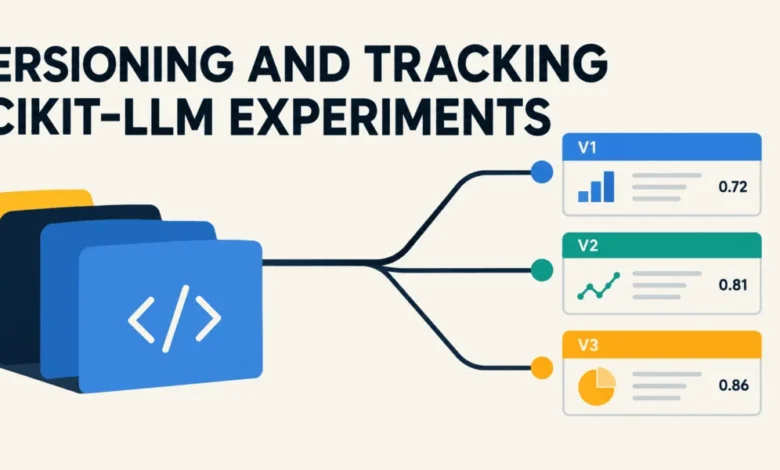
In the rapidly evolving landscape of artificial intelligence, the integration of Large Language Models (LLMs) into traditional machine learning workflows has shifted from an experimental pursuit to a standard engineering requirement. As developers increasingly adopt libraries like Scikit-LLM to bridge the gap between sophisticated generative models and structured scikit-learn pipelines, the challenge of maintaining model reproducibility, version control, and operational transparency has become critical. This article explores the professional implementation of MLflow to manage the end-to-end lifecycle of these LLM-driven pipelines, ensuring that every iteration is logged, audited, and ready for deployment.
The Evolution of LLM Integration in Machine Learning
For years, the scikit-learn ecosystem has served as the backbone of practical machine learning, favored for its modularity and intuitive API. However, the emergence of transformer-based LLMs introduced a new complexity: how to treat a generative model as a standard estimator within a traditional pipeline. The Scikit-LLM library provides a bridge, allowing developers to wrap zero-shot classification or embedding tasks into standard fit-and-predict interfaces.
Despite this technical bridge, the "black box" nature of LLMs presents a significant risk to reproducibility. Unlike traditional linear regression or random forest models, which are defined by hyperparameter settings and specific training data, LLM pipelines depend on external model weights, prompt structures, and backend hardware configurations. Without a robust tracking mechanism, updating a model backend—such as switching from a lightweight Orca Mini model to a more powerful Falcon architecture—can result in silent regressions or inconsistent output quality.
Establishing a Robust Tracking Architecture
To mitigate these risks, industry-standard practices now mandate the use of centralized tracking frameworks. MLflow, an open-source platform developed to manage the machine learning lifecycle, has emerged as the premier solution for this purpose. By configuring MLflow to interface with a SQL database backend, organizations can establish a centralized model registry that acts as the single source of truth for all experiment iterations.
The process begins with the initial configuration. For local deployments, especially in development environments like Google Colab or local workstations, developers must initialize the Scikit-LLM configuration. This involves setting up the backend environment, such as the gpt4all provider, and linking it to the MLflow tracking URI. The code implementation follows a rigorous pattern:
import mlflow
import mlflow.sklearn
from sklearn.pipeline import Pipeline
from skllm.config import SKLLMConfig
from skllm.models.gpt.classification.zero_shot import ZeroShotGPTClassifier

# Initializing local execution environment
SKLLMConfig.set_openai_key("local-execution-key")
SKLLMConfig.set_openai_org("local-execution-org")

# Configuring the MLflow tracking backend
mlflow.set_tracking_uri("sqlite:///mlflow.db")
mlflow.set_experiment("Scikit-LLM-Versioning")
By explicitly defining the experiment name and database backend, developers ensure that every execution of the pipeline—whether successful or failed—is captured as a discrete event. This level of granularity is vital for auditing, particularly in regulated industries where the lineage of a model must be traceable back to its original training data and parameter set.
Chronology of Experimentation: From Baseline to Production
In a standard production cycle, experimentation follows a non-linear path. A developer might start with a "Baseline" pipeline, utilizing a highly compressed model to test the integration logic. Once the pipeline proves functional, they proceed to "Upgraded" versions, incorporating more complex models that offer higher accuracy but demand greater computational resources.
The logging process within MLflow is designed to capture this evolution. By utilizing the with mlflow.start_run() context manager, developers can associate specific metadata—such as the LLM backend type and the specific model file path—with each run. This is crucial when utilizing cloudpickle as the serialization format, as it ensures that complex objects like Scikit-LLM classifiers are preserved correctly across different library versions.
Consider the transition from a baseline model, orca-mini-3k-71m-q4_0.gguf, to an upgraded model, ggml-model-gpt4all-falcon-q4_0.bin. Each iteration must be logged with its respective parameters. If a run fails due to hardware constraints or model incompatibility, MLflow records the failure status, providing engineers with the diagnostic data needed to refine the configuration without losing historical context.
Data-Driven Model Auditing
The real power of this workflow lies in the ability to query the entire experiment history as a structured dataset. By leveraging the MLflow search API, teams can export their tracking data into a pandas DataFrame. This allows for an objective, quantitative comparison of different model versions.
In a typical scenario, the audit table includes:
- Run ID: A unique identifier for every execution.
- Run Name: A human-readable tag (e.g., "Baseline_Orca_Mini").
- Parameters: Specific configuration details, such as the model file path.
- Status: Whether the execution concluded successfully or encountered an error.
This data-driven approach removes the ambiguity inherent in manual tracking. When it comes time to promote a model to production, stakeholders can view the performance metrics (such as accuracy or inference time) alongside the configuration parameters, ensuring that the selected model is truly the best fit for the production environment.
Implications for Production Deployment
The final stage of this lifecycle is the formal registration of the model. Registration transforms an experimental run into a versioned asset within the MLflow Model Registry. This is a critical step for DevOps teams; once a model is registered, it can be assigned an alias, such as "Staging" or "Production," and tracked through a CI/CD pipeline.
The transition from logging to registration is straightforward but significant:
best_run_id = runs_df[runs_df['tags.mlflow.runName'] == 'Upgraded_Falcon'].iloc[0]['run_id']
model_uri = f"runs:/best_run_id/model"
registered_model = mlflow.register_model(model_uri=model_uri, name="Production_ZeroShot_Classifier")
By automating this selection process—for instance, by ordering runs by an accuracy metric before registering the top performer—organizations can minimize human error and ensure that only validated, high-performing models reach the end user.
Broader Impact and Future Outlook
The methodology presented here has far-reaching implications for the enterprise adoption of generative AI. As organizations move beyond the "proof of concept" phase, the ability to manage LLM pipelines with the same rigor applied to traditional software is non-negotiable.
The integration of Scikit-LLM and MLflow provides several key benefits:
- Reproducibility: Ensuring that the same input consistently produces the same result, regardless of the deployment environment.
- Accountability: Creating a clear audit trail that links specific model versions to their development and testing history.
- Efficiency: Reducing the time required for model iteration and deployment by providing a standardized interface for experiment management.
As the ecosystem matures, we can expect to see further integration between these tools and cloud-native MLOps platforms. However, the core principles remain the same: rigorous tracking, systematic auditing, and a disciplined approach to model versioning. By adopting these practices, developers are not just building AI applications; they are building reliable, scalable systems that can withstand the rigors of production environments.
In conclusion, the combination of Scikit-LLM and MLflow provides a robust framework for managing the lifecycle of LLM-integrated pipelines. By moving from a disorganized, manual approach to a centralized, automated registry, development teams can ensure that their machine learning initiatives are not only innovative but also stable and reproducible. As we look toward the future of AI, the focus will increasingly shift from the models themselves to the processes that support their deployment, making the lessons discussed here an essential part of the modern machine learning toolkit.