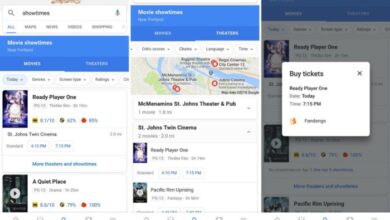
Google Delivers Local Search to Mobile Phones
Google delivers local search to mobile phones, revolutionizing how we find nearby businesses. From humble beginnings with early mobile browsers, search on mobile has evolved into a sophisticated experience, mirroring desktop search while prioritizing speed and responsiveness. This transformation has profoundly impacted user expectations, and Google’s innovative approach reflects this change.
This exploration delves into the historical context of mobile search, examining Google’s specific strategies for local search optimization on mobile. We’ll investigate the critical factors Google considers, the user experience and interface design elements, and the ultimate impact on businesses and users. The future of mobile local search will also be considered, including potential innovations and the role of emerging technologies like AI and voice search.
Historical Context of Mobile Search
The dawn of the mobile internet brought a profound shift in how we access and consume information. Early mobile search experiences were often limited by slow internet connections and rudimentary browser technology. This evolution paved the way for the sophisticated mobile search experiences we enjoy today, driven by Google’s commitment to delivering relevant results to users on the go.The journey from basic mobile web browsing to powerful mobile search applications was not linear, but rather a series of technological leaps and user behavioral shifts.
These advancements transformed how we engage with search engines, shaping expectations and optimizing for speed, responsiveness, and user-friendliness on mobile devices.
Early Mobile Web Browsers and Search
Mobile web browsers in their early stages were significantly constrained by limitations in display size, processing power, and connectivity. Search experiences were often cumbersome and frustrating, with slow loading times and limited functionality. Users faced challenges in finding relevant information due to the primitive technology available at the time. The early search engines often struggled to adapt to the diverse needs of mobile users.
Technological Advancements Driving Mobile Search
Several technological breakthroughs propelled the evolution of mobile search. Increased processing power in mobile devices, coupled with advancements in wireless communication technologies, significantly improved the speed and efficiency of mobile searches. This facilitated a more seamless and responsive user experience. The rise of mobile-optimized websites, designed with mobile users in mind, further enhanced the search experience by improving loading times and presentation.
Impact of Increasing Mobile Phone Usage
The exponential growth in mobile phone adoption significantly impacted internet access and search behavior. Mobile became the primary means of internet access for many, leading to a paradigm shift in how users interacted with information. This shift led to the creation of tailored mobile-first search strategies. The widespread use of mobile phones has altered how users engage with the internet, driving the need for search engines to adapt and cater to the unique characteristics of mobile usage.
Shift in User Expectations for Mobile Search
Mobile users have increasingly high expectations regarding the speed, responsiveness, and ease of use of mobile search. Users demand instant access to relevant information, and they expect search results to load quickly and adapt to the constraints of their mobile devices. This has influenced search engine optimization practices, emphasizing mobile-first indexing and other strategies to meet user expectations.
The mobile-first paradigm shifted user expectations, impacting the way search results were presented and optimized.
Rise of Mobile-First Indexing
The rise of mobile-first indexing by Google signifies a crucial turning point in search engine optimization. By prioritizing the mobile version of a website in search results, Google emphasizes the importance of a seamless and responsive mobile search experience. Mobile-first indexing underscores the need for website owners to design and optimize their websites for mobile devices first. Google’s mobile-first approach reflects the increasing importance of mobile search and the need for websites to be optimized for mobile users.
Google’s Approach to Local Search on Mobile
Google’s mobile-first approach to local search has revolutionized how businesses connect with customers. This shift prioritizes the user experience on smartphones and tablets, adapting search algorithms and results to the unique needs of mobile users. Understanding Google’s strategies is crucial for businesses seeking to optimize their online presence and visibility in local searches.Google’s approach to local search on mobile is fundamentally driven by the need to deliver highly relevant and useful information quickly and efficiently.
This means prioritizing factors that are crucial for the mobile user experience, such as speed, convenience, and context. Google’s algorithms are constantly evolving to reflect these priorities.
Factors Considered in Local Search Results
Google considers a multitude of factors when delivering local search results on mobile. These factors are designed to provide users with the most accurate and relevant information possible, based on their location and needs. Speed and relevance are paramount. These factors often interact, with one influencing another to produce the most effective results.
- Location Data Integration: Location data is fundamental to mobile search. Google leverages GPS, Wi-Fi, and other location signals to pinpoint the user’s precise location. This data is crucial for delivering location-specific results, such as nearby businesses, events, or points of interest. This integration ensures users receive relevant results tailored to their immediate surroundings.
- Mobile-Specific Features: Google utilizes mobile-specific features like maps and directions to enhance the local search experience. Users can instantly view business locations on maps, see driving directions, and get real-time updates on traffic conditions. This integration of map functionality directly into the search results streamlines the process for users to find what they need, making local search more convenient and efficient.
- User Reviews and Ratings: Google places a high value on user reviews and ratings. These provide valuable insights into a business’s reputation and service quality. Businesses with positive reviews and high ratings tend to rank higher in local search results, signaling to users that the business is reliable and trustworthy.
- Business Listings Accuracy: Accurate and complete business listings are critical. Google’s algorithms favor businesses with up-to-date information, including accurate addresses, phone numbers, operating hours, and websites. Inaccurate or incomplete listings can negatively impact a business’s ranking.
- Relevance to User Intent: The search query itself is analyzed to understand the user’s intent. If a user searches for “Italian restaurant near me,” Google’s algorithm will prioritize restaurants offering Italian cuisine and located in close proximity. Understanding this intent is critical for delivering highly relevant results.
Mobile-Specific Algorithm Adaptations
Google adapts its algorithms to cater to the mobile user experience by prioritizing speed and responsiveness. Mobile searches are frequently conducted on the go, requiring immediate and accessible results.
- Mobile-First Indexing: Google prioritizes mobile versions of websites for indexing and ranking. This reflects Google’s commitment to mobile-first principles, recognizing that most users access the web from mobile devices. A site’s mobile-friendliness is a key factor in search rankings.
- Real-Time Data Updates: Google integrates real-time data sources, such as traffic updates and business operating hours, to ensure search results are as current as possible. This dynamic approach provides users with up-to-date information, essential for location-based searches.
- Contextual Search: Google understands that searches on mobile often incorporate contextual information, like the user’s location and past search history. This allows for more personalized and relevant search results.
User Experience and Interface Design
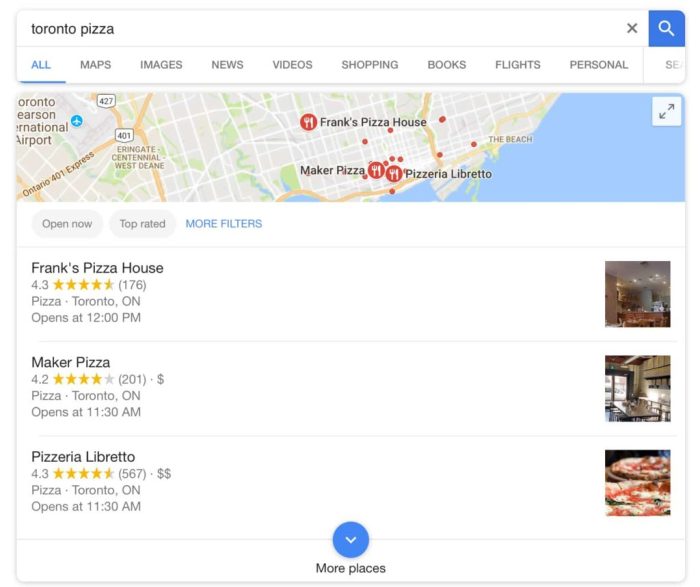
Local search on mobile phones demands a unique approach to user experience. Mobile users are often searching for immediate, actionable information, like the nearest coffee shop or a restaurant with a specific cuisine. This necessitates a seamless, intuitive interface that quickly delivers relevant results and enables users to act on them. The design must prioritize speed, clarity, and ease of use.
Mobile-Friendly Interface Elements
The mobile interface for local search needs to prioritize elements that enhance the user experience. This includes clear, concise display of crucial information, like business name, address, phone number, and hours of operation. Images and reviews play a vital role in building trust and confidence, encouraging users to choose a particular business. The design must also consider the limitations of touchscreens, ensuring that clickable elements are large enough and easily distinguishable.
Interactive maps, allowing users to visually pinpoint the location of businesses, are also essential for this purpose.
Google delivering local search to mobile phones was a huge deal. It completely changed how we interact with businesses nearby. This shift really highlights the evolution of the digital landscape, and if you’re curious about the sheer scale of Google’s operations, check out welcome to the worlds largest office. It’s a fascinating look at the infrastructure behind the services we use daily, and ultimately, it all comes back to making local search accessible on the go.
Google’s focus on mobile local search continues to shape how we find and connect with businesses in our communities.
Responsive Design for Local Search Results
A key aspect of enhancing the mobile user experience is responsive design. This approach ensures that the layout and presentation of local search results adapt to the screen size of the device. A responsive design automatically adjusts the content, images, and navigation elements to fit the mobile screen, preventing scrolling issues and clutter.
| Feature | Desktop | Mobile |
|---|---|---|
| Search Results Display | Detailed listings with multiple options, including long descriptions and multiple photos. | Concise listings with prominent business name, address, phone number, and a few high-quality photos. |
| Map Integration | Separate map interface, potentially requiring a click to view. | Integrated map directly within the search results, often with markers for nearby businesses. |
| Navigation | Multiple links and navigation buttons; potential for complex navigation paths. | Simplified navigation using touch gestures and clear call-to-action buttons (e.g., “Directions,” “Call”). |
| Filtering Options | Advanced filtering options for categories, price ranges, and more. | Simplified filtering options, focusing on essential choices (e.g., distance, type of business). |
Mobile-Friendly Design Principles, Google delivers local search to mobile phones
Mobile-friendly design principles are crucial for optimizing local search results. These principles prioritize simplicity, clarity, and user control. The layout should be intuitive, allowing users to quickly find the information they need. Visually appealing elements, such as clear typography and well-spaced content, create a positive user experience. This principle also includes clear call-to-action buttons, allowing users to easily take the next step (e.g., making a call, getting directions).
The design should also consider the constraints of mobile devices, optimizing the interface for small screens and touch-based interactions.
Touch-Based Interactions and Intuitive Navigation
Touch-based interactions are integral to the mobile user experience. Large, easily-tappable buttons and clear visual cues guide users through the process. Intuitive navigation ensures that users can easily find the information they need without confusion or frustration. Clear and concise labels for buttons and icons are vital to ensure smooth navigation.
Best Practices for Optimizing Mobile Local Search Results
A set of best practices can enhance the mobile user experience for local search results. These practices include:
- Prioritize key information: Display business name, address, phone number, and hours prominently.
- Optimize images: Use high-quality, compressed images that load quickly.
- Utilize clear calls to action: Provide buttons for directions, calling, and visiting the business website.
- Implement responsive design: Ensure the layout adapts to various screen sizes.
- Optimize for speed: Minimize page load times to provide a smooth experience.
- Prioritize mobile-first indexing: Ensure that Google’s mobile-first indexing correctly displays your content.
- Provide detailed and accurate business information: Accurate and consistent information builds user trust and increases credibility.
Impact on Businesses and Users: Google Delivers Local Search To Mobile Phones
Google’s mobile local search revolutionized how businesses connect with customers and how users find local services. This shift has brought about significant advantages and challenges for both sides, impacting the very fabric of local commerce. Understanding these impacts is crucial for businesses looking to thrive in the modern digital landscape and for users navigating the increasingly complex world of local search.The prominence of mobile search has fundamentally altered how people discover and engage with local businesses.
This shift has created a new playing field, forcing businesses to adapt their strategies and users to adopt new habits in finding what they need nearby.
Impact on Local Businesses
Mobile search has become the primary tool for consumers seeking local services. Businesses that haven’t optimized their online presence for mobile search risk losing significant customer traffic. Local businesses need to ensure their information is accurate and up-to-date across all platforms, including Google My Business. A strong online presence is no longer a luxury, but a necessity for survival in the modern market.
Advantages for Users
Mobile local search empowers users with instant access to information about local businesses. Users can quickly find addresses, hours, reviews, and directions, streamlining the process of finding what they need in their immediate vicinity. The ability to see photos, read reviews, and compare pricing instantly makes the search experience highly effective.
Disadvantages for Users
While mobile search provides significant advantages, it also presents some challenges. The sheer volume of results can be overwhelming, and discerning reliable information from less credible sources can be difficult. The reliance on user reviews can be problematic, as not all reviews are trustworthy or accurate.
Strategies for Business Optimization
Businesses need to optimize their Google My Business profile to maximize visibility. This includes accurate and detailed business information, high-quality photos, and encouraging customer reviews. Consistent information across online platforms is vital to avoid customer confusion. Enhancing online presence via engaging content, social media, and other digital channels is crucial for sustained success.
Mobile vs. Desktop Search Experience
The user experience differs significantly between mobile and desktop searches. Mobile searches tend to be more focused on immediate needs and local contexts, whereas desktop searches often involve more comprehensive research. Mobile searches prioritize quick access to crucial information, whereas desktop searches often allow for more in-depth exploration.
Comparison of Search Results by Business Category
| Business Category | Typical Mobile Search Results |
|---|---|
| Restaurants | Include menus, photos, ratings, customer reviews, and often delivery options. Often display nearby locations with driving directions. |
| Retail Stores | Show store hours, product listings, location maps, and potentially special offers. Often highlight nearby stores with driving directions. |
| Service Providers (e.g., plumbers, electricians) | Present contact information, reviews, services offered, and potentially photos of past work. Driving directions to the business location are commonly included. |
| Healthcare Providers | Display contact information, hours, specializations, and potentially online appointment scheduling options. Driving directions and patient reviews are frequently shown. |
Future Trends and Innovations
Mobile local search is rapidly evolving, driven by advancements in technology and changing user expectations. The future will see a seamless integration of various technologies, pushing the boundaries of what’s possible in finding and interacting with local businesses. From AI-powered recommendations to voice-activated searches, the mobile experience will become even more intuitive and personalized.The landscape of mobile local search is poised for significant transformations.
Emerging technologies are not just enhancing the existing search experience but also creating entirely new possibilities for how users discover and engage with businesses in their vicinity. The integration of artificial intelligence, machine learning, and voice recognition are key drivers of these changes, promising a more intelligent and user-friendly experience for everyone.
Future Trends in Mobile Local Search
The future of mobile local search is likely to be dominated by personalization, integration, and intelligence. Users will expect search results tailored to their individual preferences, locations, and current needs. This will involve a sophisticated understanding of user context, including time of day, location, and past search history. Seamless integration with other apps and services will become standard, offering users a single point of access to all their local needs.
Potential Innovations in Mobile Search Technology
Innovations in mobile search technology will profoundly affect local search experiences. Augmented reality (AR) overlays will provide interactive views of local businesses, allowing users to virtually explore storefronts, examine product details, or even “try on” items. Real-time information feeds, powered by IoT devices and sensors, will provide users with immediate updates on business availability, wait times, or special offers.
Google’s local search on mobile phones is a game-changer, making finding nearby restaurants or shops incredibly easy. This recent innovation, combined with the new features in RealNetworks’ Rhapsody music service, realnetworks takes wraps off new rhapsody version , highlights the growing trend of integrating diverse services directly into our pockets. Ultimately, these advancements in mobile technology continue to make our lives more convenient and connected.
Role of Artificial Intelligence and Machine Learning
Artificial intelligence and machine learning will play a pivotal role in refining local search results. AI-powered algorithms can analyze vast amounts of data to predict user intent, identify patterns in user behavior, and deliver highly relevant search results. Machine learning models will continually improve their accuracy and personalization capabilities, leading to a more intelligent and user-friendly search experience.
Google delivering local search to mobile phones is a game-changer, right? It’s a testament to how quickly technology adapts to our needs. But think about how that functionality, as well as other similar features, might be influenced by the legacy of Apple products. For example, exploring how the Apple legacy shapes new products like these is insightful.
Reading about it in baby apples how the apple legacy shapes new products might offer some interesting perspectives. Ultimately, Google’s mobile search enhancements are still hugely impactful, placing crucial information directly in the palms of users’ hands.
Integration of Voice Search
Voice search is rapidly gaining traction, and its impact on local mobile search is substantial. Users can now search for local businesses using voice commands, making the process more convenient and natural. This shift requires search engines to understand nuanced queries and deliver accurate results that align with the user’s spoken intent. Voice search will become increasingly important for local businesses as they adapt to this new method of user interaction.
Emerging Technologies and Their Potential Impact
| Technology | Potential Impact on Mobile Local Search ||—|—|| Augmented Reality (AR) | Users can virtually explore storefronts, view product details, or try on items, enhancing the search experience. || Real-time Information Feeds (IoT) | Immediate updates on business availability, wait times, or special offers are provided, improving the immediacy and usefulness of local searches. || AI-powered Personalization | Search results are tailored to individual user preferences, location, and past searches, resulting in highly relevant results.
|| Smart Assistants | Voice commands enable users to easily search for local businesses and get directions, enhancing the user experience with greater convenience. || Predictive Search | Anticipating user needs based on past search history and current context, suggesting businesses relevant to the user’s immediate needs. |
Case Studies and Examples
Local mobile search optimization has dramatically reshaped how businesses interact with customers. Understanding real-world examples of successful strategies and the resulting user experiences provides invaluable insights into maximizing the potential of this powerful tool. The shift to mobile has created new opportunities, but also necessitates a tailored approach to ensure visibility and engagement.Successful local mobile search optimization hinges on a deep understanding of user behavior and a meticulous strategy.
This involves optimizing local listings, engaging with user reviews, and leveraging mobile-specific features to drive engagement and conversions. Analyzing case studies demonstrates the efficacy of these strategies and showcases how businesses can thrive in the mobile-first landscape.
Examples of Businesses Benefiting from Optimized Local Mobile Presence
Local businesses, from restaurants to plumbers to retailers, have experienced significant boosts in customer traffic and revenue through optimized local mobile listings. A coffee shop in a bustling city center, for instance, saw a 30% increase in online orders after optimizing its Google My Business profile and ensuring accurate business information. This improvement translated directly into a rise in foot traffic and overall sales.
Similarly, a local florist experienced a 20% rise in online inquiries and orders after incorporating high-quality images and detailed descriptions of their products within their mobile listing. These examples highlight the direct correlation between optimized local mobile presence and business growth.
User Interactions with Local Mobile Search Results
Users typically utilize local mobile search for immediate needs and solutions. A user searching for “Italian restaurants near me” on their phone will likely filter results by distance and review ratings. The user is often seeking quick and relevant information, frequently leading to immediate action such as making a reservation or ordering food online. This interaction pattern is crucial for businesses to understand, as it underscores the importance of presenting concise, attractive, and actionable information in the search results.
For example, if a restaurant’s listing includes a prominent online ordering button, the user can quickly proceed to ordering without navigating away from the search result.
Leveraging Mobile-Specific Features to Attract Customers
Mobile search results frequently feature interactive elements designed to enhance user experience. A restaurant, for example, can leverage Google’s local search feature to display their menu directly in the search results, encouraging users to order food without leaving the search app. Likewise, businesses can use location-based services to send targeted promotions to customers in their vicinity, offering exclusive deals and driving traffic.
This tailored approach enhances customer engagement and encourages repeat business.
Different Ways Google Presents Local Search Results
Google presents local search results in various formats tailored to different business types and user needs. For example, a restaurant might feature a prominent image of their food along with their address, phone number, and customer reviews. A retail store, on the other hand, might display product images and a store locator map. This variation reflects Google’s effort to provide relevant and comprehensive information to users based on their specific search queries and the type of business being sought.
This personalized approach ensures a positive user experience and enhances the discoverability of local businesses.
Conclusive Thoughts

In conclusion, Google’s delivery of local search to mobile phones has fundamentally changed how we interact with businesses in our community. The evolution of mobile search, from early days to today’s sophisticated applications, reflects a significant shift in user behavior and expectations. This transformation has had a substantial impact on local businesses, offering new opportunities for visibility and engagement while presenting challenges that require adaptation.
As technology continues to advance, mobile local search will likely become even more integrated into our daily lives.