Growing Number of Major Corporations Object to OKX and ICE’s Planned Tokenized Stock Venue as Total Reaches 22

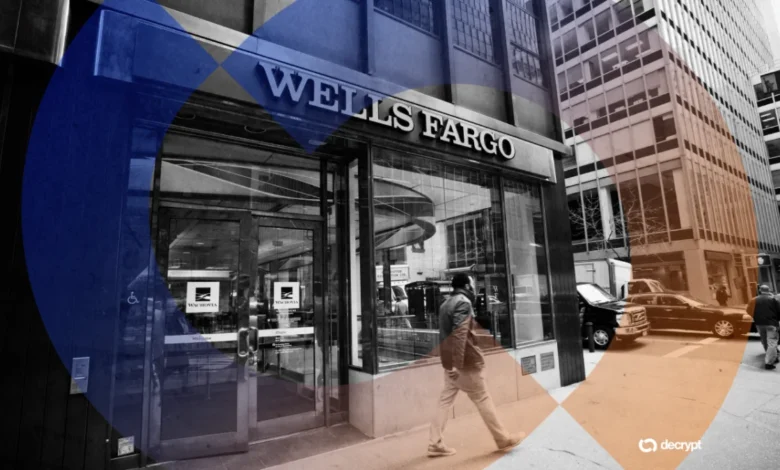
The roster of prominent global corporations expressing explicit opposition to having their shares traded on the upcoming tokenized stock venue developed by OKX and the Intercontinental Exchange (ICE) continues to expand significantly. According to an updated public notice released by the OKXICE Tokenized Securities Venue (TSV) on Friday, six additional corporate issuers have formally requested that their equities be excluded from the platform.
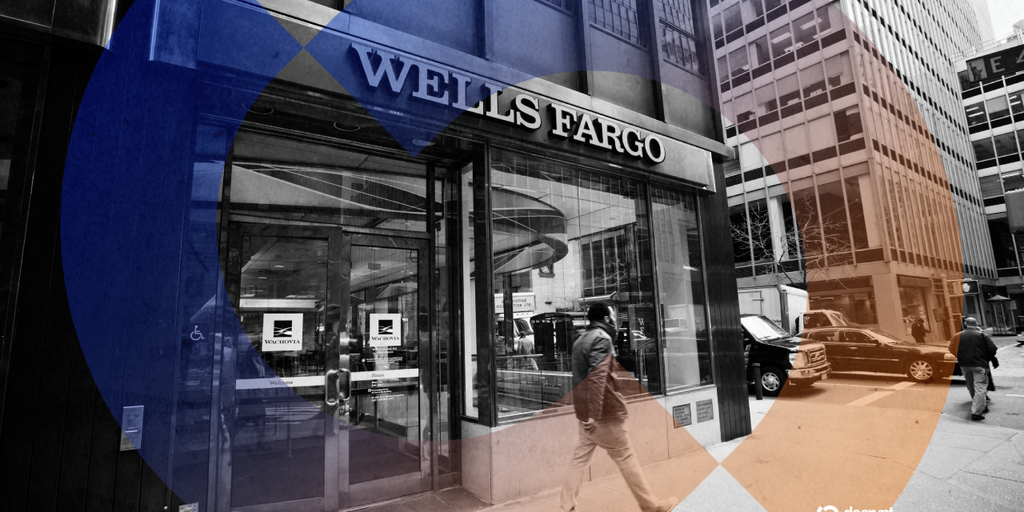
The newly added companies—Wells Fargo, Cisco Systems, Marvell Technology, Arm Holdings, Moderna, and Intuit—push the total count of objecting issuers to 22. This figure demonstrates a rapid escalation from the 16 objecting companies recorded on October 19 and the initial cohort of just nine issuers when the roster was first made public on October 15.
The growing pushback from major blue-chip corporations highlights mounting friction between traditional corporate governance structures and the rapid advance of decentralized finance (DeFi) infrastructure. While the joint venture aims to pioneer round-the-clock trading of conventional equities through blockchain architecture, corporate hesitation underscores lingering uncertainties regarding regulatory compliance, security, and market stability in tokenized asset environments.
An Expanding Coalition of Skeptics
The inclusion of Wells Fargo in the latest regulatory notice marks a notable milestone, making it the second major U.S. banking institution to formally object, following Goldman Sachs. Meanwhile, the additions of Arm Holdings, Cisco Systems, and Marvell Technology inject further heavyweight representation from the semiconductor and networking sectors into a registry that already includes tech giants such as Microsoft, Alphabet, Broadcom, and Qualcomm. Other high-profile objectors named in earlier updates include Verizon, UnitedHealth Group, and enterprise software leaders.
Despite the growing volume of corporate dissent, the public notices issued by OKXICE TSV remain sparse regarding the precise motivations behind the objections. None of the official filings elaborate on why these specific companies are opting out, nor do they explicitly clarify the legal or operational mechanics of how an issuer objection legally restricts a stock from being traded on the platform. Legal experts suggest that companies may be exercising an abundance of caution to protect shareholder value, maintain control over their corporate registries, or mitigate risks associated with decentralized liquidity pools over which they hold no direct oversight.
The Mechanics of the OKXICE TSV Initiative
The OKXICE TSV operates as a 50-50 joint venture established earlier this year between Intercontinental Exchange—the parent company of the New York Stock Exchange (NYSE)—and the U.S. holding company of cryptocurrency exchange OKX. The primary ambition of the platform is to provide approved institutional and retail users with the capability to trade tokenized versions of U.S. equities on a 24/7 basis, bridging the gap between traditional market assets and continuous blockchain settlement systems.
Under the proposed architecture, trades executed on the venue would run through automated market maker mechanisms, specifically leveraging Uniswap v4 liquidity pools hosted on OKX’s proprietary Layer 2 blockchain network, known as XLayer. To facilitate frictionless settlement outside traditional banking hours, these tokenized shares would be paired primarily with stablecoins such as USDC.
The venue has positioned its launch to take advantage of the Securities and Exchange Commission’s (SEC) innovation exemption framework. This regulatory pathway was unveiled by the agency in September following the legislative stalling of the Clarity Act in the United States Senate. Furthermore, in its October 19 update, the platform clarified that it possesses the technical capacity to list shares tokenized directly by the issuing corporations themselves, as well as equities tokenized by authorized third-party entities. However, to date, none of the 22 objecting companies have elected to participate through either channel.
Chronology of the Tokenized Stock Dispute
The conflict surrounding the OKXICE TSV platform has developed rapidly over a compressed timeline, reflecting the high stakes and fast-moving nature of digital asset integration within legacy financial markets:
- Early 2024: OKX and ICE officially initiate collaborative discussions regarding the creation of a joint digital asset infrastructure, laying the groundwork for a hybridized tokenized stock marketplace.
- September 2024: The SEC introduces its innovation exemption framework following legislative delays surrounding the Clarity Act, providing a regulatory baseline for exploratory tokenized trading venues.
- October 15, 2024: OKXICE TSV publishes its initial public notice, revealing a baseline of nine major corporations that have officially objected to the inclusion of their shares on the upcoming venue.
- October 19, 2024: An updated notice increases the tally of objecting issuers to 16, drawing heightened attention from financial analysts and regulatory observers as prominent tech and financial firms join the list.
- October 26, 2024: The latest public notice expands the objecting roster to 22 corporations, adding significant institutional names such as Wells Fargo, Cisco Systems, Arm Holdings, Moderna, Intuit, and Marvell Technology.
Operational Risks and Regulatory Uncertainty
Beyond the corporate resistance from issuers, the updated documentation released by OKXICE TSV outlines a comprehensive suite of operational and structural risks inherent to the platform’s design. These disclosures have raised eyebrows among traditional market participants accustomed to the robust fail-safes of centralized national exchanges.
Crucially, the venue’s risk disclosure notes that while trading activity will pause automatically if the underlying traditional stock is halted on its primary exchange, the platform otherwise lacks conventional market-wide circuit breakers. This absence of automated volatility dampers could expose traders to sharp, cascading price fluctuations during off-hours trading sessions when underlying market liquidity is inherently thin.
Furthermore, the venue currently lacks defined institutional policies or protective mechanisms addressing Maximal Extractable Value (MEV). MEV refers to the profit that sophisticated network participants and miners or validators can capture by arbitrarily reordering, inserting, or censoring transactions within a blockchain block. In an equity trading environment, unchecked MEV could potentially disadvantage ordinary retail investors through front-running or sandwich attacks.
The disclosures also highlight unresolved questions for participating broker-dealers regarding regulatory trade reporting mandates and the legal execution of best execution obligations. These regulatory gray areas threaten to constrain institutional participation, potentially resulting in thin liquidity pools that could exacerbate price volatility. Additionally, platform administrators retain the technical capability to upgrade underlying smart contracts without providing advance notice to active users. Compounding these governance concerns, the specific smart contract governing access control and user authorization has thus far undergone only internal security audits rather than comprehensive third-party verification.
Broader Industry Context and Institutional Outlook
The friction experienced by OKX and ICE is indicative of a broader industry-wide reckoning as traditional market infrastructure converges with decentralized technologies. Rival legacy institutions are navigating similar waters with varying strategies. Notably, Nasdaq—which successfully secured SEC approval for its own proprietary tokenized securities pilot program—has publicly stated that it will explicitly opt its own corporate shares out of similar regulatory exemptions, signaling a cautious approach even among entities embracing blockchain experimentation.
Meanwhile, macroeconomic research organizations have begun quantifying both the viability and the systemic dangers of this emerging asset class. A recent report published by the International Monetary Fund (IMF) concluded that there is genuine, measurable global demand for tokenized stocks, particularly among international investors seeking exposure to U.S. equities during off-market hours when conventional American exchanges are closed.
However, the IMF report sounded a note of pragmatic caution, warning that despite growing user interest, the tokenized stock market remains persistently volatile and structurally illiquid compared to its traditional counterpart. The study emphasized that without harmonized regulatory oversight, standardized risk-mitigation protocols, and robust protections against blockchain-specific exploits, tokenized equities could introduce systemic vulnerabilities into the broader financial ecosystem.
As the debate intensifies, the willingness of major corporations to push back against unauthorized tokenization highlights a critical tension point in the evolution of capital markets. Whether platforms like the OKXICE TSV can successfully navigate these corporate objections and regulatory ambiguities will likely serve as a defining test for the commercial viability of tokenized traditional securities in the years ahead.