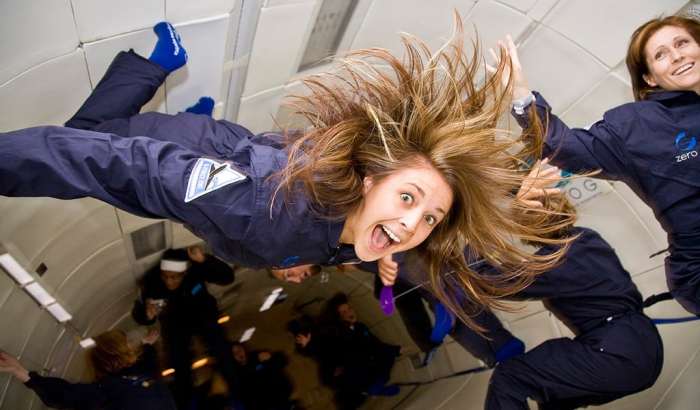
Hawking Flies Free Zero-G Joyride
Hawking flies free in zero g joyride – Hawking flies free in zero-g joyride sets the stage for this enthralling narrative, offering readers a glimpse into a personal journey through the exhilarating physics of weightlessness. Imagine a person, perhaps even Stephen Hawking himself, soaring through the cosmos, completely untethered by Earth’s gravity. This isn’t science fiction; it’s a journey into the possibilities of zero-gravity flight, exploring the physics behind the experience and the potential thrills and emotions that come with it.
The journey delves into the fundamental concepts of zero-gravity environments, examining the unique characteristics of object movement in the absence of gravity. It explores the potential methods for achieving this free flight, the challenges involved, and the intricate technical considerations. Furthermore, it details the emotional and sensory experience, painting a vivid picture of a zero-gravity joyride and comparing it to earthly experiences.
The Phenomenon of Zero-G Flight
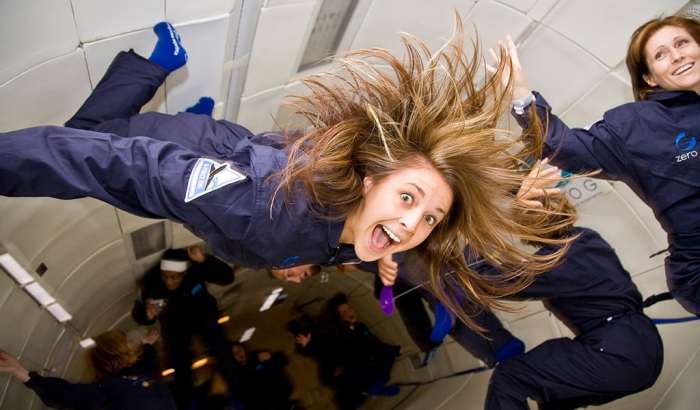
Zero-gravity, or more accurately, microgravity, is a fascinating phenomenon that allows objects to behave quite differently than they do on Earth. Understanding the physics behind this environment is key to appreciating the unique experiences of astronauts and the challenges of space exploration. It’s not truly zero gravity, but rather a state where the apparent weight of an object is negligible.The core principle behind zero-g is freefall.
Imagine an object, like a space capsule, falling towards Earth. As it falls, the Earth’s gravitational pull is constantly accelerating it downwards. Crucially, the capsule and everything inside it are also falling at the same rate. This shared acceleration effectively cancels out the sensation of weight.
Conditions for Zero Gravity
The critical condition for experiencing zero gravity is freefall. This occurs when an object’s trajectory is determined solely by the force of gravity, with no other significant forces acting upon it. For example, a space shuttle or the International Space Station (ISS) constantly falls around the Earth, but its forward velocity is carefully controlled to maintain orbit. This continuous state of falling creates the perception of weightlessness.
Watching those hawking flies float freely in zero-g is pure joy. It’s a spectacle of nature’s ingenuity, but unfortunately, mobile devices are creating a whole new kind of challenge for companies, like how security breaches are increasing due to the complexity of data on them. mobile devices create security challenge for companies. Still, the zero-g joyride of the flies is a mesmerizing reminder of the beauty of the natural world, even in the face of technological complexities.
Comparison with Earth’s Gravity
On Earth, gravity pulls objects towards the center of the planet. This force causes objects to accelerate downwards at a rate of approximately 9.8 m/s². In a zero-gravity environment, this acceleration is still present, but the object’s motion is such that it experiences no net force of gravity relative to its surroundings. The difference is stark: on Earth, objects fall towards the ground; in zero-g, objects float relative to each other.
Weightlessness in Zero Gravity
Weightlessness in zero gravity is a critical concept. It’s not that gravity is absent, but rather that the effect of gravity is balanced by the object’s motion. An astronaut inside a spacecraft orbiting the Earth feels weightless because the spacecraft and the astronaut are both falling at the same rate. This shared motion effectively eliminates the sensation of weight.
Examples of Object Movement in Zero Gravity
Zero gravity profoundly alters how objects behave. Consider a dropped object. On Earth, it falls straight down. In a zero-gravity environment, an object will either float in place or move along a path dictated by the object’s initial velocity. If given an initial push, the object will travel in a straight line at a constant speed.
Furthermore, objects don’t “pile up” as they do in Earth’s gravitational field. Instead, they tend to float and move independently.
Hawking Flies Free
Imagine a scene: Stephen Hawking, weightless, effortlessly gliding through the vast expanse of space. This isn’t science fiction; it’s a fascinating exploration of the possibilities of zero-gravity flight. The absence of gravity fundamentally alters the rules of movement, opening up a world of potential for human exploration and recreation.Zero-gravity flight, while theoretically achievable, presents several practical and conceptual hurdles.
The methods of achieving this freedom depend on the specific environment and the desired level of maneuverability. We’ll delve into the possibilities, potential obstacles, and necessary considerations for such a remarkable feat.
Methods of Achieving Free Flight
Various methods could enable a person to achieve free flight in zero gravity. Rocket propulsion systems, with their controlled thrust, would allow precise maneuvers. Alternatively, specialized suits equipped with jetpacks or other propulsion mechanisms could offer more flexible movement. These suits could also incorporate systems to counteract the effects of space radiation and maintain life support.
Obstacles to Free Flight
Achieving this kind of unhindered flight in zero gravity isn’t without its challenges. The absence of a solid surface for maneuvering and the vacuum of space create unique obstacles. Controlling trajectory and maintaining stability in the near-absolute void is crucial. Additionally, the psychological and physiological impacts of extended zero-gravity exposure, such as disorientation and bone density loss, require careful consideration and mitigation strategies.
Factors Influencing Freedom of Flight
| Factor | Description | Impact |
|---|---|---|
| Propulsion System | The method used to generate thrust, whether rockets, jets, or other forms of propulsion. | The type of propulsion system dictates the acceleration, maneuverability, and efficiency of the flight. |
| Environment | The specific characteristics of the space environment, including atmospheric pressure, radiation levels, and temperature. | Environmental conditions significantly affect the duration and safety of the flight, demanding protective measures. |
| Suit/Equipment | Any specialized equipment worn by the person, such as a spacesuit or propulsion suit. | The suit’s design and capabilities influence the comfort, safety, and maneuverability during flight. |
Hypothetical Zero-Gravity Environment
Consider a space station designed specifically for free-flight activities. Imagine a large, ring-shaped structure rotating to generate artificial gravity. This rotation would create a centrifugal force, simulating gravity. However, strategically placed zones within the station could be designed to be free of this artificial gravity. These zones would be ideal for zero-gravity flight exercises.
The design would incorporate multiple docking ports for spacecraft and shuttle access, and dedicated areas for various flight activities. Airlocks and life support systems would be essential for maintaining a safe and habitable environment.
Joyride in Zero Gravity
Zero-gravity environments offer a unique and unparalleled experience, a realm where the familiar laws of physics give way to exhilarating sensations. Imagine a world where weightlessness becomes a constant companion, where floating becomes second nature, and the very act of movement transforms into an ethereal ballet. This exploration delves into the emotional and sensory dimensions of a zero-gravity joyride, contrasting it with terrestrial experiences, and highlighting potential scenarios and thrills.Zero-gravity flight transcends the ordinary, transforming mundane actions into extraordinary feats.
The absence of gravity redefines movement, altering perceptions of self and the world around you. This is not just about defying gravity; it’s about experiencing a profound shift in perspective, a unique opportunity to understand and appreciate the universe from a different vantage point. This joyride is a journey of sensory discovery, pushing the boundaries of what is considered possible and normal.
Emotional and Sensory Experiences
The experience of zero gravity is profoundly emotional. A feeling of liberation and exhilaration often accompanies the freedom from the constraints of gravity. The sensation of weightlessness is profound, initially a disorienting feeling of floating and then a sense of wonder and joy. The visual perception of the world also undergoes a remarkable transformation. Objects and the body itself appear to defy expectations, moving in unpredictable and fascinating ways.
The absence of the familiar pull of gravity alters the way we perceive our own bodies, our movements, and the environment around us.
Comparison with Earth-Based Experiences
A zero-gravity joyride contrasts sharply with terrestrial experiences. On Earth, movement is dictated by gravity, leading to a predictable and often constrained experience. In space, the absence of gravity allows for unfettered movement, an almost ethereal sense of freedom. The exhilaration and joy derived from a zero-gravity experience stem from this fundamental difference, a liberation from the limitations of Earth’s gravitational pull.
Seeing those hawking flies zoom around in zero-G is pure joy, a fascinating display of nature’s resilience. But even this amazing spectacle pales in comparison to the challenges of real-world tech issues, like Google’s recent privacy update – a close but no cigar effort, as detailed in googles big privacy move close but no cigar. Still, the sheer beauty of the floating flies reminds us that there’s more to the universe than just tech updates.
Maybe zero-G is the ultimate freedom for those tiny flyers.
Imagine trying to throw a ball on Earth, versus the weightless dance of a similar object in space.
Possible Scenarios for Zero-Gravity Joyrides
Zero-gravity joyrides can take place in various contexts. Space tourism, offering short flights into orbit or suborbital space, is one possibility. These experiences could include breathtaking views of Earth, the sensation of floating in microgravity, and the awe-inspiring vastness of space. Simulated zero-gravity environments, such as parabolic flights or specialized facilities, provide accessible options for experiencing the thrill of weightlessness without the extensive costs of space travel.
These experiences can be designed to cater to different levels of experience, from novice to expert, offering unique sensory experiences and opportunities for exploration.
Possible Experiences During a Zero-Gravity Joyride
- Initial Disorientation: The transition to weightlessness can be disorienting, as the body adjusts to the absence of gravity. This initial feeling is a part of the overall experience and often gives way to other sensations.
- Exhilaration and Joy: The freedom from gravity’s pull can induce a profound sense of exhilaration and joy. This feeling of liberation is often associated with the unique experience of floating and moving in new ways.
- Sensory Awareness: The absence of gravity alters sensory perception. The visual and kinesthetic experiences of movement and orientation are dramatically different in a zero-gravity environment. This altered perception can lead to a heightened awareness of the senses.
- Weightlessness: The profound sensation of weightlessness is a defining feature of zero-gravity experiences. This unique feeling can be deeply moving and impactful. It’s a feeling that can’t be fully captured by words alone, and must be experienced to be understood.
- Awe and Wonder: The vastness of space and the experience of floating in a weightless environment can evoke a profound sense of awe and wonder. Witnessing the Earth from space, for example, can be an unforgettable experience.
Visual Representation: Hawking Flies Free In Zero G Joyride
Zero-G joyrides offer a breathtaking spectacle, a visual symphony of colors, textures, and cosmic grandeur. Imagine a kaleidoscope of vibrant hues dancing across the vast expanse of space, a breathtaking panorama of planets and stars swirling around you. The sheer wonder of the experience is encapsulated in the visual spectacle.
A Zero-G Joyride Experience
The person, clad in a sleek, lightweight spacesuit reflecting the surrounding light, is enveloped in a mesmerizing dance of zero gravity. They’re not just floating; they’re actively experiencing the joy of controlled movement, performing graceful aerial maneuvers. Imagine them effortlessly pirouetting, their limbs extending in all directions, like celestial figures in a cosmic ballet. The soft, almost ethereal glow of the spacesuit material creates a mesmerizing contrast against the deep, inky blackness of space.
Vibrant Colors and Textures, Hawking flies free in zero g joyride
The experience is a visual feast, where vibrant colors paint the canvas of space. Deep blues, intense purples, and fiery oranges from distant stars and nebulae intermingle with the soft, pastel tones of the spacesuit. The texture of the spacesuit, a delicate weave of lightweight yet strong materials, shimmers with an almost liquid quality as it catches and reflects the light.
This plays with the eye and senses, amplifying the feeling of weightlessness and freedom.
Environment: Space, Planets, and Stars
The environment surrounding the zero-gravity joyrider is a spectacle of cosmic proportions. Vast stretches of inky blackness are punctuated by the brilliant, dazzling light of distant stars, their intensity varying with their proximity and size. Planets, in their various hues of blues, greens, and oranges, hover like majestic jewels in the dark expanse, their surfaces reflecting the light of the stars and each other.
Nebulae, swirling clouds of gas and dust, create ethereal patterns against the backdrop, adding to the breathtaking panorama.
Watching those hawking flies take a zero-gravity joyride is pretty cool, right? It’s amazing how they navigate in the absence of gravity. Meanwhile, companies like AOL are also making strides in the digital realm, pushing high-speed service like aol makes broadband friends pushes high speed service , which is crucial for smooth online experiences. Back to the flies, it makes you wonder if their zero-G acrobatics are somehow linked to the next generation of internet speed!
Movement and Position
The joyrider’s movement is fluid and graceful, free from the constraints of gravity. They can glide effortlessly through the cosmos, their position constantly changing, defying the normal laws of physics. They’re not just passively floating; they’re actively controlling their movement, performing acrobatic maneuvers and executing choreographed patterns, creating a captivating display of human mastery in the weightless environment. Their position and posture are dynamic and ever-changing, reflecting the ongoing dance with the surrounding cosmos.
Camera Angles
| Camera Angle | Description |
|---|---|
| Bird’s Eye View | Provides a comprehensive view of the entire scene, showcasing the intricate dance of the joyrider amidst the stars and planets. |
| Close-up | Focuses on the joyrider’s facial expressions, capturing the exhilaration, wonder, and sheer joy of the experience. |
| Wide Angle | Offers a broader perspective, showcasing the vastness of space and the joyrider’s position within this immense environment. |
Visual Impact
The visual impact of this zero-gravity joyride is profound. It’s a sensory experience that transcends the boundaries of our everyday reality. The interplay of colors, textures, and movement creates a breathtaking panorama that evokes a sense of awe, wonder, and exhilaration. The sheer spectacle of the cosmos unfolding around the joyrider is likely to leave a lasting impression, potentially inspiring a new appreciation for the vastness and beauty of the universe.
Technical Considerations
Zero-gravity joyrides, while captivating in concept, present significant technical hurdles. Achieving and maintaining a sustained period of weightlessness for human passengers demands careful consideration of engineering, safety protocols, and spaceship design. This section delves into the intricacies of creating a safe and enjoyable zero-gravity experience.Creating a sustained zero-gravity environment, akin to the microgravity experienced in space, requires specialized spacecraft and meticulously controlled maneuvers.
The engineering challenges are multifaceted, ranging from propulsion systems to environmental controls and passenger safety mechanisms. Careful calculations and precise execution are critical for a successful joyride.
Requirements for Achieving Zero-Gravity
The key to a zero-gravity joyride is a controlled state of freefall. This requires sophisticated propulsion systems capable of generating precise thrust vectors. These systems must be able to counteract the effects of gravity, creating a state of equilibrium. This is not merely about suspending a person in mid-air, but about sustaining that condition over an extended period.
The spacecraft’s trajectory must be carefully calculated to maintain a continuous state of freefall.
Engineering and Design Challenges
Designing a spacecraft capable of inducing and sustaining zero-gravity for passengers necessitates advanced engineering solutions. The spacecraft must withstand the forces of acceleration and deceleration associated with the freefall maneuvers. Furthermore, maintaining a stable and comfortable environment within the craft is crucial. This includes temperature regulation, pressure control, and the prevention of motion sickness, particularly during periods of rapid acceleration or deceleration.
Safety Measures and Protocols
Safety protocols must be rigorous for a zero-gravity joyride. Comprehensive pre-flight checks, real-time monitoring of vital parameters, and emergency procedures are critical. This includes redundant systems for propulsion, life support, and communication. The spacecraft must be equipped with advanced safety mechanisms to mitigate risks associated with unexpected events, such as equipment malfunctions or environmental anomalies.
Types of Spaceships for Zero-Gravity Joyrides
Various spacecraft types could potentially facilitate a zero-gravity joyride. One possibility is a specialized, high-performance jet aircraft designed to execute parabolic maneuvers, briefly mimicking the conditions of spaceflight. These aircraft, often called “Vomit Comets,” are extensively used for astronaut training. Another type could be a small, modular spacecraft capable of executing controlled, short-duration freefall trajectories. The choice of spacecraft would depend on the desired duration, the number of passengers, and the level of sophistication required.
Comparison of Zero-Gravity Environments
Different zero-gravity environments exhibit unique characteristics. Parabolic flights, while offering brief periods of weightlessness, are limited in duration and the magnitude of the zero-g experienced. Space tourism ventures, on the other hand, offer longer durations of weightlessness but are associated with substantial costs and complexity. The best approach would depend on the specific goals and budgetary constraints of the project.
Outcome Summary
In conclusion, Hawking flies free in zero-g joyride explores the fascinating world of zero gravity, from the physics behind weightlessness to the emotional and sensory experience of a zero-gravity joyride. The journey showcases the possibilities of human flight beyond Earth’s gravity, highlighting the thrill, excitement, and technical challenges involved. It’s a journey into the unknown, a testament to human ingenuity and imagination, leaving us with a lasting impression of the universe’s wonders.