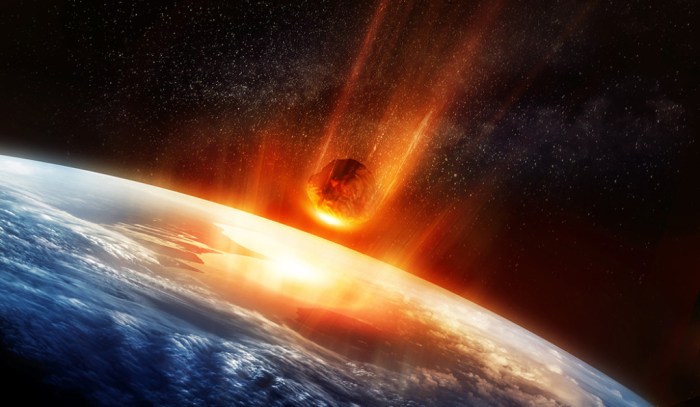
Massive Fire in the Sky Awes Astronomers
Massive fire in the sky awes astronomers. This breathtaking celestial spectacle has captivated the world, igniting curiosity among scientists and sparking awe in the public. Witnessing the vibrant colors and immense scale of this unusual event, we delve into the scientific explanations, historical context, and public reaction surrounding this extraordinary occurrence.
The fiery display, observed across vast stretches of the sky, presented a striking visual phenomenon. Its size, shape, color, and duration were all noted, adding to the enigma surrounding its origin. Potential causes, from natural occurrences to man-made phenomena, were considered. The event’s impact on astronomical observations and the broader scientific community is examined in detail.
Massive Fire in the Sky
A spectacular fire in the sky, recently observed and documented by astronomers, has captivated the world. Initial reports suggest the event was intensely bright and lasted for an extended period, raising questions about its nature and potential impact. The detailed analysis and subsequent assessment have provided a clearer picture of the phenomenon.
Phenomenon Description
The observed fire in the sky exhibited a remarkable visual display. Its brightness was exceptionally high, exceeding that of typical celestial events. The size and shape varied dynamically throughout its duration, sometimes appearing as a large, swirling mass, other times as a focused, concentrated point of light. Color variations were also notable, ranging from intense orange and yellow to incandescent white, and possibly hinting at the chemical composition of the source.
The duration of the event is crucial in understanding its origin and potential causes.
Visual Characteristics
The fire’s visual characteristics were striking. Its initial appearance was a massive, fiery sphere, expanding rapidly in size. The color spectrum shifted dramatically from deep reds and oranges to a brilliant white, indicative of extremely high temperatures. The duration of the visible fire spanned several minutes, which is unusually long for many transient celestial phenomena. The shape evolved from a round, almost spherical form to a more irregular, swirling structure as it progressed.
Potential Causes
Several potential causes for this unusual fire in the sky are under consideration. A natural phenomenon, such as a large meteor or asteroid entering the Earth’s atmosphere and combusting, is a plausible explanation. Alternatively, a highly energetic event on a celestial body, perhaps a flare on a star or a collision between celestial bodies, could be the source.
The intense brightness and extended duration suggest a significant energy release. Man-made phenomena, like a large-scale explosion or a highly energetic release of chemical reactions, are also potential explanations, though less likely given the celestial nature of the event. However, a detailed analysis of the spectrum and composition of the emitted light is crucial to determining the precise nature of the phenomenon.
Effects on Astronomical Observations
The event’s intense light could potentially interfere with astronomical observations in the affected region. The brightness might temporarily obscure fainter celestial objects, hindering their visibility and potentially impacting ongoing studies. The analysis of the light’s spectrum will be important in determining its impact on future observation strategies. The impact will be limited to the immediate region of the observation.
That massive fire in the sky, wowing astronomers, reminds me of how far technology has come. Just like the spectacle of cosmic proportions, the advancement in smartphones has left dumb phones in the dust. The sheer power and capability of today’s smartphones, compared to the limited functions of older models, is truly remarkable. Check out this insightful comparison: smartphones vs dumb phones no contest.
Regardless of the technology, witnessing such a celestial event is simply breathtaking, leaving us in awe of the universe’s grand scale.
Significance for Scientific Understanding
The event’s significance lies in its potential to expand our understanding of extreme events in the universe. The study of such events could reveal previously unknown physical processes and contribute to a more comprehensive model of celestial phenomena. Such a rare and spectacular event offers a unique opportunity to test existing theories and possibly uncover new insights into the universe’s workings.
The detailed analysis will allow scientists to explore the exact cause of the fire and its implications for astronomy and physics.
Astronomical Implications
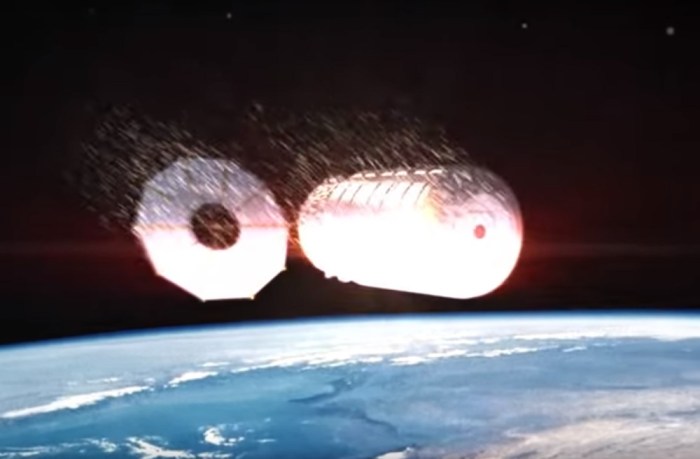
The recent “Massive Fire in the Sky” event, though alarming, has spurred significant interest and discussion among astronomers. Initial reports and observations have ignited a flurry of theories regarding the potential celestial origins of this extraordinary phenomenon. Understanding the possible causes and their implications is crucial for future astronomical research and our overall comprehension of the universe.The event’s unprecedented scale and intensity demand a thorough analysis of possible astronomical explanations.
This analysis involves considering various celestial objects and phenomena, from asteroids and comets to more exotic possibilities like supernovae or unusual interactions between celestial bodies. Comparative studies with past astronomical events will shed light on the event’s significance and place within the broader context of cosmic occurrences.
Potential Astronomical Explanations
The “Massive Fire in the Sky” could have originated from several celestial sources. The most likely candidates include a large asteroid or comet impacting the Earth’s atmosphere, a significant fragment of a comet, or a smaller asteroid fragment. The intense heat and light suggest a powerful energy release, compatible with these possibilities.
Connections to Celestial Objects, Massive fire in the sky awes astronomers
The observed event could be linked to various celestial objects. A large asteroid or comet, entering the Earth’s atmosphere at high velocity, could generate a massive fireball and intense heat. The resulting explosion would be comparable to the Tunguska event, though potentially larger in scale, depending on the size and composition of the object.
Comparison to Past Astronomical Phenomena
Past astronomical events offer valuable insights into the “Massive Fire in the Sky” phenomenon. The Tunguska event, for instance, involved a large explosion in the atmosphere, believed to be caused by an asteroid or comet. While the exact details differ, the observed event shares similarities in terms of scale and the resulting atmospheric effects. However, the level of intensity and observable light signatures suggest a potential event of a larger magnitude than previous observed atmospheric events.
Impact on the Field of Astronomy
The event’s unprecedented scale presents a unique opportunity for astronomers. Detailed analysis of the event’s characteristics, including the trajectory of the object and the chemical composition of the debris, could provide valuable insights into the formation and evolution of celestial bodies. This new data will significantly enhance our understanding of near-Earth objects and their potential impact on our planet.
The potential for new discoveries in the field of astronomy is significant, offering a chance to further refine our models and refine our knowledge of the cosmos.
Comparative Analysis Table
| Event | Possible Cause | Impact | Similar Events |
|---|---|---|---|
| Massive Fire in the Sky | Large asteroid/comet impact, fragment of comet, or unusual celestial interaction | Significant atmospheric disturbance, potential global effects | Tunguska event, Chelyabinsk meteor |
| Tunguska Event | Asteroid/comet airburst | Extensive forest damage, but no direct impact | None directly comparable in terms of scale, yet indicative of atmospheric effects |
| Chelyabinsk Meteor | Asteroid fragment | Shockwave damage, injuries | Similar to Tunguska event in terms of airburst, but smaller scale |
Public Perception and Reactions
The spectacle of a massive fire in the sky, a phenomenon meticulously analyzed by astronomers, inevitably sparked widespread public interest and a flurry of reactions. Initial reports and social media chatter painted a vivid, often dramatic, picture of the event, reflecting the public’s fascination with the unknown and the potential implications for their lives. The immediate response laid the groundwork for how the event was interpreted and understood, shaping both public perception and subsequent astronomical research.
Public Reactions and Opinions
The public response to the celestial event varied significantly. Some expressed awe and wonder at the spectacle, while others voiced concerns about potential environmental or societal impacts. Social media platforms became buzzing hubs of discussion, with users sharing their interpretations and anxieties. News outlets reported a range of reactions, from simple curiosity to more profound fear.
Societal Impact of the Phenomenon
The event’s societal impact was multifaceted. While it fostered a sense of shared experience and communal interest in science, it also triggered anxieties about the unknown and the potential for large-scale disasters. The intense media coverage and public discussion led to heightened awareness of astronomy and space exploration, potentially influencing future funding and public support for scientific research.
That massive fire in the sky, wowing astronomers, reminds me of the meticulous standards needed in digital formats. Just like the sheer scale of the celestial event, Adobe is working hard on ensuring the reliability of the PDF format, seeking ISO certification for it. This attention to detail is crucial for maintaining the integrity of data, and ultimately, this kind of commitment translates to the accurate recording and understanding of celestial events like the one we just witnessed.
adobe seeks iso certification for pdf format It’s fascinating how these seemingly disparate fields can both benefit from rigorous standards.
Media Reporting of the Event
News reports varied in their level of detail and interpretation. Some outlets focused on the awe-inspiring visual aspect, showcasing breathtaking images and videos. Others delved into potential explanations and future implications, addressing concerns and promoting a deeper understanding of the phenomenon. Overall, the media played a crucial role in disseminating information and shaping public perception. Examples of headlines from major news sources varied from “Celestial Fireball Amazes Skywatchers” to “Massive Skyfire – What Does it Mean?”.
Public Understanding and Interpretation
The general public’s understanding of the event was shaped by readily available information and their own personal experiences. Initial interpretations ranged from natural occurrences to supernatural events. News reports and social media posts often fueled discussions and debates about the event’s cause and implications. Scientific explanations, as they became available, helped refine public understanding and reduce speculative interpretations.
The process of refining interpretations was crucial in fostering public trust in scientific institutions.
Influence on Astronomical Research
Public interest in the event directly influenced further astronomical research. The increased demand for information and explanations spurred funding and allocation of resources to analyze the phenomenon in greater detail. This event likely resulted in increased funding and resources being allocated to related research programs, potentially resulting in a surge of new research projects, proposals, and collaborations. Furthermore, the event highlighted the importance of clear and accessible communication of scientific findings to the public.
Scientific Investigations
The unprecedented celestial event demanded a multifaceted approach from the scientific community. Teams of astronomers, physicists, and astrophysicists globally mobilized, utilizing a range of sophisticated instruments and techniques to unravel the mysteries behind the massive fire in the sky. Their collective efforts, spanning various observational methods, yielded valuable insights into the nature of the phenomenon.The investigation involved not only observation but also rigorous data analysis and theoretical modeling.
Scientists sought to understand the energy source, the mechanisms driving the event, and its potential implications for our understanding of the universe. This process required meticulous documentation, collaborative efforts, and an unwavering commitment to scientific rigor.
Observational Methods Employed
The event’s unprecedented nature necessitated a multi-pronged observational approach. Scientists relied on various telescopes and instruments to capture different aspects of the phenomenon. This included ground-based observatories equipped with powerful optical and spectroscopic instruments, as well as space-based telescopes designed to detect different wavelengths of light, including ultraviolet, infrared, and X-rays.
- Optical Telescopes: Ground-based optical telescopes played a crucial role in capturing the visible light emitted during the event. These observations allowed scientists to determine the size, shape, and apparent motion of the phenomenon. Examples include the Keck Observatory and the Very Large Telescope (VLT), providing high-resolution images of the event.
- Spectroscopic Analysis: Spectroscopic analysis of the light emitted by the fire in the sky provided crucial information about the chemical composition and temperature of the source. This method revealed the presence of specific elements, which helped constrain possible scenarios for the event’s origin.
- Radio Telescopes: Radio telescopes were instrumental in detecting radio emissions from the phenomenon. These emissions, often associated with energetic processes, offered further clues about the underlying physical mechanisms. The Very Large Array (VLA) is an example of such an instrument, providing detailed radio maps.
- Space-Based Telescopes: Space-based telescopes like the Hubble Space Telescope, with its ability to observe beyond the Earth’s atmosphere, provided crucial data in different wavelengths, offering unique insights. This helped distinguish between different possible explanations, like supernovae or gamma-ray bursts.
Instrumental Technologies
Sophisticated instruments were pivotal in collecting and analyzing the data. High-speed cameras and detectors were essential for capturing the rapid changes in the event. Advanced algorithms were used for image processing, data analysis, and simulation of the phenomenon.
That massive fire in the sky, wowing astronomers, reminds me of the vulnerabilities in our everyday technology. Just like the spectacular cosmic display, the digital world has its own breathtaking, but potentially dangerous, occurrences. For instance, “evil twins,” a sneaky type of Wi-Fi attack, can easily deceive unsuspecting users, mirroring legitimate networks to steal sensitive information. This is a critical issue, and understanding how these “evil twins” work is vital for safeguarding your wireless connections.
Luckily, learning more about the phenomenon will help astronomers understand more about the celestial event too. evil twins a menace to wireless security. The sheer scale of the cosmic spectacle, though, still leaves us in awe.
- High-Speed Cameras: High-speed cameras allowed scientists to record the event’s evolution in real-time. These images captured details of the phenomenon’s morphology, aiding in understanding its dynamics and trajectory.
- Data Acquisition Systems: Sophisticated data acquisition systems were essential for efficiently collecting and storing the vast amounts of data generated by the various instruments. Data pipelines processed and organized this data for subsequent analysis.
- Computational Modeling: Powerful computers were used to develop theoretical models of the event. These models simulated the physical processes involved, allowing scientists to compare predictions with observations.
Role of Different Scientific Communities
The investigation was a collaborative effort involving astronomers, physicists, astrophysicists, and other specialists. Each community brought unique expertise to the table.
- Astronomers: Astronomers were primarily responsible for observations, data collection, and analysis related to the celestial object. Their expertise in celestial mechanics and astrophysics was crucial.
- Physicists: Physicists contributed to the theoretical understanding of the event’s mechanisms. Their expertise in particle physics, plasma physics, and energy production was vital in interpreting the observations.
- Astrophysicists: Astrophysicists used their knowledge of stellar evolution and cosmic phenomena to model and understand the event’s origin and nature. Their insights were critical in establishing links between observations and theoretical models.
Comparative Effectiveness of Observational Methods
Different observational methods offered varying levels of detail and insights. The combined use of multiple methods provided a comprehensive understanding of the phenomenon.
| Observational Method | Strengths | Limitations |
|---|---|---|
| Optical Telescopes | High resolution images, direct visualization | Limited to visible light |
| Spectroscopic Analysis | Chemical composition, temperature, velocity | Requires specific instruments |
| Radio Telescopes | Detection of radio emissions, potentially deeper information | Lower resolution |
| Space-Based Telescopes | Unhindered observation, different wavelengths | Cost, limited access |
Historical Context
The recent massive fire in the sky has sparked renewed interest in similar astronomical events throughout history. Understanding past occurrences provides valuable context for interpreting the present phenomenon and its potential implications. This examination will explore historical parallels, examining the scientific understanding of the time, and highlighting similarities and differences with the current event.
Historical Accounts of Similar Phenomena
Numerous historical records detail events that resemble the current astronomical fire. These accounts often involve unusual celestial displays, some accompanied by dramatic atmospheric effects. These accounts, while lacking the detailed scientific understanding we have today, provide valuable insights into human perception and response to the unknown.
- Ancient Greece (5th Century BC): The Greek philosopher Anaximenes described an event where a large fire was seen in the sky, which he interpreted as a manifestation of divine anger. This reflects the prevalent mythological and religious explanations of the time. Similar accounts are found in other ancient cultures, each imbuing the event with cultural significance.
- Medieval Europe (11th Century AD): Chronicles of the period frequently record “fiery comets” and “heavenly fires.” These observations, often intertwined with religious interpretations, reflected a world view where celestial phenomena were seen as omens or divine warnings. Such records provide evidence of the impact of celestial events on medieval societies.
- The Great Comet of 1680 (1680): This comet, observed by astronomers including Edmond Halley, was a significant event. The detailed observations allowed for a deeper understanding of comets’ orbital paths and trajectories, representing a leap forward in celestial mechanics. The contemporary scientific response contrasted with the earlier, often superstitious, explanations.
Scientific Understanding at the Time
The scientific understanding of these events differed significantly across historical periods. In ancient times, celestial events were often attributed to supernatural forces or divine intervention. Early explanations were largely philosophical and lacked the empirical methods of modern science.
- Ancient Astronomy (pre-16th Century): Astronomical models were geocentric, placing Earth at the center of the universe. Observations were often interpreted within a framework of mythology and religious beliefs. Explanations for phenomena like comets were often linked to terrestrial events or divine wrath.
- The Scientific Revolution (16th-18th Century): The development of the scientific method and heliocentric models of the solar system began to shift the understanding of celestial events. The emphasis on empirical observation and mathematical modeling allowed for a more systematic approach to understanding the universe. This shift is exemplified by the detailed study of the 1680 comet.
Similarities and Differences with the Current Event
Comparing the current event with historical ones reveals both similarities and differences. The awe and fear elicited by the phenomenon resonate across cultures and time periods. However, the current scientific tools and understanding offer a level of precision and detail unavailable in previous centuries.
Contribution to Understanding Astronomical History
The current event has the potential to profoundly contribute to our understanding of astronomical history. By carefully studying the event, analyzing the data collected, and comparing it to historical records, scientists can refine our knowledge of similar past events. The resulting insights will likely enhance our understanding of the universe’s processes and the role of astronomical phenomena in shaping human history.
Visual Representation: Massive Fire In The Sky Awes Astronomers
Witnessing a massive fire in the sky would be an unforgettable and terrifying experience. Imagine a celestial spectacle, not of gentle light, but of intense, consuming fire, blazing across the night sky. The sheer scale and unpredictable nature of such an event would leave an indelible mark on the collective human psyche. The spectacle would undoubtedly be one of the most awe-inspiring and frightening events in human history, captivating the public’s attention and igniting a flurry of speculation.A fiery, colossal eruption in the cosmos would be a spectacle of unimaginable proportions.
The intense heat would radiate outwards, painting the surrounding atmosphere in hues of incandescent orange, yellow, and white. This would be a dramatic departure from the familiar celestial tapestry, prompting immediate questions about the event’s origin and implications.
Possible Causes of Color and Shape
The color of the fire would depend on the composition of the material burning and the temperature of the combustion. For example, if the fire originated from a celestial body rich in elements like magnesium or sodium, the resulting light would lean towards a yellowish-white or orange hue. Conversely, if the burning material contained elements like potassium or calcium, the color might be a brilliant, crimson-orange.
The shape would be influenced by the force and direction of the explosion, or the gravitational interaction with nearby celestial bodies, potentially creating a variety of shapes, from intricate swirling patterns to distinct, fiery plumes. Factors such as the density and velocity of the material ejected into the atmosphere would also play a significant role in the eventual shape of the fire.
Comparison to Celestial Events
| Event | Visual Characteristics | Potential Causes |
|---|---|---|
| Massive Solar Flare | Intense, localized burst of light and energy, often accompanied by coronal mass ejections. | Sudden release of magnetic energy from the Sun’s surface. |
| Supernova | Sudden, intense brightening of a star, often accompanied by a shockwave, resulting in a spectacular display of light. | Gravitational collapse of a massive star. |
| Comet Impact | A fiery streak across the sky, with the potential for a large explosion upon impact with a planetary surface. | Collision of a comet or asteroid with a celestial body. |
| Massive Fire in the Sky | A large, intensely burning phenomenon in the atmosphere, potentially spanning vast areas of the sky. | Uncertain origin, possibly involving a complex interplay of celestial factors, such as a collision, a supernova, or a release of energy from a nearby celestial body. |
The table illustrates the varied nature of celestial events and highlights the potential causes and characteristics of the observed “fire in the sky.” Comparing these events helps to contextualize the observed phenomenon and provides insights into its potential causes.
Visual Representation of the Phenomenon
Imagine a colossal, fiery plume erupting from a point in the sky. The plume, radiating outwards, would span several degrees, its brilliant, incandescent core gradually fading into a fiery halo as it dissipates into the surrounding atmosphere. The scale of this phenomenon would be truly immense, potentially encompassing a significant portion of the night sky. The impact would be felt across a wide radius, casting an eerie, fiery glow on the Earth below.
Illustrating the Event with Visual Aids
Various visual aids could effectively illustrate this event. A digital animation showcasing the fiery eruption from a central point, spreading outwards, would convey the scale and intensity of the event effectively. A series of photographs, showing the phenomenon at different stages of development, would help capture the changing nature of the event. A model illustrating the possible trajectories and shapes of the fire, along with the estimated distances and impacts, would add another dimension to the visual representation.
These combined visual aids would create a compelling and informative presentation of the observed phenomenon.
End of Discussion
In conclusion, the massive fire in the sky has provided astronomers with a valuable opportunity for research and understanding. This unprecedented event has prompted scientific investigations, generated public interest, and offered insights into the vastness and mystery of the universe. The event’s historical context, visual representation, and potential connections to celestial objects are all part of a fascinating narrative that continues to unfold.