Microsofts Silverlight Outshining Flash
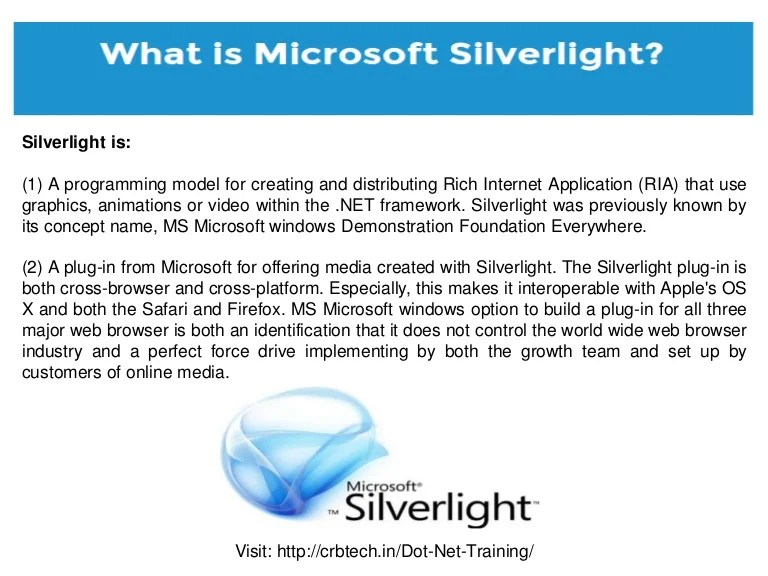
Microsofts silverlight aims to outshine flash – With Microsoft’s Silverlight aiming to outshine Flash, this post delves into the fascinating rivalry between these two technologies. Silverlight, a platform aiming for dominance in the web application space, challenged Adobe Flash’s established position. This exploration examines the initial goals, key architectural differences, and the strategic plans that both platforms employed in their quest for supremacy.
The article will trace the rise and fall of Silverlight, examining its strengths and weaknesses compared to Flash. We’ll also look at the changing technological landscape during this period, analyzing how advancements in HTML5 and JavaScript frameworks ultimately impacted both technologies. The evolution of web development and the eventual decline of Silverlight will be discussed in detail.
Introduction to Silverlight and Flash

Silverlight and Adobe Flash were two prominent technologies vying for dominance in the realm of rich internet applications (RIAs) during the mid-2000s to the early 2010s. Both aimed to bring desktop-like interactivity and visual richness to web pages, challenging the limitations of traditional HTML. This competition significantly shaped the evolution of web development, ultimately influencing the rise of HTML5 and other technologies.Both Silverlight and Flash leveraged different approaches to achieve this goal.
Silverlight, built on Microsoft’s .NET framework, focused on a more integrated and platform-consistent approach, while Flash, developed by Adobe, relied on a proprietary, action-script based language for its functionality. This divergence in architecture led to contrasting strengths and weaknesses, influencing their adoption and eventual decline.
History and Initial Goals
Silverlight, initially released in 2007, was part of Microsoft’s strategy to compete with Flash’s growing influence in the web development landscape. Its primary goal was to provide a platform for rich media content, interactive games, and complex applications within web browsers. The vision encompassed leveraging .NET technology, offering developers familiarity with C# and other languages. Flash, introduced in 1996, quickly became a dominant force, empowering interactive elements on websites, from animations to games and even early forms of video playback.
Its primary goal was to deliver dynamic content and user experiences that HTML alone could not provide at the time.
Architectural Differences
Silverlight utilized a framework based on the .NET platform. This allowed for the use of familiar programming languages like C# and a compiled execution model. The .NET framework provided a more structured and managed environment for developers, aiming for stability and performance. Flash, in contrast, used a proprietary action script language, executed within a browser plugin. This approach provided a more flexible scripting environment, enabling quicker prototyping but potentially leading to more complex debugging scenarios.
Usage in Web Applications
Silverlight was employed in a diverse range of web applications, from interactive financial dashboards and educational simulations to intricate business applications. Its integration with the .NET ecosystem allowed developers to leverage existing .NET libraries and expertise, streamlining development workflows. Flash, similarly, found widespread use in creating dynamic user interfaces, engaging games, and multimedia presentations. Examples include interactive maps, video players, and sophisticated e-learning platforms.
Key Features Comparison
| Feature | Silverlight | Flash |
|---|---|---|
| Programming Language | C#, VB.NET | ActionScript |
| Execution Environment | .NET Framework within browser | Proprietary plugin |
| Platform Support | Cross-platform (with limitations) | Mostly Windows-centric |
| Deployment | Often required a specific Silverlight plug-in | Generally required a Flash plugin |
| Community Support | Extensive community, but eventually diminished | Large, active community |
Silverlight’s Approach to Outshining Flash
Microsoft’s Silverlight, a technology aiming to challenge Adobe Flash’s dominance in rich internet applications, employed a multi-pronged strategy. This strategy involved a combination of aggressive marketing, strategic partnerships, and a compelling technical approach. Silverlight sought to offer a more robust and future-proof solution than Flash, addressing perceived limitations in terms of performance, security, and interoperability.Silverlight’s approach revolved around providing a platform for developing rich internet applications (RIAs) with a focus on ease of use and compatibility across various operating systems and browsers.
The underlying technology aimed to offer a superior alternative to Flash, emphasizing improved performance, security, and broader ecosystem support.
Microsoft’s Strategic Plan for Silverlight’s Rise
Microsoft envisioned Silverlight as a key component of its broader .NET ecosystem. This strategic plan aimed to integrate Silverlight seamlessly into the existing .NET development tools and frameworks. By making it familiar to developers already using .NET technologies, Microsoft sought to facilitate rapid adoption and a large developer community. Furthermore, Microsoft promoted Silverlight’s compatibility with various operating systems and browsers, fostering wider accessibility and use.
Technical Aspects of Silverlight’s Approach
Silverlight leveraged the power of the .NET Framework. This allowed developers to utilize familiar programming languages and tools for building RIAs. The use of XAML (Extensible Application Markup Language) simplified the development process. This allowed for declarative UI design and facilitated rapid prototyping and iteration.
Key Advantages Silverlight Positioned Itself With
Silverlight positioned itself with several key advantages. Its integration with the .NET Framework allowed for familiar programming languages and tools. The use of XAML facilitated declarative UI design. Furthermore, Silverlight offered improved security compared to Flash. It also had better cross-browser compatibility and support for different operating systems, including Windows, Linux, and Mac.
Performance Characteristics Comparison
Silverlight’s performance was often touted as an improvement over Flash. The use of a managed runtime and direct hardware acceleration were claimed to result in smoother and faster playback of multimedia content. However, Flash, with its optimized native code and extensive community support for optimization, sometimes exhibited better performance, especially for complex interactions. Performance differences could also vary greatly based on the specific application and hardware configuration.
Addressing Flash Limitations
Silverlight directly addressed some limitations of Flash. Improved security features and a more robust architecture were highlighted. The use of managed code offered enhanced security and reduced the risk of vulnerabilities. Furthermore, Silverlight’s platform aimed to create a more open and collaborative environment.
Strengths and Weaknesses of Silverlight and Flash
| Feature | Silverlight | Flash |
|---|---|---|
| Programming Language | .NET languages (C#, VB.NET) | ActionScript |
| UI Design | XAML, declarative | Mostly imperative |
| Performance | Often better for media, good for complex apps | Generally better for complex interactions, gaming |
| Security | Better security model | Known for security vulnerabilities |
| Cross-Platform Compatibility | Good compatibility | Generally excellent, but with potential issues |
| Community Support | Smaller than Flash’s at peak | Very large and active |
| Cost of Development | Higher development costs | Lower entry barrier, less expensive for simple apps |
Flash’s Strengths and Silverlight’s Countermeasures
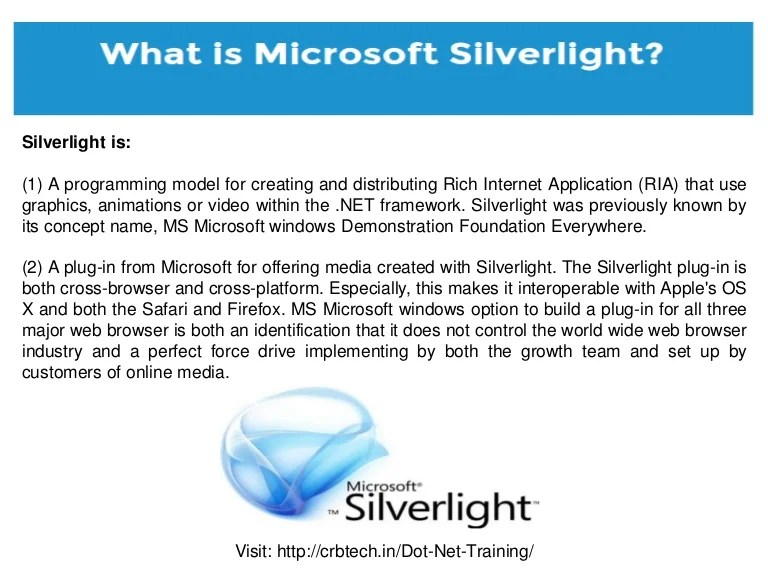
Flash, during its heyday, reigned supreme in the realm of rich internet applications. Its ability to create interactive, visually stunning experiences captivated users and developers alike. Flash’s strengths lay in its robust vector graphics capabilities, ease of use for developers, and a vast library of readily available components. This combination made it a powerful tool for building engaging websites and applications.Silverlight, Microsoft’s response to Flash, aimed to capitalize on the demand for rich web experiences while addressing the limitations of Flash.
Silverlight’s strength lay in its integration with the Microsoft ecosystem and its promise of enhanced performance and security.
Flash’s Key Strengths and Popularity
Flash’s widespread adoption was driven by several key factors. Its vector graphics capabilities allowed for smooth animations and complex visual effects, a key feature lacking in other web technologies at the time. Furthermore, Flash’s ActionScript programming language offered developers a relatively straightforward method for creating interactive content. A substantial community of developers contributed to the growth of Flash libraries, making it easier to create intricate applications.
Microsoft’s Silverlight, aiming to dethrone Flash, was a significant player in the browser plug-in game. However, the innovative approach of Fanning’s SnoCap, which bridges the gap between record labels and peer-to-peer file sharing platforms ( fannings snocap builds bridge between labels and p2p ), might offer a more practical solution for digital distribution, ultimately potentially affecting the future of Silverlight’s ambitions in the browser space.
The future of these competing technologies is still unfolding.
Flash’s ubiquity across various platforms, including desktop and mobile devices, further solidified its position.
Flash’s Limitations
Flash, while powerful, was not without its drawbacks. Security concerns, particularly the vulnerability to malicious code, plagued the platform. The limited support for different operating systems and browsers, along with the lack of cross-platform compatibility, were significant hurdles. Flash’s reliance on proprietary technology, in contrast to Silverlight’s aim for openness, also limited its long-term sustainability.
Silverlight’s Approach to Addressing Flash’s Limitations
Silverlight, aiming to supplant Flash, focused on several crucial areas. Its built-in security features were touted as a significant improvement over Flash’s inherent vulnerabilities. Silverlight supported a wider range of operating systems and browsers, addressing the compatibility issues that plagued Flash. Furthermore, Silverlight’s integration with the Microsoft ecosystem, including .NET Framework, aimed to streamline development for developers accustomed to Microsoft technologies.
Market Share Implications
The battle between Flash and Silverlight had significant market implications. Flash’s entrenched position and substantial user base made it a formidable competitor. Silverlight’s promise of enhanced security and broader compatibility aimed to attract developers and users, ultimately affecting the market share of both platforms. Ultimately, Flash’s dominance was gradually eroded as Silverlight attempted to gain traction, with the ultimate outcome shaped by factors like developer adoption and evolving web standards.
For example, the emergence of HTML5-based solutions further impacted the market share of both Flash and Silverlight.
Microsoft’s Silverlight, aiming to dethrone Flash, was a bold move. It’s interesting to consider if this ambition is part of a larger strategy, perhaps mirroring the current landscape where a new YouTube competitor is emerging. Is this new player, as discussed in the article is new youtube competitor really stalking apple , really trying to create a similar disruption, subtly targeting Apple’s position in the digital space?
Ultimately, Silverlight’s goal of outshining Flash still seems relevant, even with the changing dynamics in the video streaming industry.
Silverlight vs. Flash: A Feature Comparison
| Feature | Flash | Silverlight | Comparison |
|---|---|---|---|
| Programming Language | ActionScript | C# | Flash relied on ActionScript, while Silverlight leveraged C#, making it more accessible to .NET developers. |
| Security | Known vulnerabilities | Built-in security measures | Silverlight’s focus on security was intended to address Flash’s inherent weaknesses. |
| Operating System Support | Limited | Broader support | Silverlight aimed to provide cross-platform compatibility, unlike Flash. |
| Vector Graphics | Excellent | Strong vector graphics capabilities | Both offered high-quality vector graphics, but Silverlight aimed for a robust solution. |
Technological Advancements and Market Shifts: Microsofts Silverlight Aims To Outshine Flash
The Silverlight era saw a dynamic and evolving web development landscape. Competition between Silverlight and Flash intensified as both platforms aimed to dominate the rich internet application (RIA) space. This period witnessed crucial technological shifts that ultimately impacted the fate of both technologies. The rise of JavaScript frameworks and the standardization of HTML5 significantly altered the web development paradigm, reshaping the choices available to developers.The ongoing advancements in web technologies, from JavaScript frameworks to HTML5, gradually eroded the dominance of Silverlight and Flash.
Developers, seeking more flexible and robust solutions, increasingly favored alternatives. These changes created a marketplace where the advantages of Silverlight were no longer as compelling as they once were, ultimately contributing to its decline.
Evolving Web Development Landscape
The web development landscape during the Silverlight era was characterized by a constant push for more dynamic and interactive user experiences. This drove innovation in various areas, including the rise of rich internet applications (RIAs), which were built on platforms like Silverlight and Flash. The need for complex features and responsive designs led to the development of new programming languages and frameworks.
Timeline of Key Technological Advancements
The evolution of web technologies significantly influenced the choice between Silverlight and Flash. The following timeline highlights some key advancements:
- 2007-2010: The initial years of Silverlight’s rise saw it positioned as a strong competitor to Flash, offering a rich API for creating interactive applications. The emergence of the first JavaScript frameworks, though nascent, hinted at the future shift in development paradigms.
- 2010-2012: JavaScript frameworks like jQuery began to gain traction, providing a more accessible and efficient way to manipulate the DOM and create interactive elements. The introduction of modern browser features and performance enhancements further fueled the shift away from the more complex approaches of Silverlight and Flash.
- 2012-2014: The HTML5 specification continued to mature, providing increasingly comprehensive support for multimedia elements and complex user interfaces. This standardization significantly impacted the choices available to developers, who now had more native options within the web browser.
- 2014-2016: React, Angular, and Vue.js emerged as powerful JavaScript frameworks, dramatically increasing developer productivity and providing comprehensive solutions for building large-scale web applications. The dominance of JavaScript frameworks became undeniable, and Silverlight and Flash lost their competitive edge.
- 2016-Present: The modern web development landscape is dominated by JavaScript frameworks. Silverlight, having lost developer interest and browser support, gradually faded into obscurity, and Flash, with security concerns and deprecation, also lost relevance.
Impact of Emerging Technologies
The emergence of JavaScript frameworks like React, Angular, and Vue.js dramatically altered the web development landscape. These frameworks provided robust solutions for building complex web applications with improved performance and developer experience. Their ease of use and the growing developer community around these frameworks significantly reduced the appeal of Silverlight and Flash. These JavaScript frameworks, coupled with the growing adoption of HTML5, made the need for proprietary platforms like Silverlight and Flash less urgent and viable.
Influence of JavaScript Frameworks
JavaScript frameworks significantly impacted the web development market by providing developers with robust and efficient tools for building complex applications. Frameworks like React, Angular, and Vue.js offered a more organized approach to front-end development, streamlining code and improving developer productivity. Their impact was significant, as they directly challenged the dominance of Silverlight and Flash. The ability to quickly build and maintain interactive web applications using these frameworks was a key factor in the shift away from the more complex and less flexible Silverlight and Flash approaches.
Evolution of HTML5 and its Impact
HTML5, with its comprehensive support for multimedia elements and complex user interfaces, offered a more native and accessible alternative to Silverlight and Flash. The standardization of HTML5 made it a more attractive option for developers seeking a cross-browser solution. The support for rich media content, like video and audio, within the standard web browser diminished the need for plugins and the associated compatibility issues.
Progression of Web Technologies (Numbered List)
The following list highlights the evolution of web technologies that contributed to the decline of Silverlight and Flash:
- Early Web (Pre-2000s): Basic HTML and static web pages.
- Rise of JavaScript (Early 2000s): JavaScript began to be used for basic interactivity.
- Rich Internet Applications (RIAs) (Mid-2000s): Silverlight and Flash emerge as dominant platforms for complex web applications.
- JavaScript Frameworks (Late 2000s – 2010s): jQuery, Angular, React, and Vue.js transformed front-end development, making complex web apps more accessible.
- HTML5 (Mid-2010s): HTML5 provided a native approach to web applications, reducing reliance on plugins like Silverlight and Flash.
- Modern Web (Present): JavaScript frameworks dominate, and HTML5 is the standard for web development.
Silverlight’s Fate and Legacy
Silverlight, once a promising competitor to Adobe Flash, ultimately faded from the web development scene. Its demise highlights the rapid pace of technological change and the crucial role of ecosystem support in the success of any platform. Understanding its trajectory provides valuable insights into the dynamics of web development and the enduring challenges of innovation.Silverlight’s decline stemmed from a confluence of factors.
The rise of HTML5, with its inherent browser support and native capabilities, offered a more standardized and accessible alternative for rich internet applications. The lack of consistent and widespread adoption by major web developers and companies ultimately hampered Silverlight’s progress. This, combined with a limited and less supportive developer community compared to Flash, contributed significantly to its diminishing presence.
Reasons for Silverlight’s Decline
Silverlight’s struggles stemmed from several intertwined factors. The emergence of HTML5’s canvas and other features, offering similar functionalities with broader browser support, created a compelling alternative. The lack of significant backing from major companies and developers compared to the widespread use of Flash also hindered its adoption. Furthermore, the complexity of Silverlight’s development process, compared to simpler HTML5 approaches, potentially discouraged wider developer engagement.
Finally, the changing landscape of web development, with a move toward open standards, further diminished Silverlight’s appeal.
Microsoft’s Silverlight was aiming to dethrone Flash, offering a compelling alternative for rich internet applications. While Silverlight ultimately didn’t quite reach the same level of ubiquity, the innovative spirit is noteworthy. Interestingly, the Wii’s foray into the gaming world, bringing gamers closer to opera experiences with its unique controls ( wii takes gamers to opera ), highlights a parallel ambition to push boundaries in interactive media.
This ultimately reflects Silverlight’s own goal to create a compelling user experience across the web, though it ultimately didn’t achieve the same widespread success.
Impact on the Web Development Community
Silverlight’s demise had a profound impact on the web development community. It demonstrated the importance of cross-browser compatibility and standardized technologies. Developers shifted their focus towards HTML5, JavaScript, and other more broadly supported platforms. This resulted in a more unified web development environment, where projects were more easily ported across various browsers and devices. The shift also spurred innovation in JavaScript frameworks, like Angular and React, further shaping the evolution of front-end development.
Lessons Learned from the Silverlight-Flash Rivalry
The Silverlight-Flash rivalry serves as a valuable case study. It underscores the importance of widespread adoption and strong developer support. It also emphasizes the crucial role of standardized technologies in fostering a robust and consistent web environment. The experience highlighted the risks of relying on proprietary technologies and the benefits of open standards. Furthermore, it showcased the importance of anticipating market shifts and adapting to evolving technological trends.
Influence on Later Technologies
Silverlight’s development contributed to the advancements in later technologies. Its focus on rich internet applications (RIAs) spurred the evolution of browser-based frameworks. The need to create performant and reliable cross-browser applications spurred the refinement of JavaScript libraries and frameworks, leading to the rise of more powerful and feature-rich front-end development tools. The challenges Silverlight faced also pushed the development of more efficient and user-friendly alternatives.
Potential Areas of Silverlight’s Influence on Modern Development Practices
Silverlight’s legacy continues to resonate in modern development practices. Its focus on RIAs influenced the development of sophisticated user interfaces in web applications. The emphasis on performance and efficiency in creating cross-browser applications, though initially in Silverlight, shaped the approaches to modern web development. The need to create responsive and adaptable applications remains relevant, and the lessons learned from Silverlight’s journey provide valuable guidance.
“Silverlight’s failure to gain widespread adoption, despite its initial promise, highlights the importance of a robust ecosystem and developer community. The shift toward open standards and cross-browser compatibility proved critical in shaping the modern web development landscape.”
Illustrative Examples of Silverlight Applications
Silverlight, Microsoft’s foray into rich internet application development, aimed to challenge Adobe Flash’s dominance. While Silverlight ultimately didn’t achieve widespread market penetration, its impact on the landscape of web-based applications is undeniable. Examining specific Silverlight applications reveals insights into the technology’s capabilities and limitations.Silverlight, like Flash, enabled developers to create interactive and visually appealing web applications. However, Silverlight’s use of .NET framework and XAML brought a unique approach to application development, often resulting in applications with a distinct aesthetic and user experience.
Interactive Financial Charts, Microsofts silverlight aims to outshine flash
Silverlight excelled at creating dynamic, interactive visualizations, particularly in financial domains. A Silverlight application for visualizing stock market data could use a chart control to display real-time stock prices, volume, and other key indicators. Users could interact with the chart, zooming in on specific periods, selecting different stocks for comparison, and adjusting display options.
- Functionality: Real-time data display, interactive zooming and panning, customizable chart types, data filtering.
- User Experience: Intuitive controls, clear visualizations, and the ability to drill down into specific data points.
- Silverlight Features: Silverlight’s charting controls, data binding capabilities, and rich UI elements facilitated the development of a responsive and user-friendly application. The application could use Silverlight’s ability to render complex graphics quickly and smoothly.
- Technologies Used: A financial data API (e.g., from a stock exchange), Silverlight charting library (e.g., provided by a third-party), and XAML for UI design.
- Visual Aspects: A visually appealing chart would display stock price trends with various lines for different stocks, along with interactive controls for zooming and selecting data points. The chart would be responsive to user interactions, smoothly updating as the data changed.
3D Modeling and Visualization
Silverlight’s ability to render 3D models offered opportunities in educational and design applications. A Silverlight-based application could showcase complex 3D models of molecules, machinery, or architectural designs. Users could rotate, zoom, and explore the models from various perspectives.
- Functionality: Interactive 3D model manipulation, perspective changes, cross-sectioning, and information overlays.
- User Experience: Immersive experience, allowing users to explore the model from all angles, and view internal structures.
- Silverlight Features: Silverlight’s 3D rendering capabilities, XAML for defining the UI, and the ability to load and display external 3D models, allowing developers to focus on user interface design rather than 3D model rendering.
- Technologies Used: 3D modeling software (e.g., Blender), a 3D model loading library (e.g., provided by a third-party), and XAML for UI design.
- Visual Aspects: The user would see a 3D model of a molecule, a machine, or a building, allowing for rotation and zooming. Labels and annotations could be placed on specific elements of the model to enhance the user experience. The user interface elements would be embedded within the 3D scene.
Educational Simulations
Silverlight could create interactive educational simulations that would be a significant upgrade over basic text-based content. For example, a Silverlight application could simulate the movement of planets or the process of photosynthesis. Students could interact with the simulation, adjusting variables and observing the results in real-time.
- Functionality: Interactive elements, variable adjustments, and real-time results visualization.
- User Experience: Engaging learning experience, where students can explore and understand complex concepts through hands-on interaction.
- Silverlight Features: Silverlight’s support for animations and interactivity, as well as its ability to manage complex data sets.
- Technologies Used: Data sets, Silverlight animation libraries, and XAML for UI design.
- Visual Aspects: The application would have a clean and uncluttered layout, with clear visualizations of the simulated process. Users would be able to see, for example, the orbit of a planet as it changes due to user interaction. Interactive controls would be easily accessible.
Final Wrap-Up
In conclusion, Microsoft’s Silverlight, while aiming to dethrone Flash, ultimately failed to achieve its ambitious goals. The story highlights the ever-shifting dynamics of the web development world and the importance of adapting to evolving technologies. The rise and fall of Silverlight serves as a valuable case study for developers, showcasing the challenges and opportunities within the ever-changing landscape of web applications.