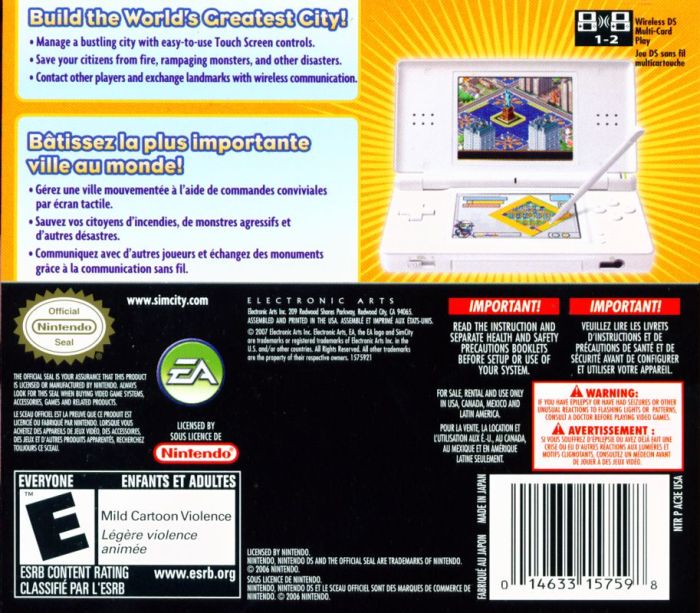
Nintendo DS Annexing SimCity A Bold Idea?
Nintendo DS annexing SimCity – a fascinating concept that sparks intrigue. Imagine a handheld version of the beloved city-building simulation, painstakingly crafted for the Nintendo DS. This blog post delves into the historical context, technical challenges, and gameplay adaptations required to make this a reality, considering the unique characteristics of both platforms. What motivations could drive such a project, and what would be the hurdles to overcome?
This exploration will cover everything from the limitations of the Nintendo DS’s hardware to potential marketing strategies, ultimately aiming to determine the feasibility and potential success of this ambitious undertaking. The post will also consider alternative approaches and potential pitfalls.
Historical Context of Nintendo and SimCity
Nintendo’s journey in the gaming industry has been marked by innovative console releases, each targeting specific demographics and game preferences. From the early days of arcade gaming to the modern era of hybrid consoles, Nintendo has consistently pushed boundaries, often with unique and playful approaches to gaming experiences. SimCity, on the other hand, revolutionized the city-building simulation genre, offering players unprecedented control over urban development and resource management.
This exploration examines the contrasting histories of these two franchises, along with the potential factors behind a hypothetical Nintendo DS iteration of SimCity.The historical development of both Nintendo and SimCity reveals distinct paths. Nintendo, focusing primarily on family-friendly and accessible gaming experiences, has seen its consoles evolve from dedicated gaming machines to multi-functional entertainment devices. SimCity, driven by the desire to simulate complex systems, has evolved from early concepts to sophisticated city-building tools.
Understanding these differences is key to appreciating the potential challenges and opportunities involved in merging these two franchises.
Nintendo Console History
Nintendo’s console releases demonstrate a progression from dedicated gaming platforms to more versatile entertainment devices. The NES (Nintendo Entertainment System) introduced millions to the joy of gaming, featuring a wide array of titles, from platformers to role-playing games. The Super Nintendo followed, adding more advanced graphics and sound, expanding the library of games. The Nintendo 64, though visually impressive, was not as commercially successful as its predecessors.
The GameCube, aimed at providing a more streamlined experience, focused on high-quality gaming. The Wii, with its innovative motion controls, reached a broader audience. The Nintendo DS, with its dual-screen design, offered a unique handheld experience, allowing for more detailed interaction. This evolution reveals a commitment to expanding gaming horizons.
SimCity Evolution
SimCity’s impact on the simulation genre is undeniable. Its core gameplay mechanics, revolving around city planning, resource management, and citizen satisfaction, provided players with a tangible and interactive way to experience urban development. Early versions focused on basic city building, with limited options for citizen interactions. Subsequent iterations introduced more advanced features, including zoning, traffic management, and environmental considerations.
The evolution shows a commitment to increasingly sophisticated simulation, expanding the capabilities and complexity of urban development.
Comparison of User Bases and Game Genres
Nintendo’s target audience has traditionally been broad, encompassing various demographics, particularly families and casual gamers. The Nintendo DS, with its portability and accessibility, further broadened this appeal. SimCity, on the other hand, has always catered to players who enjoy strategic thinking, complex simulations, and city management. The target audience tends to be more focused on problem-solving and detailed simulations.
- Nintendo’s games are often characterized by colorful graphics, simple controls, and engaging narratives. These games are generally accessible to a wide range of players.
- SimCity, in contrast, relies on a deeper understanding of resource management, economics, and urban planning principles. This often requires more strategic thinking and attention to detail.
Handheld Simulation Games
The intersection of handheld gaming and simulation games has been relatively limited. While handheld devices like the Nintendo DS and later models have seen a range of games, the complexity of simulation genres has often been challenging to translate to the smaller screens and limited processing power of these devices. Exceptions exist, but they are generally simpler implementations of core concepts.
Possible Motivations for a Nintendo DS SimCity
Several potential motivations could drive a Nintendo DS version of SimCity. A desire to reach a wider audience through a more accessible format is possible. The DS’s portability could appeal to players who want to experience city building on the go. Another factor might be leveraging the DS’s dual-screen functionality for enhanced interaction with the simulation. Ultimately, the success of such a project would depend on the extent to which the core mechanics of SimCity could be adapted to the constraints of the Nintendo DS platform.
Technical Feasibility and Design Considerations
Porting SimCity, a complex city-building simulation, to the Nintendo DS presented significant technical hurdles. The DS’s limited processing power and graphics capabilities necessitated considerable design trade-offs to achieve a playable, yet faithful, experience. This analysis explores the challenges and potential solutions, focusing on adapting the core mechanics to the handheld platform.Adapting SimCity’s intricate simulation to the DS required a careful balancing act between maintaining the core experience and catering to the hardware’s limitations.
The Nintendo DS, while popular for its portability, lacked the processing power and memory of the PC or console platforms on which SimCity ran. This necessitated a simplification of the simulation’s scope and complexity.
Potential Technical Challenges
The DS’s limited processing power and memory posed substantial technical challenges. The intricate algorithms driving SimCity’s population growth, resource management, and infrastructure development required significant optimization for the DS. Maintaining real-time responsiveness and accurate simulations would be a critical issue. Additionally, the graphics pipeline would be drastically different from the high-fidelity visuals of the original SimCity.
Limitations of the Nintendo DS Hardware
The Nintendo DS’s hardware limitations significantly impacted the design choices. The processor speed, RAM, and GPU capacity constrained the complexity of the simulations and the detail of the graphical representations. A reduction in the number of city elements, simplified building models, and fewer concurrent simulation processes were necessary to achieve a playable experience.
Design Trade-offs
To adapt SimCity’s core mechanics, significant design trade-offs were necessary. The scope of the simulation had to be narrowed, and certain features had to be removed or simplified. Examples include reducing the number of available building types, streamlining resource management, and limiting the scale of the simulated city.
Simplified Gameplay for Nintendo DS
Simplifying the gameplay while retaining the core experience of SimCity was crucial. One approach involved focusing on a smaller, more manageable city. This would allow for faster loading times and more responsive gameplay. A simplified version of SimCity, designed for the Nintendo DS, could focus on key features such as building residential, commercial, and industrial zones, managing resources (power, water, and waste), and maintaining public services.
Simplified City Management Simulation for the Nintendo DS
| Feature | Description |
|---|---|
| City Size | A smaller city size would significantly reduce the complexity of the simulation, allowing for better responsiveness and loading times. |
| Building Types | A reduced set of building types (residential, commercial, industrial) would focus on the core gameplay loop without overwhelming the player or the system. |
| Resource Management | Simplified resource management systems (power, water, and waste) would focus on the core mechanics without including advanced features. |
| Public Services | Key public services (fire, police, and emergency medical) would be included, but with simplified interactions and limited detail. |
| Infrastructure | Simplified infrastructure (roads, railways, and public transport) would be included, prioritizing functionality over visual complexity. |
This simplified simulation would allow for a more accessible and enjoyable city management experience on the Nintendo DS, retaining the core concepts of the original SimCity while adapting to the limitations of the platform.
Gameplay Mechanics Adaptation
Bringing the sprawling complexity of SimCity to the Nintendo DS presents a significant challenge. The limited screen real estate, fewer control options, and different input methods require a radical reimagining of the core gameplay loop. This adaptation demands a focus on simplifying core mechanics while maintaining the strategic depth that defines SimCity. The goal is to translate the experience to a handheld format without sacrificing the essence of city-building simulation.
Resource Management
SimCity’s resource management is crucial. On the DS, a simplified approach is necessary. Instead of a complex system of interconnected resources, a streamlined approach focusing on three key resources (food, energy, and materials) is preferable. Each resource would have its own production chain, with various buildings catering to specific needs. This simplified system allows for clear visualization on the DS screen and intuitive management.
A color-coded system, indicating resource levels and potential shortages, could effectively convey critical information. For example, a low food supply could be represented by a darkening of the population icon.
Building Placement and City Growth
The intricate placement of buildings in SimCity needs simplification for the DS. A grid-based system, similar to that used in many tile-based strategy games, would be suitable. Buildings could be placed within these grid sections, offering a balance between precise placement and speed of construction. Instead of numerous building types, focus on key categories: residential, commercial, industrial, and public services.
This would streamline the construction process and make it easier for players to manage their growing city.
User Interface Elements
The DS’s touch screen and buttons require specific interface design. A simplified, icon-based interface, with clear visuals and intuitive controls, is essential. The use of larger icons and simplified menus is crucial. Menus should offer quick access to important functions. The use of scrolling menus and panels is acceptable to navigate through options.
- Basic Controls: Touchscreen controls for building placement and resource management would be necessary. Simple button prompts for activating actions, like upgrading buildings or enacting policies, would be efficient. The DS’s directional buttons and A/B buttons would also be vital for navigating menus.
- Resource Display: Real-time resource levels, displayed with visual indicators (like gauges or icons), would be crucial. A concise overview of the city’s current state would help players understand and manage resources.
- Building Icons: Clear visual representations of buildings, highlighting their function and resource requirements, are essential for ease of understanding.
- Mini-map: A simplified mini-map providing a bird’s-eye view of the city, highlighting key areas, would assist players in managing growth and development. This mini-map could be dynamically updated to reflect real-time changes.
Real-time Strategy Adaptation
Real-time strategy elements in SimCity, such as disasters and emergencies, could be adapted to the DS. Instead of a complex system of triggers and events, simplified events, such as fires, floods, and crime, could be used. These events would be triggered by random occurrences or player actions. A simple alert system, using visual cues and notifications, would keep players informed.
Comparison with Similar Handheld Games
Analysis of existing city-building games on handheld platforms, like
Cities
Skylines* for mobile devices, reveals several key approaches. Many of these games prioritize streamlined resource management and a simplified interface. They use intuitive touch controls and clear visuals to enhance the gameplay experience. The goal is to replicate this success, while maintaining the strategic depth of SimCity. These examples demonstrate that the challenge is not insurmountable, but requires a thoughtful simplification of core mechanics.
For example,
Cities
Skylines* on mobile effectively demonstrates how to balance simplicity and depth in a limited environment.
Marketing and Target Audience
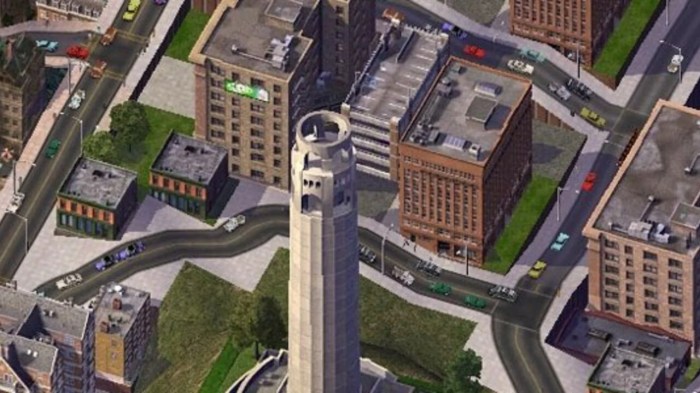
Bringing SimCity to the Nintendo DS presented a unique marketing challenge. The game, known for its complex city-building simulations, needed a streamlined approach to appeal to a handheld audience. This required a nuanced understanding of the DS’s user base and a strategy to translate the core SimCity experience into a compact, engaging package.Targeting the right demographic was crucial.
A key aspect was understanding the strengths and preferences of the Nintendo DS user, who was likely familiar with the platform’s strengths and limitations.
Potential Target Audiences
The Nintendo DS audience was diverse, encompassing casual gamers and experienced simulation enthusiasts. A crucial aspect was understanding that this demographic wasn’t solely focused on hardcore gaming. The target audiences were likely to be younger players, students, and families, alongside those seeking portable entertainment.
Marketing Strategies
A key strategy was highlighting the portability and accessibility of the game. Marketing campaigns emphasizing the ability to build cities on the go would be effective. Showcase how SimCity’s core mechanics, like resource management and zoning, could be enjoyed in a smaller format.
Unique Marketing Opportunities and Challenges
Selling a simulation game on a handheld presented both opportunities and challenges. A crucial opportunity was to simplify the core gameplay to make it accessible to a broader audience. Simultaneously, the challenge was to retain the core simulation elements that made SimCity appealing. Highlighting the portability of the game and the ability to enjoy short, engaging sessions was crucial.
Remember all those amazing SimCity games on the Nintendo DS? Well, the whole situation with the Nintendo DS annexing SimCity feels a bit like a parallel universe to the current bittorrent loyalists donating cash to fight the MPAA, bittorrent loyalists donate cash to fight mpaa. It’s fascinating how passionate communities can rally around shared interests, even when those interests are as seemingly disparate as a handheld console and a digital rights organization.
Ultimately, both highlight the power of community and user-generated content, which reminds me again of the surprising depths of creative expression even in seemingly niche gaming communities like the one behind the DS SimCity.
Brand Collaborations and Partnerships
Collaborating with other Nintendo franchises could significantly expand the game’s reach. For instance, a partnership with Mario could provide a recognizable character to appeal to a broader audience. Other partnerships could include popular children’s shows or toy brands, offering cross-promotion.
Promotional Materials for the Nintendo DS
Promotional materials should be concise and visually appealing, considering the small screen of the Nintendo DS. This included:
- Short, engaging trailers demonstrating the core gameplay mechanics, focusing on the portable aspect and streamlined interface. The trailers should show the speed and ease of building a city, without overwhelming the player with complexity.
- Eye-catching posters and in-store displays highlighting the game’s portability. The visuals should convey a sense of fun and accomplishment, capturing the essence of city building. The posters and displays should be designed to stand out in a crowded gaming environment.
- Limited edition bundles, perhaps with DS accessories or exclusive in-game content, could incentivize purchases and create a sense of exclusivity.
- Interactive demos on the Nintendo DS’s own website and at retail locations. The demo should provide a taste of the core gameplay, allowing players to experience the city-building experience directly.
Illustrative Examples
Bringing SimCity to the Nintendo DS presents a unique challenge in visual representation. The smaller screen and limited processing power of the DS necessitate a careful consideration of detail and visual style. This section delves into the graphical approaches that could make the game appealing and playable on this platform.
Graphical Representations
The graphical style for a DS SimCity needs to strike a balance between visual appeal and efficiency. A simplified, stylized approach, akin to the visuals in other DS games, is ideal. Detailed photorealistic buildings, while impressive, would strain the DS’s resources. Instead, a more abstracted style, reminiscent of the classic SimCity but with a contemporary touch, is more suitable.
Buildings could be represented by simple, easily rendered shapes, with color and texture variations to indicate different types of structures and their statuses.
Resource Visualizations
Representing resources like water, electricity, and industry will be vital for conveying gameplay information quickly. Simple icons could indicate the presence and quantity of resources, while dynamic animations could show the flow of resources through the city. For example, a small, animated stream could represent water, while electric lines could pulsate with varying intensity depending on the city’s power usage.
These animations would not only be visually engaging but also provide valuable feedback to the player.
User Interface
The user interface (UI) is crucial for a smooth gameplay experience on the DS. It must be intuitive and easy to navigate with the touch screen. The menus could feature clear, simplified icons for actions like zoning, constructing buildings, and managing resources. A mini-map would be essential for overviewing the city layout, and potentially even showing resource flow paths.
Buttons could be strategically placed for fast access to essential actions. The overall style should align with the game’s graphical representation.
Remember that Nintendo DS game, SimCity? It’s fascinating how the DS could seemingly take on such a complex city-building sim. Meanwhile, the recent Sun and Intel strike, resulting in a “win-win” server pact, demonstrates a similar kind of collaborative approach to problem-solving. Perhaps there’s a lesson to be learned about innovation and cooperation when thinking about the Nintendo DS tackling a project like SimCity after all.
City Layout Example
A hypothetical city layout on the DS could showcase a vibrant mix of residential, commercial, and industrial zones. The player could strategically place different building types, ensuring proper infrastructure like roads and utilities are interconnected. The layout could incorporate a river or other natural features that could be used for resource management or aesthetically. A small, but well-organized, industrial zone could be situated near a power plant.
This would demonstrate resource management and the interconnectedness of elements within the city.
Visual Comparisons
Comparison with existing DS games is key to gauging a successful visual aesthetic. Games like Pokémon or similar strategy titles offer useful examples of how to balance visual impact with limited processing power. A focus on simplified models and dynamic animations, like those seen in Animal Crossing, could translate well into a DS SimCity. These games show how vibrant and engaging a DS game can be, even without high-resolution graphics.
Animation and Visual Effects, Nintendo ds annexing simcity
Animation should be used sparingly but effectively to enhance the gameplay experience. Animating construction, resource flow, and citizen movement would provide visual cues. A subtle animation, like the rising of a building, could indicate progress. Citizen movement could be represented by small, easily rendered icons, providing feedback on the effectiveness of the city’s design. These animations would not distract from the gameplay but would offer useful visual cues.
Potential Success Factors: Nintendo Ds Annexing Simcity
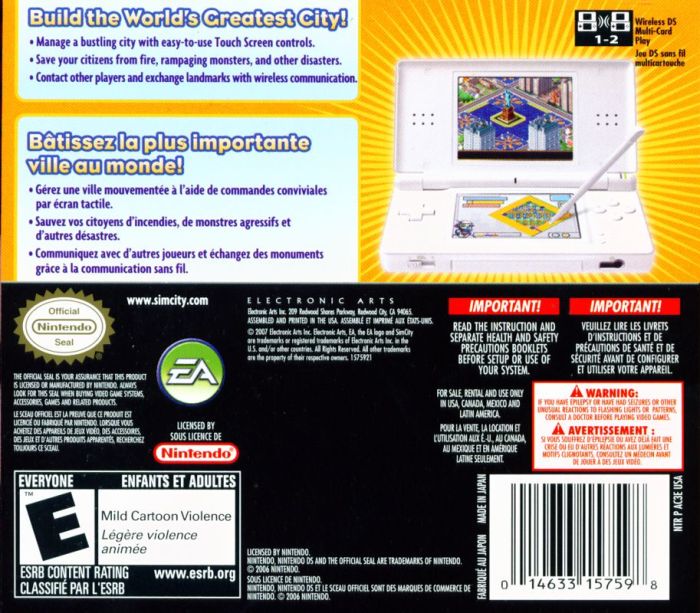
A Nintendo DS SimCity, while seemingly a bold concept, holds significant potential. Successfully adapting the complex city-building simulation to a handheld platform requires careful consideration of both the strengths of the DS and the core values of the SimCity franchise. A successful launch hinges on understanding the specific needs and desires of the target audience, and how those needs intersect with the game’s unique mechanics.This analysis explores the key success factors, pitfalls to avoid, and strategic marketing initiatives crucial for a successful DS SimCity release.
The goal is to not just port the game, but to create a truly compelling and engaging experience for Nintendo DS owners.
Factors Contributing to Success
The Nintendo DS platform, known for its portability and engaging gameplay, presents unique opportunities for a SimCity adaptation. A successful DS SimCity would leverage these strengths to create a compelling experience. Key factors include a streamlined interface that maintains the core simulation elements, a more focused scope that allows for deep immersion in smaller, manageable city areas, and a user-friendly interface for intuitive gameplay on the touch screen.
- Simplified Gameplay Mechanics: A core principle of success will be simplifying the core SimCity mechanics to fit the smaller screen and limited control options of the DS. This will involve a shift towards more intuitive controls and a reduced complexity of options, while still retaining the strategic depth of the original game. For example, the “SimCity 2000” port to handheld devices prioritized a streamlined experience, focusing on intuitive gameplay elements.
This allowed for a larger player base to enjoy the game’s features.
- Intuitive Interface: The DS’s touch screen and stylus provide opportunities for a more intuitive interface compared to the traditional mouse and keyboard. A successful design will leverage these features, allowing players to easily manage resources, build structures, and interact with the city’s inhabitants.
- Focused Gameplay Scope: The smaller screen and limited processing power necessitate a focus on a smaller, more manageable city scale. This could involve a more contained area, a narrower range of building types, and a more limited population. The design would maintain the simulation’s depth but with a simplified scope to enhance the DS experience. A good example would be focusing on the development of a single district or neighborhood rather than an entire metropolitan area.
Factors That Could Negatively Impact Reception
Maintaining the core SimCity experience while adapting to the handheld format presents challenges. A poor adaptation could alienate both existing fans and new players. Understanding these potential pitfalls is essential for success.
- Loss of Core Experience: If the core simulation elements are overly simplified or compromised, existing fans of the series might be disappointed. The adaptation should not sacrifice the strategic depth and complexity that define SimCity.
- Unintuitive Interface: A poorly designed interface that doesn’t leverage the DS’s strengths will make gameplay cumbersome and frustrating. Carefully considering the layout, touch-screen interactions, and overall ease of use is paramount.
- Limited Visual Appeal: The DS’s limitations in terms of graphics and visual fidelity should be acknowledged. The game should strive for visual clarity and efficiency to convey the simulation effectively. A good example of this is considering the trade-off between high fidelity graphics and a fluid gameplay experience.
Marketing Strategies
A well-defined marketing strategy is crucial to generating interest and driving sales. This should leverage existing SimCity brand recognition and appeal to the Nintendo DS audience.
- Leveraging Existing Brand Recognition: Highlight the SimCity name and brand recognition. The game should emphasize the core simulation experience in a new and engaging format. Emphasizing the strategic depth and city-building aspects that are synonymous with SimCity is key to marketing success.
- Targeting the Nintendo DS Audience: The marketing campaign should resonate with the Nintendo DS player base. The game should be presented as a unique and compelling handheld experience, emphasizing the portability and ease of play. This could include social media campaigns, influencer collaborations, and special bundles.
- Highlighting Key Features: Communicate the core features that make the game compelling. Emphasize the simplified but still engaging gameplay and the visual style. Highlight the innovative use of the DS’s touch screen and stylus in a clear and concise manner.
Maintaining the Core SimCity Experience
A successful DS SimCity must balance adaptation with preservation of the core SimCity experience. This requires careful consideration of gameplay mechanics and visual elements.
Remember that weird rumour about the Nintendo DS annexing SimCity? It’s fascinating how similar tech hurdles pop up across different eras. This recent development about Macrovision CD protection becoming apple compatible macrovision cd protection to be apple compatible makes me wonder if that DS SimCity thing was ever truly possible. Maybe the complexities of that era’s game development just weren’t quite ready for the DS.
- Balancing Simplification and Depth: Maintaining the strategic depth of the original game is crucial, but the gameplay must be streamlined for the handheld format. A good example would be to offer multiple levels of complexity, allowing players to tailor their experience based on their skill level.
- Adapting Visuals to the Format: The game should leverage the DS’s strengths while respecting the original’s aesthetic. Maintaining a recognizable visual style is crucial to attracting the core SimCity audience.
Appealing to the Targeted Demographic
The game should appeal to both existing SimCity fans and new players on the Nintendo DS platform. This requires a thoughtful consideration of the strengths and preferences of this demographic.
- Catering to Casual and Hardcore Players: The game should appeal to both players who want a relaxed simulation experience and players who want a deep strategic challenge. The design should offer different difficulty levels or options to customize the experience.
- Appealing Visual Style: The game should use a style that is both engaging and accessible for the target demographic. The graphics should be visually appealing but also efficient to enhance the gameplay experience. A good example would be using a simplified but recognizable visual style that aligns with the Nintendo DS’s aesthetics.
Alternative Approaches
Taking a different tack on porting SimCity to the Nintendo DS offers intriguing possibilities, moving beyond a straightforward adaptation. We need to explore alternative approaches to leverage the unique strengths of the platform and create a compelling experience. This section explores potential alternative representations of the city-building simulation, focusing on different aspects of the game and considering the impact on gameplay.
Miniature City Simulation
This approach focuses on a more manageable, stylized representation of a city. Instead of a sprawling metropolis, players might build a smaller, intricately detailed city. This allows for a greater level of control and micro-management, though it reduces the scale of the simulation. A potential benefit is a heightened sense of achievement from meticulously crafting a smaller, more complete city.
The challenge would be balancing the need for detail with the limitations of the DS’s screen and processing power. The miniature scale could be achieved by using pixel art or simplified 3D models to create a charming, nostalgic feel.
Resource Management Focus
Another alternative is to emphasize resource management. Players might manage water, energy, and food supplies within a defined area. This could be a self-contained island, a village, or a single district within a larger city. This gameplay would be less about city expansion and more about efficient resource allocation and responding to citizen needs within a constrained environment.
This approach could offer a more streamlined, focused experience, ideal for players seeking a more strategic challenge. Players could focus on managing production, distribution, and consumer demand, rather than the intricate details of zoning and development. This approach could be a good way to appeal to a wider range of players interested in strategy games.
Simplified Zoning and Development
This approach focuses on simplifying the traditional zoning and development aspects of SimCity. Players might select from a limited set of building types with varying resource requirements and citizen needs. The gameplay would be more about understanding the relationships between different building types and how to efficiently allocate resources to meet demands. This streamlined approach could create a more accessible and intuitive experience for new players, potentially appealing to a broader demographic.
The challenge is to balance the simplified gameplay with the strategic depth needed to make it engaging for experienced SimCity players. It would be crucial to ensure the limited options still allowed for meaningful choices and strategic thinking.
Comparison to Initial Ideas
The initial ideas focused on a direct port of SimCity’s core mechanics to the DS. The alternative approaches, however, explore different facets of the city-building genre. A miniature city simulation offers a tighter focus on details, resource management prioritizes strategic thinking, and simplified zoning provides an accessible entry point. These alternatives are distinct in their representation and gameplay emphasis, offering a wider range of options for players.
Pros and Cons of Alternative Approaches
| Approach | Pros | Cons |
|---|---|---|
| Miniature City Simulation | Intricate detail, focused gameplay, potential for charm | Limited scale, potential for frustration with DS limitations |
| Resource Management Focus | Strategic depth, accessible entry point, potential for streamlined gameplay | Less focus on city expansion, may not appeal to all players |
| Simplified Zoning and Development | Accessible gameplay, wider appeal, potential for intuitive experience | Reduced strategic depth, may not engage experienced players |
Summary
In conclusion, the prospect of a Nintendo DS SimCity, while technically challenging, isn’t entirely impossible. Careful consideration of the platform’s limitations, alongside innovative gameplay adaptations, and a well-defined target audience could pave the way for a successful, albeit unique, experience. This post has explored the possibilities, challenges, and alternative approaches. Ultimately, the success of such a project would depend on finding the right balance between maintaining the core SimCity experience and adapting it to the Nintendo DS’s distinctive environment.