Nokia Unveils N95 GPS Enabled Phone A Revolution
Nokia unveils n95 gps enabled phone, marking a significant leap forward in mobile technology. This innovative device, released in the early 2000s, integrated GPS functionality into a handheld device, something previously unimaginable. This groundbreaking phone revolutionized how people navigated and interacted with the world, offering a glimpse into the future of personal mobile devices.
The N95’s GPS integration was a game-changer, providing real-time location data for navigation. It combined advanced mapping technology with a sleek design and user-friendly interface, making it a popular choice for travelers and explorers. This article will delve into the N95’s impact, exploring its key features, market context, technological advancements, and lasting legacy.
Overview of the Nokia N95 GPS Phone
The Nokia N95, released in 2007, wasn’t just another phone. It represented a significant leap forward in mobile technology, integrating advanced features that pushed the boundaries of what was possible in a handheld device. This wasn’t merely a phone; it was a multimedia powerhouse, and a glimpse into the future of mobile computing.
Key Features and Specifications
The Nokia N95 showcased a blend of cutting-edge technology and user-friendly design. It wasn’t just about GPS; it was about creating a comprehensive mobile experience. This phone transcended the role of a basic communication tool.
Remember the Nokia N95? That GPS-enabled phone was a game-changer back in the day. Looking at tech advancements now, it’s fascinating to see how the spirit of innovation continues. This kind of groundbreaking technology has a clear parallel in the hp amd notebook will aid lance armstrong foundation , showcasing how powerful computing can be used for good.
Even though the N95 is a thing of the past, its impact on mobile technology remains undeniable.
| Feature | Description | Technical Specifications |
|---|---|---|
| GPS Navigation | Integrated Global Positioning System for location-based services, including map navigation. | High-sensitivity GPS receiver |
| 3.5-inch Touchscreen | A large display area for enhanced multimedia consumption, allowing users to view and interact with content more intuitively. | QVGA display, capacitive touchscreen |
| 3MP Camera | A high-resolution camera capable of capturing still images and videos. | 3 megapixel camera, autofocus |
| Wi-Fi | Enabled wireless internet connectivity, facilitating access to web content. | 802.11b/g Wi-Fi |
| Video Recording | Allowed users to record and play videos. | Video recording in H.263 format |
| Music Player | Supported various audio formats. | MP3, AAC, WMA support |
| High-Capacity Memory | Offered a considerable amount of storage for media files. | Internal storage, expandable memory card slot |
| Intuitive User Interface | A user-friendly interface for ease of navigation and interaction. | Symbian OS |
Innovative Aspects Compared to Contemporaries
The N95 distinguished itself from its competitors by combining several advanced features into a single device. The integration of GPS, a high-resolution camera, and a vibrant display were particularly notable. While other phones offered individual components, the N95 offered a holistic experience.
Significance of GPS Integration
GPS integration in 2007 mobile phones marked a turning point. Before the N95, GPS was primarily found in dedicated navigation devices. The N95’s incorporation of GPS made location-based services accessible to a wider audience. This was a crucial step toward the ubiquitous use of GPS that we see today, impacting applications from mapping to delivery services.
Phone Design and User Interface
The N95’s design was sleek and modern for its time. The large touchscreen and intuitive interface made navigating the device a seamless experience. The device’s ergonomic shape was optimized for comfortable handling.
Market Context and Impact
The Nokia N95, released in 2007, arrived amidst a burgeoning mobile phone market, characterized by a rapid shift towards sophisticated devices. Consumers were increasingly seeking smartphones with multimedia capabilities beyond basic calling and texting. This era witnessed the rise of the “feature phone” category, offering a middle ground between basic phones and the nascent smartphone market. The N95 aimed to capture this evolving consumer desire for a richer mobile experience.The N95’s GPS functionality was a significant step in this evolving landscape, representing a major shift in the way people interacted with their mobile devices.
This functionality was becoming increasingly important, particularly for navigation and location-based services. The introduction of GPS technology, coupled with the N95’s impressive features, had a substantial impact on the mobile phone market.
Mobile Phone Market Landscape
The mobile phone market in 2007 was a dynamic and competitive environment. Symbian OS, the platform powering the N95, held a strong position alongside other operating systems. BlackBerry devices were gaining popularity for their messaging capabilities, while Apple’s iPhone was starting to gain traction, though limited in availability at the time. The key was the convergence of multiple technologies like cameras, music players, and now, GPS, into a single device.
This trend was driving significant growth and innovation within the industry.
Competitive Landscape
The N95 faced competition from various manufacturers offering feature-rich phones. Key competitors included Sony Ericsson with its range of Walkman phones, known for their audio capabilities. Motorola and Samsung also held significant market share with diverse models. The availability of GPS-enabled devices from these manufacturers was growing, presenting a challenge for the N95. Each company attempted to attract consumers with specific strengths in design, features, and pricing.
The emergence of the iPhone also played a significant role, signaling the start of a new era of mobile computing.
Impact of GPS Functionality
The integration of GPS into the N95 significantly broadened the potential uses of mobile phones. The addition of GPS technology allowed for location-based services, including navigation and map applications. This functionality was crucial for travelers and individuals seeking practical applications beyond basic communication. This functionality was also a key factor in driving the demand for more sophisticated mobile devices, showcasing a clear trend toward incorporating location-based services into daily life.
Pricing Comparison
The N95’s price point was crucial in its market success. While offering advanced features like GPS, a high-resolution camera, and a large screen, it needed to remain competitive with other devices in the feature phone category. Pricing strategies often balanced the need for affordability with the inclusion of high-end features. This price-performance ratio played a significant role in the N95’s success in its respective market segment.
Key Competitors’ Pricing and Specifications
| Manufacturer | Model | Price (USD) | GPS | Camera | Storage |
|---|---|---|---|---|---|
| Sony Ericsson | K800i | ~350 | No | 2.0MP | 128MB |
| Motorola | Razr V3 | ~300 | No | 2.0MP | 64MB |
| Nokia | N95 | ~500 | Yes | 5.0MP | 2GB |
Note: Prices and specifications are approximate and may vary depending on the region and retailer.
Technological Advancements
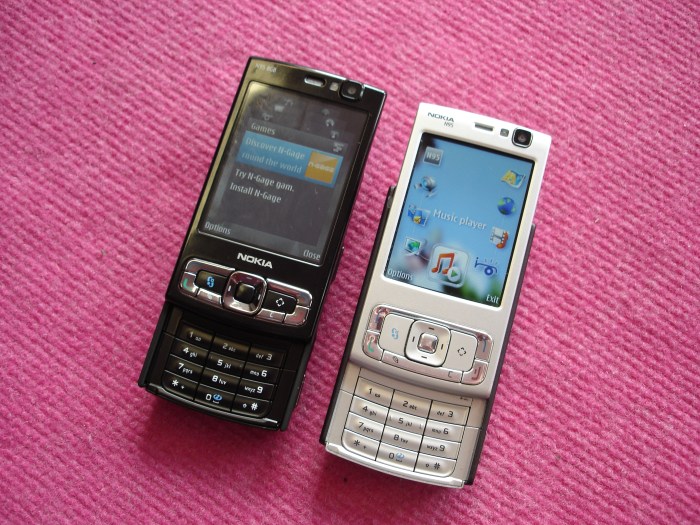
The Nokia N95, a landmark phone in its time, wasn’t just about a sleek design; it represented a significant leap forward in mobile technology, particularly in the integration of GPS. This integration, while not revolutionary in the abstract, was revolutionary in the context of mass-market mobile phones. This section delves into the specific technological advancements that enabled the N95’s GPS capabilities, the vital role of satellite systems, the limitations of the technology at the time, and the burgeoning potential it held for future applications.GPS technology, at the time of the N95’s release, had progressed to a point where its integration into a consumer device like a phone became viable.
Significant advancements in miniaturization of the necessary components, coupled with improvements in battery efficiency, allowed for the inclusion of a GPS receiver within the phone’s form factor.
GPS Technology in the 2000s
The GPS receivers in 2000s phones, while capable of providing location data, faced limitations in terms of accuracy and speed. This was largely due to the design constraints imposed by the available technology. The processing power of the phones was not as advanced as it is today. This meant that the GPS signal processing and location calculation took more time, leading to slower updates.
Moreover, the accuracy of location determination was often affected by factors such as the surrounding environment and the number of visible satellites. The signals from satellites could also be obstructed by buildings or trees, leading to errors.
Satellite Systems and GPS Functionality
Satellite-based systems, such as the Global Positioning System (GPS), are fundamental to GPS functionality. These systems rely on a constellation of satellites orbiting Earth, transmitting precise time and position signals. The GPS receiver in a phone receives these signals from multiple satellites. By measuring the time it takes for the signals to reach the receiver, the receiver can calculate its precise position on Earth.
The more satellites the receiver can “see,” the more accurate the location data.
Limitations of GPS Technology
Despite the advancements, GPS technology in the early 2000s had limitations. The accuracy of the location data wasn’t as high as modern GPS systems. The processing power of the phone limited the speed of location updates, which could be frustrating for users. Furthermore, the availability of satellite signals was affected by environmental conditions, impacting the reliability of the location information.
Potential for Future Applications
The integration of GPS into the Nokia N95 demonstrated the burgeoning potential of location-based services. The ability to pinpoint one’s location opened up a wealth of possibilities, from navigation to location-based entertainment. Today, GPS plays a pivotal role in numerous applications, including mapping, navigation, and even location-based advertising. As the technology continues to evolve, we can expect even more innovative applications.
Comparison of GPS Technology (2000s vs. Present)
| Feature | 2000s Phones (e.g., Nokia N95) | Present Day |
|---|---|---|
| Accuracy | Lower accuracy due to processing power and signal limitations. | High accuracy with advanced processing and more satellites. |
| Speed of Updates | Slower updates due to processing constraints. | Rapid and continuous updates. |
| Power Consumption | Higher power consumption due to older technology. | More efficient power consumption. |
| Miniaturization | GPS receiver was relatively large and required dedicated space. | Miniaturization allows integration into smaller devices. |
| Applications | Limited applications, primarily navigation and location awareness. | Vast array of applications, including mapping, navigation, location-based services, and more. |
User Experience and Reception: Nokia Unveils N95 Gps Enabled Phone
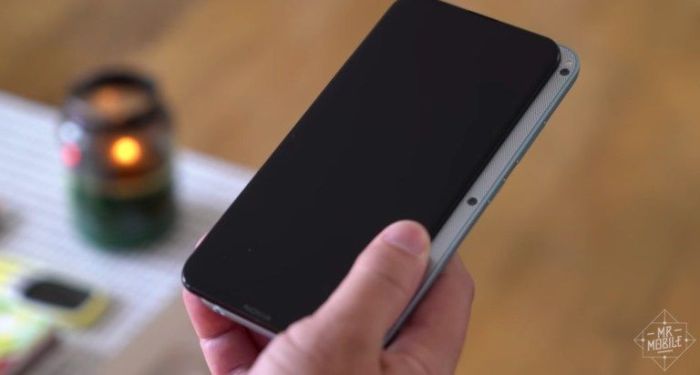
The Nokia N95, with its groundbreaking GPS integration, significantly altered the mobile phone landscape. User reception was a crucial factor in its success, and understanding the experience provided by this innovative device is vital to assessing its impact. Early adopters and critics alike weighed in on the N95’s GPS functionality, and their feedback, positive and negative, helped shape future mobile device design.
User Reviews and Feedback
The N95’s GPS functionality received a mixed bag of responses. Early reviews highlighted the intuitive design and user-friendly interface of the integrated GPS software, praising its ease of use. However, some users reported minor glitches, particularly with initial map loading times and accuracy issues, particularly in urban environments with high-rise buildings. The device’s overall performance was often contrasted with the then-existing standards for mobile devices, with some reviewers noting a positive shift towards a higher quality experience.
Potential Benefits of GPS Navigation
GPS navigation on the N95 offered users a compelling alternative to traditional paper maps. This integration allowed for real-time directions, eliminating the need to consult physical maps or rely on printed directions. The ability to pinpoint locations, find businesses, and receive turn-by-turn directions was a significant advantage, especially for travelers or individuals unfamiliar with a region. This feature offered a marked improvement over the limited navigation options previously available on mobile phones, leading to increased user adoption.
Challenges and Drawbacks of GPS Use
Despite the significant benefits, using the N95’s GPS presented some challenges. Battery consumption was a major concern for users, with extended GPS use often resulting in reduced battery life. Accuracy could also be an issue, particularly in areas with poor signal reception or dense urban environments. The need for a strong GPS signal, coupled with the limitations of the technology at the time, occasionally led to inaccurate positioning, particularly in indoor settings.
Influence on Overall User Experience
The GPS integration significantly influenced the overall user experience of the N95. While some minor issues existed, the functionality was generally well-received. The ability to navigate easily and quickly, coupled with the overall user-friendly interface, made the N95 a popular choice for individuals seeking a comprehensive mobile experience.
User Reviews and Ratings
| Criteria | Positive Reviews | Neutral Reviews | Negative Reviews |
|---|---|---|---|
| Ease of Use | High, intuitive interface, easy to learn | Acceptable, some learning curve | Difficult, unclear instructions |
| Accuracy | Mostly accurate, especially in open areas | Moderate accuracy, inconsistent in some areas | Inaccurate in urban areas, signal issues |
| Speed | Fast map loading and navigation | Average speed, some delays | Slow map loading, navigation lag |
| Battery Life | Acceptable battery life for limited use | Average battery life, decreased with GPS use | Poor battery life, significant reduction with GPS |
Note: This table represents a generalized overview of user reviews and is not an exhaustive analysis. Actual user feedback varied considerably.
Historical Significance
The Nokia N95, with its integrated GPS, wasn’t just another phone; it was a pivotal moment in the evolution of mobile technology. Its impact extended far beyond simple location tracking, reshaping personal navigation and influencing the design language of the era. The N95 demonstrated the potential of mobile devices to be more than just communication tools.The N95’s GPS capability, while not the first mobile GPS, was a significant leap forward in user-friendliness and accessibility.
Prior GPS-enabled devices were often bulky and expensive. The N95’s integration made the technology suddenly accessible to a much wider consumer base. This democratization of GPS had a profound impact on how people navigated the world, moving beyond simple paper maps and printed directions.
GPS Integration and Personal Navigation
The N95’s GPS profoundly changed personal navigation. Users could now find directions, locate destinations, and track their movements with ease. The ability to use the phone as a primary navigation tool became commonplace, especially in the context of road trips, city exploration, and even outdoor adventures. This transition from printed maps to a portable device drastically simplified travel planning and execution.
Nokia’s N95 GPS-enabled phone was a huge deal, offering a new level of navigation. Interestingly, around the same time, Yahoo was connecting with millions of Windows Mobile users, further demonstrating the rising importance of mobile connectivity. This integration of location services with the broader online world, as seen in yahoo connects with windows mobile millions , really showcased the potential of the N95, making it a landmark phone in its time.
The N95’s impact is best seen in its widespread adoption and the subsequent rise of GPS-enabled applications and services that leveraged this technology.
Design and Feature Influence
The N95’s sleek design and advanced features, including its high-resolution screen, 5-megapixel camera, and intuitive user interface, profoundly influenced the design trends of the time. The combination of a compact form factor with a multitude of powerful features became a popular design paradigm in the mobile industry. Manufacturers began to adopt similar approaches, focusing on integrating more functionality into increasingly smaller and more stylish devices.
Nokia’s N95 GPS-enabled phone was a huge deal back in the day, but the real revolution was happening elsewhere. The shift towards online gaming, like the Wii, was already starting to take hold, and the future of gaming was clearly headed towards online is where wii will be. While the N95 was a technological marvel for its time, the real impact was setting the stage for how we connect and play now.
It’s fascinating to look back on that era and see how the N95 foreshadowed the rise of the modern gaming landscape.
Nokia’s Product History
The N95 played a crucial role in Nokia’s product portfolio. It represented a significant shift in the company’s approach to incorporating advanced technologies into their devices. The phone aimed to move beyond just basic communication and into a more comprehensive, feature-rich device that addressed the emerging needs of a more technology-driven society. This strategic move aimed to differentiate Nokia in the rapidly evolving mobile landscape.
Comparison to Other Notable Nokia Models
| Model | Key Features | GPS Capabilities | Design |
|---|---|---|---|
| Nokia 3310 | Basic phone with simple features | No GPS | Durable and simplistic design |
| Nokia N93 | Camera-focused device | GPS | Sleek, elegant design with emphasis on camera |
| Nokia N95 | Multimedia powerhouse with GPS | Integrated GPS, user-friendly interface | Sleek, sophisticated design emphasizing multi-functionality |
| Nokia E71 | Business-oriented device | GPS | Durable, functional design suited for business use |
The table above highlights the evolution of Nokia’s mobile offerings, showcasing the gradual integration of advanced technologies like GPS and the corresponding shifts in design and functionality. The N95 sits as a crucial stepping stone in this evolution, demonstrating the convergence of communication and navigation.
Potential Future Trends
The Nokia N95, with its groundbreaking GPS integration, wasn’t just a phone; it was a harbinger of a new era in mobile technology. Its impact extended far beyond simple navigation, foreshadowing the sophisticated mobile devices we use today. Predicting the precise future is impossible, but examining the N95’s influence allows us to extrapolate likely trends in mobile design and applications.The N95’s success demonstrated the burgeoning demand for mobile navigation.
This spurred the development of more powerful and user-friendly GPS-enabled devices, paving the way for sophisticated mapping and location-based services. Its compact size and relative affordability made it accessible to a wider audience, thereby boosting the adoption of GPS technology beyond specialized markets.
Influence on Future Mobile Designs
The N95’s design, incorporating a physical keypad and a relatively large screen, influenced subsequent mobile phone designs in several ways. Its compact form factor, while seemingly simple, set a precedent for integrating sophisticated features within a portable form. Furthermore, the emphasis on a dedicated physical interface, crucial for intuitive GPS usage, led to a broader consideration of user-friendly interfaces in mobile devices.
This was not a trend limited to phones but extended to other devices that needed simple, clear user interfaces.
Potential Future Applications of Mobile GPS Technology
The N95’s GPS capability hinted at a wide range of applications beyond simple navigation. The integration of GPS with other technologies, like mobile communication and sensor data, facilitated the development of location-aware services. This includes real-time tracking, dynamic routing, and precise location-based services, which continue to evolve and shape our world today.
Long-Term Impact on Personal Navigation Tools
The N95’s introduction marked a pivotal shift in personal navigation tools. Before the N95, GPS functionality was often confined to specialized devices like dedicated GPS units. The N95’s integration of GPS into a mainstream mobile phone dramatically democratized access to precise location information. This shift resulted in a reliance on mobile devices for everyday navigation tasks, fundamentally altering the way we use personal navigation tools.
This evolution from dedicated devices to ubiquitous smartphones continues today.
Potential Innovations Built Upon the N95’s GPS Technology
The N95’s GPS technology facilitated the development of several innovative features. The integration of GPS with other mobile functionalities, such as cameras and mobile networks, led to location-based services that are integral to modern smartphones. The technology spurred innovations in augmented reality (AR) applications, where location data enhances user experience. The combination of GPS with other sensors paved the way for location-based social networking and mobile commerce.
Forecasted Future Applications of Mobile GPS, Nokia unveils n95 gps enabled phone
| Application Area | Potential Future Application |
|---|---|
| Navigation | Personalized route optimization based on real-time traffic conditions, including predicted arrival times and alternative routes. |
| Retail | Interactive in-store experiences, location-based promotions, and inventory management. |
| Emergency Services | Enhanced emergency response times through precise location data, facilitating quicker dispatch and aid. |
| Environmental Monitoring | Mobile data collection for environmental monitoring, such as tracking wildlife populations or detecting pollution patterns. |
| Public Transportation | Real-time updates on bus and train schedules, optimizing travel choices, and offering integrated ticketing systems. |
Wrap-Up
The Nokia N95, with its groundbreaking GPS integration, proved that mobile devices could be more than just communication tools. It paved the way for countless applications and innovations in the years that followed. While technology has moved on, the N95’s impact on personal navigation and mobile design remains significant. It was a clear demonstration of Nokia’s innovative spirit and a turning point in mobile history.