Sans to Offer Certification for Security Software Programmers
Sans to offer certification for security software programmers, a program designed to equip professionals with the cutting-edge skills needed in today’s rapidly evolving digital landscape. This comprehensive certification will provide a strong foundation in cybersecurity principles and practical application, preparing graduates for high-demand roles in the industry. The program promises a detailed curriculum covering critical security concepts, hands-on exercises, and rigorous assessment methods.
The program will cater to both aspiring and experienced security professionals, offering a structured learning path. This comprehensive certification will provide participants with a deep understanding of cybersecurity, from fundamental concepts to advanced techniques. The program’s modular structure allows for flexibility and adaptability to different learning styles. Participants will gain practical skills, knowledge, and confidence to excel in the field of security software development.
The program’s curriculum is carefully crafted to address the specific needs of the industry, focusing on both theoretical understanding and practical application.
Curriculum Design and Content
Crafting a robust security certification curriculum requires a meticulous approach, focusing on practical application and real-world scenarios. This approach ensures graduates possess the skills needed to address emerging threats effectively. The curriculum should move beyond theoretical concepts to equip programmers with hands-on experience and problem-solving abilities.
Modules and Core Security Concepts
The curriculum is organized into distinct modules, each centered around a key security concept. This modular structure allows for focused learning and progressive mastery of intricate security principles. This segmented approach enables targeted practice and understanding within each area.
Module 1: Foundations of Cybersecurity
This initial module establishes the fundamental concepts of cybersecurity. It lays the groundwork for understanding various security threats and vulnerabilities, providing a solid foundation for more advanced topics.
- Introduction to Cybersecurity Principles: This section will cover core concepts like confidentiality, integrity, and availability (CIA triad), along with the different types of security threats.
- Network Security Fundamentals: This component will delve into network topologies, protocols, and common network security vulnerabilities.
- Cryptography Basics: Understanding encryption, hashing, and digital signatures is critical. This part will explore fundamental cryptographic concepts and their practical application.
- Introduction to Security Architecture: Different security architectures will be presented, along with the advantages and disadvantages of each, including layered security approaches.
Module 2: Secure Coding Practices
This module dives deep into secure coding techniques, empowering programmers to build secure applications from the ground up. This module focuses on preventing vulnerabilities in software code.
- Input Validation and Sanitization: This section details techniques for validating and sanitizing user input to prevent common injection attacks, such as SQL injection and cross-site scripting (XSS).
- Authentication and Authorization: This part explores secure methods for verifying user identities and controlling access to resources.
- Secure Data Handling: This section covers secure storage, transmission, and handling of sensitive data.
- Error Handling and Logging: Proper error handling and logging mechanisms are critical for preventing attackers from exploiting vulnerabilities.
Module 3: Practical Application and Case Studies
This module integrates real-world scenarios to solidify the theoretical knowledge acquired in previous modules.
SANs are stepping up by offering certification for security software programmers, a crucial move in today’s digital landscape. This aligns well with HP’s continued progress on plans for ITanium server switching, a key component in modern data centers. Their commitment to bolstering security in these crucial server systems, as detailed in hp moving forward on plans for itanium server switch , is a testament to the industry’s need for robust protection.
Ultimately, this certification from SANS will be a valuable asset for programmers looking to enhance their skills and knowledge in the ever-evolving field of cybersecurity.
- Real-World Case Studies: The module will incorporate examples of actual security breaches, demonstrating the impact of vulnerabilities and highlighting best practices for mitigation.
- Hands-on Exercises: Practical exercises will allow learners to apply learned concepts in simulated environments, including penetration testing and vulnerability assessment exercises.
- Scenario-Based Challenges: Complex, real-world security scenarios will be presented to test the ability to analyze, identify, and resolve security issues.
Module 4: Advanced Security Topics
This module delves into more advanced security concepts.
- Advanced Encryption Techniques: This section covers advanced cryptographic algorithms and their implementation.
- Vulnerability Scanning and Penetration Testing: This section will teach how to use tools and techniques for identifying and exploiting vulnerabilities.
- Security Auditing and Compliance: This section focuses on compliance standards like PCI DSS and HIPAA.
Hands-on Exercises and Labs
Hands-on exercises and labs are crucial for practical application of concepts. These labs will be integrated throughout each module to enhance understanding.
| Module | Topics | Practical Exercises |
|---|---|---|
| Module 1 | Network security, cryptography, security architecture | Network simulation, cryptography tool usage, basic security architecture design |
| Module 2 | Secure coding practices, input validation | Vulnerability identification and mitigation exercises, secure coding challenges |
| Module 3 | Case studies, scenario-based challenges | Real-world case study analysis, penetration testing labs |
| Module 4 | Advanced security topics, vulnerability scanning | Advanced encryption exercises, vulnerability scanning simulations |
Assessment and Evaluation

Crafting a robust assessment system is crucial for ensuring the security certification accurately reflects a candidate’s understanding and practical skills. This involves carefully designing various evaluation methods to gauge their grasp of security concepts, from theoretical underpinnings to real-world application. A balanced approach encompassing both theoretical knowledge and practical application is essential for a comprehensive evaluation.The assessment process should be multifaceted, moving beyond simple memorization and aiming to identify individuals capable of applying security principles effectively.
This necessitates a variety of assessment types that cater to different learning styles and evaluate the candidate’s ability to think critically and solve problems under pressure. Each assessment stage should progressively build upon the previous one, ensuring a comprehensive evaluation of the candidate’s abilities.
Methods for Evaluating Understanding of Security Concepts
The assessment of security concepts goes beyond rote memorization. It focuses on the candidate’s ability to apply knowledge in diverse scenarios. Methods involve analyzing their comprehension of security principles, their ability to identify vulnerabilities, and their proficiency in implementing security measures. These assessments should measure a candidate’s ability to analyze potential threats, predict consequences, and suggest effective countermeasures.
Different Types of Assessments for Various Stages
The certification program should include a tiered approach to assessment, aligning with the increasing complexity of security concepts. Initial assessments will focus on foundational knowledge, while later stages demand more advanced application and critical thinking. These stages should incorporate multiple assessment types, moving from basic comprehension to complex scenarios. Each stage builds upon the previous, ensuring a gradual progression in difficulty and evaluation.
Importance of a Balanced Assessment System
A well-rounded assessment system is critical for a meaningful certification. It must encompass both theoretical knowledge and practical application. Theoretical components assess the candidate’s understanding of security principles, standards, and models. Practical components, such as coding challenges and simulated security scenarios, evaluate their ability to apply this knowledge in real-world situations. The integration of these two components is paramount to ensure the certification accurately reflects the candidate’s overall capabilities.
Examples of Assessment Types
- Multiple-Choice Questions: These assess fundamental knowledge of security concepts, protocols, and vulnerabilities. Questions should be designed to evaluate not just recall but also critical thinking and problem-solving skills. For example: “Which of the following is the most common attack vector for SQL injection?”
- Coding Challenges: These evaluate a candidate’s ability to implement security measures within code. Challenges could involve hardening existing code, detecting vulnerabilities in code, or writing secure code from scratch. An example challenge might be, “Write a function to sanitize user input to prevent SQL injection vulnerabilities.” This challenges the candidate’s ability to apply their knowledge and understand security best practices.
- Simulated Security Scenarios: These assessments simulate real-world security threats and incidents. Candidates are presented with scenarios requiring them to analyze the threat, identify vulnerabilities, and propose appropriate countermeasures. For instance, a scenario could involve a simulated network intrusion, requiring candidates to identify the attack vector, mitigate the damage, and prevent future occurrences. This assesses their problem-solving skills and practical security knowledge.
Assessment Weighting and Objectives
| Assessment Type | Weighting (%) | Objectives |
|---|---|---|
| Multiple-Choice Questions | 30 | Fundamental knowledge of security concepts |
| Coding Challenges | 40 | Practical application of security measures in code |
| Simulated Security Scenarios | 30 | Problem-solving and critical thinking in real-world security situations |
Program Delivery and Support
This section details the methods of delivering our security software programmer certification program, outlining the learning resources and support mechanisms available to participants. Effective delivery and support are crucial for ensuring a positive learning experience and maximizing knowledge acquisition. A well-structured program ensures that learners have access to the necessary tools and resources to succeed.
Delivery Methods
The program utilizes a blended approach, combining online learning with optional in-person workshops. This approach caters to diverse learning styles and schedules, while providing opportunities for practical application and networking. This flexibility ensures the program remains accessible to a wide range of individuals.
Online Learning Platforms
The online learning component leverages a robust platform with interactive modules, video lectures, coding exercises, and downloadable resources. We utilize platforms like Coursera, edX, or similar established learning management systems (LMS). These platforms offer features like progress tracking, discussion forums, and virtual office hours, fostering a dynamic learning environment. The use of these platforms allows for scalability and accessibility to learners across geographical boundaries.
Sans is offering certification for security software programmers, a great step forward in the industry. This move highlights the growing need for skilled professionals as technology advances. Meanwhile, the search for safer battery alternatives is crucial for portable electronics and beyond. the search for safer battery alternatives is a complex but vital challenge, impacting everything from our devices to electric vehicles.
Ultimately, this focus on both security and innovation within the tech space will shape the future, further emphasizing the importance of certifications like the ones offered by Sans.
In-Person Workshops
For a more hands-on experience, optional in-person workshops are offered at strategic locations. These workshops provide opportunities for collaborative learning, real-time problem-solving, and direct interaction with instructors. Training facilities could include university computer labs, specialized training centers, or co-working spaces, depending on the location and specific workshop. These workshops are designed to provide practical experience and networking opportunities.
Learner Support Resources
Comprehensive support resources are available throughout the program. These include dedicated instructor support, online forums for peer-to-peer interaction, and a comprehensive FAQ section on the program website. Dedicated instructor support via email, video calls, or online office hours provides individualized attention and guidance to learners facing challenges.
Ongoing Support and Community Engagement
We believe that ongoing support and a strong sense of community are essential for program success. Dedicated support staff are available to answer questions and address concerns. An online community forum facilitates interaction among participants, enabling peer-to-peer learning and knowledge sharing. This sense of community helps learners feel connected and supported, fostering a collaborative learning environment.
Learning Resource Accessibility
| Learning Resource | Accessibility Details |
|---|---|
| Online Courses | Accessible 24/7 from any location with an internet connection. Course materials and assessments are available in multiple formats (text, audio, video). |
| In-Person Workshops | Offered at specific locations and times. Accessibility features, such as assistive technologies, may be available upon request. |
| Online Forums | Accessible 24/7, providing a platform for questions, discussions, and peer support. |
| Instructor Support | Available via email, video calls, or online office hours, providing personalized assistance. |
| FAQ Section | Provides answers to frequently asked questions, accessible on the program website. |
Market Analysis and Competitor Benchmarking: Sans To Offer Certification For Security Software Programmers
This section delves into the current market landscape for security software programmers and certifications, focusing on identifying competitors, analyzing their strengths and weaknesses, and highlighting the unique selling points of our proposed program. Understanding the market dynamics is crucial for positioning our certification effectively and attracting the desired talent pool. A comprehensive analysis informs strategic decisions about program design, marketing, and overall impact.The demand for skilled security software programmers is consistently high, fueled by the increasing reliance on digital systems and the growing threat landscape.
This demand often outpaces the supply of qualified professionals. Our analysis aims to pinpoint specific niches within the security software development sector, identify the gaps in existing certifications, and showcase how our program uniquely addresses these needs. This allows us to tailor the program and marketing efforts to effectively attract and retain top talent.
Current Market Demand
The demand for security software programmers is robust, with numerous companies actively seeking professionals possessing specialized skills in areas like cryptography, network security, and intrusion detection. Specific roles such as penetration testers, security architects, and incident responders are in high demand. Online job postings frequently highlight the need for certified professionals, indicating a strong correlation between certifications and employment opportunities.
This demand is projected to continue rising as digitalization accelerates and cyber threats become more sophisticated.
Key Competitors
Several organizations offer certifications related to security software programming. These include established industry bodies and specialized training providers. Their offerings vary significantly in scope, depth, and focus areas. Some emphasize theoretical knowledge, while others lean towards practical, hands-on experience. Analysis of competitor certifications helps to understand the current market standards and identify potential gaps.
Competitive Analysis Table
| Certification | Focus Area | Strengths | Weaknesses | Unique Selling Points (Proposed Program) |
|---|---|---|---|---|
| Certified Information Systems Security Professional (CISSP) | Broad information security | Wide recognition, established reputation | Less specific to software programming | Deep dive into security software development methodologies, practical hands-on experience |
| CompTIA Security+ | Fundamental security concepts | Entry-level certification, affordable | Limited scope, does not cover advanced programming | Focuses on security software development principles, bridges the gap to more advanced certifications |
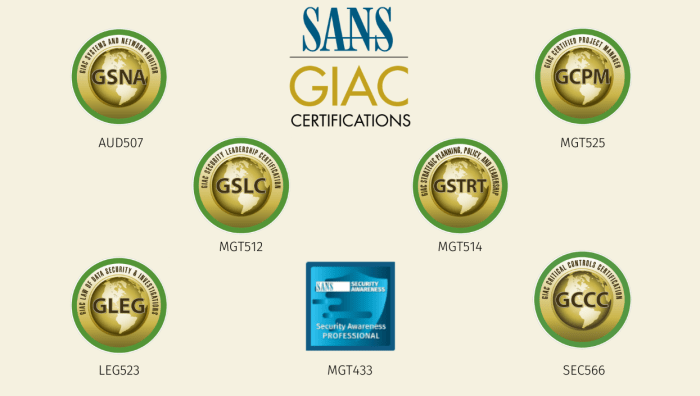
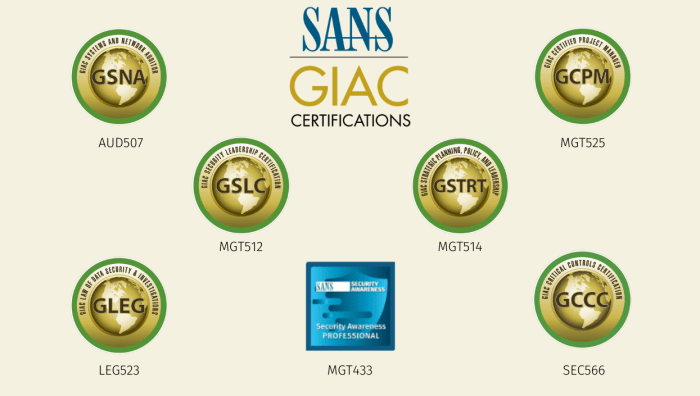
| GIAC Security Essentials | Practical security skills | Strong emphasis on hands-on experience | Limited theoretical background, not widely recognized as a developer certification | Combines practical skills with strong theoretical foundation in software development security principles |
| (Proposed Program) | Security software programming | Focuses exclusively on security software programming | Newly established | Integrates practical and theoretical aspects of software development security. Includes advanced topics and a focus on industry best practices. Includes a project-based approach to allow students to implement their learning. |
Unique Selling Points, Sans to offer certification for security software programmers
Our proposed certification program differentiates itself by offering a comprehensive, hands-on approach to security software programming. It will go beyond theoretical concepts and incorporate real-world scenarios, emphasizing practical application. A unique aspect is the project-based learning component, enabling candidates to develop and implement security solutions, which is a critical skill in today’s market. Furthermore, it will focus on specific security software development methodologies and best practices, providing candidates with a distinct advantage over those holding general security certifications.
Scope and Depth Comparison
The proposed certification program will cover a broader scope than many existing certifications focused on specific aspects of security. It will combine in-depth knowledge of security principles with advanced programming skills. This approach allows graduates to create and maintain robust, secure software applications. Existing programs often lack a dedicated focus on the specific development techniques required for creating secure applications.
Sans is offering certification for security software programmers, a move that’s super important for the future of digital safety. Meanwhile, Microsoft’s mobile 6 is making waves with an early debut, potentially changing the mobile landscape. This new certification from Sans will be crucial for keeping up with the evolving needs of secure software development, especially as new platforms emerge.
Our program addresses this gap by integrating security considerations into every stage of the development lifecycle.
Financial Considerations and Sustainability
A robust certification program for security software programmers needs a sound financial foundation. This section delves into the costs associated with the program, exploring diverse revenue models, and calculating the potential return on investment (ROI) for both individuals and organizations. Understanding the financial sustainability of the program is crucial for long-term success.
Program Costs
The costs of developing and maintaining a certification program encompass several key elements. These include program development, instructor fees, material costs, and platform maintenance. Accurately assessing these costs is essential for crafting a realistic financial model. For example, the initial development costs of creating a comprehensive curriculum, including the creation of practice exercises, assessments, and courseware, will be significant.
Ongoing costs may involve updating the curriculum to reflect current industry standards and security threats. In addition, ongoing platform maintenance and software licensing fees will need to be factored into the budget.
Revenue Models
Generating sufficient revenue to cover costs and ensure program sustainability is crucial. Multiple revenue streams can be explored, including program fees, training materials sales, partnerships with organizations, and potentially sponsorships. Exam fees for the certification itself will be a primary revenue source. The program could also generate income by offering specialized training materials, such as textbooks, practice exams, and supplemental study guides.
Building strategic partnerships with cybersecurity companies or organizations can offer additional income streams. Offering the program as part of a larger corporate training package can significantly boost revenue and improve the program’s reach.
Return on Investment (ROI)
Analyzing the ROI for both individuals and organizations is essential to demonstrating the program’s value proposition. For individuals, the ROI will be determined by the increased earning potential and career advancement opportunities that the certification unlocks. For example, a certified programmer might command a higher salary compared to their uncertified counterparts. The ROI for organizations will come from improved security practices, reduced risk of breaches, and enhanced employee skill sets, which can translate into cost savings and increased productivity.
The potential ROI will need to be demonstrated through quantitative metrics, such as salary increases for certified employees or reduced security incident costs.
Ensuring Long-Term Sustainability
Long-term sustainability requires a proactive approach to maintaining financial stability. This includes consistent monitoring of program costs, adapting to changing market demands, and building strong relationships with stakeholders. Regular review and updates of the curriculum are essential to ensure its relevance and value. Maintaining high-quality program delivery, whether through in-person or online courses, will also be important to retain and attract participants.
Financial Model
| Category | Description | Estimated Cost/Year | Estimated Revenue/Year | Projected Profit/Year |
|---|---|---|---|---|
| Program Development | Initial curriculum development and platform setup | $50,000 | – | – |
| Instructor Fees | Compensation for instructors | $20,000 | – | – |
| Materials & Resources | Study guides, practice exams, etc. | $10,000 | $15,000 | $5,000 |
| Platform Maintenance | Software licensing and hosting | $5,000 | – | – |
| Certification Fees | Exam fees and administrative costs | – | $60,000 | $60,000 |
| Total Costs | $85,000 | $75,000 | $10,000 |
Note: These figures are estimates and may vary based on actual market conditions and program implementation.
Program Promotion and Marketing Strategy
This section Artikels the marketing strategy for the security software programmer certification program, focusing on reaching the target audience effectively and showcasing the program’s value proposition. A robust marketing plan is crucial for attracting qualified candidates and establishing the program as a leading industry standard.This comprehensive approach ensures the program’s visibility and desirability within the target community, driving enrollment and solidifying its position in the competitive market.
Target Audience Identification
Identifying the ideal candidates is paramount to a successful marketing campaign. The target audience comprises aspiring and current security software programmers, cybersecurity professionals seeking advanced credentials, and IT departments looking to upskill their workforce. Specific sub-groups, like recent graduates with relevant degrees, experienced developers transitioning to cybersecurity roles, and companies with existing security teams in need of specialized training, will be targeted with tailored messages.
Marketing Channels
A multi-channel approach will maximize reach and engagement. Utilizing a blend of online and offline strategies will optimize the program’s visibility and attract the appropriate audience.
- Online Platforms: Utilizing social media platforms like LinkedIn, Twitter, and specialized cybersecurity forums will allow direct engagement with the target audience. Paid advertising on relevant industry websites and job boards will further increase visibility and attract potential candidates. Content marketing, including blog posts, articles, and webinars on cybersecurity topics, will position the program as an industry leader and establish credibility.
Search Engine Optimization () will ensure the program’s website and associated content rank highly in search results.
- Industry Events and Conferences: Participating in relevant cybersecurity conferences and industry events provides an opportunity for direct interaction with potential candidates. This includes setting up booths, delivering presentations, and engaging in networking opportunities. Exhibiting at these events will increase brand awareness and create a strong impression.
- Partnerships with Educational Institutions: Collaborating with universities and colleges offering computer science or cybersecurity programs will allow for targeted outreach to students and recent graduates. Joint seminars and workshops will foster awareness and encourage enrollment. This approach will generate a significant pool of qualified candidates.
Value Proposition
Highlighting the unique value proposition of the certification program is critical. The program’s advantages, such as industry-recognized credentials, practical skills development, and career advancement opportunities, should be prominently displayed. Emphasizing the program’s ability to validate skills, enhance employability, and increase earning potential will be key in attracting the target audience.
Marketing Materials
The marketing materials should be designed to effectively communicate the program’s value proposition. These include:
- Website Content: The website should feature detailed information about the program, including curriculum, instructor bios, testimonials from previous participants, and FAQs. Clear calls to action, such as registration links and contact information, are essential.
- Social Media Posts: Engaging social media posts, including infographics, short videos, and interactive quizzes, should be designed to attract the target audience. Promoting success stories and showcasing the benefits of the certification will generate interest and build excitement.
- Brochures and Flyers: Print materials, like brochures and flyers, are valuable for distributing at industry events. These materials should succinctly describe the program’s value proposition and include key information like cost, schedule, and registration details.
Marketing Budget
A well-defined budget is crucial for effective program promotion. A breakdown of estimated budget allocations for various marketing channels is presented below:
| Marketing Channel | Estimated Budget Allocation |
|---|---|
| Online Platforms (Advertising, , Social Media) | $15,000 – $25,000 |
| Industry Events and Conferences | $5,000 – $10,000 |
| Partnerships with Educational Institutions | $3,000 – $5,000 |
| Marketing Materials (Website, Brochures, Flyers) | $2,000 – $4,000 |
| Contingency | $2,000 |
| Total | $30,000 – $46,000 |
Final Thoughts
In conclusion, the Sans certification for security software programmers represents a significant step forward in equipping the next generation of cybersecurity experts. This program promises to bridge the gap between theoretical knowledge and practical application, equipping individuals with the skills needed to thrive in the demanding world of cybersecurity. The program’s comprehensive approach, coupled with its focus on hands-on learning, sets it apart from existing offerings, ensuring its relevance and value for both individuals and organizations seeking top-tier talent.