Samsung Galaxy Watch 9 to Feature Qualcomm Snapdragon Wear Elite Chip Marking Major Shift from Exynos

The landscape of the premium wearable market is poised for a significant transformation as Samsung prepares to unveil its latest flagship smartwatch, the Galaxy Watch 9. In a move that signals a departure from a decade-long hardware strategy, leaked marketing materials and industry reports confirm that Samsung will transition its upcoming wearable lineup to the Qualcomm Snapdragon Wear Elite chipset. This shift represents a pivotal moment for the Galaxy Watch series, which has historically relied on Samsung’s proprietary Exynos silicon to power its specialized version of the Wear OS platform. The adoption of the Snapdragon Wear Elite, built on a cutting-edge 3nm process, is expected to bring unprecedented levels of performance, efficiency, and artificial intelligence capabilities to the wrist-worn device.
The Transition to Qualcomm Silicon
For years, the division between Samsung’s mobile and wearable hardware has been defined by the use of in-house Exynos processors. While Samsung’s smartphones often featured a mix of Snapdragon and Exynos chips depending on the region, the Galaxy Watch line remained a bastion for Exynos development. This vertical integration allowed Samsung to tightly optimize its software—first Tizen and later the co-developed Wear OS 3 and beyond—around its own hardware. However, as the demands for on-device AI and extended battery life have intensified, the limitations of older architecture have become more apparent.
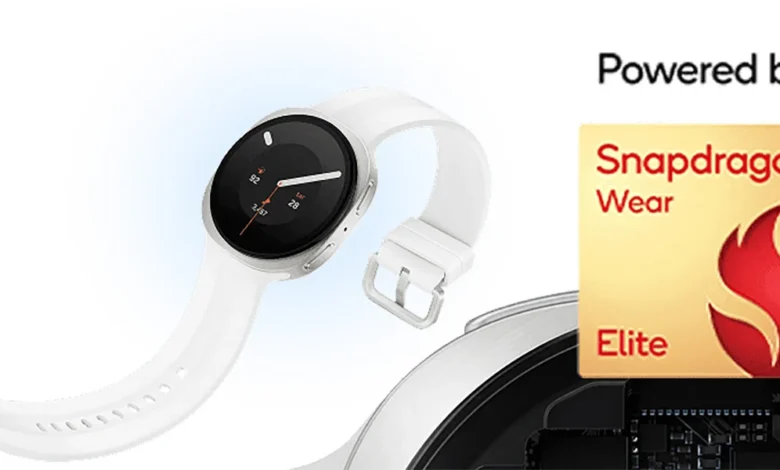
The confirmation of the Snapdragon Wear Elite’s inclusion in the standard Galaxy Watch 9 comes via veteran leaker Evan Blass, whose "Leakmail" newsletter recently surfaced high-resolution promotional images of the device. One specific image explicitly features the branding "Powered by Snapdragon Wear Elite" alongside the Galaxy Watch 9 chassis. Notably, this suggests the chip will not be exclusive to a high-end "Ultra" or "Pro" variant but will instead be the standard engine across the primary product line. This move effectively ends the Exynos era for Samsung’s flagship wearables, at least for the current generation, as the company seeks to leverage Qualcomm’s latest architectural breakthroughs.
![Galaxy Watch 9 is ‘Powered by Snapdragon Wear Elite,’ leaked images confirm [Gallery]](https://i0.wp.com/9to5google.com/wp-content/uploads/sites/4/2026/07/galaxy-watch-9-snapdragon-2.jpg?resize=1200%2C628&quality=82&strip=all&ssl=1)
Technical Specifications of the Snapdragon Wear Elite
The Snapdragon Wear Elite is not merely a marginal upgrade over its predecessors; it is a complete reimagining of what a wearable processor can achieve. Built on a 3nm fabrication process—the most advanced currently available in mass production—the chip is designed to maximize transistor density while minimizing power consumption. This is a critical factor for wearables, where physical space for batteries is extremely limited and thermal management is a constant challenge.
Central to the Snapdragon Wear Elite’s appeal is its focus on artificial intelligence. Qualcomm has integrated a dedicated Neural Processing Unit (NPU) designed specifically for low-power environments. This NPU is capable of handling complex AI tasks locally on the watch, reducing the need to offload data to a paired smartphone or the cloud. For the user, this translates to faster voice recognition, more accurate health tracking through advanced algorithmic analysis, and smarter "context-aware" features that can predict user needs based on environmental and physiological data.
Furthermore, the chip features a hybrid architecture that balances high-performance cores for demanding applications with ultra-low-power cores for background tasks and the Always-On Display (AOD). This "big.LITTLE" approach, refined for the 3nm node, is expected to provide a significant boost to battery life, potentially allowing the Galaxy Watch 9 to push past the multi-day barrier that has long eluded high-performance Wear OS devices.
A Historical Perspective: The Evolution of Galaxy Watch Hardware
To understand the weight of this transition, one must look at the history of Samsung’s wearable journey. When Samsung launched the original Galaxy Gear in 2013, it experimented with various hardware configurations before settling on its own Exynos chips for the Gear S2 and subsequent models. Throughout the late 2010s, while other manufacturers struggled with Qualcomm’s early Snapdragon Wear 2100 and 3100 platforms—which were often criticized for being repurposed smartphone chips with poor efficiency—Samsung’s Exynos chips were widely considered the gold standard for Android-compatible wearables.
![Galaxy Watch 9 is ‘Powered by Snapdragon Wear Elite,’ leaked images confirm [Gallery]](https://9to5google.com/wp-content/uploads/sites/4/2026/07/galaxy-watch-9-snapdragon-2.jpg?quality=82&strip=all&w=1200)
The partnership between Samsung and Google to revive Wear OS resulted in the Galaxy Watch 4, which featured the 5nm Exynos W920. This was followed by the W930 in the Galaxy Watch 6. While these chips were competent, the gap between wearable silicon and smartphone silicon began to widen. As Qualcomm regained its footing with the Snapdragon W5+ Gen 1, the competitive advantage of Exynos began to wane. By opting for the Snapdragon Wear Elite, Samsung is acknowledging that the current requirements for AI-driven health features and high-resolution interfaces require the specialized expertise that Qualcomm has poured into its latest "Elite" tier of processors.
AI Integration and the "Galaxy AI" Ecosystem
The timing of this hardware shift coincides with Samsung’s broader corporate push toward "Galaxy AI." Having integrated advanced AI features into the Galaxy S24 series and the latest Galaxy Z Fold and Flip devices, Samsung is now looking to extend those capabilities to the wrist. The Snapdragon Wear Elite provides the necessary overhead to run these features smoothly.
Expected AI enhancements for the Galaxy Watch 9 include:
- Advanced Sleep Coaching: Using the NPU to analyze sleep stages, heart rate variability, and respiratory data in real-time to provide more nuanced health insights.
- Enhanced Fitness Tracking: The ability to automatically detect a wider range of exercises and provide real-time form correction through sensor fusion and AI analysis.
- On-Device Translation: Leveraging the chip’s processing power to provide near-instant speech-to-text and translation services, a feature that was previously hampered by latency.
- Smart Reply 2.0: Using local large language models (LLMs) to suggest contextually relevant replies to messages that go beyond simple "Yes" or "No" templates.
Market Implications and Competitive Landscape
Samsung’s decision to adopt Qualcomm silicon has ripples across the entire tech industry. For Qualcomm, securing the world’s leading Android smartwatch manufacturer as a client for its top-tier chip is a massive victory. It solidifies the Snapdragon Wear Elite as the premier platform for high-end wearables, potentially making it the default choice for other manufacturers like Google, Fossil, and Mobvoi in the coming years.
![Galaxy Watch 9 is ‘Powered by Snapdragon Wear Elite,’ leaked images confirm [Gallery]](https://9to5google.com/wp-content/uploads/sites/4/2026/07/galaxy-watch-9-snapdragon-1.png)
For the consumer, this shift likely means a more unified experience across the Android ecosystem. With the Galaxy Watch 9 using the same underlying architecture as other flagship Android watches, developers can more easily optimize their apps for a single high-performance target. This could lead to a significant improvement in the quality and quantity of third-party apps available on the Google Play Store for Wear OS.
However, the move also raises questions about pricing. The 3nm manufacturing process is notoriously expensive, and the "Elite" branding suggests a premium price point. Analysts are watching closely to see if Samsung will maintain its current pricing structure or if the Galaxy Watch 9 will see a price hike to offset the costs of the more advanced Qualcomm silicon.
Timeline to Launch
The Galaxy Watch 9 is scheduled to be officially unveiled at Samsung’s upcoming "Galaxy Unpacked" event, which is expected to take place next week. Traditionally held in July or August, this event serves as the launchpad for Samsung’s second-half flagship products. This year, the Galaxy Watch 9 will share the stage with the next generation of foldable smartphones, the Galaxy Z Fold 7 and Galaxy Z Flip 7.
The chronology of the product’s development suggests that Samsung has been working closely with Qualcomm for at least eighteen months to integrate the Wear Elite platform. Early rumors of a "major performance jump" began circulating in late 2023, and by the time Qualcomm officially announced the Wear Elite in early 2024, industry insiders were already pointing to Samsung as the lead partner.
![Galaxy Watch 9 is ‘Powered by Snapdragon Wear Elite,’ leaked images confirm [Gallery]](https://i0.wp.com/9to5google.com/wp-content/uploads/sites/4/2026/07/galaxy-watch-9-leakmail-1.png?ssl=1)
Implications for the Future of Exynos
While the Galaxy Watch 9 represents a pivot to Qualcomm, it does not necessarily signal the end of Samsung’s semiconductor ambitions. Samsung Foundry remains a critical player in the global market, and the company continues to develop Exynos chips for its mid-range and budget smartphones. However, the decision to use Qualcomm in its flagship wearable suggests that for the most demanding, high-profile consumer electronics, Samsung is willing to prioritize performance and market-leading technology over internal vertical integration.
This pragmatic approach mirrors Samsung’s strategy in its smartphone division, where it has increasingly utilized Snapdragon chips for its "Ultra" models and North American releases. By choosing the best tool for the job, Samsung aims to maintain its dominant position in the wearable market against the Apple Watch, which continues to lead in global market share.
Conclusion
The Samsung Galaxy Watch 9, powered by the Qualcomm Snapdragon Wear Elite, marks the beginning of a new chapter in wearable technology. By combining Samsung’s expertise in design and health sensors with Qualcomm’s prowess in 3nm silicon and artificial intelligence, the upcoming device is set to offer a performance profile previously unseen in the Wear OS ecosystem. As the "Unpacked" event approaches, the industry remains focused on how Samsung will utilize this new power to redefine the role of the smartwatch in the daily lives of millions of users worldwide. The transition from Exynos to Snapdragon is more than a simple component change; it is a strategic realignment intended to ensure that the Galaxy Watch remains at the absolute cutting edge of the mobile technology frontier.
Related posts: