AWS Builder Center Celebrates First Anniversary, Unveiling a Year of Growth and New Features

The AWS Builder Center, a dynamic platform designed to foster innovation and collaboration within the Amazon Web Services ecosystem, marked its first anniversary last week, celebrating a year of significant expansion and community engagement. Launched on July 9, 2025, the platform has evolved from its initial conception as a community hub into a comprehensive resource for AWS developers, architects, and enthusiasts. This milestone is being commemorated with a detailed retrospective, highlighting the platform’s rapid development, substantial content contributions, and the introduction of key features that enhance the builder experience.
From Community Hub to Comprehensive Ecosystem
Initially conceived as a space for developers to connect, share ideas, and influence future AWS offerings through a wishlist voting system, the AWS Builder Center has undergone a remarkable transformation. Over the past year, it has blossomed into a full-fledged ecosystem. This expansion includes the introduction of sandbox environments, structured workshops, community-driven "Spaces," and a rich "Builders’ Library." This evolution reflects AWS’s commitment to providing a robust and accessible environment for continuous learning and practical application of its cloud services.
Rick Suttles, a key figure in the platform’s development, published a comprehensive feature timeline detailing the extensive array of features and content shipped since the Builder Center’s inception. This timeline underscores the sheer volume of development and community involvement over the past twelve months. Notable additions include:
- AWS Capabilities by Region: A detailed listing of over 1,500 services available across 37 AWS Regions, offering developers granular insight into service availability and deployment options globally.
- Spaces: A feature enabling the creation of community-curated groups, allowing users to organize around specific interests, projects, or technologies.
- Workshops: Enhanced workshop functionalities with advanced filtering options based on category and complexity, making it easier for users to find relevant hands-on learning experiences.
- Gamification and Recognition: The introduction of badges and streaks to acknowledge and incentivize participation and achievement within the community.
- Content Enhancements: The addition of article series, view counts for community-generated content, saved item functionality, student status designation, and availability notifications for popular resources.
- Authentication and Integration: Expanded sign-in options, including GitHub and Amazon accounts, streamlining user access and integration with existing development workflows.
- Sandbox Environments: A groundbreaking addition providing users with temporary, pre-provisioned AWS accounts to experiment with services and complete workshop exercises without the need for personal AWS accounts or credit card commitments.
A Year of Unprecedented Content and Community Engagement
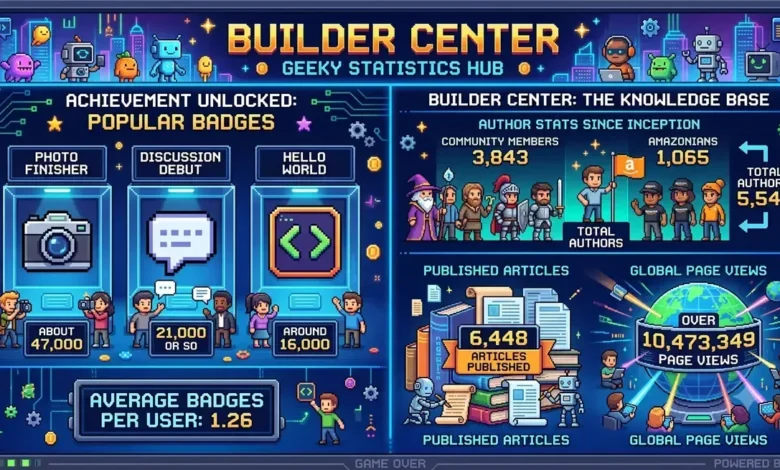
Jeff Barr, a prominent voice in the AWS community, shared a retrospective analysis of the Builder Center’s inaugural year, emphasizing the significant contributions from its user base. Since its launch, the platform has attracted a vibrant community of authors, with 5,548 individuals contributing 6,448 articles. This prolific content generation has resulted in an impressive cumulative total of over 10.4 million page views, demonstrating the high demand for practical, community-driven AWS knowledge.
The introduction of a badge system in March 2026 has further energized the community, with builders earning a remarkable 99,226 badges. This gamified approach has proven effective in encouraging active participation and skill development. Furthermore, the community’s direct influence on the platform’s evolution is evident in the 565 submitted wishes, 10 of which have already been implemented, with another 20 slated for near-term development. This feedback loop ensures that the AWS Builder Center remains responsive to the needs of its users.
Top-Performing Content and Community Spotlight
The platform’s success is also measured by the engagement with its user-generated content. Several articles have achieved significant traction, underscoring the community’s interest in specific AWS technologies and practical applications.
- "Building an AWS Study Buddy with MCP + Strands Agents SDK" by Dineshraj Dhanapathy emerged as the most popular community article, surpassing 50,000 views. This indicates a strong interest in leveraging AWS services for educational tools and AI-driven applications.
- Following closely, "Migrating an EOL Linux Server to AWS in 8 Hours with Kiro" by Chris Miller garnered over 45,000 views. This highlights the ongoing need for efficient and practical solutions for migrating legacy systems to the cloud.
- "AIdeas: NeuroVoice – Multimodal AI for Early Screening of Neurological Diseases" by Yash Aggarwal reached over 38,000 views, showcasing the community’s exploration of advanced AI and machine learning for critical applications in healthcare.
These highly viewed articles exemplify the diverse and impactful projects undertaken by the AWS builder community, ranging from practical migration strategies to cutting-edge AI research.
Introduction of Sandbox Environments: A Game-Changer for Learning
A significant highlight of the past week’s announcements is the official launch of Sandbox Environments on the AWS Builder Center, detailed in an article by Rick Suttles. This feature represents a substantial step forward in making hands-on AWS experience more accessible. Sandbox Environments provide users with a free, pre-provisioned AWS account specifically designed for completing workshop exercises.
Key benefits of this new feature include:

- No Personal Account Required: Users do not need to possess a personal AWS account or provide credit card details to access these environments.
- Time-Limited Access: Each sandbox environment is active for a period of 8 hours, after which all associated resources are automatically de-provisioned. This ensures efficient resource utilization and eliminates the risk of unexpected charges.
- Controlled Usage: Users can have one active sandbox at a time and are permitted to request one per week, providing a structured and manageable approach to experimentation.
- Effortless Cleanup: The automatic de-provisioning process eliminates the need for manual cleanup of AWS resources, simplifying the learning process and removing a common barrier for new users.
The introduction of sandbox environments is expected to significantly lower the barrier to entry for individuals looking to learn and experiment with AWS services, fostering a more inclusive and practical learning environment.
Broader AWS Ecosystem Updates and Future Outlook
In addition to the Builder Center’s anniversary, AWS continues to roll out a consistent stream of innovations across its vast service portfolio. While specific "last week’s launches" were not detailed in the provided content, a general reminder was issued to monitor the "What’s New with AWS" page for comprehensive announcements. This proactive approach ensures that the AWS ecosystem remains at the forefront of cloud technology.
The platform also provides links to other relevant AWS blogs and upcoming events, underscoring a holistic strategy for developer engagement and education. The AWS Builder Center itself serves as a central hub, encouraging builders to connect with peers, contribute their solutions, and discover resources that empower continuous development.
The anniversary celebrations conclude with a personal note from Esra, who is embarking on a summer trip to Scandinavia, highlighting the importance of balancing work and personal well-being. This sentiment resonates with the platform’s ethos of supporting builders in their journeys, whether focused on creation, learning, or rejuvenation. The AWS Builder Center’s first year has been a testament to the power of community-driven innovation and a strong indicator of its future potential as a vital resource for the global AWS developer community. The platform’s rapid growth and the introduction of features like sandbox environments signal a clear commitment from AWS to empower and enable builders worldwide.
Related posts: