Google Updates Gemini Usage Limits and Quota Management Following Compute-Based Transition at I/O 2026


The landscape of consumer-facing artificial intelligence underwent a significant structural shift following the Google I/O 2026 conference, as the tech giant transitioned its Gemini application from traditional message-based caps to a sophisticated compute-based usage model. This transition, while designed to reflect the varying computational costs of different AI tasks, initially met with resistance and technical hurdles from the power-user community. In a rapid response to widespread feedback regarding the speed at which users were exhausting their allocations, Google has announced a series of refinements to the Gemini quota system. These changes aim to balance the high operational costs of large language models (LLMs) with a sustainable and transparent user experience, introducing more granular controls, free tiers for lighter models, and a more equitable "compute-used" methodology.
The Shift to Compute-Based Metrics
For much of the early era of generative AI, platforms such as ChatGPT and Gemini relied on simple message counts—for example, allowing users 50 messages every three hours. However, as AI models evolved to handle multimodal inputs, including long-form video, complex codebases, and massive document uploads, the "one message equals one unit" logic became economically and technically obsolete. A single-sentence text query requires a fraction of the processing power compared to a prompt asking the AI to analyze an hour-long video or debug ten thousand lines of code.
At I/O 2026, Google addressed this disparity by launching the compute-based approach. Under this system, usage is calculated based on the complexity of the prompt, the specific tools utilized (such as extensions for Workspace or YouTube), and the length of the ongoing conversation. The system operates on a rolling five-hour refresh cycle until a broader weekly limit is reached. While logically sound from an infrastructure perspective, the initial implementation led to reports of users hitting "walls" after only a few intensive interactions, particularly when utilizing the high-reasoning capabilities of Gemini 3.1 Pro.
Refining Gemini 3.1 Pro and the Quota Cap
The most significant update announced this week concerns Gemini 3.1 Pro, the mid-to-high tier model used by millions for professional and creative tasks. Gemini lead Josh Woodward confirmed that the company is now "capping the amount of quota a single prompt can use." This strategic adjustment is designed to prevent a single, massive request—such as a request to summarize multiple 500-page PDFs—from entirely depleting a user’s session limit. By placing a ceiling on the "cost" of an individual prompt, Google ensures that users can maintain a conversational flow without the fear that one complex task will render the AI unusable for the remainder of the day.
This move addresses a core friction point: the unpredictability of AI resource consumption. By standardizing the maximum impact of a single prompt, Google provides a more predictable environment for developers and researchers who rely on the Pro model for iterative work.

The "Free" Tier Strategy: Gemini 3.1 Flash-Lite
In a bid to maintain market share against increasingly aggressive competition from open-source models and rival startups, Google has decoupled Gemini 3.1 Flash-Lite from the quota system entirely. Starting today, prompts directed to the Flash-Lite model are free and do not count against a user’s compute-used limits.
Gemini 3.1 Flash-Lite is optimized for speed and efficiency, making it ideal for quick translations, basic brainstorming, and simple factual queries. By making this model "unlimited," Google effectively creates a safety net for users. When a user exhausts their high-tier compute for Gemini 3.1 Pro or Ultra, the system can now seamlessly transition them to Flash-Lite, ensuring that the utility of the Gemini app is never completely severed. Furthermore, Google has introduced "sticky" model selection. Once a user manually selects a specific model tier, the application will remember that choice across all future sessions, only reverting to a lighter model if a quota cap is hit or the user manually intervenes.
Infrastructure Reliability and the "Error Protection" Policy
One of the most contentious issues in the transition to compute-based billing was the "penalty" for failed requests. In early testing phases, users reported that if the AI crashed, timed out, or produced a system error, the compute units were still deducted from their accounts. Google has now formally clarified its stance on this issue, adopting a "successful completion only" policy.
"If a request fails, you won’t be charged," the company stated. "Our system mistakes are on us, not you." This policy is a crucial step in building trust, particularly as AI systems remain prone to occasional hallucinations or infrastructure-related timeouts. By ensuring that only successful completions consume quota, Google incentivizes itself to maintain high uptime and model reliability.
Addressing the "Omni" Video Bug and Ultra Tier Enhancements
The Gemini "Omni" capabilities, which allow for real-time video reasoning and multimodal interaction, have proven to be the most resource-intensive features in the Google AI ecosystem. Following the I/O 2026 rollout, a bug was identified where a very small number of Omni video interactions—sometimes as few as one or two—would completely drain the weekly quota for "certain people."
Google has deployed a fix for this specific bug and, as a gesture of goodwill to its highest-paying tier, has doubled the number of Omni generations available to Google AI Ultra users. The Ultra model, typically bundled with the Google One AI Premium plan, represents the pinnacle of Google’s consumer AI, and the increase in Omni access reflects the company’s commitment to justifying the premium subscription price.
Enhanced Transparency through Usage Dashboards
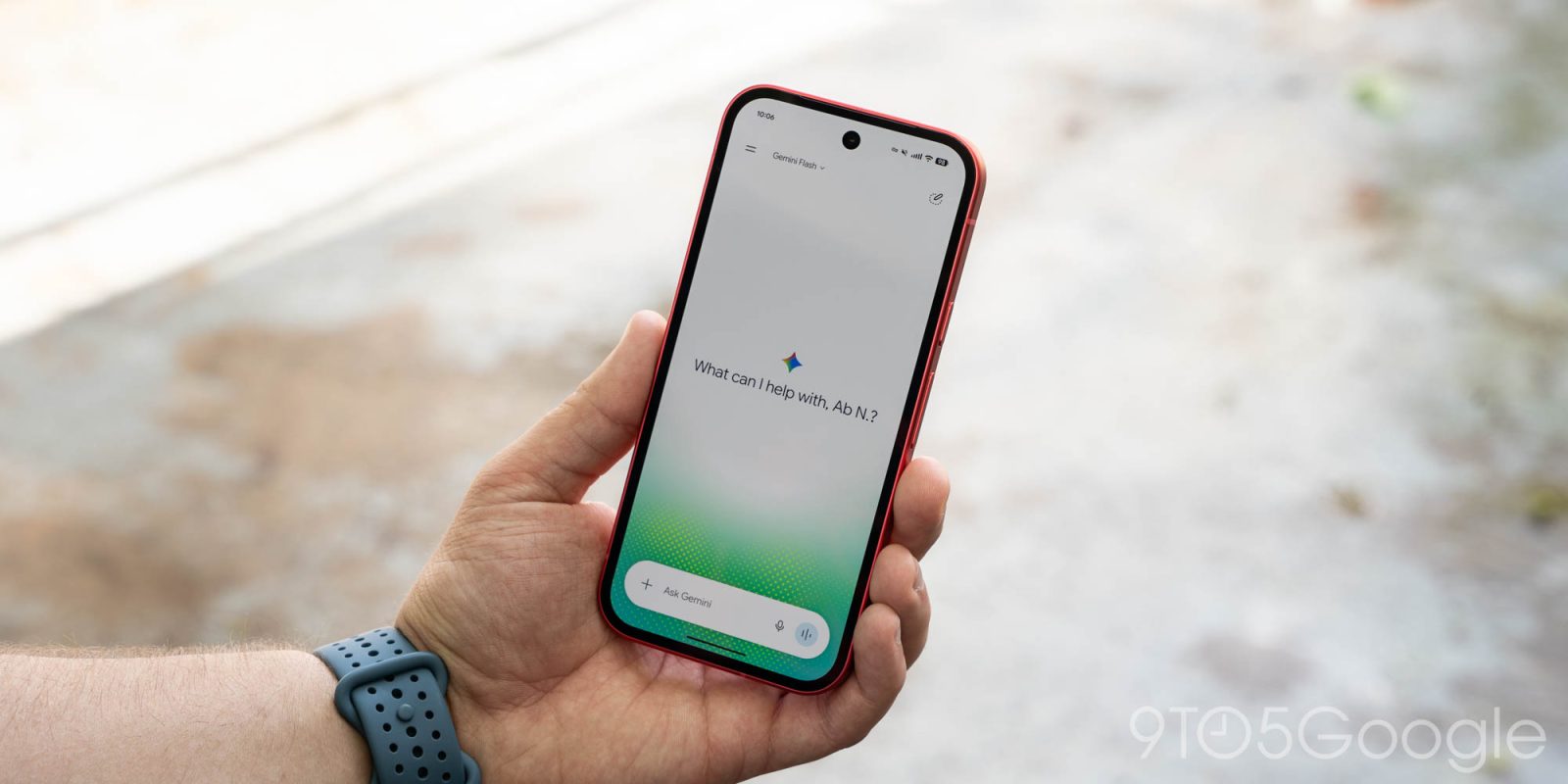
As AI consumption becomes more akin to a utility—similar to data usage on a cellular plan—transparency has become a primary demand from the user base. Currently, the dashboard at gemini.google.com/usage provides only a high-level overview of remaining compute. Recognizing that this is insufficient for users performing "Deep Research" or heavy coding tasks, Google has pledged to provide more detailed usage breakdowns.
The upcoming updates to the dashboard will include:
- Task-Specific Notifications: Real-time alerts when a specific task is expected to use a significant portion of the remaining quota.
- Historical Analytics: Data on which types of prompts (video, text, code) are consuming the most resources.
- Predictive Modeling: Estimations of how many "standard" prompts remain based on current usage patterns.
The Future: Pay-As-You-Go and the AI Economy
Perhaps the most significant long-term development mentioned in the recent update is the move toward "pay-as-you-go top-up AI credits." This marks a departure from the "all-you-can-eat" subscription model that has dominated the industry since 2023. By allowing users to purchase additional compute credits on an ad-hoc basis, Google is aligning its consumer AI product with the business model of Google Cloud Platform (GCP).
This shift suggests that the cost of running state-of-the-art models like Gemini 3.1 Ultra remains high enough that flat-rate subscriptions may eventually become unsustainable for the heaviest power users. The top-up model provides a middle ground, allowing the majority of users to stay within their subscription limits while offering a path for professionals to extend their usage without waiting for a weekly refresh.
Market Context and Competitive Implications
Google’s pivot to compute-based limits and the subsequent adjustments occur in a highly competitive landscape. OpenAI has experimented with similar "dynamic" limits for its GPT-4o and o1 models, while Anthropic’s Claude 3.5 Sonnet employs a complex formula based on context window size. Google’s advantage lies in its vertical integration; because Google designs its own Tensor Processing Units (TPUs) and manages its own data centers, it has more granular control over the "cost" of compute than competitors who rely on third-party hardware like NVIDIA’s H100s.
However, the challenge for Google is managing user perception. The transition from "unlimited" (or high-limit) message counts to "compute units" can feel like a restriction to the average consumer. By making Flash-Lite free and doubling Omni access for Ultra users, Google is attempting to frame the change not as a limitation, but as an optimization of resources.

Analysis of Implications
The move to compute-based limits is an admission of the staggering energy and financial costs associated with the next generation of AI. As models move toward "Deep Research"—tasks where the AI may browse the web for ten minutes, synthesize twenty sources, and generate a five-page report—the traditional message cap becomes an insufficient metric.
For the user, these changes mean a steeper learning curve in managing their "AI budget." Just as early internet users had to monitor their megabytes, the power users of 2026 must now monitor their "compute." Google’s decision to cap the cost of individual prompts and provide free access to lighter models suggests a future where AI usage is tiered not just by the quality of the model, but by the intensity of the task.
As Google continues to refine these limits, the focus will likely shift toward making the Gemini app an "operating system" for tasks. The introduction of more detailed notifications and usage breakdowns is a necessary step in that evolution, ensuring that as AI becomes more integrated into daily workflows, it remains a predictable and reliable tool rather than a fluctuating resource. The fix for the Omni video bug and the doubling of generations for Ultra subscribers further indicate that while compute is scarce, Google is willing to prioritize its most loyal users as it scales its infrastructure to meet the demands of a multimodal future.
Related posts: