MEXC Reinforces Market Trust with Robust September 2026 Proof of Reserves Report Validated by Hacken

In an era where transparency remains the cornerstone of investor confidence within the digital asset sector, MEXC has officially released its Proof of Reserves (PoR) report for September 2026. This latest disclosure, audited by the renowned cybersecurity firm Hacken, confirms that the exchange maintains a comprehensive backing for user assets, with reserve ratios exceeding the 1:1 threshold across all major holdings. As the cryptocurrency industry continues to navigate a complex regulatory and economic landscape, these monthly snapshots have become a vital tool for platforms seeking to demonstrate solvency and operational integrity to a global retail and institutional user base.
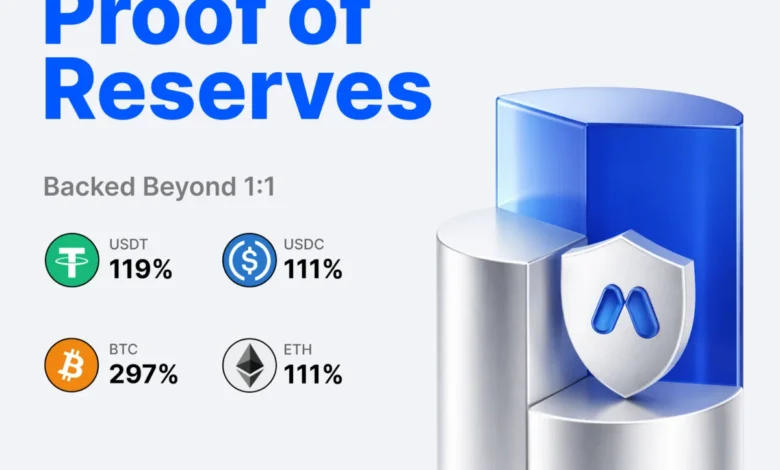
The September report, which utilizes a snapshot taken on September 10, 2026, highlights a notable increase in the exchange’s Bitcoin (BTC) reserve ratio, which climbed to 297% from the 288% reported in August. This surge underscores a deliberate strategy by the platform to maintain substantial liquidity buffers, ensuring that even in periods of extreme market volatility, user funds remain fully protected and accessible.
A Chronology of Transparency: The Evolution of PoR
The concept of Proof of Reserves gained significant traction following the market turbulence of 2022, which prompted a paradigm shift in how centralized exchanges manage and report their custodial activities. Since then, MEXC has institutionalized the practice of monthly auditing to provide a consistent audit trail.
Historically, the industry relied on "trust-me" models where exchanges operated as black boxes. Today, the integration of Merkle Tree technology allows individual users to independently verify that their specific balances are accounted for within the platform’s total reserve liabilities without compromising the privacy of other account holders. By aligning with third-party security auditors like Hacken, MEXC has moved beyond self-reporting to a model of verifiable external validation. This evolution is part of a broader industry trend toward "auditable finance," where the burden of proof has shifted from marketing claims to cryptographic certainty.
Detailed Breakdown of Reserve Ratios
According to the audited data for September 2026, the platform’s reserves significantly exceed the liabilities owed to its clients. The following figures provide a snapshot of the current asset health:
- Bitcoin (BTC): With 12,202.13 BTC in reserves against user holdings of 4,106.57 BTC, the exchange maintains a healthy 297% coverage ratio.
- Tether (USDT): The platform holds 1,818,202,910.24 USDT, comfortably covering the 1,526,526,878.38 USDT liability, resulting in a 119% ratio.
- USD Coin (USDC): Reserves total 299,925,929.77 USDC, against user holdings of 269,894,125.25 USDC, representing a 111% ratio.
- Ethereum (ETH): The exchange retains 58,917.60 ETH, providing 111% coverage for the 53,243.98 ETH held by users.
These figures are audited through a rigorous process conducted by Hacken, which includes an assessment of Proof of Liabilities, Proof of Ownership, and an overall reserve calculation. This exhaustive methodology ensures that the assets listed are not only under the control of the exchange but are also sufficient to meet all immediate and anticipated withdrawal demands from the user base.
Strategic Capital Reserves and Risk Mitigation
Beyond the primary Proof of Reserves, MEXC has implemented a dual-layered security approach to insulate its users from market-driven risks. This strategy involves the maintenance of dedicated insurance funds designed to provide a safety net during anomalous market events.
The Futures Insurance Fund, which acts as a buffer against liquidation-related losses, currently maintains a balance of approximately 798 million USDT. This fund is particularly important for high-volume derivative traders, as it absorbs the costs associated with "clawbacks" that can occur during periods of extreme price instability. Furthermore, The Guardian Fund, a specialized reserve structure consisting of both USDT and BTC, provides a secondary layer of coverage for platform-related contingencies. With a current valuation of $101 million and an stated objective to reach $500 million within the next two years, the platform is signaling a long-term commitment to capital adequacy.
Leadership Perspective on Institutional Trust
Vugar Usi, the CEO of MEXC, emphasized that these disclosures are not merely a compliance requirement but a core tenet of the company’s operational philosophy. "Protecting user assets and earning their trust are fundamental responsibilities, not optional commitments," Usi stated in a release accompanying the report.
The sentiment reflects a growing realization among major exchange executives that the "trust gap" created in previous years can only be bridged through consistent, verifiable action. By allowing users to validate their own asset data at any time, MEXC is attempting to empower the retail investor, moving the platform away from the traditional banking model of opacity and toward a more decentralized, transparent architecture. The CEO’s emphasis on "earned trust" highlights a shift in corporate communications, where transparency is treated as a product feature rather than a regulatory burden.
Market Implications and Future Outlook
The broader impact of such transparent reporting cannot be understated. As traditional finance (TradFi) and decentralized finance (DeFi) continue to converge, the standards set by exchanges like MEXC influence market expectations. If major exchanges fail to provide robust, audited, and frequent reserve reporting, the risk of market-wide systemic shocks increases. Conversely, by establishing a high-frequency audit rhythm, the platform contributes to a more stable ecosystem.

However, industry analysts note that while PoR is a critical component of safety, it does not replace the need for secure cold-storage practices, robust cybersecurity protocols, and regulatory compliance. The "0-fee" model employed by MEXC, which lowers the barrier to entry for retail traders, necessitates even higher transparency standards, as a large user base requires constant liquidity management.
Looking forward, the roadmap for the industry includes the potential for real-time, on-chain verification, where reserve snapshots are updated instantaneously rather than on a monthly basis. MEXC’s expansion of its insurance funds to a $500 million target suggests that the exchange is preparing for a future where digital asset volatility is managed through deep, pre-funded capital reserves rather than reliance on market makers or external liquidity providers.
Conclusion: A New Standard for Digital Asset Custody
The September 2026 report serves as a benchmark for the exchange’s ongoing commitment to user security. By documenting its reserve status with precision and transparency, the platform is addressing the primary concerns of the modern investor: liquidity, solvency, and accountability.
For the average user, these reports provide a necessary layer of reassurance. For the broader industry, they serve as a reminder that the path toward mass adoption is paved with verifiable data. As the landscape continues to evolve, the ability of platforms to demonstrate, in real-time, that they are holding the assets they claim to hold will likely be the primary differentiator between surviving exchanges and those that fall behind.
Investors are encouraged to review the full details of the audit, including the methodology and the specific reserve snapshots, via the official MEXC Proof of Reserves portal. As with all financial instruments, users are reminded that the digital asset market is inherently volatile and that self-custody and personal risk management remain essential alongside exchange-level security measures.
Disclaimer: This article is for informational purposes only and does not constitute financial or investment advice. The digital asset market is subject to high levels of volatility. Investors should perform their own due diligence, assess their risk tolerance, and consult with a professional financial advisor before making any investment decisions. The information provided herein is based on the official September 2026 audit report and should be treated as a summary of the disclosed data.
Related posts: