The original article was published on systemdesign.one website.
In the intricate world of distributed computing, where systems span vast networks and millions of users, maintaining consistent and reliable communication is paramount. Traditional centralized approaches often buckle under the weight of scale, becoming single points of failure and bottlenecks. Enter the Gossip Protocol, a revolutionary decentralized communication paradigm that mirrors the organic spread of information in social networks and biological epidemics. This article delves into the mechanics, applications, advantages, and disadvantages of the Gossip Protocol, highlighting its critical role in building robust, scalable, and highly available distributed systems.
The Challenge of Distributed Systems
Distributed systems, by their very nature, present a unique set of challenges. Unlike monolithic applications running on a single machine, distributed systems involve multiple independent nodes communicating over a network. This distributed architecture introduces complexities such as:
- Node Failures: Individual nodes can crash, become unresponsive, or experience network disruptions.
- Network Partitions: The network can split, isolating subsets of nodes from each other.
- Data Consistency: Ensuring all nodes have an up-to-date and accurate view of the system’s state is a significant hurdle.
- Scalability: As the number of nodes and the load on the system increase, maintaining performance and responsiveness becomes increasingly difficult.
Historically, solutions to these problems have often relied on centralized state management services. Systems like Apache ZooKeeper provide robust service discovery and coordination, offering strong consistency guarantees. However, these centralized services inherently become single points of failure. If the ZooKeeper ensemble goes down, the entire system relying on it can grind to a halt. Furthermore, as the number of nodes in a distributed system grows into the thousands or millions, a single centralized service can struggle to scale, leading to performance degradation.
The Peer-to-Peer Revolution: Embracing Eventual Consistency
In contrast to centralized models, peer-to-peer (P2P) state management services prioritize high availability and eventual consistency. This approach accepts that there might be a transient period where different nodes have slightly different views of the system state, but guarantees that eventually, all nodes will converge to a consistent state. The Gossip Protocol is a prime example of an algorithm that enables efficient and scalable P2P state management.
The term "Gossip Protocol," also known as "Epidemic Protocol," draws a direct analogy to how information spreads through human populations. Just as a rumor or an epidemic disseminates from person to person, messages in a gossip protocol propagate across a distributed network. Each node acts like an individual, periodically sharing information with a randomly selected subset of its peers. Over time, this random, decentralized exchange ensures that information reaches virtually all nodes in the system with a high probability.
Understanding Broadcast Protocols in Distributed Systems
To appreciate the elegance of the Gossip Protocol, it’s helpful to consider other broadcast mechanisms in distributed systems:
Point-to-Point Broadcast
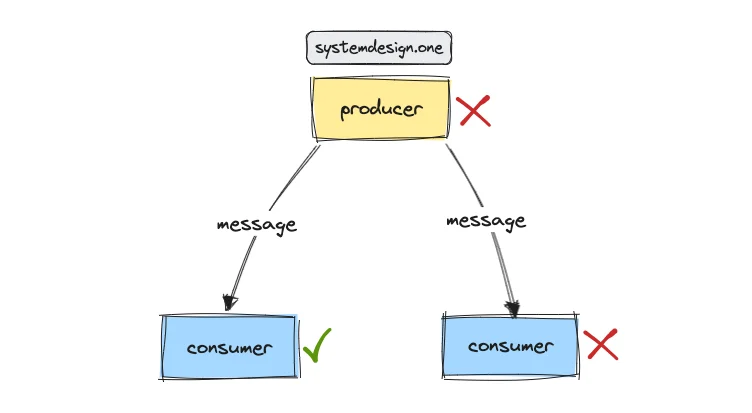
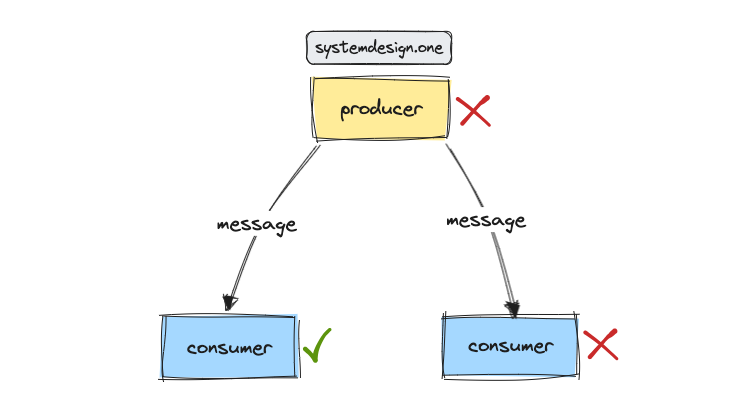
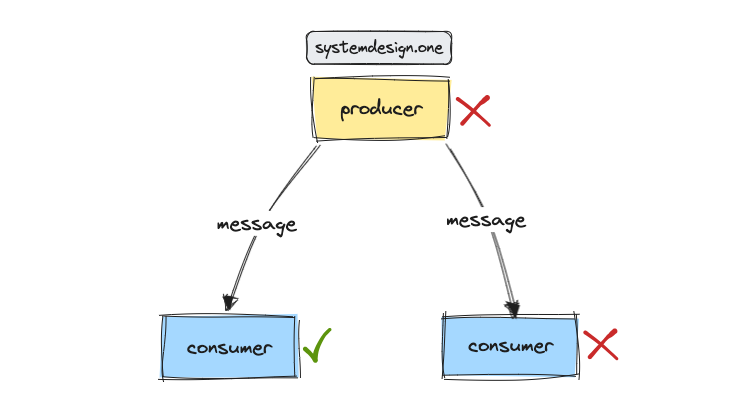
In a simple point-to-point broadcast, a producer directly sends a message to a consumer. Reliability is typically achieved through retry mechanisms on the producer’s end and deduplication on the consumer’s. However, this model is vulnerable to simultaneous failures of both the producer and consumer, leading to message loss.
Eager Reliable Broadcast
This approach involves every node rebroadcasting received messages to all other nodes via reliable network links. This significantly enhances fault tolerance, as remaining nodes can retransmit messages even if the original sender or receiver fails. The major drawbacks of eager reliable broadcast are its high network overhead and the potential for message redundancy, especially in large-scale systems. Every message essentially traverses every link multiple times, creating significant traffic.
The Gossip Protocol: A Decentralized Information Cascade
The Gossip Protocol stands out as a decentralized, peer-to-peer communication technique designed for massive distributed systems. Its core principle is elegantly simple: each node periodically selects a random subset of other nodes (its "fanout") and disseminates its current information or new messages to them. This probabilistic approach ensures that, over a series of "gossip rounds" or "cycles," any given message will eventually reach all nodes in the system with a very high probability.
This mechanism allows nodes to build a global understanding of the system’s state through limited, local interactions. It’s akin to individuals in a large organization sharing snippets of information, and through these fragmented conversations, everyone eventually gains a comprehensive picture.
The Gossip Protocol is inherently robust, scalable, and converges to an eventually consistent state. It’s commonly employed for critical functions within distributed systems, including:
- Node Membership Management: Keeping track of which nodes are currently active and available.
- Failure Detection: Identifying unresponsive or failed nodes.
- Achieving Consensus: While not providing strong consistency, it facilitates agreement on certain states.
- Application-Level Data Distribution: Piggybacking application-specific data onto gossip messages for efficient dissemination.
The protocol’s reliability stems from its inherent redundancy. If a node fails, other nodes that have already received the message can continue to spread it, compensating for the lost node. Furthermore, gossip protocols can be used to implement various broadcast guarantees, including First-In-First-Out (FIFO), causal, and total order broadcasts, albeit with varying levels of complexity and overhead.
Key parameters like "cycle" (the number of rounds for a message to propagate) and "fanout" (the number of nodes a message is sent to) can be tuned to optimize performance and probabilistic guarantees. Tools exist to simulate and visualize these protocols, aiding in their design and tuning.
The characteristics that make gossip protocols ideal for large-scale distributed systems include:
- Decentralization: No central authority or single point of failure.
- Scalability: Performance degrades gracefully with increasing node count.
- Fault Tolerance: Resilient to node failures and network issues.
- Simplicity: Relatively easy to implement and understand.
An interesting aspect of gossip is how it handles data invalidation. When data needs to be removed, a special entry called a "tombstone" is used. This tombstone signifies that the data associated with a particular key has been invalidated, effectively marking it for deletion without immediately purging it from all nodes, which can be important for consistency in eventually consistent systems.
Types of Gossip Protocols
The choice of gossip protocol often depends on the specific requirements of the system, particularly concerning the time it takes for messages to propagate and the network traffic generated. Broadly, gossip protocols can be categorized into:
Anti-Entropy Gossip Protocol
Introduced to combat "entropy" (discrepancies) between replicated data, the anti-entropy protocol focuses on ensuring replicas are synchronized. In each gossip round, a node with newer messages shares them with other nodes. To optimize bandwidth, techniques like checksums, lists of recent updates, or Merkle trees are employed to identify differences between nodes, avoiding the transmission of entire datasets. A potential drawback is that the anti-entropy protocol, without termination mechanisms, could potentially send an unbounded number of messages.
Rumor-Mongering Gossip Protocol (Dissemination Protocol)
This protocol prioritizes rapid message dissemination. Rumor-mongering cycles occur more frequently than anti-entropy cycles, leading to higher network load in the worst case. However, it’s more bandwidth-efficient as it typically only transfers the latest updates. To manage the message lifecycle, messages are marked for removal after a certain number of communication rounds, ensuring that the network doesn’t get flooded indefinitely. This approach offers a high probability of reaching all nodes.
Aggregation Gossip Protocol
This type of protocol is designed for computing system-wide aggregates. Nodes sample information from their peers and combine these values to generate a global metric or statistic. This is useful for tasks like calculating average load across a cluster or monitoring overall system health.
Strategies for Message Dissemination
Within the framework of gossip protocols, several strategies dictate how messages are spread:
- Push Model: The node with the latest message actively sends it to a random subset of other nodes. This is efficient for systems with infrequent updates to minimize traffic overhead.
- Pull Model: Each node proactively queries a random subset of other nodes for any new update messages. This is advantageous when there are frequent updates, as it increases the likelihood of finding a node with the most recent information quickly.
- Push-Pull Model: This hybrid approach combines the benefits of both push and pull. A node can push new updates and also pull for updates from its peers. The push phase is effective initially when few nodes have new information, while the pull phase becomes more beneficial as more nodes acquire updates. This model is often considered optimal for rapid and reliable message dissemination.
Performance and Properties of Gossip Protocols
The efficiency of a gossip protocol is often measured by its "fanout" (the number of peers a node communicates with) and "cycle" (the number of rounds for a message to propagate across the system). The relationship between these parameters and the total number of nodes ($n$) is logarithmic: the cycles required are approximately $O(log_textfanout n)$. For example, propagating a message across 25,000 nodes might take around 15 gossip rounds. With a gossip interval as low as 10 milliseconds, a message can traverse a large data center in roughly 3 seconds. To prevent unnecessary load, messages are typically designed to "age out" over time.
Performance metrics can include message latency, bandwidth consumption, and CPU utilization. Case studies have shown that gossip protocols can be remarkably lightweight, with a system of 128 nodes consuming less than 2% of CPU and under 60 KBps of bandwidth for gossip operations.
While there’s no single formal definition, gossip protocols are generally expected to exhibit certain desirable properties:
- Scalability: Ability to handle increasing load without performance degradation.
- Fault Tolerance: Resilience to node failures and network issues.
- Robustness: Resistance to minor disruptions and transient network problems.
- Convergent Consistency: The system eventually reaches a consistent state.
- Decentralization: Information discovery and dissemination are distributed.
- Simplicity: Easy to implement and maintain.
- Integration and Interoperability: Ability to work with other distributed system components.
- Bounded Load: Predictable and manageable resource consumption.
Gossip Algorithm in Action
A high-level overview of the gossip algorithm involves nodes periodically exchanging information. This exchange often includes "heartbeats," which are essentially status updates. A node is considered "healthy" if its heartbeat counter increments consistently, indicating it’s participating in the gossip. A stalled heartbeat counter can signal a network partition or a node failure.
Peer node selection for gossip exchange is crucial. This is often managed by a "peer sampling service," which uses randomized algorithms to pick peers. The API of such a service typically provides endpoints to get a list of peers and to report the health of a node.
The workflow of a peer sampling service involves nodes maintaining a partial view of the system in a local membership table and periodically refreshing it via gossip messages. Probabilistic selection helps minimize duplicate message transmissions.
Application state can be carried as key-value pairs within gossip messages. When multiple changes occur to the same key, the most recent value is transmitted. APIs are provided to orchestrate this application state exchange.
"Seed nodes" are static, pre-configured nodes that every node in the system knows about. They act as an anchor point, helping to prevent the system from becoming logically divided, especially during initial bootstrapping or in the event of network partitions.
When a node receives gossip with metadata of a peer node, it typically updates its local view. On node startup, the entire metadata might be transferred. To optimize this, an in-memory version number or a "generation clock"—a monotonically increasing number incremented on node restarts—can be used to send only incremental updates. This generation clock, coupled with version numbers, ensures correct detection of node metadata changes even after restarts.
The "gossiper timer" is a key component that ensures all nodes eventually receive crucial metadata, even those isolated by network partitions. Each node has a heartbeat state, including generation and version numbers, and application state (key-value pairs with version numbers). A gossip exchange typically involves a "gossip digest synchronization" message containing a list of gossip digests (endpoint, generation, version). An acknowledgment message follows, which includes the digests and endpoint states.
Use Cases and Applications
The Gossip Protocol is a workhorse in modern distributed systems, particularly where eventual consistency is acceptable. Its applications are vast and include:
- Databases: Amazon DynamoDB, Apache Cassandra, and others use gossip for node membership, failure detection, and data replication.
- Cluster Management: Systems like Kubernetes employ gossip for node discovery and health checking.
- Messaging Systems: Facilitating reliable message delivery in distributed queues.
- Service Discovery: Helping services find and communicate with each other.
- Failure Detection and Monitoring: Proactively identifying and reporting node or service failures.
One of the critical applications is failure detection. In a distributed system, a single client’s inability to reach a node doesn’t definitively mean the node has failed; it could be a network issue. However, when multiple "clients" (nodes participating in gossip) confirm a node’s lack of liveness, its failure can be asserted with high probability. This proactive detection saves valuable resources like CPU, bandwidth, and queue space.
Gossip protocols often offer a more reliable and scalable alternative to TCP for data exchange and command and control compared to traditional multicast. They abstract communication details from application logic, allowing node statistics (e.g., average load, memory) to be shared to inform local decision-making. Subsystem information, configuration changes, and even request-response patterns can be transmitted. Aggregating updates into single chunks reduces communication overhead. Routing messages across the cluster is optimized by understanding node liveness. The decentralized nature, with local decision-making, is key to scaling. Vector clocks can be used to version messages, ensuring nodes ignore older versions.
Real-world implementations can be found in systems like Cassandra, Consul, and many others that rely on decentralized coordination.
Advantages of the Gossip Protocol
The widespread adoption of the Gossip Protocol is driven by its numerous advantages:
Scalability
Gossip protocols are inherently scalable. The logarithmic time complexity for convergence means that as the number of nodes increases, the time required for a message to spread across the system grows much slower. Crucially, each node interacts with only a fixed number of peers, and sends a fixed number of messages, irrespective of the total system size. The lack of acknowledgment requirements further reduces latency and overhead.
Fault Tolerance
The protocol’s design inherently builds in fault tolerance. Redundancy, parallelism, and randomness ensure that the system can withstand node crashes, network partitions, and message loss. The symmetric and decentralized nature means that the failure of one node does not cripple the entire system. Messages are typically sent multiple times via different paths, so if one route fails, others exist.
Robustness
The symmetric nature of participating nodes contributes to robustness. A single node failure doesn’t compromise system integrity. Gossip protocols are also resilient to transient network partitions. However, they are not inherently robust against malicious nodes or corrupted messages unless additional security measures like encryption and authentication are implemented, or data is self-verified. Reputation systems can also help mitigate issues from malicious nodes.
Convergent Consistency
While not providing strong consistency guarantees, gossip protocols excel at achieving eventual consistency. Through the exponential spread of data, the system converges to a consistent state in logarithmic time.
Decentralization
The peer-to-peer nature provides a truly decentralized model for information discovery and dissemination, eliminating reliance on central authorities.
Simplicity
Most gossip protocol variants are relatively straightforward to implement, requiring minimal code and complexity. The symmetric interaction model simplifies execution.
Integration and Interoperability
Gossip protocols can be seamlessly integrated with other distributed system components like databases, caches, and queues, provided common interfaces and data formats are defined.
Bounded Load
Unlike some traditional protocols that can cause surge loads, gossip protocols generate a strictly bounded worst-case load on individual components. This predictability prevents service quality disruption. The peer selection can be tuned to minimize network link load, and in practice, the load is often negligible compared to available bandwidth.
Disadvantages of the Gossip Protocol
Despite its strengths, the Gossip Protocol is not without its limitations:
Eventually Consistent
The most significant disadvantage is its inherent eventual consistency. This means there’s a delay before all nodes reflect the same state, which may not be suitable for applications requiring immediate, strong consistency. Recognizing new nodes or node failures can also take time.
Network Partition Unawareness
Gossip protocols are generally unaware of network partitions. Nodes within isolated sub-partitions will continue to gossip amongst themselves, potentially delaying the propagation of critical information across the entire system once the partition heals.
Bandwidth Consumption
While bounded, gossip can still consume significant bandwidth. The same message might be retransmitted to the same node multiple times. Although bounded message sizes and periodic exchanges help, the effective fanout can degrade if the amount of data to be gossiped exceeds the message size limit. The saturation point depends on message generation rate, size, fanout, and protocol type.
Latency
Messages are not transmitted instantaneously upon generation. They must wait for the next scheduled gossip interval. While the time complexity for message spread is logarithmic, the latency for a single message can be higher than with direct multicast, as it relies on scheduled exchanges rather than immediate triggers.
Debugging and Testing Challenges
The inherent non-determinism and distributed nature of gossip protocols make debugging and reproducing failures difficult. Testing requires sophisticated tools like simulation, emulation, extensive logging, tracing, monitoring, and visualization.
Scalability Limitations (Membership Protocols)
While the gossip communication itself is scalable, some variants rely on non-scalable membership protocols, which can become a bottleneck.
Computational Error
The protocol can be susceptible to computational errors, particularly if malicious nodes inject corrupted data. While robust against many failures, it requires self-correcting mechanisms or external verification to handle sophisticated attacks. However, with proper implementation, outcomes with a probability of one are typical.
Conclusion: The Indispensable Backbone
The Gossip Protocol, despite its trade-offs, has become an indispensable component in the architecture of modern, large-scale distributed systems. Its ability to provide decentralized, fault-tolerant, and scalable communication makes it ideal for a vast array of applications, from managing distributed databases to orchestrating microservices. By mimicking the organic spread of information, it offers a robust and resilient foundation for systems that must operate reliably in the face of constant change and potential failures. The continuous evolution of gossip protocols and their underlying mechanisms further solidifies their position as a critical technology for the future of distributed computing.
For those looking to deepen their understanding of system design principles and excel in technical interviews, exploring resources like the system design newsletter from SystemDesignOne is highly recommended. It offers valuable insights into complex topics, including the intricate workings of protocols like Gossip.