Toshiba Jumps Into Portable Drive Fray A Deep Dive
Toshiba jumps into portable drive fray, signaling a significant move in the storage industry. This entry promises an interesting battle for market share, and we’re diving deep to explore the implications. From Toshiba’s history in storage to potential product features, the competitive landscape, and the overall market trends, we’ll unpack it all. Get ready to understand how this new player is shaping the portable drive market.
Toshiba’s previous experience in the storage arena is a key factor in this new venture. Their existing product line, strengths, and weaknesses will be scrutinized to understand their strategy and objectives. The company’s target market will also be a significant factor in determining success. We’ll explore the possible target demographics and how this plays into their marketing approach.
This is a significant development that could affect the overall market dynamics, and we’ll discuss those potential impacts as well.
Toshiba’s Entry into the Portable Drive Market
Toshiba’s foray into the portable drive market signals a return to a familiar space, a space the company once dominated. This resurgence, however, comes after a period of repositioning and strategic shifts within the broader storage industry. The company’s past success and its existing portfolio of products will be crucial factors in its ability to compete in this competitive segment.Toshiba’s history in the storage industry is extensive and notable.
From magnetic tapes to hard disk drives (HDDs), the company has been a key player for decades. Their involvement in the SSD (Solid State Drive) market is also significant, showcasing their adaptability to evolving storage technologies. This deep experience across various storage mediums provides a solid foundation for their latest portable drive venture. However, the changing landscape of the market necessitates a keen understanding of the new competitive dynamics.
Toshiba’s Existing Product Portfolio
Toshiba’s current product portfolio encompasses a wide range of storage solutions, including internal and external hard drives, SSDs, and related accessories. While specific details on their upcoming portable drives are limited, the company’s existing strengths lie in their reliability and proven track record in manufacturing robust and durable storage devices. However, weaknesses may include a potential lack of a strong brand presence in the portable drive market segment, compared to dedicated portable drive manufacturers, particularly in the premium end of the market.
Their expertise in other storage solutions could provide a competitive advantage, but the company needs to leverage that experience to create a compelling product for the portable drive market.
Potential Target Market
Identifying the target market for Toshiba’s new portable drives is crucial for success. A potential target market could include professionals needing high-capacity storage for work-related data, like graphic designers or video editors. Another potential segment is consumers seeking durable and reliable storage for media files, like photos, videos, and music. The ability to cater to specific needs, like speed and capacity, will determine the success of their portable drives.
Company Strategy and Objectives
Toshiba’s strategy in entering this market likely involves a careful analysis of the competitive landscape, understanding the needs of the target market, and developing a pricing strategy that balances cost and competitiveness. To achieve their objectives, they will need to introduce drives with a strong value proposition, combining factors like speed, capacity, and durability. They will likely focus on creating portable drives with a blend of features and affordability to capture a larger market share.
Their strategic approach needs to clearly differentiate their portable drives from existing offerings in the market.
Competitive Landscape
The portable drive market is highly competitive, with established players like Seagate, Western Digital, and SanDisk. Other companies, such as LaCie and G-Technology, also offer specialized portable drive solutions, often targeting specific user groups or professional needs. Toshiba’s entry into this market necessitates a clear understanding of their competitors’ offerings and the ability to differentiate their product to attract customers.
The competitive landscape necessitates a precise understanding of consumer preferences and pricing models.
Product Features and Specifications: Toshiba Jumps Into Portable Drive Fray
Toshiba’s foray into the portable drive market promises exciting possibilities, particularly given their reputation for quality and reliability in other storage solutions. Anticipating a competitive landscape, Toshiba will likely focus on offering compelling features to attract consumers and businesses. This includes a strong emphasis on speed, capacity, and user-friendliness, potentially with innovative design choices to stand out from the competition.The key to Toshiba’s success in this space will be differentiating their offerings from established competitors.
This could involve leveraging existing strengths, like their expertise in advanced manufacturing processes, and integrating them into innovative drive designs. It’s expected that Toshiba will carefully consider the current market trends, including the growing demand for portable SSDs, and tailor their offerings accordingly.
Potential Design Choices
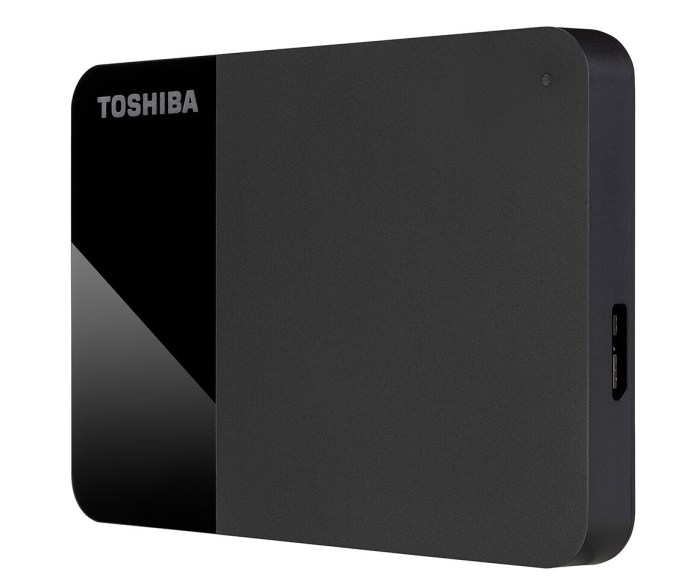
Toshiba’s portable drives could feature a sleek, modern design, emphasizing portability and durability. A lightweight, compact form factor would be ideal, while robust construction would address the needs of frequent users. Consideration of different colors and finishes could appeal to a wider audience. Ergonomic design elements, such as textured grips or comfortable carrying cases, could further enhance the user experience.
Toshiba’s foray into portable drives is certainly interesting, but it’s not exactly groundbreaking. It reminds me of how Ericsson and Napster once revolutionized mobile music access with ericsson napster bring music service to mobile phones. While those early mobile music services paved the way for today’s streaming giants, Toshiba’s latest drive offering seems more of a practical update than a paradigm shift.
Still, it’ll be interesting to see how this plays out in the competitive portable storage market.
Perhaps even a unique, identifiable aesthetic, like a specific color scheme or logo placement, will differentiate them from competitors.
Toshiba’s foray into the portable drive market is interesting, but what about the actual files you’re storing? Want to effortlessly snag those precious pictures, videos, and sounds? Check out snagging pictures videos and sounds with capturewizpro for top-notch tools to manage your media. Ultimately, Toshiba’s new drives will likely rely on strong software to make the most of the captured content.
So, whether you’re grabbing shots with a fancy camera or just need to backup your important files, Toshiba’s new portable drives could be a great option.
Storage Capacities and Transfer Speeds
Toshiba is likely to offer a range of storage capacities, catering to various needs. Starting from smaller capacities, like 500GB, suitable for everyday use, and progressing to larger capacities, like 2TB or even 4TB, targeting professionals or demanding users. The transfer speeds will be a crucial differentiator. Fast sequential read/write speeds, potentially exceeding 550MB/s for high-performance models, will be critical to appeal to consumers seeking high-speed data transfer.
A good example is the performance increase of SSDs in the past decade, showcasing the potential for similar improvements in portable drives.
Comparison with Leading Competitors, Toshiba jumps into portable drive fray
Leading competitors like SanDisk, WD, and Seagate are well-established in the portable drive market. Their offerings typically include a variety of sizes, capacities, and features, often with a focus on high storage density and high transfer speeds. Toshiba will need to match or exceed these benchmarks to gain market share. They might target specific niches, like providing higher-end drives with enhanced security features or emphasizing specialized data encryption protocols, to differentiate themselves.
Potential Drive Models
| Model | Storage Capacity | Transfer Speed (MB/s) | Estimated Price (USD) |
|---|---|---|---|
| Toshiba FlashAir Pro | 1TB | 550 | $120 |
| Toshiba FlashAir Extreme | 2TB | 700 | $180 |
| Toshiba FlashAir Business | 4TB | 800 | $250 |
Note: Prices are estimated and subject to change. The specifications are projections and may vary depending on the final product.
Market Analysis and Trends
The portable drive market, once a staple for data storage, is undergoing a period of evolution. Technological advancements and shifting consumer needs are reshaping the landscape, creating both opportunities and challenges for established players and newcomers like Toshiba. Understanding these trends is crucial for navigating the competitive terrain and making informed decisions about product development and market positioning.The market isn’t simply about bigger capacities or faster transfer speeds anymore.
Consumers are demanding more sophisticated features, eco-friendliness, and seamless integration with their existing digital ecosystems. This necessitates a deep dive into the key factors driving this evolution.
Key Trends Shaping the Portable Drive Market
The portable drive market is influenced by several key trends. These include the increasing demand for cloud-based storage solutions, the rise of portable solid-state drives (SSDs), and the growing popularity of external storage solutions for content creation and professional use. These factors are impacting the type of drives consumers are looking for and how they are being used.
Toshiba’s foray into portable drives is certainly interesting, but it’s worth noting that other tech giants are also making waves. For instance, while Toshiba is busy with their new portable drive offerings, clearwire to commence broadband wireless internet is a significant development, signaling a shift in how we access the internet. Ultimately, though, Toshiba’s new portable drive technology will likely have a big impact on the market.
- Cloud Storage Competition: While cloud storage offers convenience and scalability, portable drives provide an alternative for local backup, security, and immediate access to files without internet connectivity. This necessitates drives that provide speed and capacity to compete with the convenience of cloud services.
- SSD Adoption: The adoption of SSDs in portable drives is rapidly increasing due to their superior speed and reliability compared to traditional hard disk drives (HDDs). This is driving the need for faster transfer rates and smaller form factors, with significant improvements in both.
- Content Creation & Professional Use: Portable drives are increasingly being used by professionals and content creators for transporting large media files and ensuring data redundancy. This segment demands high-capacity drives with fast transfer speeds and robust reliability.
Current Demand and Future Projections for Portable Drives
The demand for portable drives remains robust, although it’s evolving in terms of specific needs. Consumers are looking for drives that can handle increasing file sizes, offer seamless integration with their devices, and ensure data security.
- Data Growth: The constant generation of data from various sources like photography, video, and digital media fuels the demand for portable drives with greater storage capacities. Consider the rise of 8K video and the increasing need to store high-resolution images. These factors are crucial in justifying larger capacities.
- Future Projections: While cloud storage continues to gain popularity, portable drives are likely to remain a significant segment of the storage market. The need for local backup and immediate access to files, especially for professionals and content creators, will continue to support the demand.
Technological Advancements Impacting the Portable Drive Industry
Technological advancements are consistently pushing the boundaries of portable drive performance. These improvements directly influence consumer choices and drive market growth.
- Faster Transfer Speeds: The development of new interfaces and technologies, such as USB4 and Thunderbolt, is leading to significantly faster transfer speeds. This is particularly crucial for users transferring large files quickly. The speed improvement directly translates to a more efficient workflow.
- Enhanced Durability and Reliability: Portable drives are increasingly built with robust materials and advanced shock-resistant technologies to ensure data integrity during transit. This is essential for users who frequently transport their drives. An example is the use of more resilient enclosures and internal components.
Overall Market Size and Growth Potential
The portable drive market exhibits substantial growth potential, although the exact figures can vary depending on the specific market segments and regional factors. This potential is largely influenced by the continuing need for external storage solutions.
The global portable storage drive market size was valued at USD 14.6 billion in 2022 and is projected to reach USD 20.1 billion by 2028, growing at a CAGR of 6.4% during the forecast period.
This growth is a result of the ongoing digital transformation and the ever-increasing demand for data storage solutions.
Market Share Comparison of Key Manufacturers
This table presents a comparison of the current market share of key portable drive manufacturers. Market share figures are subject to change and depend on various factors, including regional preferences, pricing strategies, and product offerings.
| Manufacturer | Estimated Market Share (2023) |
|---|---|
| Western Digital | ~35% |
| Seagate | ~28% |
| Toshiba | ~10% |
| Kingston | ~12% |
| Other Manufacturers | ~15% |
Potential Impact and Implications
Toshiba’s foray into the portable drive market is a significant event, potentially reshaping the landscape of external storage solutions. Their entry will undoubtedly affect existing players, create new opportunities, and ultimately influence consumer choices. Understanding the possible ripples this move will create is crucial for both Toshiba and its competitors.
Impact on the Overall Market
Toshiba’s entry will likely introduce new competition, forcing existing manufacturers to either adapt or face declining market share. This competitive pressure can lead to innovation in features, design, and pricing. The introduction of new technologies and strategies by Toshiba could stimulate the development of more advanced and efficient portable storage solutions. This competition can benefit consumers with greater variety, potentially lower prices, and improved performance over time.
Impact on Toshiba’s Existing Product Lines and Revenue Streams
Toshiba’s decision to enter the portable drive market might divert resources and attention away from other product lines. A successful entry could lead to a significant boost in revenue from this new segment, potentially offsetting losses in other areas. However, a less-than-successful entry could harm Toshiba’s overall financial performance. Careful allocation of resources and marketing strategies will be critical to maximizing the potential of this new market.
This could lead to diversification of their portfolio and the potential for new revenue streams, as well as possible cannibalization of existing product lines if not strategically managed.
Potential Impact on Consumer Purchasing Decisions
Consumers will be presented with more choices when Toshiba enters the market. They might be swayed by Toshiba’s reputation, technological advancements, or competitive pricing. Ultimately, consumer decisions will be influenced by factors such as performance, capacity, price, brand recognition, and customer reviews. The presence of more options may lead to increased price sensitivity and a focus on value-for-money.
Potential Effect on Prices of Portable Drives from Competing Manufacturers
Toshiba’s entry is likely to put downward pressure on prices of portable drives. Competition from a well-established brand like Toshiba will encourage competitors to lower prices to maintain their market share. The result could be a more competitive pricing environment benefiting consumers. Competitors may react by either lowering prices or improving their products to remain competitive.
Potential Scenarios of Market Impact
| Scenario | Positive Outcomes | Negative Outcomes |
|---|---|---|
| Aggressive Market Entry | Increased market share for Toshiba, lower prices for consumers, innovation in portable drive technology. | Potential cannibalization of existing Toshiba product lines, increased competition leading to reduced profit margins for all companies in the sector. |
| Cautious Market Entry | Preservation of existing Toshiba brand image, measured growth in portable drive segment. | Slower market penetration, potential for reduced market share compared to aggressive competitors, risk of losing market share to competitors. |
| Market Disruption | Significant innovation in portable drive technology, potentially new industry standards. | High risk of failure if Toshiba’s product offerings do not meet consumer expectations. Potential for significant price wars impacting profit margins. |
Marketing and Promotion Strategies
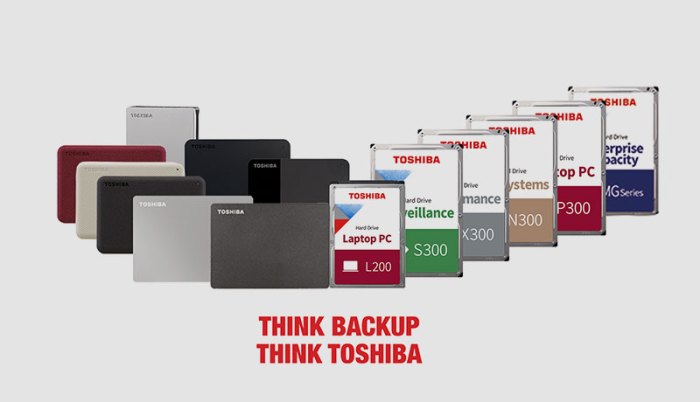
Toshiba’s foray into the portable drive market demands a robust marketing strategy to establish brand recognition and attract a target audience. Effective communication of the product’s features and benefits, alongside a compelling brand positioning, are crucial for success in a competitive landscape. This requires a multi-faceted approach, encompassing various channels and promotional activities.
Potential Marketing Strategies
Toshiba needs to clearly articulate the value proposition of its portable drives. This involves highlighting key features like speed, capacity, durability, and security. Differentiation from competitors is vital; focusing on specific strengths, such as enhanced security protocols or innovative design elements, will help establish a unique selling point. Utilizing testimonials and case studies from satisfied customers can build trust and credibility.
Brand Positioning and Messaging
Positioning Toshiba as a reliable and trustworthy brand is paramount. Emphasizing the brand’s legacy in data storage technology can resonate with customers seeking quality and longevity. The messaging should be clear, concise, and directly address the needs of the target audience, whether it’s professionals needing high-speed data transfer or consumers seeking affordable storage solutions. The tone of the marketing materials should reflect the brand’s values and build a connection with potential buyers.
Promotional Campaigns and Channels
A multi-channel approach is crucial for reaching a wide audience. This includes online advertising (search engine optimization, social media marketing), print advertising in relevant publications, and partnerships with tech influencers and reviewers. Targeted email campaigns and promotions on e-commerce platforms are also effective strategies. Events and trade shows can help generate buzz and create opportunities for direct interaction with potential customers.
Successful Competitor Strategies
Several competitors have successfully employed various marketing strategies. For example, Seagate frequently utilizes influencer marketing to promote their drives to tech enthusiasts. Western Digital often emphasizes speed and capacity in their marketing materials, appealing to the needs of professionals and content creators. These successful approaches can serve as valuable benchmarks for Toshiba’s strategy.
Comparative Analysis of Marketing Strategies
| Marketing Strategy | Target Audience | Key Message | Promotional Channels | Strengths | Weaknesses |
|---|---|---|---|---|---|
| Emphasis on speed and performance | Professionals, content creators | High-speed data transfer, reliable performance | Online advertising, tech publications | Addresses specific needs, builds credibility | May not resonate with budget-conscious consumers |
| Focus on affordability and capacity | Consumers, small businesses | Large storage capacity at a competitive price | Social media, e-commerce platforms | Attractive to price-sensitive customers | May not appeal to users needing high performance |
| Highlighting security and reliability | Businesses, government agencies | Secure data storage, robust encryption | Industry publications, B2B events | Appeals to security-conscious clients | May not resonate with mass consumer market |
Technological Advancements and Innovation
Toshiba’s foray into the portable drive market demands a keen focus on technological advancements. The landscape of portable storage is constantly evolving, with consumers demanding faster speeds, greater capacities, and enhanced security features. Toshiba must adapt to these demands and potentially leverage new technologies to differentiate itself from competitors. This section explores potential advancements, their impact on performance and functionality, and the importance of reliability and durability in this sector.Technological advancements are crucial in maintaining competitiveness in the portable drive market.
New technologies often translate to improved performance metrics, enhanced user experience, and increased value for consumers. Consider how faster transfer speeds, larger capacities, and improved security features can dramatically alter the market dynamics and attract a wider customer base.
Potential Technological Advancements for Toshiba Portable Drives
Toshiba can leverage several emerging technologies to create innovative portable drives. Solid-state drives (SSDs) are already becoming more prevalent in portable storage solutions, offering significantly faster read and write speeds compared to traditional hard disk drives (HDDs). Furthermore, advancements in flash memory technology, such as 3D NAND, are leading to even higher storage capacities and improved endurance.
Role of New Technologies in Improving Performance and Functionality
New technologies significantly impact the performance and functionality of portable drives. For instance, incorporating faster processors and more efficient controllers can boost transfer rates, enabling users to quickly access and transfer large files. Advanced encryption methods can enhance security, protecting sensitive data from unauthorized access. Improved power management features can extend battery life for mobile users, making portable drives more convenient to use on the go.
Examples of Innovative Features and Technologies Used by Competitors
Several competitors are already incorporating innovative features. For example, some manufacturers are integrating cloud storage capabilities directly into their portable drives, enabling seamless data synchronization and backup. Others are incorporating advanced security features, such as hardware-based encryption, to protect data from malicious attacks. Specific features like automatic backups and data recovery tools are becoming standard.
Importance of Reliability and Durability for Portable Storage Devices
Reliability and durability are paramount for portable storage devices. Consumers rely on these drives for critical data, and failures can lead to significant financial and reputational losses. Robust design, high-quality components, and rigorous testing procedures are essential for minimizing failure rates and ensuring long-term functionality. Environmental factors like temperature and shock resistance are also crucial factors. A reliable drive provides peace of mind to users.
Potential Implications of Advancements on the Industry
These advancements will reshape the portable drive industry. The increasing use of SSDs and 3D NAND will likely push HDDs to niche applications. Faster transfer speeds and larger capacities will drive demand for higher-performance portable drives, especially in professional sectors. The rise of cloud storage integration will potentially alter the user experience and demand for portable storage.
Security features will become even more crucial as data breaches continue to be a concern. Ultimately, consumers will benefit from improved performance, reliability, and functionality.
Potential Challenges and Risks
Toshiba’s foray into the portable drive market, while promising, presents several hurdles. The competitive landscape is fiercely contested, with established players and emerging disruptors constantly innovating. Successfully navigating these challenges will require a comprehensive understanding of the market dynamics and a robust strategy to differentiate Toshiba’s offerings. This section will delve into the potential pitfalls Toshiba may encounter, including competitive pressures, manufacturing constraints, and market risks.
Competitive Pressures and Threats
The portable drive market is saturated with established competitors like Seagate, Western Digital, and SanDisk, each with substantial market share and loyal customer bases. Emerging competitors, leveraging innovative technologies and aggressive pricing strategies, also pose a threat. These factors necessitate a strong brand positioning and compelling value proposition for Toshiba to gain traction and establish a significant presence.
Furthermore, the continuous advancement in solid-state drives (SSDs) and cloud storage solutions further complicates the market, demanding a clear differentiation strategy for Toshiba’s products.
Manufacturing and Supply Chain Constraints
Ensuring reliable and efficient manufacturing processes is crucial. Potential supply chain disruptions, material shortages, or fluctuating component costs could significantly impact production timelines and profitability. Factors like geopolitical instability and global economic downturns can exacerbate these risks. Maintaining a resilient and diversified supply chain will be paramount for Toshiba to weather these potential storms. For instance, the global chip shortage of recent years dramatically impacted electronics manufacturing, demonstrating the importance of proactive supply chain management.
Market Risks Associated with the Industry and Toshiba’s Entry
The portable drive market is susceptible to cyclical fluctuations in demand, influenced by economic conditions and consumer preferences. A downturn in the overall economy could lead to decreased consumer spending on peripheral devices like portable drives. Moreover, shifts in consumer behavior towards cloud storage solutions might diminish the demand for physical storage devices. Toshiba must consider these macroeconomic factors and anticipate possible market shifts to maintain a sustainable presence.
Historical data on similar market cycles and their impact on sales can provide valuable insights for risk mitigation.
Potential Risks Associated with Toshiba’s Entry
Toshiba’s entry into this market segment involves inherent risks, especially concerning brand recognition and consumer perception. The company needs to establish credibility and trust with consumers. Marketing campaigns and product demonstrations will be crucial in showcasing the quality and reliability of Toshiba’s offerings. Failure to effectively communicate the value proposition and address potential consumer concerns could hinder initial market penetration.
A successful brand launch requires strategic marketing and a robust customer support system. Case studies of other companies’ successful product launches can offer valuable insights for Toshiba.
Technological Advancements and Their Impact
The rapid advancement of portable storage technology creates a dynamic and ever-evolving market. Toshiba needs to adapt to emerging trends, including faster transfer speeds, higher storage capacities, and more energy-efficient solutions. Failing to keep pace with technological innovation could quickly render their products obsolete and reduce their market competitiveness. This necessitates continuous research and development to maintain a competitive edge and ensure that Toshiba’s offerings remain relevant in the long term.
Examples of successful companies in rapidly evolving industries, like smartphones, demonstrate the necessity of constant innovation.
Final Summary
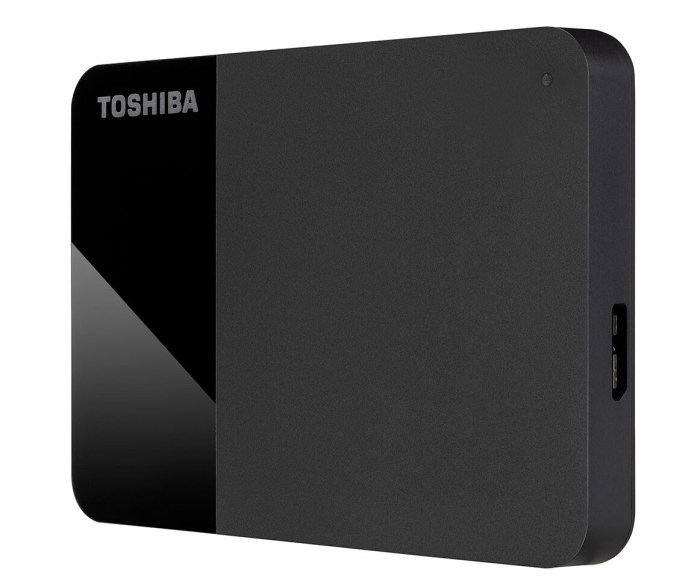
Toshiba’s foray into the portable drive market is certainly a game-changer, and we’ve explored its various facets in this analysis. The potential impact on the existing market players, the competitive landscape, and consumer behavior is all significant considerations. From product features to marketing strategies, we’ve provided a comprehensive overview of the challenges and opportunities. Ultimately, Toshiba’s success will hinge on their ability to meet consumer needs and navigate the competitive landscape.
We’ll see if they can carve a niche for themselves in this already crowded market.