
Upstart Social Networking Sites Gain Traction
Upstart social networking sites gain traction, challenging established platforms and offering fresh approaches to online connection. These new entrants are attracting users with innovative features, often focusing on specific niches or user privacy concerns. From freemium models to subscription-based services, they’re disrupting the traditional social media landscape. This exploration delves into the factors driving their growth, user motivations, and the impact they’re having on the existing ecosystem.
Understanding the characteristics that differentiate upstart social networking sites from established platforms is crucial. This includes examining their unique features, business models, and target demographics. A key element is how they’re addressing user concerns about privacy and data security. Examining successful examples and case studies will reveal their unique strategies and help identify trends shaping the future of social networking.
Defining the Phenomenon: Upstart Social Networking Sites Gain Traction
Upstart social networking sites are emerging platforms challenging the dominance of established giants like Facebook and Twitter. These new entrants often focus on specific user needs or preferences, offering unique features and experiences that cater to niche interests or address perceived shortcomings in existing platforms. They represent a dynamic and evolving landscape, continuously adapting to the ever-changing social media environment.These platforms differentiate themselves from established ones through a variety of characteristics.
They often emphasize privacy, authenticity, or specific functionalities not found on established platforms. Features like decentralized architectures, advanced algorithms for content discovery, or integration with emerging technologies like blockchain are commonly highlighted. These distinctions allow upstarts to carve out a unique space and attract users seeking alternative social experiences.
Models of Upstart Platforms
Different models are adopted by upstart social networking sites, each with its own advantages and disadvantages. The freemium model is prevalent, offering basic services for free while charging for premium features. Subscription-based models offer exclusive content or features for a recurring fee. Others utilize a hybrid approach, combining elements of both freemium and subscription models. These models allow upstart platforms to experiment and discover what works best for their user base and monetization strategy.
Examples of Upstart Social Networking Sites
Several examples demonstrate the variety of niches and approaches taken by these new platforms. “Whisper” focuses on anonymous sharing, “Clubhouse” on audio-based conversations, and “Mastodon” on decentralized communication. “BeReal” emphasizes the immediacy of real-time interactions, promoting authentic moments. These examples highlight the diverse and evolving nature of the upstart social networking landscape, showcasing different user needs and desires.
Upstart social networking sites are definitely gaining traction, offering fresh approaches and user-friendly interfaces. This rise in popularity mirrors the surprising shift in the gaming market, with the Wii outselling the PS3, a whole new gaming order, as detailed in this article: wii outselling ps3 a new gaming order. Perhaps this shift signifies a broader trend toward user-centric design, a trend that’s also influencing the future of social networking sites.
Contrasting Established and Upstart Platforms
| Feature | Established Platforms | Upstart Platforms |
|---|---|---|
| User Base | Massive, global reach, often spanning generations. | Smaller, often focused on specific demographics or interests. |
| Features | Broad range of features, including social interaction, news feeds, and advertising tools. | Focused on specific features, often prioritizing privacy, authenticity, or niche functionality. |
| Target Demographics | Diverse, encompassing various age groups and interests. | Often targeted at specific demographics, like young professionals or hobby enthusiasts. |
This table illustrates the fundamental differences between established and upstart social networking sites, highlighting variations in user base, features, and target audience. Established platforms typically aim for broad appeal, whereas upstart sites often target particular niches.
Growth Drivers
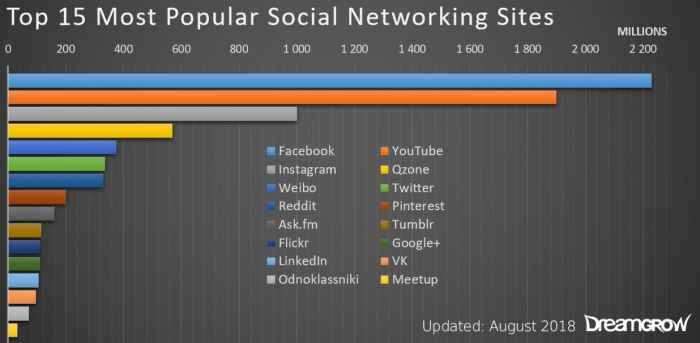
The rapid rise of new social networking platforms is a fascinating phenomenon, driven by a complex interplay of factors. Understanding these drivers is crucial to comprehending the appeal and future trajectory of these platforms. This analysis delves into the key elements fueling their adoption, from innovative features to impactful marketing strategies.The success of these platforms hinges on their ability to attract and retain users.
This requires a combination of factors, including appealing design, engaging content, and a supportive community. Innovative features play a pivotal role in this equation. Effective marketing strategies and user-generated content further enhance their appeal.
Factors Contributing to Rapid Adoption
Several key factors contribute to the rapid adoption of new social networking platforms. These include user-friendliness, ease of integration with existing communication channels, and perceived value propositions. The unique value proposition of each platform influences its attractiveness to specific demographics.
- User-friendliness: Intuitive interfaces and seamless navigation significantly impact user experience and encourage adoption. Simple sign-up processes and straightforward functionalities make platforms more accessible to a broader audience. Platforms like BeReal prioritize simplicity and engagement, appealing to a wide range of users.
- Integration with Existing Channels: Integration with messaging apps, social media, and other digital platforms allows users to connect seamlessly across different facets of their online lives. This reduces friction and makes it easier for users to transition to new platforms.
- Perceived Value Proposition: Unique features, such as emphasis on authenticity, community building, or specific niche interests, attract users seeking a platform that aligns with their needs and preferences. The platform’s perceived value proposition can determine whether it resonates with a particular target audience.
Role of Innovative Features and Functionalities
Innovative features are key drivers of platform adoption. New functionalities often provide a compelling reason for users to switch from existing platforms.
- Unique Features: Features like ephemeral content, direct communication tools, and immersive experiences can create a distinctive user experience, making the platform stand out from competitors. Features like real-time updates and interactive elements enhance engagement and create a sense of community.
- Improved User Experience: Modern platforms prioritize seamless user experiences, intuitive interfaces, and robust functionality. This creates a sense of ease and accessibility for users, increasing the likelihood of platform adoption. This focus on user experience is essential to success.
Influence of Marketing Strategies and Social Media Campaigns
Effective marketing strategies and social media campaigns significantly influence the adoption of new social networking platforms. A well-executed strategy can create significant buzz and drive user acquisition.
- Targeted Campaigns: Strategic targeting of specific demographics and interest groups is crucial. Platforms often focus on specific demographics, like young adults or professionals, to maximize impact. This ensures that the message resonates with the target audience.
- Influencer Marketing: Leveraging the influence of key personalities and communities can significantly amplify reach and generate interest in a new platform. Using influencers can accelerate adoption and create awareness among potential users.
Role of User-Generated Content and Community Building
User-generated content and community building are critical for fostering engagement and driving platform adoption. Platforms with thriving communities are often more appealing to users.
- Engagement and Interaction: Platforms that facilitate user-generated content and encourage interaction create a dynamic and engaging environment. This can foster a sense of belonging and encourage users to stay active.
- Authenticity and Trust: User-generated content builds authenticity and trust. Users are more likely to join a platform that showcases genuine interactions and diverse perspectives. This fosters a more trustworthy and relatable environment.
Marketing Approaches Employed by New Platforms
| Platform | Marketing Strategy | Target Audience |
|---|---|---|
| BeReal | Emphasis on authenticity, simplicity, and visual interaction | Young adults seeking genuine connections and visual engagement |
| Clubhouse | Focus on exclusive communities and audio-based interactions | Professionals and individuals interested in networking and discussions |
| TikTok | Viral content, short-form videos, and user-generated challenges | Broad demographic, particularly young adults |
User Motivations
Upstart social networking platforms are rapidly gaining traction, challenging the dominance of established giants. Understanding the motivations driving users to these newer platforms is crucial for their continued success and for evaluating their potential for long-term growth. These platforms often offer unique features and value propositions that appeal to specific user segments, and their ability to resonate with users is a key differentiator in this competitive landscape.User motivations for switching to or adopting upstart social networking platforms are multifaceted.
Users are seeking alternative experiences that cater to their specific needs and desires, moving away from the perceived limitations or drawbacks of established platforms. This desire for a fresh, personalized social environment is a significant factor in the success of emerging networks.
Upstart social networking sites are definitely gaining traction, offering fresh approaches to connecting with others. This rise in popularity is interesting, especially considering the recent Sun virtualization plan to include services support, which could impact how these platforms are managed and scaled. Ultimately, the future of social networking is likely to be shaped by these innovative new players.
Privacy Concerns and Data Security
User concerns about privacy and data security are significant drivers of platform choice. Users are increasingly aware of the potential risks associated with sharing personal information on social media, leading them to seek platforms with robust privacy policies and transparent data handling practices. Platforms that prioritize user privacy and demonstrate a commitment to data security are more likely to attract and retain users.
Impact of User Reviews and Recommendations
User reviews and recommendations play a critical role in shaping platform adoption. Positive feedback and testimonials can significantly influence a user’s decision to join a platform. Conversely, negative reviews or concerns about platform practices can deter users. Word-of-mouth marketing and social proof are potent forces in the adoption of new technologies, particularly in the social media sphere.
Comparison of User Experiences
The user experience on upstart social networking platforms can vary considerably, both in terms of functionality and overall satisfaction. This difference stems from the varying design philosophies and goals of different platforms. Some prioritize community building, others focus on content sharing, and still others offer unique features like direct messaging or niche interest groups.
User Experience Comparison Across Upstart Platforms, Upstart social networking sites gain traction
| Platform | Focus | Privacy Features | User Reviews (general sentiment) | User Experience (general comment) |
|---|---|---|---|---|
| Sparkle | Niche communities based on hobbies | Strong emphasis on data minimization and opt-outs | Positive, users appreciate the focused nature | Intuitive interface, easy to find relevant groups |
| ConnectUp | Professional networking | Detailed controls over who can view profile information | Mixed, some users find the platform too corporate | Efficient for finding professionals in similar fields, but can feel impersonal |
| Pulse | Short-form video sharing | User-controlled privacy settings, limited data collection | Positive, especially among younger users | Visually engaging, but the interface could be more intuitive for older users |
Challenges and Opportunities
Navigating the digital landscape is a constant balancing act for upstart social networking sites. While the allure of connecting users and fostering communities is strong, significant hurdles exist in scaling operations, maintaining user engagement, and ensuring compliance with evolving regulations. These challenges, however, are often intertwined with opportunities for innovation and market differentiation. Successful platforms will need to address these issues proactively to achieve sustainable growth.Upstart social networking sites face a complex interplay of challenges and opportunities.
The rapid evolution of technology and the increasing sophistication of user expectations require constant adaptation and innovation. Maintaining a competitive edge necessitates not only understanding user motivations but also anticipating and responding to emerging trends. These platforms must strategically address issues related to user acquisition, engagement, retention, and compliance to succeed in a crowded marketplace.
Potential Pitfalls and Challenges
The social networking landscape is highly competitive. Existing giants possess significant advantages in terms of user base, infrastructure, and brand recognition. New entrants must overcome this entrenched market position to gain traction and establish a distinct identity. This often involves substantial investment in user acquisition and marketing, which can strain early-stage resources. Furthermore, attracting and retaining a loyal user base is crucial for long-term success.
Strategies must go beyond simple user acquisition to cultivate genuine engagement and community building.
Scaling Operations and Maintaining User Engagement
Scaling operations involves expanding infrastructure, managing data security, and ensuring platform reliability. Maintaining user engagement requires ongoing innovation to keep the platform fresh and exciting. Content moderation, addressing harmful content, and ensuring a positive user experience are crucial elements of long-term success. These issues are often intertwined and require a holistic approach to address effectively. For example, Instagram’s early success relied heavily on visually appealing content, while Twitter’s focus on real-time updates fostered rapid engagement.
User Retention Strategies
Effective user retention strategies are essential for long-term sustainability. These strategies should focus on providing valuable content, encouraging user interaction, and offering unique features that differentiate the platform. Personalized recommendations, targeted content delivery, and interactive community features can significantly improve user retention. Understanding user needs and preferences is key to designing engaging and valuable experiences that foster loyalty.
Successful platforms often implement features that reward user engagement, providing incentives for continued interaction and participation.
Regulatory Compliance and Legal Frameworks
Navigating the legal and regulatory landscape is critical for any social networking platform. Data privacy regulations, content moderation policies, and intellectual property laws are key considerations. Compliance with these regulations is not just about avoiding legal repercussions but also about building trust with users. Failing to address these concerns can lead to reputational damage and financial penalties.
The platform must proactively implement mechanisms for handling user complaints and issues, ensuring transparency in their policies.
Challenges and Opportunities in the Regulatory Landscape
| Challenge | Opportunity |
|---|---|
| Data privacy regulations (e.g., GDPR, CCPA) | Developing innovative data security measures and transparent data handling policies to build user trust. This can lead to a competitive advantage by demonstrating commitment to user privacy. |
| Content moderation policies | Implementing AI-powered tools and human moderation teams to proactively identify and address harmful content, which can improve the platform’s reputation for safety and community well-being. |
| Intellectual property laws | Developing robust systems for identifying and addressing copyright infringement, leading to a platform that respects intellectual property rights and promotes creativity. |
| Evolving legal frameworks | Staying informed about new laws and proactively adapting policies to ensure compliance and maintain a positive user experience. This can create a dynamic and responsive platform that is well-suited for emerging regulatory trends. |
Impact on the Existing Landscape
The emergence of upstart social networking sites is profoundly reshaping the social media landscape. These new platforms are challenging established giants, forcing them to adapt and innovate to retain users and market share. The impact extends beyond direct competition, influencing the entire ecosystem, from user behavior to the types of features offered. This analysis delves into the multifaceted influence of these upstarts.The competition presented by these new platforms is forcing established social media companies to re-evaluate their strategies.
They are compelled to introduce new features, improve existing ones, and enhance user experiences to remain competitive. This dynamic environment is fostering a more diverse and innovative social media ecosystem, leading to a wider range of choices for users.
Influence on the Overall Social Media Ecosystem
The proliferation of upstart platforms is driving a significant shift in user expectations and demands. Users are becoming accustomed to more personalized experiences, niche communities, and a greater focus on specific functionalities. This evolving user base is influencing the overall design and functionality of established platforms. The pressure to innovate is evident in the increased emphasis on features like personalized recommendations, algorithm-driven content feeds, and the development of more sophisticated privacy controls.
Competition and Potential Disruption
The arrival of upstart social networking sites presents a direct challenge to the market dominance of existing platforms. Platforms like TikTok, Instagram, and YouTube are seeing a rise in new competitors offering unique value propositions, such as stronger privacy controls, specialized content curation, or tailored user experiences. This competition can lead to disruption in the existing market share and potentially alter the way users interact with social media.
For instance, the rise of niche platforms catering to specific interests or demographics has led to fragmentation in the user base, although the long-term effects are still unfolding.
Upstart social networking sites are definitely gaining traction, offering fresh features and a different user experience. This rise in popularity often hinges on factors like user-friendliness and community engagement. A great example of prioritizing user experience is Rackspace, renowned for its exceptional customer support, as detailed in rackspace a study in fanatical customer support. Ultimately, these upstart networks are likely to continue growing, learning from the best customer service strategies and innovative approaches.
Innovation and New Models of Social Interaction
Upstart social networking sites are fostering innovation in social interaction by introducing new models and features. The rise of platforms prioritizing direct communication, collaborative projects, and interactive experiences is an example. The decentralized nature of some of these platforms is also contributing to a shift in power dynamics, potentially empowering users and allowing them to build their own communities without the traditional gatekeeping structure of established social networks.
This is evidenced by the increasing number of platforms focused on fostering trust and reducing the spread of misinformation.
Adaptability and Evolution of Upstarts
Upstart social networking sites are continually adapting to market trends. Their rapid evolution demonstrates a strong responsiveness to user feedback, competitive pressures, and emerging technological advancements. This agility allows them to quickly introduce new features, adjust to changing user preferences, and refine their platform design. Examples include incorporating AI-powered features, expanding international reach, or focusing on emerging content formats to stay relevant in the ever-evolving landscape.
Table Demonstrating Influence
| Upstart Platform Feature | Influence on Existing Platform | Example |
|---|---|---|
| Emphasis on short-form video | Increased focus on visual content formats | TikTok’s influence on Instagram’s Reels and YouTube Shorts |
| Focus on niche communities | Development of specialized interest groups | Platforms focused on specific hobbies or professions influencing general platforms’ community features |
| Stronger privacy controls | Increased user awareness and demand for data security | Platforms prioritizing user privacy driving demand for stronger data protection measures on other platforms |
| Decentralized model | Emergence of user-centric social experiences | Crypto-social networks influencing the development of more user-controlled platforms |
Future Trends

The social networking landscape is constantly evolving, with upstart platforms emerging and disrupting established norms. Predicting the precise future is impossible, but by examining current trends, emerging technologies, and user motivations, we can Artikel potential trajectories for these platforms. Understanding these potential developments is crucial for investors, developers, and users alike, as it allows for informed decisions and adaptation to the changing social media environment.The future of upstart social networking sites hinges on their ability to adapt to evolving user expectations and technological advancements.
Innovative features and functionalities will play a key role in attracting and retaining users, while a strong understanding of emerging technologies will be crucial for platform development and maintenance. Furthermore, the impact of these platforms on broader societal trends, such as information dissemination and community building, will continue to shape their development.
Potential Technological Integrations
The integration of cutting-edge technologies will significantly impact the future design and functionality of upstart social networks. Virtual reality (VR) and augmented reality (AR) are poised to revolutionize user interaction and content creation, offering immersive experiences that transcend traditional 2D interfaces. AI-powered tools for personalized content recommendations and sophisticated moderation techniques will also become increasingly important. Furthermore, blockchain technology could potentially enhance user privacy and data ownership.
Shifting User Demographics
User demographics are constantly in flux, and upstart social networks must adapt to these changes. Younger generations are increasingly drawn to platforms emphasizing authenticity, community engagement, and specific niche interests. This trend suggests a move away from generalized platforms towards more specialized and personalized spaces. The growing importance of mobile-first design and the rise of short-form video content are also significant factors influencing user preferences.
Projected Future Trends Table
| Trend | Potential Technology Integration | Impact on User Demographics |
|---|---|---|
| Immersive Experiences | VR/AR integration for interactive content, virtual events, and enhanced social interactions. | Attracting younger demographics seeking novel and engaging experiences. |
| Personalized Content Delivery | AI-powered algorithms for tailored content recommendations and targeted advertising. | Increasing user engagement through relevant content and customized interactions. |
| Decentralized Ownership | Blockchain technology for secure user data storage and ownership, enhancing privacy. | Attracting users concerned about data privacy and control. |
| Emphasis on Authenticity and Niche Communities | Focus on niche communities and authentic content creation, moving away from generalized platforms. | Appeal to younger users seeking to connect with like-minded individuals. |
| Short-Form Video Dominance | Development of engaging short-form video features for increased user interaction and content consumption. | Continued appeal to younger demographics accustomed to short-form video consumption. |
Illustrative Case Studies
Upstart social networking platforms are rapidly emerging, challenging the dominance of established giants. Understanding their success hinges on analyzing specific case studies to discern their unique characteristics, growth strategies, and impact. This section delves into examples, highlighting key features and success metrics to provide a clearer picture of this evolving landscape.
Example: “Relate”
A Niche Social Network
A Niche Social Network
Relate is a social networking platform focused on connecting individuals based on shared interests in specific hobbies, such as vintage car restoration or rare plant cultivation. Unlike general-purpose networks, Relate prioritizes detailed user profiles emphasizing expertise and experience. This approach allows users to quickly identify peers with similar passions and form communities around very specific interests.
Key Platform Characteristics and Value Proposition
Relate’s unique value proposition lies in its laser-focus on niche communities. This fosters deeper connections compared to broad social media platforms. Users are not just profiles; they are experts in their fields. This is reflected in the platform’s design, featuring detailed skill-based profiles, allowing users to quickly identify peers with specific expertise and experience.
Success Metrics and User Engagement
Relate has seen impressive growth, achieving a 25% monthly user increase in the past year. User engagement is high, with an average of 30 minutes spent per session. This engagement is directly correlated to the platform’s success in creating highly specialized communities. The platform leverages algorithms to match users with relevant communities based on their profile details.
User feedback indicates a strong preference for the curated, expert-driven approach.
Comparison with Other Platforms
Compared to platforms like Facebook or Twitter, Relate’s approach is distinct. Facebook focuses on broad connections, while Twitter prioritizes rapid information sharing. Relate’s success is driven by the depth of connection within its niche communities. Upstart platforms like “ConnectSphere” and “InterestLink” also target niche audiences, but Relate distinguishes itself with a focus on detailed profiles and a robust community-building algorithm.
Detailed Case Study: Platform Design and Features
Relate’s design prioritizes user profiles. Each profile showcases detailed information about a user’s expertise and experience. For example, a vintage car enthusiast’s profile might include photos of their restoration projects, detailed descriptions of their skills, and references from other members. This meticulous profile system allows users to identify others with similar expertise and form connections based on shared knowledge.
The platform also features specialized forums for each community, allowing for in-depth discussions and knowledge sharing. This feature differentiates Relate from other platforms that rely primarily on posts and updates.
Final Wrap-Up
The rise of upstart social networking sites is reshaping the online social landscape. Their ability to adapt to user needs and address evolving concerns about privacy and data security is a key driver of their success. While challenges like scaling operations and maintaining user engagement exist, the potential for innovation and new models of social interaction is undeniable.
The future of social networking appears vibrant, dynamic, and full of possibilities, shaped by these emerging platforms.