Welcome to the Worlds Largest Office
Welcome to the worlds largest office – Welcome to the world’s largest office sets the stage for this fascinating exploration. Imagine a space so vast, it impacts everything from global economies to individual workflows. We’ll delve into the specifics, from its architectural grandeur to the potential cultural shifts it might bring.
This sprawling office, potentially encompassing millions of square feet, will demand careful consideration of design, functionality, and organizational structure. We’ll examine various factors, including historical precedents, geographical possibilities, and the integration of cutting-edge technology. The sheer scale will introduce unique challenges and opportunities, pushing the boundaries of how we work and live.
Defining the Concept
The term “world’s largest office” is inherently subjective and requires a clear definition to avoid ambiguity. Simply measuring square footage isn’t enough to capture the essence of such a space. It’s important to consider the purpose, functionality, and scale of the workspace in relation to its surrounding context.This exploration will delve into the criteria for defining a space as the “world’s largest office,” considering different measurement methods and highlighting potential interpretations.
We’ll also compare notable large office spaces to illustrate the concept practically.
Defining “World’s Largest”
The “world’s largest office” is not a formally recognized title. Therefore, there is no single definitive standard for determining its status. It depends on the criteria employed for measurement. One approach focuses on the sheer size of the physical space, while another emphasizes the number of people it accommodates.
Measurement Methods
Determining the size of an office space can be approached in various ways. One method involves calculating the total square footage of the occupied area. Another method considers the number of employees the office can accommodate. A third method focuses on the overall volume or capacity of the space, which could be particularly relevant for open-plan or highly multi-functional offices.
The choice of measurement method directly impacts the final determination of the “world’s largest.”
Different Interpretations
The concept of “world’s largest office” can be interpreted in several ways. For example, one interpretation might focus on the office with the most extensive physical area. Alternatively, another interpretation might prioritize the office that employs the largest number of people. The ambiguity of the term emphasizes the need to clarify the specific criteria being used.
Comparison Table of Large Office Spaces
| Office Name | Approximate Size (sq ft) | Number of Employees (approx.) | Location | Key Features |
|---|---|---|---|---|
| Googleplex (various locations) | ~4 million sq ft | ~160,000+ | Mountain View, CA (among other locations) | Extensive campus, innovative design, collaborative environment |
| Amazon HQ2 (Seattle) | ~8 million sq ft | ~50,000+ | Seattle, WA | Large-scale facility, modern architecture, focus on technology |
| Facebook (Menlo Park) | ~4 million sq ft | ~80,000+ | Menlo Park, CA | Expansive campus, employee-centric facilities, innovative design |
| Apple Park (Cupertino) | ~2.8 million sq ft | ~60,000+ | Cupertino, CA | Iconic architecture, focus on design, modern facilities |
Note: Figures are approximate and may vary depending on the source and criteria used for measurement. This table provides a comparative overview but is not exhaustive.
Historical Context
The evolution of large office spaces mirrors the growth and transformation of industries, technologies, and societal structures. From humble beginnings to the sprawling behemoths of today, these spaces have played a critical role in shaping modern business and communication. Understanding this history provides valuable insights into the forces that have molded the way we work and interact professionally.Large office spaces weren’t always the norm.
Early businesses often operated out of smaller, shared spaces or even individual homes. The shift towards centralized, large-scale offices reflects a significant change in the way businesses organized themselves and the increasing complexity of tasks. The rise of industrialization and the subsequent expansion of companies directly correlated with the need for larger, more functional work environments.
Early Office Spaces (Pre-20th Century)
The concept of a dedicated workspace, let alone a large office complex, was less prevalent before the 20th century. Early businesses were often smaller in scale and operated from homes, shops, or rented rooms. As industries like manufacturing and trade grew, the need for more space and centralized management became apparent. Examples include early factories, which, while not offices in the modern sense, laid the groundwork for organized work environments.
The physical layout of these early spaces, though rudimentary, focused on practicality and efficiency for the specific tasks being performed.
Evolution of Large Office Spaces (20th Century)
The 20th century witnessed a dramatic increase in the size and complexity of office spaces. The rise of large corporations, global trade, and advanced technologies spurred the development of dedicated office buildings.
- Rise of the skyscraper: The development of advanced construction techniques and the need for vertical space led to the construction of skyscrapers. These structures housed numerous offices and became symbols of urban development and economic power.
- Emphasis on functionality: The design of large office spaces began to prioritize functionality and efficiency. Open floor plans, modular furniture, and efficient layouts were introduced to accommodate larger teams and streamline workflow.
- Impact of technology: The introduction of telephones, typewriters, and later computers revolutionized communication and work processes. This demanded larger spaces to accommodate the increasing number of employees and equipment.
Key Moments in the History of Large Offices
The evolution of large office spaces is a continuous process, marked by significant events and shifts in architectural design and workplace culture.
| Year | Event | Significance |
|---|---|---|
| 1885 | Construction of the Home Insurance Building | Considered the first skyscraper, marking the beginning of the trend toward taller office buildings. |
| 1910 | Rise of the “open office” concept | This began the move away from individual offices towards shared spaces, aiming for better communication and collaboration. |
| 1970s-1980s | Growth of multinational corporations | This era saw the need for even larger office spaces to accommodate global teams and operations. |
Factors Contributing to the Development of Large Offices
Several factors contributed to the development of large offices. These include the need for increased efficiency, better communication, the rise of large corporations, and the need to accommodate a growing workforce.
- Growth of industries: The expansion of various industries, including manufacturing, finance, and technology, required more space to accommodate increased employees and operations.
- Technological advancements: The introduction of new technologies, like the telephone and computer, led to more complex communication and workflow, necessitating larger and more specialized office spaces.
- Organizational structures: The rise of large corporations and the need for centralized management facilitated the development of large office spaces.
Geographical Locations
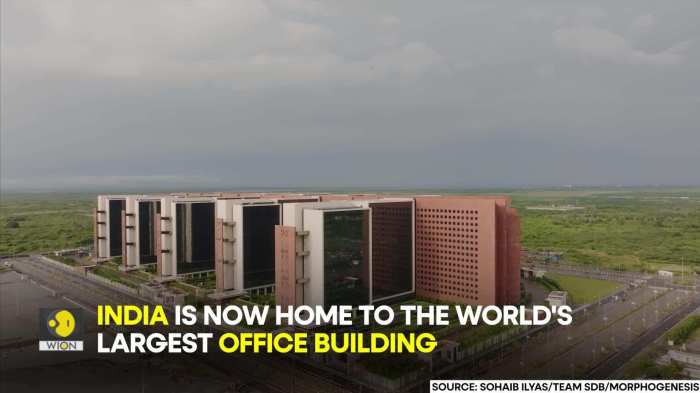
The world’s largest office, a truly monumental undertaking, demands a location that can accommodate its immense scale and complexity. Choosing the right geographic location is critical, impacting everything from the office’s functionality to its environmental footprint. The considerations extend far beyond just square footage; they encompass infrastructure, resources, and the broader economic and social landscape.
Potential Locations for the World’s Largest Office
The ideal location for the world’s largest office must balance factors such as accessibility, infrastructure, and the availability of skilled labor. Proximity to major transportation hubs, including airports, high-speed rail lines, and extensive road networks, is essential to facilitate the movement of employees and supplies. Furthermore, the presence of robust communication networks, including fiber optic cables and advanced internet connectivity, is crucial for seamless operations.
Factors Influencing Location Choice
Several factors influence the selection of a location for the world’s largest office. Proximity to a large talent pool, including specialized skills required for diverse projects, plays a key role. A strong and supportive regulatory environment, which includes business-friendly policies and incentives, is essential for a smooth operation. Availability of affordable and high-quality land, sufficient for the vast size of the office, is a critical prerequisite.
Finally, the overall economic climate of the region, including a stable currency and a supportive government, is vital for long-term success.
Infrastructure and Resources
The infrastructure required to support such a massive office is substantial. This necessitates advanced utilities, including robust power grids, reliable water and waste management systems, and effective waste disposal mechanisms. The presence of ample parking spaces, secure transportation, and access to public transit is critical. The availability of ample storage facilities and secure logistics networks is equally important.
Comparison of Potential Locations
A comparative analysis of potential locations reveals a spectrum of advantages and disadvantages. Proximity to major hubs often translates to higher costs for land and resources. Conversely, locations further afield might offer more affordable options but face challenges in terms of accessibility and infrastructure.
Potential Locations Table, Welcome to the worlds largest office
| Location | Advantages | Disadvantages |
|---|---|---|
| Singapore | Excellent infrastructure, highly skilled workforce, strategic location for global trade, strong government support. | Land costs are high, competition for space might be intense. |
| London | Established global financial center, highly skilled workforce, excellent transportation links. | High land costs, potential regulatory complexities, dense urban environment. |
| Dubai | Modern infrastructure, supportive government policies, growing economy, strategic location for international trade. | Potential fluctuations in economic conditions, less established talent pool in specific industries. |
| New York City | Largest and most advanced US market, highly skilled workforce, strong cultural center. | Extremely high land costs, significant competition for space, demanding regulatory environment. |
Functional Aspects
The world’s largest office, a monumental structure housing countless individuals and diverse functions, necessitates a meticulous approach to functionality. Optimizing workflow and maximizing efficiency are paramount considerations, requiring careful planning and execution. From administrative support to research and development, each function demands specific considerations for space, technology, and communication.This colossal workspace must accommodate a wide array of needs, from quiet concentration zones for deep work to collaborative hubs for brainstorming and teamwork.
Balancing these disparate demands is critical for fostering a productive and engaging environment. The sheer scale of the operation necessitates an innovative approach to managing space and optimizing resource allocation.
Various Functions and Their Requirements
The immense office space can house a myriad of functions, each with unique needs. These include administrative departments, research and development teams, customer service centers, marketing divisions, and potentially even manufacturing or production facilities. The specific requirements for each function differ significantly, demanding varying levels of privacy, collaboration space, and technological infrastructure. For example, a research team requires specialized labs and equipment, while a customer service center needs efficient communication systems and large call center areas.
Impact of Size on Workflow and Efficiency
The sheer size of the office presents both opportunities and challenges for workflow and efficiency. A large office can facilitate better division of labor and specialization, allowing for dedicated teams and streamlined processes. However, the size also necessitates sophisticated communication systems and organizational structures to maintain smooth operations. Large open spaces can enhance collaboration, while smaller, more enclosed areas can foster focus and concentration.
Role of Technology in a Large Office
Technology plays a pivotal role in maintaining efficiency and productivity in a large office environment. From sophisticated communication platforms to advanced data management systems, technology is integral to coordinating activities and sharing information across vast teams. The implementation of collaborative software, video conferencing tools, and cloud-based storage systems is crucial for seamless workflow and communication across geographical locations.
Welcome to the world’s largest office! It’s fascinating to see how innovative companies are pushing boundaries, like the recent victory for Evolution in the Kansas education battle, evolution wins latest round in kansas education battle. This development highlights the ongoing evolution of educational technology and its potential impact on future workplaces. The world’s largest office is, after all, a reflection of the broader technological landscape, and these advancements are shaping its future.
Optimizing Functionality Through Layouts and Designs
Effective layouts and designs are essential for maximizing functionality in a large office. Open-plan layouts can promote collaboration, while dedicated workspaces can encourage focus and concentration. Flexible workspaces are essential to cater to diverse work styles. Careful consideration of natural light, ventilation, and ergonomic design elements will contribute to employee well-being and productivity. Strategically placed break areas and communal spaces encourage social interaction and team building, fostering a positive and engaging environment.
For example, a dedicated area for quiet work might be separated from a more open-plan area for collaborative tasks.
Example of Functional Zoning
| Function | Space Requirements | Technology Needs |
|---|---|---|
| Research and Development | Dedicated labs, specialized equipment, quiet zones | High-speed internet, advanced software, specialized hardware |
| Administrative Support | Organized reception, dedicated meeting rooms, filing systems | Sophisticated communication systems, document management software |
| Customer Service | Large call center area, quiet zones for individual agents, customer waiting areas | Advanced phone systems, CRM software, high-speed internet |
A well-designed office layout incorporates a variety of zones, catering to different functions and fostering a productive and harmonious work environment.
Architectural Design: Welcome To The Worlds Largest Office
Designing the world’s largest office isn’t just about aesthetics; it’s a complex interplay of functionality, sustainability, and human well-being. The architectural design must accommodate a vast workforce, facilitate collaboration, and promote productivity while minimizing environmental impact. A thoughtful approach to space planning and material selection is crucial for creating a dynamic and healthy environment.Careful consideration of architectural principles is paramount in a massive office space.
This involves optimizing workflows, ensuring accessibility, and creating an environment that fosters creativity and collaboration. The design needs to account for a diverse range of needs and preferences, catering to the varied roles and responsibilities of employees. It must also be flexible enough to adapt to future changes in the workplace.
Natural Light and Ventilation
Natural light and ventilation are critical to the well-being of employees in a large office. They are not just design elements, but vital components for creating a healthy and productive work environment. Studies have shown that exposure to natural light improves mood, reduces stress, and boosts productivity. Adequate ventilation ensures a clean and comfortable atmosphere, reducing the risk of illnesses and promoting overall well-being.
Large windows, strategically placed skylights, and well-designed ventilation systems are crucial for maximizing natural light and fresh air. Large atria or courtyards can further enhance these benefits.
Design Elements and Features
Several design elements contribute to the overall experience and functionality of a large office building. These elements range from the layout of the space to the specific features integrated into the design.
Welcome to the world’s largest office – the internet! But with a recent court ruling paving the way for ISP snooping, this seemingly open space might not be as free as we thought. It’s a bit like having a silent observer in every corner of your digital world. Still, the vastness of this online office offers amazing possibilities.
Welcome to the world’s largest office!
- Open-plan layouts: These layouts foster collaboration and communication. They are best suited for teams and projects requiring frequent interaction. However, careful consideration must be given to soundproofing to prevent noise distractions.
- Dedicated workspaces: These are essential for focused work, providing privacy and minimizing distractions. Different types of dedicated spaces, such as individual offices or enclosed work pods, offer different levels of privacy and quiet.
- Flexible spaces: Adaptability is key in a large office, as the work environment can change over time. Multifunctional rooms, collaborative zones, and break-out areas allow for flexibility in use.
- Wellness facilities: Promoting employee well-being is crucial. These facilities can include fitness centers, meditation rooms, and outdoor spaces for relaxation.
- Accessibility: The design must consider the needs of employees with disabilities.
This includes ramps, elevators, and accessible restrooms.
Sustainable Design Practices
Sustainability is paramount in large office construction. It reduces environmental impact, lowers operational costs, and enhances the building’s reputation. Several design practices contribute to sustainable outcomes.
- Energy-efficient building materials: Choosing materials with low embodied energy and high insulation values reduces the building’s carbon footprint.
- Renewable energy sources: Integrating solar panels or wind turbines can reduce reliance on traditional energy sources.
- Water conservation strategies: Implementing water-efficient fixtures and landscaping reduces water consumption.
- Waste management systems: Implementing systems for recycling and composting reduces landfill waste.
- Green building certifications: Obtaining certifications like LEED (Leadership in Energy and Environmental Design) demonstrates a commitment to sustainability.
Architectural Styles
Choosing the appropriate architectural style is essential for a large office. The style should reflect the company culture and values while also being functional and aesthetically pleasing.
| Architectural Style | Description | Suitability for Large Offices |
|---|---|---|
| Modern | Clean lines, minimalist design, emphasis on functionality. | Excellent for tech companies and firms seeking a contemporary aesthetic. |
| Post-modern | Playful and experimental designs, often incorporating unconventional elements. | Suitable for creative agencies and firms looking for a distinctive design. |
| Sustainable | Focus on environmentally friendly materials and energy efficiency. | Highly suitable for companies prioritizing sustainability and environmental responsibility. |
| Traditional | Classic elements and designs inspired by historical architecture. | Can be suitable for established firms looking for a sophisticated and enduring style. |
| Industrial | Raw materials and exposed elements, often with a loft-like feel. | Suitable for firms with a creative or innovative culture. |
Cultural Impact
The world’s largest office, a monumental undertaking, will inevitably leave its mark on the surrounding culture. Beyond the immediate impact on employees, its sheer scale and presence will ripple outwards, affecting local communities and potentially even becoming a global icon. This analysis explores the multifaceted ways in which this colossal workspace will shape the environment around it.The sheer size of the office space will undoubtedly alter employee interactions.
Welcome to the world’s largest office! It’s a pretty exciting place, and I’ve been thinking about how the vibrant design choices, like the recent color additions to the Pearl Treo phones by ATT, with their “red badge of style,” red badge of style att adds color to pearl treo , really elevate the whole experience. I’m sure this creative approach will continue to inspire the design of future office spaces.
Overall, it’s a truly inspiring and innovative space!
A large and diverse workforce will foster interactions across various backgrounds and perspectives. This environment could encourage cross-cultural understanding and collaboration, leading to new ideas and innovations. Conversely, managing the complexities of communication and collaboration within such a vast space will be crucial to ensure the effectiveness of the work environment.
Employee Interactions
The potential for collaboration and cross-cultural exchange within the massive office is substantial. A large workforce naturally creates a dynamic and diverse social network, potentially leading to innovative solutions and perspectives. However, maintaining a cohesive and productive atmosphere within such a large space requires careful management of communication channels and employee engagement initiatives. Clear communication protocols and opportunities for social interaction will be essential to avoid fragmentation and foster a sense of community among the workforce.
Local Community Impact
The large office will have a significant impact on the local community. Increased demand for goods and services will drive economic activity in the surrounding areas. This could lead to job creation in local businesses, improved infrastructure, and an overall boost to the local economy. The office could also attract new businesses and entrepreneurs, further stimulating growth in the area.
The office’s size and presence might also influence the development of local amenities and public services to cater to the needs of the large workforce.
Economic Impact
The large office will generate a substantial economic impact on the surrounding region. Increased demand for goods and services, from food and transportation to entertainment and retail, will stimulate local businesses. Job creation in various sectors, including hospitality, retail, and transportation, will contribute to a significant economic boost. This, in turn, will likely lead to improvements in infrastructure and public services to cater to the expanded workforce and community.
Potential as a Landmark
The sheer scale and distinctive architectural design of the world’s largest office have the potential to become a global landmark. Its presence will likely attract tourists and visitors, generating revenue for the local economy and enhancing the area’s reputation. The office could become a symbol of progress and innovation, inspiring architects, designers, and entrepreneurs worldwide. This iconic status could lead to the office becoming a major destination for educational and cultural programs.
Impact on Daily Life
The presence of a large office will undoubtedly alter daily life for residents of the surrounding areas. Increased traffic and congestion are potential consequences, necessitating improvements in transportation infrastructure. The influx of workers and visitors could also affect local amenities, potentially leading to changes in housing availability and retail options. The office’s influence will extend beyond the immediate vicinity, impacting daily routines in a noticeable manner.
Technological Advancements
The future of work is undeniably intertwined with technological progress. Large offices, as hubs of human interaction and productivity, are experiencing rapid transformation through innovative tools and systems. Technology isn’t just enhancing existing processes; it’s fundamentally reshaping how teams collaborate, communicate, and achieve goals.Technological advancements are critical for optimizing large office environments, fostering seamless communication, and streamlining workflows.
From AI-powered automation to cutting-edge communication platforms, technology is redefining the modern office experience.
Optimizing a Large Office Through Technology
Implementing sophisticated technologies is crucial for optimizing large offices. This involves a multifaceted approach, encompassing everything from communication systems to workspace management tools. Efficient resource allocation, enhanced productivity, and a more enjoyable work environment are all possible outcomes of strategically deployed technologies.
Integrating Technologies for Communication and Collaboration
Robust communication platforms are essential for maintaining seamless collaboration within a large office. Video conferencing tools, instant messaging applications, and project management software facilitate real-time interaction and information sharing across geographical locations.
- Unified Communication Platforms: These platforms integrate various communication channels, such as voice calls, video conferencing, instant messaging, and file sharing, into a single interface. This eliminates the need for employees to switch between multiple applications, promoting efficiency and reducing confusion. For example, Microsoft Teams and Slack are widely used unified communication platforms, offering robust features for communication and collaboration.
- Virtual Reality (VR) and Augmented Reality (AR): These technologies are starting to play a significant role in training, design reviews, and even collaborative design sessions. Imagine architects using VR to walk through a proposed office space or employees utilizing AR to visualize new processes in real-time.
- Project Management Software: Tools like Asana, Trello, and Monday.com help teams organize tasks, track progress, and ensure everyone is on the same page. This is especially critical in large offices where multiple teams and projects are constantly underway.
Streamlining Workflows with Technology
Automation plays a key role in streamlining workflows, reducing manual tasks, and improving accuracy. By automating repetitive processes, organizations can free up employees to focus on more strategic and creative work.
- Robotic Process Automation (RPA): RPA software automates repetitive tasks such as data entry, invoice processing, and report generation. This can dramatically reduce errors and free up human workers for higher-value tasks. For instance, many large companies employ RPA for processing customer orders or claims.
- Workflow Automation Software: These tools automate steps in business processes, from approvals to document routing, reducing delays and improving efficiency. This can include tasks such as approving expense reports, managing hiring processes, or coordinating meetings.
The Role of Automation and AI in a Large Office Setting
Automation and Artificial Intelligence (AI) are transforming the office landscape. AI-powered tools can analyze data, predict outcomes, and optimize processes, leading to greater efficiency and productivity.
- AI-powered Chatbots: These can handle routine inquiries, schedule meetings, and provide instant support to employees, freeing up human resources for more complex issues. For example, many large companies use chatbots to answer basic customer service questions, providing instant support.
- Predictive Analytics: AI can analyze historical data to predict future trends, such as resource needs or potential bottlenecks in workflows. This allows for proactive management and prevents disruptions.
Examples of Technological Advancements in Office Environments
The integration of technology in modern office environments is evident in various ways.
- Smart Workspaces: Smart sensors can adjust lighting, temperature, and even noise levels based on occupancy and activity, promoting a comfortable and productive environment.
- Biometric Security: Implementing biometric systems like fingerprint scanners or facial recognition for access control enhances security and improves efficiency.
Conclusion
In conclusion, the world’s largest office isn’t just a building; it’s a complex system. From the historical context of previous massive workspaces to the potential impact on local communities, we’ve touched on a wide array of factors. We’ve seen how design, organization, and technology play vital roles in optimizing this colossal workspace. The future of work, it seems, is getting even bigger.