EdgeBeam taps Soracom to pair ATSC 3.0 broadcast with cellular IoT for one-to-many delivery

The traditional model of IoT connectivity relies almost exclusively on unicast communication, where a central server establishes an individual connection with every single device in the field. While this is effective for personalized data—such as a specific sensor reading or a user-specific command—it becomes a massive operational and financial bottleneck when an enterprise needs to distribute the same data to thousands or millions of endpoints simultaneously. Whether it is a critical firmware-over-the-air (FOTA) update, a high-definition map package for autonomous vehicles, or a content refresh for a national network of digital signage, the linear scaling of cellular costs and bandwidth consumption has long been a deterrent to hyper-scale deployments.
The Technological Foundation: ATSC 3.0 and Cellular Synergy
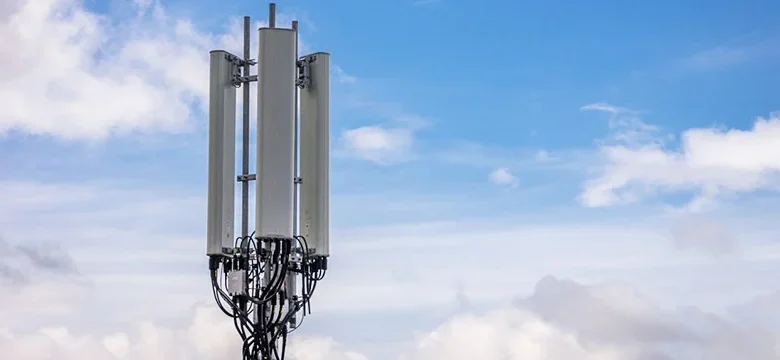
At the heart of this partnership is the utilization of ATSC 3.0, the latest version of the Advanced Television Systems Committee standards. Unlike its predecessors, ATSC 3.0 is entirely IP-based, allowing it to carry data just like a cellular or Wi-Fi network, but with the massive coverage and "one-to-many" efficiency of a television broadcast signal. A single ATSC 3.0 tower can blanket a metropolitan area, delivering high-bandwidth data to an unlimited number of receivers within its footprint without the signal degradation or congestion typically seen in crowded cellular cells.
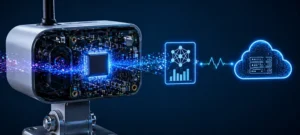
EdgeBeam Wireless has positioned itself as a pioneer in "datacasting"—the practice of using this broadcast spectrum specifically for non-television data delivery. By onboarding Soracom as its first cellular partner, EdgeBeam is bridging the gap between the broad reach of broadcast and the precision of cellular. In this hybrid model, the ATSC 3.0 signal serves as a high-capacity "downlink" for bulk data, while Soracom’s 4G/5G network provides the "uplink" or return path for device acknowledgments, security handshakes, and individualized commands.
Soracom’s role extends beyond mere connectivity. As a cloud-native provider of IoT connectivity, Soracom offers a sophisticated management platform and hardware-based security via its SIM technology. This is a critical component of the partnership: by using the SIM as a hardware-based root of trust, the system can ensure that broadcasted data is only decrypted and utilized by authorized devices. This addresses a primary concern in broadcast scenarios—security—ensuring that while the signal is sent to "many," only the "intended" can access the information.
The Evolution of the Datacasting Market
The move toward hybrid broadcast-cellular networks comes at a time when the ATSC 3.0 rollout is reaching critical mass in the United States and gaining interest globally. As of late 2023, NextGen TV (the consumer-facing brand for ATSC 3.0) signals were available to more than 75% of U.S. households, with a path toward 90% coverage in the near future. While the primary driver for this rollout has been the television industry, the "data pipe" capacity of the standard has always been its most lucrative secondary feature.
Historically, the IoT industry has looked to satellite or specialized LPWAN (Low Power Wide Area Network) technologies to solve coverage and scaling issues. However, satellite remains cost-prohibitive for many high-bandwidth applications, and LPWAN lacks the throughput required for modern software packages. ATSC 3.0 fills this vacuum by offering bitrates that can exceed 50 Mbps per channel, providing a robust pipeline for data-heavy IoT applications that cellular networks struggle to support during peak hours or in high-density environments.
The partnership between EdgeBeam and Soracom represents a maturation of this ecosystem. It moves the conversation from "what the technology can do" to "how the enterprise can deploy it." By integrating these two distinct types of networks into a single operational workflow, the companies are lowering the barrier to entry for OEMs and fleet managers who previously would have had to manage two separate vendors and two disparate hardware configurations.
Operational Advantages and Economic Impact
The economic rationale for a hybrid approach is grounded in the decoupling of data volume from device count. In a standard cellular-only model, sending a 100MB update to 10,000 devices results in 1TB of billable data transfer. If that same update is sent via EdgeBeam’s ATSC 3.0 broadcast, the "cost" to the network is effectively the same whether it is being received by 10 devices or 10 million.
For enterprise customers, this shifts the cost of connectivity from a variable expense that grows with the fleet to a more predictable, fixed-cost model for bulk distributions. Furthermore, it mitigates "network congestion risk." During major software rollout events (such as a critical security patch for connected vehicles), cellular networks often experience localized slowdowns as thousands of devices attempt to download large files simultaneously. By offloading these downloads to the broadcast spectrum, the cellular network remains free for high-priority, low-latency communication.
Beyond cost, the partnership highlights the importance of orchestration. Managing a hybrid network requires a sophisticated control plane that can determine the most efficient route for any given piece of data. Soracom’s professional services and platform capabilities are expected to play a lead role here, helping customers navigate the complexities of version control, delivery verification, and "retry" logic for devices that may have been out of range or powered down during a broadcast window.
Targeted Industry Use Cases
EdgeBeam and Soracom have identified several key sectors where this hybrid delivery model is expected to have an immediate impact:
- Automotive and Transportation: Modern vehicles are essentially rolling data centers. The industry is moving toward software-defined vehicles (SDVs) that require frequent updates to infotainment systems, engine control units, and advanced driver-assistance systems (ADAS). High-definition maps for autonomous driving also require constant refreshes. Broadcasting these updates via ATSC 3.0 can save automotive OEMs millions in data roaming and transit fees.
- High-Precision GNSS: Global Navigation Satellite Systems (GNSS) often require correction data to achieve centimeter-level accuracy for applications like autonomous farming, drone delivery, and construction. This correction data is identical for all receivers in a specific geographic area, making it a perfect candidate for broadcast delivery.
- Digital Signage and Out-of-Home (OOH) Advertising: Large-scale digital billboard networks frequently update high-resolution video content. Sending these files over cellular is slow and expensive. A broadcast "push" allows an entire city’s signage to be updated in a single transmission.
- Public Safety and Emergency Alerts: In times of crisis, cellular networks are often overwhelmed by consumer traffic. ATSC 3.0 provides a dedicated, high-power channel for distributing emergency information, building maps, or tactical data to first responders’ devices without competing for cellular bandwidth.
Security and Identity Management
One of the most nuanced aspects of the EdgeBeam-Soracom announcement is the focus on SIM-based authentication. In a broadcast environment, the "airwaves" are open. To prevent unauthorized access or malicious data injection, the system must have a robust encryption and identity framework.
By leveraging Soracom’s SIM technology, the hybrid system can implement a "Conditional Access" model similar to premium cable television but scaled for IoT security requirements. The cellular link (managed by Soracom) can be used to distribute unique decryption keys to authorized SIMs. When the EdgeBeam broadcast sends the encrypted data payload, only the devices with the valid, SIM-authenticated keys can unlock and use the data. This creates a secure, closed-loop system that combines the efficiency of a public broadcast with the privacy of a private network.
Future Outlook and Market Implications
As the IoT market moves toward its next phase of growth—characterized by "massive IoT" and "critical IoT"—the limitations of single-bearer networks are becoming increasingly apparent. The industry is witnessing a broader trend toward multi-access connectivity, where devices seamlessly switch between cellular, satellite, Wi-Fi, and now broadcast, depending on cost, availability, and the nature of the data.
The EdgeBeam and Soracom partnership is a landmark in this transition. It validates the role of broadcast spectrum as a legitimate and necessary component of the global telecommunications infrastructure for the internet of things. While the companies have not yet released specific rollout timelines or hardware reference designs, the integration of Soracom’s global platform suggests an ambition that extends beyond the North American market, potentially eyeing other regions where broadcast standards like DVB-T2 or ISDB-T are being upgraded to support similar data capabilities.
For system integrators and developers, the challenge will lie in the software layer. Creating applications that can intelligently handle data arriving from two different "pipes"—and ensuring the integrity of that data—will require new tools and standards. However, the potential reward is a drastic reduction in operational friction and a new level of scalability that cellular-only approaches simply cannot match.
In conclusion, the collaboration between EdgeBeam Wireless and Soracom represents a strategic response to the "one-to-one" bottleneck of traditional IoT. By treating broadcast as a scalable distribution layer and cellular as a secure control plane, they are providing a blueprint for the future of large-scale, data-intensive IoT operations. As enterprises continue to deploy larger fleets of more sophisticated devices, the ability to "broadcast once and reach all" may soon move from an innovative luxury to a fundamental requirement of the connected world.