As Amazon prepares to mark the tenth anniversary of the Alexa voice assistant and the Echo smart speaker in 2024, the company is facing a period of significant transition. David Limp, the senior vice president of devices and services who has been the primary architect of Amazon’s hardware strategy for over a decade, has announced his retirement. His departure is part of a broader executive shuffle at the tech giant, occurring against a backdrop of shifting consumer interest in the smart home market and increasing regulatory scrutiny regarding the security of Internet of Things (IoT) devices.
The milestone of a decade in the smart home space offers an opportunity to evaluate how far the technology has evolved—and where it remains stagnant. While voice assistants have become ubiquitous, the broader ecosystem of connected devices often struggles with fragmented standards, high price points, and persistent security vulnerabilities.
A Decade of Evolution: From Novelty to Necessity
When Amazon first introduced the Echo in 2014, the concept of a voice-controlled home assistant was largely viewed as a futuristic novelty. Over the subsequent ten years, the device transformed into a central hub for home automation. However, the maturation of the market has not been without friction. Critics and industry analysts have noted that despite the proliferation of "smart" devices, the user experience is frequently hampered by poor interoperability between different manufacturers.
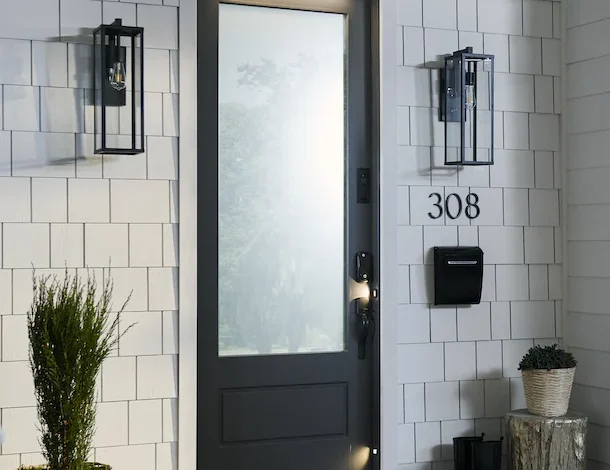
Recent market entries highlight this ongoing struggle. For instance, the Mill composting system, developed by Nest co-founder Matt Rodgers, exemplifies the current trend of high-end, specialized appliances that attempt to integrate into the smart home ecosystem. Similarly, Masonite’s decision to retail its sophisticated smart door at Home Depot signals a shift toward premium, integrated home infrastructure. Yet, these products are often prohibitively expensive for the average consumer, raising questions about whether the smart home is reaching a plateau of adoption.
Regulatory Oversight and Cybersecurity
The federal government is increasingly concerned with the security implications of a home filled with connected, and often insecure, devices. The Federal Communications Commission (FCC) recently released a Notice of Proposed Rule Making (NPRM) aimed at establishing a cybersecurity labeling program for IoT devices. This initiative seeks to provide consumers with a transparent rating system, similar to energy-efficiency labels, to help them identify devices that meet baseline security standards.
The proposal has ignited a 30-day public comment period, during which industry stakeholders and privacy advocates are expected to weigh in. The objective is to standardize the security posture of consumer electronics, which are frequently targeted by bad actors. This move coincides with broader concerns regarding critical infrastructure. Notably, Microsoft recently identified a series of vulnerabilities in industrial equipment that could theoretically be exploited to disrupt power plants. These findings underscore the danger of connected systems, whether they are in a residential setting or part of the national grid.
The Role of Connectivity Protocols: Z-Wave and Matter
As the industry grapples with standardization, the role of connectivity protocols remains critical. Z-Wave, a long-standing wireless protocol for home automation, is receiving a renewed boost in relevance. The emergence of new providers for Z-Wave chips is expected to increase the supply and lower the costs of smart home components.

Mariusz Malkowski, founder and CTO of Trident IoT, has become a central figure in this transition. Trident IoT is positioning itself not just as a manufacturer of Z-Wave chips, but as a comprehensive service provider that includes certification testing. According to Malkowski, the future of the smart home lies in the successful bridging of existing protocols like Z-Wave with the newer, industry-backed Matter standard.
Matter, a royalty-free connectivity standard, aims to solve the interoperability problem that has plagued the industry since its inception. The technical challenge for companies like Trident IoT is to ensure that legacy Z-Wave devices can communicate seamlessly with newer Matter-enabled ecosystems. This integration is vital for the long-term viability of the smart home, as it prevents consumer "lock-in" and allows for a more cohesive user experience.
Hubs and Local Control: A Shift in User Preference
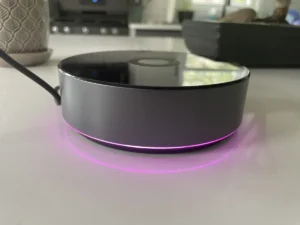
While cloud-based voice assistants have dominated the market, there is a growing segment of power users moving toward local control systems. The Homey Pro smart home hub serves as a case study for this trend. Unlike standard consumer hubs that rely heavily on cloud processing, the Homey Pro allows for local execution of commands, offering improved latency and privacy. However, such systems often come with a high price tag and require a steeper learning curve, emphasizing the ongoing tension between "plug-and-play" convenience and granular, local control.
Future Outlook and Strategic Implications
The departure of David Limp from Amazon, combined with the maturation of protocols like Z-Wave and the introduction of the Matter standard, signals a pivot point for the entire smart home industry. The next phase of development will likely be defined by three key factors:
- Security Transparency: The FCC’s labeling program, if implemented, will likely force manufacturers to prioritize security over rapid time-to-market. Companies that fail to secure their devices will be at a competitive disadvantage.
- Protocol Convergence: The success of the smart home depends on the ability to unify disparate technologies. The work being done by entities like Trident IoT to bridge Z-Wave and Matter is essential for reducing the complexity that currently frustrates consumers.
- Sustainable Business Models: As the market moves away from the initial "hype" cycle, manufacturers must justify the premium costs of smart devices. Whether it is a smart door or an automated waste management system, the value proposition must be clear, reliable, and secure.
Technical Analysis: Bridging the Gap
The integration of Z-Wave Long Range (LR) and upcoming security upgrades are poised to enhance the protocol’s reliability. Z-Wave LR, in particular, offers extended range and higher capacity, allowing for the connection of hundreds of devices in a single network—a significant improvement over previous iterations. When combined with the interoperability of Matter, these advancements could provide the robust infrastructure needed to support a truly autonomous home.
However, the industry must remain vigilant. The vulnerabilities identified in industrial equipment serve as a stark warning: as more devices become connected, the surface area for cyberattacks expands exponentially. Manufacturers, developers, and regulatory bodies must collaborate to ensure that "smart" does not come at the expense of safety or privacy.
Conclusion
The smart home industry is currently in a state of consolidation and refinement. As Amazon moves into its next decade of Echo and Alexa development, it will do so under new leadership and within a more demanding regulatory environment. The challenges ahead—ranging from cybersecurity to device interoperability—are significant, but the technological foundation for a more integrated home is stronger than ever.
Whether the future will be dominated by simple, cloud-reliant voice assistants or complex, locally-controlled automation hubs remains to be seen. What is certain is that the next ten years will be defined by a shift toward maturity, where the promise of the smart home is finally matched by the reality of secure, reliable, and truly interoperable technology. As consumers look toward the future, the emphasis will undoubtedly move away from the novelty of the device itself and toward the stability and security of the ecosystem that supports it.