Semtech Adds SGP.32 Multi-Profile eSIM Support to Its Global IoT Connectivity Offering

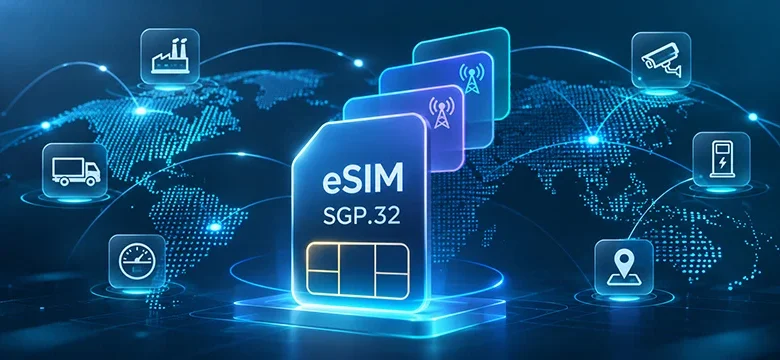
Semtech Corporation has officially expanded its enterprise connectivity portfolio by introducing native SGP.32 support for its Smart Connectivity Premium offering. Launched commercially, this strategic development addresses one of the most persistent and complex engineering hurdles in the Internet of Things (IoT) sector: deploying, managing, and maintaining connected devices across international borders without the logistical nightmare of handling physical SIM cards or rigid, market-specific configurations. By integrating advanced remote SIM provisioning (RSP) into its proprietary AirVantage platform, Semtech aims to give Original Equipment Manufacturers (OEMs) and enterprise fleets the flexibility to combine robust global multi-network coverage with localized mobile network operator (MNO) profiles via a unified Stock Keeping Unit (SKU).
The Evolution of IoT Connectivity Challenges
To understand the operational significance of Semtech’s latest deployment, one must examine the historical friction points inherent in global IoT deployments. Historically, enterprises scaling connected hardware—such as smart utility meters, asset tracking tags, industrial automation systems, and remote surveillance cameras—across multiple countries faced a fractured landscape of telecommunications regulations.
Organizations frequently had to choose between two imperfect models. The first was utilizing permanent roaming profiles, which often ran afoul of local regulatory mandates in certain jurisdictions that limit how long a foreign-registered SIM can operate on domestic towers. The second approach involved manufacturing region-specific hardware variants, each embedded with distinct local carrier SIM cards. This latter strategy drastically complicated supply chains, inflated warehousing costs, and created administrative bottlenecks whenever a device needed to be redeployed to a different geographic market.
Over time, the industry sought relief through early remote provisioning frameworks like the GSMA SGP.02 specification. While SGP.02 laid the groundwork for remote profile management, its architecture was fundamentally inherited from consumer eSIM paradigms (SGP.22), meaning it relied heavily on device-side user interfaces and localized intervention methods that proved cumbersome for headless, constrained, or deeply embedded industrial IoT assets. As enterprise fleet sizes grew from hundreds to millions of units, the industry required a streamlined standard specifically tailored to the unique operational demands of unattended industrial machinery.
The SGP.32 Paradigm and Kigen Partnership
Enter the GSMA SGP.32 specification, designed from the ground up to solve the architectural mismatches of previous iterations by introducing a server-driven remote profile management model optimized for machine-to-machine (M2M) and IoT environments. Semtech’s implementation of SGP.32 within Smart Connectivity Premium directly leverages this standard, utilizing underlying eSIM and eSIM IoT Manager (eIM) technology developed by security specialist Kigen. Kigen’s architecture supports SGP.32 version 1.3 and proudly holds stringent GSMA eUICC Security Assurance certifications, offering enterprises a trusted foundation for mission-critical deployments.
Under the new single-SKU architecture, manufacturers no longer need to tailor hardware variations for individual destination countries. Instead, a device leaves the assembly line bearing a uniform eSIM configuration that merges Semtech’s Smart Connectivity Advanced multi-IMSI (International Mobile Subscriber Identity) profile with the capability to dynamically download and provision local MNO profiles on demand.
This dual capability is particularly transformative for assets that split their operational life between predictable stationary periods and unpredictable mobile journeys. For example, a commercial shipping container equipped with environmental sensors can rely on multi-network global roaming while traversing international waters and highways, yet automatically switch to a localized carrier subscription upon entering a port city or nation with strict permanent roaming prohibitions. Similarly, stationary infrastructure like smart electricity grids can permanently anchor to domestic networks to comply with local utility regulations while maintaining fallback options managed entirely through remote software orchestration.
Centralized Orchestration Through AirVantage
Deploying multiple operator profiles across thousands, or even millions, of geographically dispersed devices introduces a secondary layer of complexity: lifecycle management. Provisioning a profile is merely the first step; enterprises must also activate, monitor, troubleshoot, update, and eventually deprecate those subscriptions over operating lifespans that often span a decade or longer.
Semtech addresses this operational overhead by embedding SGP.32 management directly into its AirVantage orchestration platform. AirVantage serves as a centralized command center, allowing fleet administrators to execute bulk provisioning operations, monitor real-time connectivity health, and handle subscription lifecycle events through either an intuitive graphical user interface or programmatic APIs that integrate cleanly into enterprise ERP and fleet management software.
Within this ecosystem, an advanced embedded eSIM applet operates locally on the device hardware. Working in tandem with the AirVantage cloud platform, the applet can autonomously download, enable, switch, or remove connectivity profiles based on predefined operational rules or network availability thresholds. This automation effectively eliminates the need for manual, on-site technician interventions, drastically reducing operational expenditures (OPEX) for large-scale enterprise deployments.
Addressing Battery-Constrained Use Cases
Recognizing that industrial IoT is not a monolithic market, Semtech has structured its offering to accommodate devices engineered around strict energy budgets. Many remote environmental sensors, agricultural monitors, and structural health beacons rely on tiny primary batteries designed to last for years without replacement. For these hardware classes, heavy network attachment procedures, frequent background polling, and complex profile-switching routines can rapidly drain limited power reserves.
To mitigate this constraint, Semtech has introduced a dedicated configuration within the service portfolio known as PowerSave eSIM. This specialized multi-network, dual-profile option is meticulously optimized to streamline network attachment times, minimize signaling overhead, and facilitate the transmission of vital telemetry data while exerting minimal impact on overall battery longevity.
By running PowerSave eSIM alongside the broader, feature-rich Smart Connectivity Premium service—which supports expansive MNO profile downloading—Semtech provides a bifurcated architecture. Enterprises can deploy high-bandwidth, power-abundant assets using the full-featured tier while outfitting their battery-constrained edge nodes with the streamlined PowerSave configuration, all while maintaining unified visibility and control through the single AirVantage management plane.
Market Context and Industry Adoption
Semtech’s rollout of SGP.32 support arrives at a crucial inflection point for the cellular IoT ecosystem. Industry analysts note that eSIM technology is rapidly transitioning from a novelty for consumer electronics into a foundational operational requirement for industrial and enterprise deployments. According to data shared by Berg Insight analyst Fredrik Stalbrand, approximately 12% of all active cellular IoT devices globally utilized eSIM technology by the close of 2025.
The widespread commercial ratification and implementation of SGP.32 are widely projected to act as major accelerators for this adoption curve. By eradicating the traditional friction points of remote provisioning, standards-based SGP.32 lowers the barrier to entry for small and medium-sized enterprises seeking to scale internationally, while giving multinational corporations the centralized governance they require to maintain regulatory compliance across fragmented regional telecommunications markets.
Furthermore, the decoupling of hardware manufacturing from connectivity provider selection represents a fundamental shift in supply chain economics. OEMs can manufacture batches of identical devices for global distribution, deferring the critical decision of which local mobile network operators will service the hardware until the devices are actively staged or deployed in the field. This capability insulates manufacturers against sudden carrier pricing shifts, network sunsets (such as ongoing 2G/3G deprecations), and changing geopolitical telecommunications restrictions.
Broader Implications and Future Outlook
While Semtech’s introduction of SGP.32 Smart Connectivity Premium marks a significant technical milestone, industry observers point out that the ultimate success and practical utility of the service will hinge upon ecosystem expansion. Specifically, the breadth and depth of local operator profiles available within Semtech’s partner network will dictate how seamlessly enterprises can execute cross-border deployments without encountering regional coverage gaps.
Semtech has indicated that while the service is generally available, it plans to progressively onboard additional carrier partnerships and geographic markets in the coming months. Additionally, as the telecommunications sector looks toward the horizon, technologies such as non-terrestrial networks (NTN)—integrating cellular IoT directly with satellite constellations—loom large as the next frontier for remote asset tracking. Although Semtech’s current SGP.32 release focuses primarily on terrestrial MNO profiles, the architectural flexibility of the AirVantage orchestration platform positions the company to incorporate emerging satellite connectivity options as those standards mature.
For enterprise CTOs, systems integrators, and product developers, Semtech’s latest move signals a maturation of the IoT connectivity landscape. By marrying GSMA SGP.32 standards with robust cloud orchestration and tailored power-saving configurations, the company is helping to turn the promise of frictionless, borderless IoT deployment into an operational reality. As these technologies scale through 2026 and beyond, the traditional headaches of global SIM management may soon become a relic of telecommunications history.