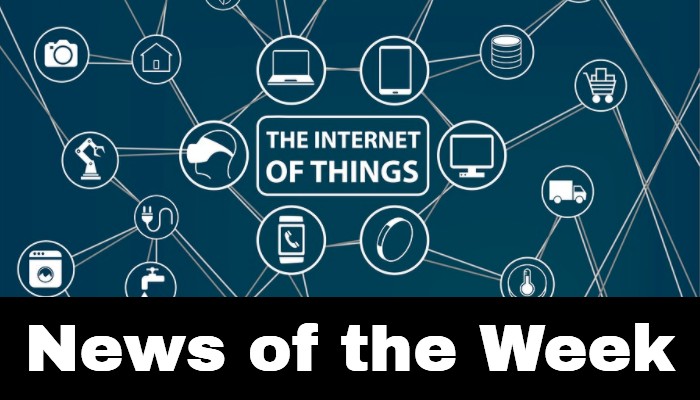
The Internet of Things (IoT) landscape experienced a flurry of activity during the third week of August 2023, characterized by significant capital injections for energy-efficiency startups, strategic hardware acquisitions, and a renewed industry focus on infrastructure reliability. As the sector matures, the transition from experimental consumer gadgets to enterprise-grade, mission-critical infrastructure has become the dominant narrative.
Verdigris Secures $10 Million to Advance AI-Driven Energy Management
Verdigris, a developer of artificial intelligence solutions for building energy optimization, has successfully closed a $10 million funding round. The investment was led by DCVC and Solea Energy, signaling continued institutional confidence in technologies designed to reduce the carbon footprint of commercial real estate.
Founded with the mission to integrate IoT sensors with machine learning to automate HVAC and electrical loads, Verdigris occupies a critical niche in the "green building" movement. Historically, commercial buildings account for nearly 40% of global energy consumption. By deploying high-frequency sensors that monitor circuit-level electrical usage, Verdigris provides facility managers with actionable insights to reduce waste. This funding arrives at a time when regulatory pressure and rising energy costs are forcing property owners to adopt sophisticated, automated energy management systems. The injection of capital will support the company’s efforts to scale its sensor deployment and enhance its predictive analytics engine, which helps buildings proactively manage power consumption based on occupancy patterns and grid demand.
Nordic Semiconductor Strengthens AI Portfolio via Atlazo Acquisition
In a strategic move to bolster its presence in the burgeoning TinyML (Tiny Machine Learning) market, Nordic Semiconductor has acquired the intellectual property assets of San Diego-based Atlazo. The acquisition is framed as a "bolt-on" strategy, intended to integrate specialized machine learning capabilities directly into Nordic’s existing low-power wireless chipsets.
The IoT market is currently undergoing a paradigm shift, moving intelligence from the cloud to the "edge." Atlazo, which specialized in developing ultra-low-power microcontrollers (MCUs) optimized for neural network inference, provides the technical architecture necessary for this transition. By bringing this technology in-house, Nordic aims to reduce the latency and power consumption of battery-operated IoT devices. Industry analysts project that the integration process will take approximately 12 to 18 months, at which point Nordic will likely roll out next-generation chips capable of local voice recognition, gesture sensing, and anomaly detection without the need for constant cloud connectivity.
Infrastructure Reliability: The Rise of ChargePoint’s NOC
The electric vehicle (EV) charging industry is shifting from a growth-at-all-costs phase to a focus on operational excellence. ChargePoint, a leader in the EV charging infrastructure space, has officially inaugurated a Network Operations Center (NOC) to monitor the health and uptime of its 243,000 active ports across North America and Europe.
This development follows increasing scrutiny from the U.S. federal government, which has tied funding for national charging networks to strict uptime requirements. Historically, the charging ecosystem has suffered from fragmented maintenance schedules and inconsistent connectivity. By adopting a model similar to telecommunications providers—which utilize centralized NOCs to perform remote diagnostics and coordinate real-time repairs—ChargePoint is addressing the "maintenance gap" that has plagued public charging adoption. The establishment of this center marks a broader trend: as EV adoption enters the mainstream, charging infrastructure is increasingly viewed as critical public utility, necessitating the same reliability standards as cellular or power grids.
Security Theater or Effective Deterrence? The Video Doorbell Debate
A persistent topic of debate in the smart home sector is the efficacy of video doorbells. While the technology has become a staple of modern residential security, recent reports from the BBC and other outlets have questioned whether these devices serve as genuine security tools or merely "security theater."
While video doorbells offer undeniable convenience for package delivery notifications and remote visitor interaction, their role as a crime deterrent remains contested. Criminals have increasingly adapted to the presence of cameras by utilizing face coverings or avoiding front-door approaches altogether. However, the data indicates that these devices serve a dual purpose: they provide an evidentiary record for law enforcement and act as a psychological deterrent for opportunistic theft. The consensus among security experts is that while video doorbells cannot replace physical security measures, they represent a significant advancement in residential situational awareness, provided that users maintain realistic expectations regarding their limitations.
Shelly Introduces Subscription-Based Energy Management
Shelly, a prominent manufacturer of smart home automation components, has introduced a premium subscription model for its user base in Europe and the United States. Priced at approximately €3.99 ($4.34) per month, the "Shelly Smart Control" premium tier focuses on advanced energy analytics.
The subscription includes automated notifications for high-consumption appliances, predictive maintenance alerts, and granular reports on electricity usage. This move highlights a broader industry trend: hardware manufacturers are shifting toward "hardware-as-a-service" models to ensure long-term revenue stability. For the consumer, the value proposition rests on the potential for efficiency gains. Shelly claims that users can achieve up to 18% savings on monthly utility bills by utilizing these AI-driven insights to manage their power usage, a figure that, if realized, provides a clear return on investment for the monthly subscription fee.
Strategic Realignment: Alphabet and the Future of Nest
Recent reports from The Information regarding Verily—an Alphabet-owned business unit—have fueled speculation about the future of Google’s "Other Bets" division, which includes the Nest smart home business. As Alphabet continues to prioritize fiscal discipline under the guidance of CFO Ruth Porat, there is renewed discussion regarding the potential spin-out of non-core business units.
While the prospect of a Nest spin-out remains purely speculative, the implications for the smart home industry would be profound. Nest currently serves as a central pillar of Google’s smart home ecosystem, integrating hardware, software, and AI services. A separation from the parent company could lead to significant changes in product strategy, data privacy policies, and cross-platform interoperability. As Alphabet continues to refine its portfolio, the market is closely watching for signs that its consumer hardware divisions might be reorganized to prioritize profitability over market share expansion.
Matter Protocol: Navigating the Trade-offs of Connectivity
The launch of the Aqara LED Strip Lights T1 highlights the current friction point in the transition to the Matter smart home standard. While the product supports Matter—allowing it to function across various platforms like Apple Home, Amazon Alexa, and Google Home—it does so at the cost of specific proprietary features, such as "Adaptive Lighting."
To access advanced lighting features that adjust color temperature based on the time of day, users must bypass Matter and utilize the device through a proprietary Aqara Zigbee hub. This "either-or" scenario is emblematic of the early stages of Matter implementation. While the industry is moving toward a unified standard, the current technical specifications often lack the depth required for advanced peripheral features. Consumers are currently forced to choose between the cross-platform convenience of Matter and the advanced, feature-rich functionality of ecosystem-specific hubs.
Innovation in DIY and Privacy-Centric Hardware
While major manufacturers focus on subscription models and ecosystems, the DIY community continues to push the boundaries of privacy and customization. Recent projects, such as the development of open-source video doorbells using the ESP32 microcontroller and ESPHome firmware, demonstrate a growing interest in "local-first" smart home technology.
These DIY solutions allow users to bypass the cloud entirely, ensuring that video feeds and metadata remain on the local network. While these projects require a higher level of technical proficiency than commercial alternatives, they offer a blueprint for users concerned about data privacy and the longevity of cloud-connected devices. Simultaneously, the rumored arrival of a second-generation EveCam suggests that established consumer brands are also responding to demand, as the upcoming hardware is expected to feature upgraded Wi-Fi connectivity and a more compact form factor, further refining the residential security market as it evolves toward the 5GHz spectrum and enhanced local interoperability.