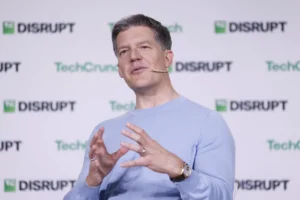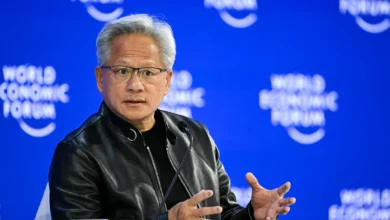
The delicate ecosystem of Silicon Valley governance and venture capital has been rocked by an intensely public feud involving high-profile AI startups, elite venture capitalists, and allegations of corporate espionage. Matan Grinberg, co-founder and chief executive officer of agentic coding startup Factory, took to social media to publicly announce the termination of venture capitalist Chris Degnan from his role as a board advisor. Grinberg’s explosive allegation centered on claims that Degnan had systematically shared sensitive, confidential corporate information with Factory’s primary market rival, Cognition.
The public dispute instantly illuminated the increasingly frayed ethical boundaries of modern technology investing. In an era where venture capital firms routinely back multiple competing entities within the same hyper-growth sectors—such as generative artificial intelligence—traditional notions of fiduciary loyalty, board-level confidentiality, and conflict-of-interest management are facing unprecedented stress tests. The unfolding drama has drawn sharp public retorts from legendary tech investors Vinod Khosla and Keith Rabois, while underscoring broader regulatory scrutiny regarding venture capital board seats and antitrust considerations.
Chronology of the Fallout
The sequence of events unraveled rapidly across professional networks and public forums, transforming a private boardroom dispute into an open Silicon Valley spectacle.
According to Grinberg’s initial statements, suspicions arose after Degnan—who had previously acknowledged having casual communications with a Cognition executive—assured Factory leadership that he harbored no professional interest in joining the rival firm. Grinberg stated that Degnan had remarked he had "made too much money" and was "too lazy" to work for Cognition, statements that Grinberg accepted in good faith. However, subsequent disclosures by Degnan revealed that ongoing employment dialogues with Cognition had been active.
Realizing the potential exposure of sensitive strategic data, Grinberg moved to sever ties, formally firing Degnan as a board advisor on Tuesday. Roughly two hours after Grinberg’s initial public disclosure, Degnan countered the narrative by announcing on X and LinkedIn that he had officially joined Cognition as its chief revenue officer. Degnan subsequently refuted the characterization that he had been fired, maintaining that he had voluntarily resigned on Monday upon informing Grinberg of his impending career move.
The public war of words escalated further when prominent venture capitalist Vinod Khosla weighed in via social media. Khosla, whose firm Khosla Ventures is an investor in both Factory and Cognition, accused Grinberg of fabricating the termination narrative, labeling Factory a "struggling second tier competitor" and characterizing the CEO’s public statements as desperate and unethical. Conversely, Khosla Ventures partner Keith Rabois came to Factory’s defense, condemning the act of interviewing with a direct competitor while maintaining active participation in board meetings as inherently unethical.
Industry Background and Corporate Stakes
To understand the ferocity of the clash, one must examine the immense financial stakes and competitive pressures defining the agentic AI coding landscape. Factory, a San Francisco-based enterprise founded three years ago, specializes in autonomous artificial intelligence agents designed to execute complex software engineering and programming workflows independently. The startup recently closed a massive $200 million funding round at a staggering $5 billion valuation, backed by prominent institutional heavyweights including Khosla Ventures, Blackstone, Sequoia Capital, and Insight Partners. Factory’s enterprise client roster includes industry titans such as Nvidia, Adobe, T-Mobile, and the Royal Bank of Canada.
Conversely, its primary rival, Cognition—the developer of the prominent AI coding agent Devin—operates on an even larger financial scale. Cognition made headlines by securing a massive $2 billion funding round at an eye-watering $48 billion valuation, boasting enterprise partnerships with global giants like Mercedes-Benz, NASA, Goldman Sachs, and Citi. With tens of billions of dollars in market capitalization and venture capital resting on the outcome of this competitive race, the margin for error—and the value of proprietary product roadmaps—is exceptionally high.
The Professional Background of Chris Degnan
At the center of the governance storm is Chris Degnan, a veteran sales executive and venture investor whose career commands significant respect within enterprise technology circles. Degnan made his mark as the very first sales hire at cloud data warehousing pioneer Snowflake, where he spent more than a decade helping scale the enterprise into a publicly traded juggernaut, eventually serving as its chief revenue officer for 11 years.
Transitioning to the investment sphere, Degnan joined RPT Partners—a Newport Beach, California-based venture firm that holds a financial stake in Factory—as a partner approximately five months prior to the incident. Furthermore, his institutional footprint extended to a go-to-market advisory role at Iconiq, a massive Silicon Valley venture capital firm, a position he assumed in October of the preceding year. Following his departure from Factory’s advisory board, Degnan announced that RPT Partners and its managing partner, Chad Peets, would align closely with him in his new executive capacity at Cognition.
The Changing Ethics of AI Venture Capital
The public brawl highlights a systemic transformation within the venture capital ecosystem. Historically, venture capital firms exercised strict adherence to conflict-of-interest guidelines, rarely taking board seats or heavy advisory roles in direct, head-to-head market competitors. However, the unprecedented velocity and capitalization of the generative AI boom have fundamentally altered these traditional norms.
Today, prominent venture capital funds routinely cross-invest in fierce rivals. For instance, Khosla Ventures maintains financial positions in both Factory and Cognition—a dynamic that placed the firm in an awkward posture when its founder, Vinod Khosla, publicly intervened to criticize Grinberg while defending Cognition. This widespread multi-vying approach has severely tested the traditional boundaries of fiduciary duty, raising questions about how venture capitalists manage sensitive proprietary insights when sitting in the boardrooms of competing portfolio companies.
Regulatory and Legal Implications
Beyond reputational damage and social media friction, incidents of this nature carry significant legal and regulatory ramifications. Board advisors and directors are bound by strict legal confidentiality obligations and fiduciary duties. When an advisor transitions directly to a primary competitor while retaining access to non-public product roadmaps, pricing strategies, and customer pipelines, the potential for intellectual property contamination becomes a critical enterprise risk.
The broader regulatory landscape is already taking notice of potential conflicts of interest within venture capital governance structures. Notably, the United States Department of Justice has initiated antitrust probes scrutinizing venture capital firms—such as Andreessen Horowitz—over practices involving partners holding board seats across competing technology companies. While these investigations focus primarily on antitrust concerns regarding information sharing among oligopolistic markets, governance disputes like the Factory-Cognition rift illustrate the very operational vulnerabilities that regulators seek to monitor.
Governance and the Sacred Bond of Trust
In the wake of the public exchange, Matan Grinberg emphasized the foundational importance of trust within the Silicon Valley entrepreneurial ecosystem. He argued that early-stage founders must operate with absolute confidence that their board members and advisors are acting in the sole interest of the company, free from divided loyalties or clandestine dialogues with rivals.
"Trust in Board Membership is one of the sacred bonds in the Silicon Valley, one that helps the startup ecosystem thrive," Grinberg asserted in his public statements. "With it comes an enormous responsibility. That trust was violated."
As the artificial intelligence sector continues its hyper-accelerated growth trajectory, the clash between Factory, Cognition, and their respective backers serves as a cautionary tale for the tech industry. It exposes the urgent need for clearer governance frameworks, stricter non-disclosure enforcement, and redefined ethical standards for venture capitalists navigating the high-stakes battlegrounds of artificial intelligence innovation. As of publication, representatives for Factory, Cognition, RPT Partners, and Khosla Ventures have declined to provide further official commentary on the ongoing dispute.