World ID Unveils Major Upgrade, Integrating Account-Based Architecture and Partnering with Tech Giants to Combat AI Proliferation

World, the identity verification platform formerly known as Worldcoin, announced a significant overhaul of its World ID system on Friday, introducing a more robust account-based architecture for "proof of human" verification. This strategic pivot aims to solidify its position in an increasingly complex digital landscape dominated by the rise of artificial intelligence. The upgrade is accompanied by a series of high-profile integrations with leading technology companies, including Tinder, Zoom, and Docusign, signaling a broad push to embed verified human identity into everyday online interactions and critical business processes.
The newly launched World ID app represents a fundamental shift from the company’s earlier approach, which relied heavily on its proprietary cryptocurrency wallet for identity management. By establishing a dedicated application, World aims to provide users with a more streamlined and secure experience for managing and deploying their verified human identity across a diverse range of internet services. This move away from a wallet-centric model suggests a maturation of the platform, focusing on the core functionality of identity verification as a standalone service rather than an appendage to a financial tool.
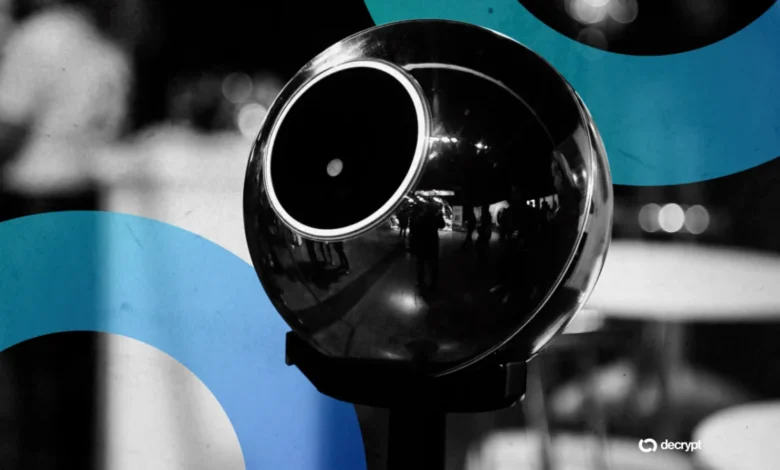
World, co-founded by OpenAI CEO Sam Altman, has garnered considerable attention for its distinctive iris-scanning Orb device. This hardware has been central to its strategy of verifying unique human identities for use in online applications. Historically, the adoption of the Orb and the subsequent verification process have been incentivized through the distribution of Worldcoin’s native cryptocurrency token, WLD. While the WLD token experienced a notable price dip of approximately 10% on Friday, settling around $0.286, the company’s broader "proof-of-human" suite has expanded significantly beyond its initial hardware-dependent verification methods, embracing a more diversified approach.
The announcement also coincided with the launch of Concert Kit, a new platform designed to leverage World ID for event ticketing. This innovative tool empowers artists and event organizers to reserve tickets exclusively for verified human attendees, a direct response to the pervasive issue of bot-driven ticket scalping. By requiring human verification for access, Concert Kit seeks to restore fairness and accessibility to the event market. The unveiling of this technology was notably attended by Grammy-winning musician Anderson .Paak, who participated in Friday’s event, underscoring the potential impact of verified human identity on the entertainment industry.
In a move to further broaden developer adoption and integration, World has forged strategic partnerships with key players in the tech ecosystem. Collaboration with Vercel, a prominent cloud platform for frontend developers, will see the integration of World ID’s human-in-the-loop verification capabilities into Vercel’s new open-source Workflow SDK. This will enable developers building on Vercel’s infrastructure to seamlessly incorporate robust human verification into their applications. Furthermore, Okta, a leader in identity and access management, has announced its intention to develop "Human Principal," a product that will allow API builders to ascertain whether a human, rather than an automated agent, is operating behind a particular service.
The expansion of World ID’s reach into consumer-facing applications is marked by the strengthening of its relationship with Match Group, Tinder’s parent company. This partnership will now extend its World ID verification services to U.S. users, enhancing the safety and authenticity of interactions on the popular dating platform. In parallel, World has established significant business-centric agreements with Zoom and Docusign, two companies whose services are integral to remote work and digital transactions.
Zoom, the ubiquitous video conferencing application, plans to integrate World ID’s advanced deepfake detection technology. This integration aims to bolster the security and authenticity of virtual meetings by identifying and flagging manipulated video streams, a growing concern in the era of sophisticated AI. Fund management firm VanEck is reportedly among the early adopters currently trialing this innovative technology. Concurrently, Docusign will incorporate World ID support to ensure the integrity of digital signatures. This feature will provide an additional layer of assurance that the individual digitally signing a document is indeed the person they claim to be, mitigating risks associated with identity fraud in legal and financial contexts.
The timing of these significant announcements is particularly noteworthy, arriving as Worldcoin’s network has surpassed the milestone of 18 million verified humans across 160 countries. This rapid growth underscores the escalating global demand for reliable methods of distinguishing human users from the burgeoning proliferation of AI-driven traffic online. Internet traffic generated by AI chatbots, autonomous agents, and bots has reached unprecedented levels, creating a pressing need for systems that can guarantee genuine human participation.
Tom Lee, Chairman of Ethereum treasury firm BitMine Immersion Technologies and a board member of Worldcoin treasury firm Eightco, articulated the urgency of this trend in a recent statement. "Proof of human and verified human identity vaulted to a critical priority for social networks and banking and financial systems as AI and agentic-AI capabilities experienced an exponential step forward in the past few months," Lee observed. This sentiment highlights the widespread recognition within the tech and financial industries that robust human verification is no longer a niche concern but a fundamental requirement for maintaining trust and security in the digital age. Lee’s involvement and statements underscore the financial backing and strategic vision propelling World’s expansion.
Background and Evolution of World ID
The journey to this significant World ID upgrade began with the initial vision of Worldcoin, launched in 2020. The project’s core premise was to create a global, decentralized identity and financial network. A cornerstone of this vision was the World App, a cryptocurrency wallet designed to facilitate access to the Worldcoin ecosystem, including the distribution of WLD tokens to verified users. The controversial aspect, the World ID’s Orb device, was introduced as a method to confirm human uniqueness by scanning irises, thereby preventing individuals from creating multiple accounts and claiming multiple WLD grants.
However, the approach was met with both enthusiasm for its innovation and criticism regarding privacy concerns and the potential for misuse of biometric data. The company has consistently maintained that the iris data is processed in a way that ensures privacy, with the data being discarded after a unique hash is generated for verification purposes. Despite these assurances, the debate surrounding biometric data and its collection continues.
The shift towards an account-based architecture for World ID represents an evolution of this strategy. It moves the focus from solely relying on a single, hardware-dependent verification method to a more flexible and accessible system that can accommodate various verification pathways. This includes not only the Orb but potentially other forms of digital identity verification that can be linked to a user’s World ID account. This diversification is crucial for wider adoption and for catering to different user preferences and regulatory environments.
Key Integrations and Their Implications
The recent wave of partnerships signifies a strategic effort by World to embed its verified human identity solution into the fabric of the internet.
-
Tinder: The expansion of the World ID partnership with Match Group, Tinder’s parent company, to U.S. users is a direct response to the need for enhanced safety and authenticity in online dating. By allowing users to verify their humanity through World ID, Tinder can potentially reduce the prevalence of fake profiles, bots, and malicious actors, creating a more trustworthy environment for its millions of users. This could lead to more genuine connections and a better user experience.
-
Zoom: The integration of World ID’s deepfake detection technology into Zoom addresses a critical vulnerability in the increasingly virtual world of communication. As AI-generated content becomes more sophisticated, the ability to detect fabricated video and audio is paramount for maintaining trust in remote interactions, from business meetings to educational lectures. This feature could become an essential tool for organizations concerned about security and the integrity of their communications.
-
Docusign: The incorporation of World ID into Docusign’s digital signature platform offers a significant boost to the security and legitimacy of online transactions. In an era where contracts and agreements are increasingly digitized, ensuring that the signatory is who they claim to be is vital for legal and financial compliance. This integration provides an additional layer of assurance, reducing the risk of fraud and disputes arising from impersonation.
-
Vercel and Okta: The partnerships with Vercel and Okta are aimed at developers and businesses, respectively. By integrating World ID into developer workflows via Vercel’s SDK, World is making it easier for creators to build human-centric applications. Okta’s planned "Human Principal" product will empower API builders to integrate human verification into their services, a crucial step for businesses looking to differentiate between human and automated activity.
The Growing Imperative for Proof of Human
The global surge in AI development has created an unprecedented environment where distinguishing human-generated content and activity from machine-generated output has become a paramount challenge. The World Economic Forum has highlighted the potential for AI to disrupt labor markets, spread misinformation, and even pose existential risks. In this context, verified human identity emerges not just as a convenience but as a critical infrastructure for maintaining trust, security, and democratic processes online.
The exponential growth in AI capabilities over the past year has amplified concerns about bot farms influencing social media narratives, automated systems manipulating financial markets, and the potential for AI agents to engage in increasingly sophisticated forms of deception. As AI becomes more adept at mimicking human behavior, the need for systems that can unequivocally verify human presence and intent becomes increasingly urgent. World’s expanded focus on "proof of human" directly addresses this growing imperative.
Broader Impact and Future Outlook
The success of World ID’s upgraded platform will depend on several factors, including user adoption, the continued evolution of its verification methods, and its ability to navigate complex regulatory landscapes surrounding data privacy and digital identity. The company’s ability to maintain user trust, particularly concerning the handling of sensitive biometric data, will be crucial.
The broader implications of a widely adopted, verifiable human identity system are significant. It could lead to a more secure and trustworthy internet, with reduced instances of fraud, spam, and manipulation. It could also pave the way for new economic models, such as universal basic income or decentralized governance, that rely on verified human participation.
As AI continues its rapid advancement, the development of robust human verification systems like World ID is not merely an innovation but a necessity. The recent upgrades and partnerships signal a determined effort by World to establish itself as a leader in this critical domain, shaping the future of digital identity and human interaction in an increasingly automated world. The company’s strategic direction suggests a long-term vision where verified human identity is as fundamental to online participation as internet access itself.