TurboQuant Redefining AI Efficiency Through Extreme Compression and High-Performance Inference Metrics

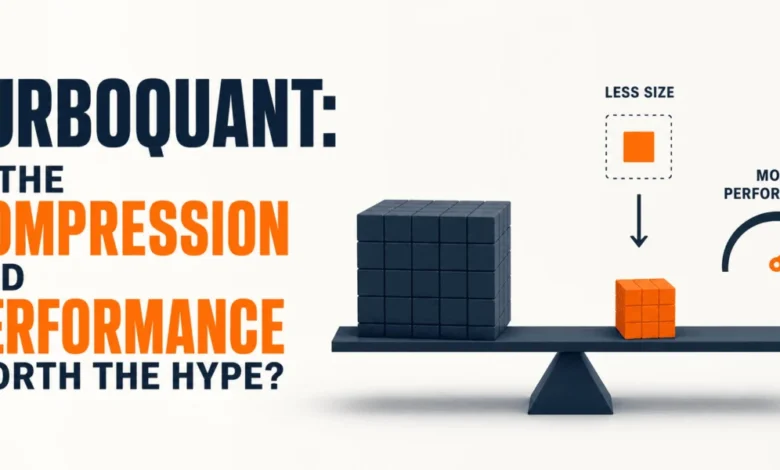
The landscape of large language model (LLM) deployment is undergoing a fundamental shift as Google Research unveils TurboQuant, a sophisticated algorithmic suite designed to address the most pressing bottleneck in modern artificial intelligence: memory efficiency. As generative AI models transition from experimental novelties to enterprise-grade tools, the computational cost of maintaining long-context conversations has become a primary barrier to scalability. TurboQuant represents a significant leap forward, offering a novel approach to quantization that reduces memory consumption to a mere 3 bits per value without the traditional trade-offs of model retraining or significant accuracy degradation. By targeting the Key-Value (KV) cache—a critical component of the Transformer architecture—TurboQuant promises to redefine the economics of inference, particularly for retrieval-augmented generation (RAG) systems and long-context applications.
The Scaling Challenge and the KV Cache Bottleneck
To understand the significance of TurboQuant, one must first examine the structural limitations of modern Transformer-based models. During the inference process, LLMs utilize a mechanism known as the KV cache. This serves as a "digital memory" that stores the mathematical representations of previous tokens in a sequence, allowing the model to generate new text without re-processing the entire prompt from scratch every time a new word is produced.
As the industry moves toward "long-context" models capable of processing hundreds of thousands of tokens—such as legal documents, entire codebases, or multi-hour transcripts—the KV cache grows linearly with the sequence length. In traditional 16-bit or 32-bit floating-point precision, this cache can quickly exceed the available memory of even the most advanced hardware, such as the NVIDIA H100 GPU. This phenomenon, often referred to as the "memory wall," forces developers to choose between limiting the length of the conversation or investing in massive, prohibitively expensive hardware clusters.
While previous attempts at quantization have sought to reduce the precision of these vectors to 8 or 4 bits, they often introduced "memory overhead" by requiring additional metadata to maintain accuracy. Furthermore, many traditional methods require computing full-precision constants on small blocks of data, which creates a secondary bottleneck that negates the speed benefits of compression.
The TurboQuant Innovation: A Two-Stage Precision Architecture
TurboQuant differentiates itself by employing a next-generation compression strategy that avoids the expensive data normalization cycles typical of traditional approaches. The suite utilizes a two-stage process that optimizes how data is stored and retrieved from memory. By focusing on the specific distribution of values within LLM activations, Google researchers developed an algorithm that can compress information down to 3 bits while maintaining the mathematical integrity required for complex reasoning tasks.
One of the primary technical hurdles in low-bit quantization is the presence of "outliers"—specific values in the neural network’s activations that carry disproportionate importance. Standard quantization often "clips" these values, leading to a loss of model intelligence. TurboQuant’s architecture is designed to handle these variations dynamically. By bypassing the need for per-block normalization, the system reduces the number of memory access operations required per token generation. This hardware-aware design ensures that the GPU’s processing cores are not left idling while waiting for data to be fetched from memory, a common issue in high-throughput inference scenarios.
Benchmarking Performance: From Local Tests to Enterprise Clusters
The efficacy of TurboQuant is most visible when measured against unquantized baselines. In controlled experimental environments using H100 GPU-based accelerators, Google reported an 8x performance increase over 32-bit unquantized keys. This throughput gain is not merely a result of having more space in memory, but a direct consequence of reduced memory bandwidth requirements. When the data is smaller, it can be moved from the GPU’s VRAM to its computational cores much faster, allowing for higher concurrency and lower latency.
However, the "speedup" experienced by users can vary depending on the scale of the deployment. For developers testing TurboQuant in localized environments or using smaller models like TinyLlama-1.1B, the most immediate benefit is memory conservation rather than raw execution speed. In a typical benchmark using a 1.1-billion parameter model, the baseline 16-bit floating-point (FP16) cache might occupy approximately 42.45 MB for a specific prompt. Implementing TurboQuant’s 3-bit quantization reduces this footprint to 7.86 MB, representing a compression ratio of approximately 5.4x.
While localized tests may show a speedup ratio below 1.0x (due to the overhead of the quantization kernels on short sequences), the technology is optimized for the "long-tail" of AI tasks. As context lengths scale beyond 32,000 tokens, the reduced memory traffic becomes the dominant factor in performance. In enterprise-level clusters handling massive RAG prompts, the 8x throughput increase becomes the standard, enabling service providers to support significantly more users on the same hardware infrastructure.
Practical Implementation and Developer Accessibility
Google has structured TurboQuant as an accessible library, allowing developers to integrate it into existing workflows with minimal friction. The library is designed to work alongside popular frameworks such as Hugging Face’s Transformers. The following conceptual workflow demonstrates how TurboQuant is applied to a pre-trained model:
- Environment Setup: The library requires specific hardware-optimized kernels. In environments like Google Colab, developers typically utilize a T4 or A100 GPU.
- Model Loading: A model is loaded in standard half-precision (FP16) to maintain its base weights.
- Cache Integration: The
TurboQuantCacheobject is initialized, specifying the desired bit-rate (e.g., 3 bits). - Inference: During the generation process, the model is instructed to use the TurboQuant cache instead of the default PyTorch cache.
This "plug-and-play" nature is crucial for the adoption of the technology. Because it does not require retraining the model—a process that can cost millions of dollars for large-scale LLMs—it can be applied retroactively to existing open-source models like Llama 3, Mistral, or Gemma.
Broader Implications for the AI Industry
The introduction of TurboQuant carries significant implications for the competitive landscape of AI development. As the industry grapples with the high costs of GPU compute, technologies that maximize the utility of existing hardware become strategic assets.
Reducing the "AI Tax"
For startups and enterprises, the "AI tax" refers to the high operational expenditure associated with running LLMs. By reducing memory requirements by over 5x, TurboQuant allows companies to run larger, more capable models on cheaper hardware or to fit more instances of a model onto a single server. This directly translates to lower subscription costs for end-users and higher margins for providers.
Enabling the Next Generation of RAG
Retrieval-Augmented Generation is currently the gold standard for enterprise AI, as it allows models to reference private, up-to-date data. However, RAG often involves feeding massive amounts of retrieved text into the prompt, which quickly exhausts the KV cache. TurboQuant’s ability to handle extreme context lengths with 3-bit efficiency makes RAG more viable for complex use cases, such as analyzing thousands of pages of financial reports or technical manuals in a single query.
Edge Computing and Local AI
While much of the focus is on H100 clusters, the efficiency gains of TurboQuant also pave the way for more sophisticated AI on edge devices. As mobile processors and laptop GPUs become more capable, the ability to store a massive KV cache in a fraction of the traditional RAM could enable "local-first" AI assistants that remember months of user interactions without needing to upload data to the cloud.
Timeline of Quantization Advancements
The release of TurboQuant is the latest milestone in a rapidly evolving timeline of AI optimization:
- 2022: Standard INT8 quantization becomes mainstream, offering a 2x reduction in memory with negligible accuracy loss.
- Early 2023: 4-bit quantization methods (like GPTQ and AWQ) emerge, becoming the standard for the open-source community to run 70B models on consumer hardware.
- Late 2023: Focus shifts from weight quantization to KV cache quantization as context windows expand from 4K to 128K tokens.
- 2024: Google introduces TurboQuant, pushing the boundary to 3 bits and optimizing the process for the specific architecture of H100 and next-generation accelerators.
Conclusion: Is TurboQuant Worth the Hype?
In the fast-moving world of AI research, "hype" is often a precursor to disappointment. However, TurboQuant appears to be an exception, grounded in the practical necessity of hardware efficiency. By solving the memory overhead issue that plagued previous vector quantization attempts, Google has provided a tool that addresses the most significant bottleneck in the path toward truly long-form, intelligent AI interaction.
The transition to 3-bit cache efficiency represents more than just a technical curiosity; it is a necessary evolution for the industry. As AI models continue to grow in complexity and the demand for long-context processing increases, the ability to maintain high precision while operating at extreme levels of system efficiency will be the defining factor in which AI systems become ubiquitous in the professional world. TurboQuant proves that through clever algorithmic design, it is possible to break through the "memory wall" and usher in a new era of high-performance, cost-effective artificial intelligence.