Microsoft Azure Databricks Delivers Unprecedented Value, Validated by Independent Forrester Study

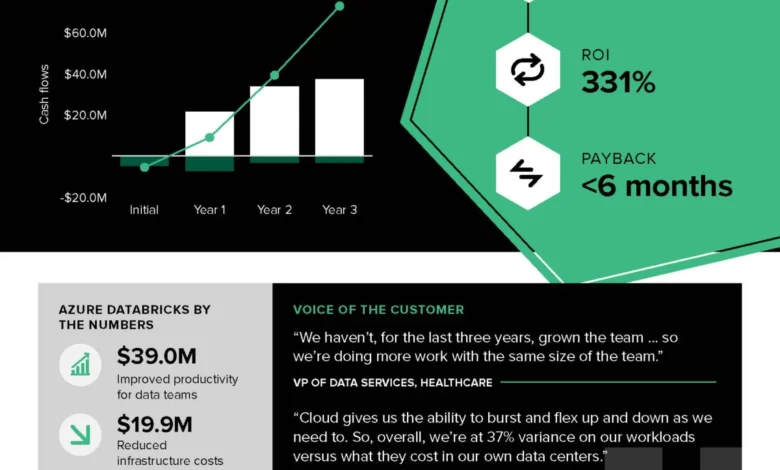
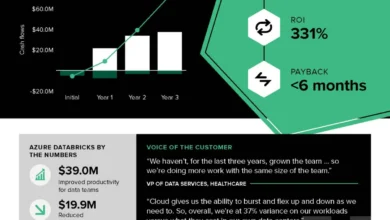
Microsoft Azure Databricks, a deeply integrated offering that brings the power of the Databricks Lakehouse Platform directly into the Microsoft Azure ecosystem, is demonstrating significant, quantifiable business value for organizations worldwide. A comprehensive Total Economic Impact™ (TEI) study commissioned by Microsoft and conducted by Forrester Consulting has validated these claims, revealing a remarkable 331% return on investment (ROI) over three years for a composite organization leveraging Azure Databricks. The study further highlights a net present value (NPV) of $58.1 million and an astonishingly short payback period of less than six months, underscoring the platform’s rapid and substantial economic benefits.
The foundational advantage of Azure Databricks lies in its "first-party" status within the Azure cloud. This means the platform is not merely an add-on but is co-engineered by Microsoft and Databricks, ensuring seamless integration with the broader Azure data and AI stack. This native integration extends to existing Microsoft tools, identity management systems, and governance frameworks that organizations already employ. This "built-in, not bolted-on" approach eliminates the complexities and costs associated with integrating disparate systems, a common pain point for enterprises managing vast and intricate data landscapes.
For technical teams, this deep-seated integration translates into enhanced performance and a more streamlined operational experience. For business leaders, the implications are equally compelling: reduced costs, minimized risk, and accelerated time-to-value for data-driven initiatives. The strategic partnership between Microsoft and Databricks fuels an accelerated integration roadmap and continuous optimization, ensuring that Azure Databricks remains at the forefront of data and AI innovation.
Forrester’s Deep Dive into Economic Impact
To address the critical question of tangible business value, Microsoft commissioned Forrester Consulting to conduct the TEI study of Azure Databricks. The research involved in-depth interviews with existing Azure Databricks customers, from which Forrester constructed a composite organization designed to represent a typical user. This composite entity was characterized as a $6 billion company operating within a regulated industry, managing approximately 10 petabytes of data.
Prior to adopting Azure Databricks, this composite organization grappled with a fragmented, costly, and unreliable data estate that proved difficult to govern at scale. The implementation of Azure Databricks yielded transformative results. Over a three-year period, the study projected total benefits amounting to $75.6 million, against an investment of $17.5 million, culminating in the impressive $58.1 million NPV.
The study meticulously detailed the sources of this substantial value, identifying four primary drivers:
- Enhanced Productivity: This category captured the gains realized from data engineers, data scientists, and analysts becoming more efficient. Features like simplified data preparation, automated workflows, and improved collaboration tools contributed to this increased output. For instance, the ability to perform complex data transformations and model training with greater speed and ease directly impacts project timelines and resource allocation.
- Reduced Infrastructure Costs: By consolidating data workloads onto a unified platform and optimizing resource utilization, organizations experienced significant savings on their underlying infrastructure. The elimination of redundant data copies, the efficient scaling of compute resources, and the reduction in the need for separate, specialized tools all contributed to this cost reduction.
- Accelerated Time-to-Insight: The inherent performance advantages and streamlined workflows of Azure Databricks enabled organizations to derive insights from their data more rapidly. This means faster identification of market trends, quicker detection of operational inefficiencies, and more agile responses to business challenges.
- Improved Operational Efficiency: This encompasses a broad range of benefits, including reduced administrative overhead, simplified data governance, and enhanced security. The unified nature of Azure Databricks, coupled with robust governance features like Unity Catalog, streamlines management and reduces the burden on IT operations.
Beyond the quantifiable benefits, Forrester also highlighted several other critical advantages that contribute to Azure Databricks’ value proposition, even if they were not assigned a specific monetary value in the study. These include the profound native integration with other Azure services, the ability to unlock faster and more widespread access to data across the organization, and the robust governance capabilities provided by Unity Catalog. These qualitative benefits are foundational to achieving the quantifiable returns, acting as catalysts for productivity and cost savings.
The Genesis of Value: Native Integration and Innovation
The substantial economic returns are intrinsically linked to Azure Databricks’ core architectural principle: being a true first-party Azure service. This co-engineered approach by Microsoft and Databricks means the platform seamlessly integrates with the tools and workflows that teams already utilize. This eliminates the friction, extra data copies, and extensive integration efforts that often inflate costs and slow down project delivery in less integrated environments.
A prime example of this synergistic integration is the Azure Databricks Genie feature, which offers natural language querying capabilities and is being progressively embedded within Microsoft’s broader AI ecosystem. Genie allows users to interact with their data lakehouse using plain language, democratizing data access and insights. Its integration into tools like Microsoft Teams, Microsoft 365 Copilot, and Copilot Cowork allows for context-aware data exploration directly within the flow of daily work.
Crucially, Genie grounds these interactions in trusted data and leverages Unity Catalog for granular access control. This ensures that while intelligence is readily accessible, governance is never compromised, and users only see the data they are authorized to access. This intelligent and secure approach to data interaction is a significant driver of productivity and reduces the risk associated with widespread data access.
The depth of this integration extends across the entire Azure Databricks platform and its surrounding Azure services. This includes:
- Azure Active Directory (Azure AD) Integration: Providing single sign-on and centralized identity management for enhanced security and simplified user access.
- Azure Machine Learning Integration: Enabling seamless MLOps workflows, from experimentation to production deployment of machine learning models.
- Azure Synapse Analytics Connectivity: Facilitating hybrid analytical architectures that combine the strengths of both platforms for diverse data workloads.
- Azure Data Factory and Azure Purview Integration: Streamlining data ingestion, transformation, and governance across the entire data lifecycle.
- Azure Kubernetes Service (AKS) Deployment Options: Offering flexible deployment models for containerized data and AI applications, leveraging Azure’s robust orchestration capabilities.
- Microsoft Power BI Connectivity: Enabling business users to easily visualize and analyze data residing within Azure Databricks for enhanced business intelligence.
These integrations, while not always directly priced in economic impact studies, are critical enablers of the quantified productivity and cost benefits. They represent the underlying infrastructure that allows organizations to innovate faster and operate more efficiently.
Performance Benchmarks: Independent Validation of Speed
Beyond economic value, the speed and performance of a data platform are crucial for maintaining productivity and scalability. Azure Databricks’ performance has been independently validated through rigorous benchmarking. Principled Technologies, a respected independent firm, conducted a decision-support benchmark, similar to the industry-standard TPC-DS, on a 10-terabyte dataset.
The results demonstrated a clear performance advantage for Azure Databricks. In single-query stream scenarios, Azure Databricks completed queries up to 21.1% faster than Databricks on AWS (when autoscale was disabled). Furthermore, when running four concurrent query streams, Azure Databricks outperformed its AWS counterpart by more than nine minutes. These benchmarks indicate that organizations can expect faster query execution and a more responsive experience, especially under heavy workloads, which directly translates to more efficient data analysis and quicker decision-making.
Implications for Decision-Makers and the Future of Data Analytics
The choice of a data and AI platform is a strategic, long-term decision with far-reaching implications for an organization’s ability to innovate, compete, and operate efficiently. Azure Databricks, as a first-party Azure service, offers a cohesive and reinforcing ecosystem where each component enhances the value of the others.
The deep integration drives the significant cost savings identified by Forrester. The robust performance ensures these gains are sustained as data volumes and user demands grow. All of this is built upon a solid foundation: a first-party partnership that places the combined engineering, product roadmap, and support of both Microsoft and Databricks behind an organization’s most critical data assets.
The measurable value—a three-year 331% ROI with payback in under six months—is not merely a marketing claim but a validated outcome for organizations. This compelling economic justification, coupled with the platform’s inherent strengths in integration, performance, and governance, makes Azure Databricks a leading choice for enterprises looking to build and manage their lakehouse environments. As organizations continue to grapple with the complexities of the data-driven world, the streamlined, high-performing, and cost-effective nature of Azure Databricks positions it as a key enabler of future success.
Exploring Further: Resources for Deeper Understanding
For organizations seeking to delve deeper into the capabilities and benefits of Azure Databricks, several resources are available:
- Forrester Total Economic Impact™ Study: Access the full study detailing the methodology, findings, and specific economic drivers of Azure Databricks.
- Azure Databricks Product Page: Explore the comprehensive features, capabilities, and use cases of the Azure Databricks platform.
- Azure Databricks Documentation: Find detailed technical guides, tutorials, and best practices for implementing and managing Azure Databricks.
- Microsoft Learn Modules: Engage with interactive learning paths and courses designed to build expertise in Azure Databricks and related data and AI services.
- Customer Success Stories: Discover how other organizations across various industries are leveraging Azure Databricks to achieve their business objectives.
Related posts: