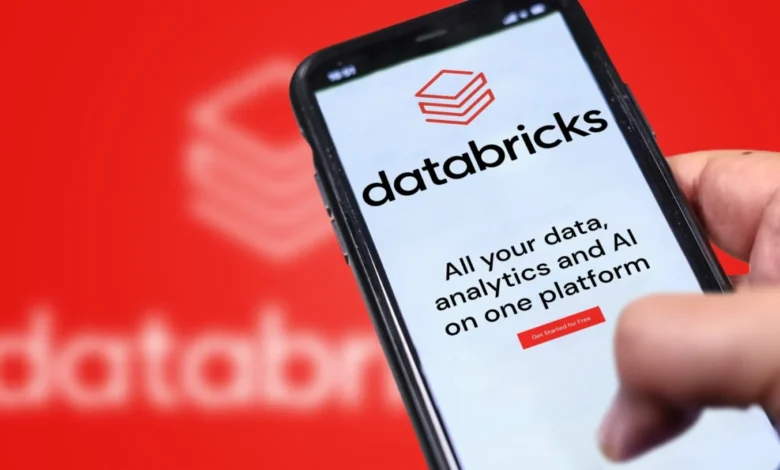
Databricks has officially unveiled its latest advancement in enterprise search technology, the Adaptive Instructed-Retriever. This model represents a strategic evolution in how businesses interact with Retrieval-Augmented Generation (RAG) systems. By introducing a mechanism that dynamically determines the necessity of multi-step search sequences, Databricks seeks to solve the "all-or-nothing" dilemma that has historically plagued enterprise AI: the trade-off between the high accuracy of deep, iterative searching and the low cost and speed of single-step retrieval.
The Evolution of Retrieval Technology
The landscape of enterprise AI has shifted significantly over the past 24 months. Initially, RAG systems were simple, relying on semantic search to pull a single chunk of context to answer a user prompt. However, as business requirements grew more sophisticated, the limitations of these simple architectures became apparent. Complex queries—often referred to as "multi-hop" questions—require an AI agent to perform an initial search, synthesize that information, determine it is insufficient, and perform subsequent searches to gather the full picture.
Databricks first entered this space with the introduction of Instructed-Retriever-1. That model established a foundation by utilizing parallel, single-step search techniques that incorporated custom enterprise data schemas. While effective for standard lookups, it struggled with the nuanced demands of complex queries. The Adaptive Instructed-Retriever serves as the successor to this architecture, evolving the model from a static retrieval tool into an agentic, decision-making engine capable of assessing its own search trajectory.
A Chronology of Databricks’ AI Strategy
The release of this model follows a deliberate series of investments Databricks has made to secure its position in the "data-intelligence" market.
- Late 2023: The company intensified its focus on "Data Intelligence," emphasizing that AI models are only as good as the underlying data governance and retrieval mechanisms.
- Early 2024: Databricks released its initial Instructed-Retriever models, focusing on optimizing retrieval accuracy by embedding business-specific instructions directly into the retrieval layer.
- Mid-2024: Research shifted toward "Agentic" workflows, where the focus moved from simple retrieval to autonomous task completion.
- Q4 2024: The announcement of the Adaptive Instructed-Retriever marks the integration of reinforcement learning into the retrieval process, allowing the model to "learn" the cost-to-benefit ratio of searching.
Technical Architecture and Reinforcement Learning
The core innovation of the Adaptive Instructed-Retriever lies in how it was trained. Rather than relying solely on static, supervised training sets, Databricks employed a synthetic enterprise retrieval environment. This involved an agentic data synthesis process that generated complex, multi-hop questions specifically designed to test whether an agent should stop or continue searching.
By applying online reinforcement learning, Databricks trained the model to weigh the potential improvement in retrieval accuracy against the computational cost of additional inference steps. The model is essentially rewarded for achieving high accuracy with the fewest possible steps. This training method allows for the creation of different "checkpoints" or versions of the model. For instance, a "high-precision" checkpoint might be trained to prioritize answer quality regardless of a higher compute penalty, while a "latency-optimized" version would be trained to prioritize speed, stopping at the first sign of a sufficient answer.
Economic Implications for Enterprise CIOs
For Chief Information Officers (CIOs) and IT leadership, the unpredictability of AI costs has become a primary barrier to wide-scale deployment. As organizations scale AI agents, the "runaway meter" effect—where agents perform endless loops of searching and reasoning—can lead to massive, unexpected cloud consumption bills.
Ashish Chaturvedi, executive research leader at HFS Research, notes that the ability to define a "search ceiling" per workload is a game-changer. By allowing organizations to match the model’s behavior to the specific criticality of the task, enterprises can ensure that a routine HR document lookup does not consume the same computational budget as a complex legal or financial audit request.
Databricks claims that this specialized approach yields significant performance benefits. In internal benchmarking, the Adaptive Instructed-Retriever reportedly matched or outperformed several leading large language models (LLMs) in retrieval quality, while completing tasks in roughly 5.8 seconds. This is more than twice the speed of general-purpose models like Claude Sonnet 3.5 or specialized variants of GPT, potentially saving enterprises significant sums on inference tokens and compute hours.
Reducing the Orchestration Burden
Beyond cost control, the model offers a reprieve for AI engineering teams. Traditionally, developers were forced to build complex "orchestration layers"—bespoke code designed to tell the AI when to refine a search, when to stop, and when to pivot to a new keyword. This required significant expertise in prompt engineering and software architecture.
With the Adaptive Instructed-Retriever, this logic is baked into the model itself. By shifting the decision-making process into the learned search policy of the retriever, developers can focus on higher-level application logic. As Stephanie Walter, practice leader of the AI stack at HyperFRAME Research, suggests, this democratization of complex retrieval could allow smaller, resource-constrained teams to deploy agentic systems that were previously the domain of top-tier AI labs.
Critical Analysis: The Reality of Deployment
Despite the technical advancements, industry analysts caution that the model is not a "silver bullet." The effectiveness of any retrieval system remains fundamentally tethered to the quality of the underlying data. Mike Leone, a principal analyst at Moor Strategy and Insights, points out that a smarter search policy cannot fix a "garbage in, garbage out" scenario. If an enterprise’s internal knowledge base is poorly structured, lacks clear definitions, or is riddled with conflicting information, even an adaptive, intelligent retriever will fail to produce accurate results.
Furthermore, there is the challenge of the "management tax." Deploying a specialized, adaptive model requires teams to monitor, test, and tune different checkpoints. This introduces a new layer of MLOps (Machine Learning Operations). Many development teams may find the process of curating a list of optimized settings for every specific business use case to be too time-consuming, leading to a tendency to use a single, "one-size-fits-all" setting that may not be optimal for every scenario.
Finally, there is the broader question of architectural complexity. CIOs must decide if the benefit of an specialized retrieval model outweighs the complexity of adding another component to their AI stack. For some organizations, using a single, large-scale general-purpose model for both retrieval and reasoning may remain a more attractive, albeit potentially more expensive, alternative simply because it simplifies the vendor management and deployment lifecycle.
Conclusion and Future Outlook
The release of the Adaptive Instructed-Retriever by Databricks highlights a maturing market. As enterprises move past the "proof of concept" phase of AI and into production, the focus is shifting from simple functionality to efficiency, cost-predictability, and scalability.
While the model offers a sophisticated way to manage the costs and latency associated with agentic AI, its ultimate success will depend on how easily it integrates into existing enterprise ecosystems. Organizations will need to balance the promise of reduced compute costs against the operational effort of maintaining specialized models. As more companies transition to these agentic workflows, the ability to fine-tune retrieval behavior will likely become a standard, rather than a luxury, in the enterprise AI toolkit. The coming months of real-world implementation will serve as the true test of whether these performance gains translate into the bottom-line savings that businesses are so desperately seeking.
Related posts: