Stuff The Internet Says On Scalability For December 2nd, 2022 – High Scalability –

The Technological Lineage of Mainframe Computing
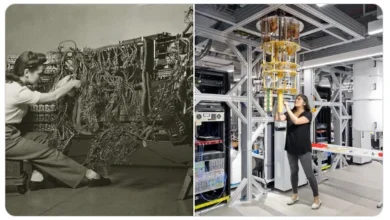
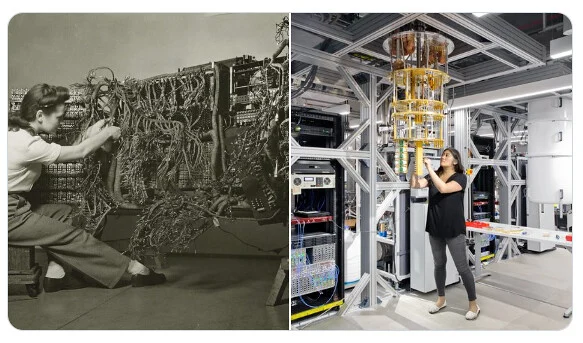
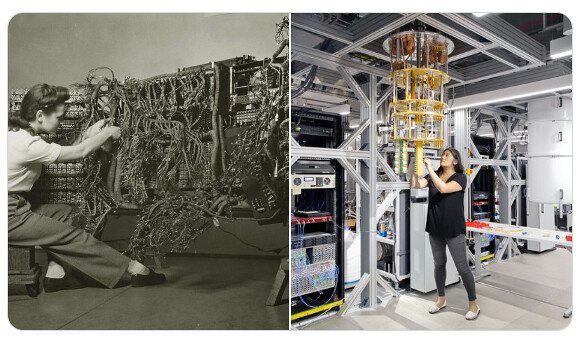
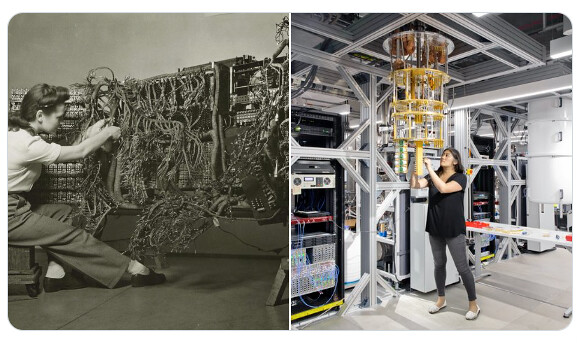
In 1958, the computing landscape was dominated by vacuum tube technology. Systems such as the IBM 700/7000 series required massive, climate-controlled environments to function, as the sheer heat output of thousands of vacuum tubes posed a constant risk of hardware failure. Engineers of that era operated with a level of tactile precision that is rarely seen today. Every logic gate had to be physically wired, and the debugging process was a laborious, manual undertaking involving oscilloscopes and schematics printed on paper.
This era established the foundational principles of modern architecture, specifically the von Neumann model, which separates the processing unit from the memory. However, the physical constraints of 1958—limited by the speed of electron travel through wires and the thermal limits of glass tubes—paved the way for the invention of the integrated circuit. By the 1960s and 1970s, the transition to silicon semiconductors allowed for the miniaturization of these massive mainframes into personal computers, eventually leading to the cloud-native architectures that define the current era of HighScalability.
The Quantum Leap: Complexity at Absolute Zero
Fast-forwarding to 2021 and beyond, the wiring of a quantum computer reveals a starkly different, yet surprisingly familiar, set of challenges. While modern quantum processors do not rely on vacuum tubes, they require an equally complex infrastructure to maintain coherence. Quantum bits, or qubits, are notoriously fragile. To prevent decoherence caused by environmental thermal noise, these processors must be housed in dilution refrigerators capable of maintaining temperatures near 10 millikelvins—colder than deep space.
The "wiring" seen in modern quantum setups serves a different purpose than that of 1958. Instead of carrying standard electrical logic signals, these coaxial cables are designed to deliver precisely timed microwave pulses to control the quantum states of superconducting loops. The engineering challenge has shifted from managing thermal dissipation in a standard room to managing the signal-to-noise ratio in a cryogenic vacuum. The visual similarity between the two eras—a human surrounded by a dense thicket of wires—serves as a reminder that regardless of the computational medium, the interface between human engineering and machine logic remains an intensely physical discipline.
Historical Chronology: From Tubes to Qubits
The trajectory of computational evolution can be mapped across several critical inflection points:
- 1940s–1950s: The Vacuum Tube Era. Focus on basic arithmetic, bulk storage on magnetic drums, and the first attempts at automated programming.
- 1960s–1970s: The Transistor Revolution. The shift to solid-state electronics, enabling the development of the microprocessor and the democratization of computing power.
- 1980s–1990s: Networking and Distributed Systems. The rise of the internet shifted the focus from individual processor speed to the architecture of distributed systems, leading to the early challenges of scale.
- 2000s–2010s: The Cloud and Big Data. High-performance computing moved into the data center. Scalability became the defining metric, moving beyond hardware constraints into software-defined infrastructure.
- 2020s–Present: The Quantum Frontier. The industry is currently in the "Noisy Intermediate-Scale Quantum" (NISQ) era. This phase is characterized by the attempt to build systems that can solve specific, high-complexity problems that remain intractable for classical supercomputers.
Data Analysis: Performance and Scaling
To understand the leap between 1958 and 2021, one must look at the data density of operations. The IBM 709, a flagship machine of the late 1950s, operated at speeds measured in thousands of instructions per second (KIPS). Today, a standard smartphone processor performs in the range of billions of instructions per second (GIPS).
Quantum computing does not replace classical computing; it augments it. While a classical bit exists as either a 0 or a 1, a qubit exists in a superposition of both states. This allows quantum algorithms, such as Shor’s algorithm or Grover’s algorithm, to perform parallel computations on a scale that grows exponentially with the number of qubits. Whereas doubling the power of a classical system requires a linear increase in hardware, adding a single qubit to a quantum system can, in theory, double its computational capacity. However, the error rates associated with quantum systems remain significantly higher than those of classical silicon, representing the "wiring" challenge that researchers currently face.
Institutional Perspectives and Industry Trends
Leading technology organizations, including IBM, Google, and Rigetti Computing, have shifted their research focus toward "Quantum Utility." Industry reports suggest that the primary barrier to adoption is no longer the fundamental theory of quantum mechanics, but the engineering of the control stack.
Official statements from these organizations emphasize that the transition from the laboratory to the production floor requires a standardized "quantum-classical" hybrid architecture. This involves using classical supercomputers to handle routine tasks, while offloading specific, high-complexity workloads to the quantum processor. This collaborative architecture mirrors the historical transition of mainframes, where specialized co-processors were developed to handle floating-point arithmetic or graphics, offloading these tasks from the primary CPU.
The Broader Implications for Global Infrastructure
The implications of this shift are profound for sectors ranging from cryptography to material science. As computing architectures move toward quantum capabilities, the standard encryption protocols that secure global financial and communication systems—such as RSA and ECC—face the threat of obsolescence. This has prompted a global move toward "post-quantum cryptography," where organizations are updating their security standards to withstand the future processing power of quantum machines.
Furthermore, the impact on material science and pharmaceuticals is expected to be immediate. Classical computers struggle to simulate molecular interactions because the number of variables grows exponentially with the size of the molecule. Quantum computers are natively suited to model these interactions, potentially accelerating the discovery of new catalysts for carbon capture or the design of novel medicines.
Conclusion: The Persistence of Engineering
While the materials have changed—from copper wiring and vacuum tubes to superconducting niobium and microwave-attenuated gold plating—the spirit of the work remains unchanged. The 1958 engineer and the 2021 quantum researcher are both engaged in the same fundamental pursuit: extending the reach of human intelligence through the manipulation of physical reality.
As we look toward the future, the integration of quantum systems into the global network will require the same level of architectural rigor that was applied to the growth of the internet in the 1990s. The lessons of the past—specifically the need for modularity, robust testing, and scalable maintenance—will be the guiding principles for the next generation of engineers as they move from the mainframe to the quantum-distributed grid. The visual legacy of the engineer at their workbench is a testament to the fact that computing is not merely a digital phenomenon, but a physical one, grounded in the meticulous assembly of the tools that define our age.