The Samsung Galaxy S26 Ultra vs iPhone 18 Pro Debate and the Best Ways to Secure a Premium Flagship Device in 2026

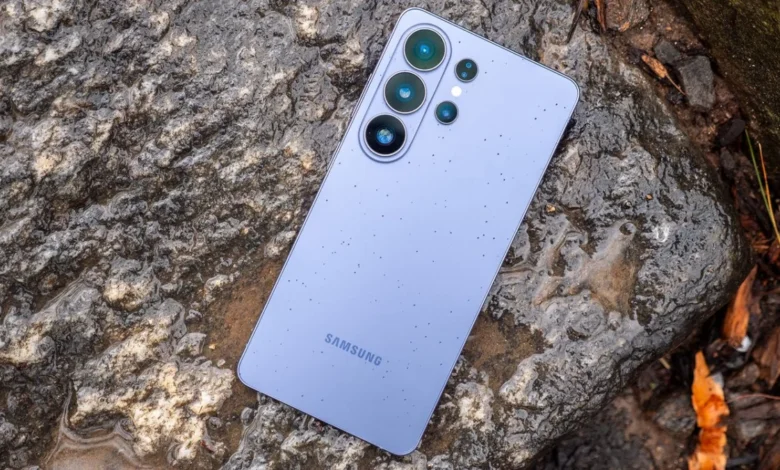
The release of the iPhone 18 Pro this week has reignited the perennial rivalry between Apple and Samsung, placing the consumer in the middle of a high-stakes technological standoff. While Apple’s latest flagship introduces significant advancements in processing power and videography, the Samsung Galaxy S26 Ultra remains a dominant force in the Android ecosystem. For prospective buyers, the decision is no longer purely about hardware specifications; it is increasingly influenced by the aggressive financial incentives currently being deployed by major wireless carriers to capture market share. As these two tech giants vie for supremacy in the 2026 smartphone market, T-Mobile has emerged as a significant player by offering a $1,100 discount on the Galaxy S26 Ultra, shifting the focus from retail price tags to long-term service value.
A Chronology of the 2026 Flagship Race
The rivalry between the iPhone and the Galaxy S-series has defined the smartphone industry for nearly two decades. The timeline for the 2026 cycle began in early Q1 with Samsung’s announcement of the Galaxy S26 Ultra, which introduced the Snapdragon 8 Elite Gen 5 processor. Samsung emphasized a shift toward on-device AI integration and improved weight distribution, positioning the device as a productivity powerhouse for power users.
Apple’s response, arriving this week, centers on the A20 Pro chip. Industry analysts have closely tracked the development of this silicon, noting that Apple’s transition to a more efficient lithography process mirrors Samsung’s own efforts to mitigate thermal throttling during intensive tasks. While pre-orders for the iPhone 18 Pro are slated to commence on September 12th, the market has already had months to acclimate to the S26 Ultra’s feature set, including its proprietary Privacy ID security suite and the integrated S Pen.
Technical Parity and Divergent Philosophies
When comparing the hardware, the two devices represent different philosophies in mobile computing. The iPhone 18 Pro’s integration of Dolby Vision support and advanced computational photography remains a benchmark for content creators. Apple’s software ecosystem, characterized by tight integration between the A20 Pro chip and iOS, provides a level of operational stability that has historically been the brand’s strongest selling point.
Conversely, the Samsung Galaxy S26 Ultra leans into hardware versatility. The inclusion of the S Pen—a feature that remains unique in the ultra-premium smartphone segment—continues to attract enterprise and creative users. Furthermore, Samsung’s engineering team has successfully reduced the physical mass of the S26 Ultra, addressing a common critique of previous "Ultra" models. The implementation of Privacy ID reflects Samsung’s broader strategic pivot toward security-first mobile computing, a direct response to rising concerns over data sovereignty and digital tracking.
Market Dynamics and the Financial Barrier
The high cost of entry for flagship devices has led to a significant change in consumer behavior. In 2026, the retail price for top-tier smartphones has reached a threshold where few consumers pay the full amount upfront. Instead, the industry has shifted toward carrier-subsidized installment plans.
T-Mobile’s current promotion, which offers $1,100 off the Galaxy S26 Ultra when adding a new line under the "Experience More" or "Experience Beyond" plans, serves as a case study in carrier marketing. By eliminating the requirement for a trade-in, the provider removes a significant barrier to entry. For the consumer, this effectively reduces the monthly cost of the device to $5.56 over a 36-month period.
This strategy is designed to drive long-term customer retention. By bundling the hardware discount with high-tier unlimited plans, carriers ensure a steady stream of subscription revenue. The "Experience Beyond" plan, which includes ancillary services such as Netflix and Hulu, demonstrates the industry’s push toward "content-plus-connectivity" bundles.
Data Analysis: The Value Proposition of Service Bundles
For a household or an individual user, the decision to switch carriers or add a line requires a careful assessment of total cost of ownership. The "Experience More" plan starts at $90 per month for a single line, while "Experience Beyond" is priced at $100. However, these figures are deceptive when analyzed in isolation.
Data from recent industry reports indicates that multi-line accounts drastically lower the average cost per user. For instance, adding four lines of the "Experience More" plan reduces the cost to $42.50 per line, totaling $170 for the group. When this is coupled with the $1,100 device subsidy, the total value proposition becomes difficult for competing carriers to match.
Financial analysts observe that these promotions are not merely charitable acts by service providers; they are calculated responses to a saturated market. With smartphone innovation reaching a plateau—where year-over-year gains in performance are increasingly incremental—carriers must leverage financial engineering to entice users to upgrade their devices or switch networks.
Broader Implications for the Smartphone Industry
The competition between the iPhone 18 Pro and the Galaxy S26 Ultra is symptomatic of a maturing industry. As both Apple and Samsung approach the theoretical limits of current mobile hardware, the differentiator becomes the user experience and the financial flexibility offered at the point of sale.
The focus on "Privacy ID" by Samsung and "A20 Pro performance" by Apple suggests that both companies are attempting to lock users into their respective software ecosystems. Once a user adopts a specific security standard or utilizes a specific creative suite, the cost of switching brands becomes higher than the monetary cost of the device itself.
Furthermore, the prevalence of such aggressive promotions suggests that the premium smartphone market is becoming increasingly price-sensitive. As inflation and economic volatility influence consumer spending, manufacturers and carriers are finding that they must offer more than just a better camera or a faster processor; they must offer a sustainable path to ownership.
Official Stances and Industry Outlook
While neither Apple nor Samsung typically comment on the specific promotional strategies of third-party retailers, industry spokespeople have frequently noted that their primary goal remains the expansion of their installed user base. For Samsung, the S26 Ultra represents a critical opportunity to maintain its market share against an increasingly refined iPhone lineup.
Experts suggest that the remainder of 2026 will be characterized by similar, if not more intense, competitive maneuvers. As the holiday shopping season approaches, it is expected that other carriers will follow T-Mobile’s lead, potentially introducing their own aggressive subsidies to counter the launch of the iPhone 18 Pro.
Conclusion: A Strategic Choice
The choice between the iPhone 18 Pro and the Galaxy S26 Ultra is fundamentally a choice between two distinct ecosystems. The iPhone offers a refined, vertically integrated experience that excels in creative applications, while the S26 Ultra offers hardware flexibility and unique features like the S Pen and Privacy ID.
However, for the pragmatic consumer, the decision is likely to be swayed by the current economic climate. With $1,100 in potential savings available through current promotions, the barrier to upgrading to a premium device has been significantly lowered. Consumers are advised to weigh the long-term commitment of carrier plans against the immediate benefit of device subsidies, ensuring that their choice of smartphone aligns with their budget as much as their technical requirements. As the market continues to evolve, the ability to secure such value will remain a cornerstone of the consumer electronics experience in 2026 and beyond.