The Evolution of the TA558 Threat Landscape
The activities of TA558 are not a new phenomenon; rather, they represent a persistent and evolving threat that has shadowed the travel industry for nearly half a decade. Since at least 2018, this group has specialized in the hospitality and travel sectors, primarily targeting organizations across Latin America, though their reach has expanded into North America and Western Europe. Historically, the group relied on social engineering tactics, utilizing phishing emails written in Spanish or Portuguese—often with subject lines as simple as "reserva" (reservation)—to lure employees or customers into opening malicious attachments.
The group’s technical approach has remained consistent in its objective: to gain unauthorized access to target machines for the purpose of financial gain, reconnaissance, and data theft. However, the methodology used to deliver these malicious payloads has undergone a dramatic transformation. In the early years of their operation, TA558 frequently exploited known vulnerabilities in Microsoft Office, such as the infamous CVE-2017-11882, a remote code execution bug found in the Microsoft Equation Editor. By embedding malicious macros or using remote template injections, they successfully deployed various Remote Access Trojans (RATs), including Loda and Revenge RAT, onto the systems of unsuspecting victims.
A Strategic Pivot: ISO and RAR Files
A critical shift in the group’s tactics occurred in 2022, largely in response to the changing security posture of global software providers. Following Microsoft’s decision to disable VBA and XL4 macros by default in Office products—a move designed to curb the prevalence of macro-based malware—TA558 was forced to innovate. According to detailed findings from Proofpoint, the threat group rapidly moved away from document-based exploits toward the use of compressed archive files, specifically RAR and ISO formats.
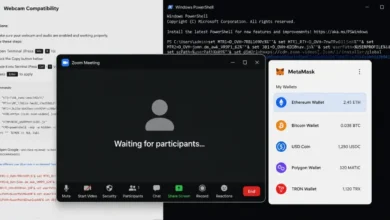
This evolution is significant because it complicates the detection process for traditional security filters. An ISO file, which acts as a virtual disk image, can be used to host a variety of malicious files that remain hidden until the user intentionally executes them. In recent campaigns, researchers observed that a reservation link within a phishing email would lead the victim to download an ISO file containing an embedded batch (.BAT) file. Once triggered, this script launches a PowerShell command that silently downloads a secondary payload, such as AsyncRAT. This multi-stage infection chain allows the attacker to maintain a low profile while gaining persistent access to the victim’s computer, facilitating everything from password theft to the installation of additional ransomware or spyware.
The scale of this shift is evident in the campaign metrics. Between 2018 and 2021, TA558 conducted a combined total of only five campaigns utilizing URLs to deliver their payloads. In 2022 alone, that number skyrocketed to 27 distinct campaigns. This exponential increase in activity highlights the group’s determination to maintain its hold on the travel industry despite improved security measures at the enterprise level.
Chronology of Escalation: 2018 to Present
The timeline of TA558’s operations illustrates a group that is highly adaptable and sensitive to global trends.
- 2018: The emergence of TA558, focusing primarily on Latin American travel and hospitality firms. Early campaigns utilized CVE-2017-11882 to install Loda RAT.
- 2019: The group expanded its scope, introducing malicious PowerPoint macros and template injections. This period also marked the first time the group utilized English-language lures, signaling a broader geographic targeting strategy.
- 2020: The most prolific year for the group, with 25 campaigns documented in January alone. The group leveraged the chaos of the early pandemic to prey on workers in the travel sector.
- 2021: A period of transition. While the pandemic suppressed global travel, TA558 continued to refine its social engineering techniques, focusing on specialized RATs like Revenge RAT.
- 2022: A major tactical pivot. The group abandoned reliance on Office macros, favoring ISO/RAR containers and increased reliance on URL-based delivery mechanisms to bypass new security defaults in Microsoft software.
Industry Implications and Financial Motivations
The primary objective of TA558 remains financial. Analysts at Proofpoint, along with researchers from Palo Alto Networks’ Unit 42 and Cisco Talos, have reached a "medium to high confidence" conclusion that the group is motivated by the prospect of monetizing stolen data. For hotels, airlines, and travel agencies, a successful breach does not only result in the loss of proprietary data; it represents a significant reputational risk. If customer credit card information, passport details, or personal travel itineraries are compromised, the resulting loss of consumer trust can be devastating.
Sherrod DeGrippo, Vice President of Threat Research and Detection at Proofpoint, emphasized that the threat is dual-pronged. The compromise affects both the travel organizations, whose internal systems are breached, and the customers, who may find themselves the victims of follow-on fraud or identity theft. The "potpourri" of malware variants deployed by the group—ranging from Loda to AsyncRAT—suggests that the group is not merely interested in simple theft but is building a robust infrastructure for long-term cyber-espionage and financial extraction.
Strengthening Defensive Postures
For organizations operating within the hospitality and travel sectors, the rise of TA558 serves as a stark reminder of the need for "defense in depth." Security experts advise that companies must move beyond signature-based detection, which is increasingly ineffective against the polymorphic nature of modern RATs.
Key recommendations for mitigation include:
- Strict File Handling Policies: Organizations should implement controls that prevent the execution of ISO, RAR, and other archive files from untrusted sources, particularly when delivered via email.
- User Awareness Training: Employees must be trained to recognize the signs of sophisticated phishing. While "reserva" was a common subject line in the past, the group is now using more contextually relevant, localized, and professionally crafted lures.
- Endpoint Monitoring: Given the use of PowerShell and batch scripts to execute follow-on payloads, robust endpoint detection and response (EDR) tools are essential to identify and terminate anomalous process trees before they can connect to command-and-control servers.
- Macro Controls: Despite the shift away from macros, disabling them globally remains a best practice. IT departments should ensure that all systems are patched against known vulnerabilities that TA558 has historically exploited.
The Broader Impact on the Travel Economy
The resurgence of TA558 is particularly concerning given the fragile state of the travel industry. As the sector continues its recovery from the pandemic, businesses are under immense pressure to streamline operations and process bookings as efficiently as possible. This high-velocity environment creates the perfect conditions for phishing attacks; when staff are overwhelmed, the likelihood of a human error—such as clicking a malicious link in an urgent-looking "reservation" email—increases significantly.
Furthermore, the globalization of these attacks means that no region is truly immune. While the group has historical ties to Latin American targeting, the shift toward English-language phishing indicates a permanent expansion of their operational footprint. As international travel volumes continue to climb, the potential attack surface for TA558 grows in tandem. Organizations must acknowledge that the threat is no longer limited to regional cybercrime; it is a sophisticated, global campaign that requires a coordinated, international response from security researchers, law enforcement, and the travel industry at large.
The case of TA558 demonstrates that cybercriminals are as adept at reading market trends as the industries they target. When the travel industry is busy, the hackers are busy. By leveraging the same mechanisms that allow modern commerce to function—digital reservations and rapid information exchange—TA558 has turned the industry’s own infrastructure against it. As the sector looks toward a future of increased digital integration, the ability to secure these pipelines against such persistent threats will be the defining challenge for travel and hospitality firms in the coming years. Failure to address these vulnerabilities risks not only financial loss but the integrity of the travel experience itself, leaving travelers to wonder if their next trip will be disrupted by a flight delay or a digital security nightmare.