Microsoft Named a Leader in the 2026 Gartner Magic Quadrant for Container Management

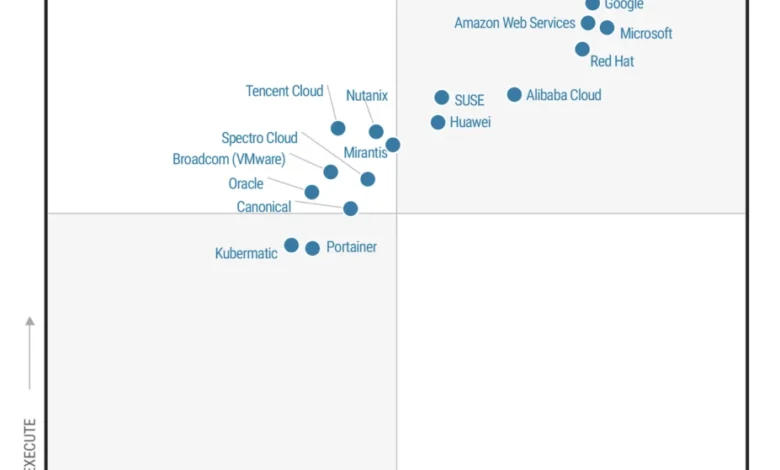
Microsoft has officially been recognized as a Leader in the 2026 Gartner Magic Quadrant for Container Management, achieving the furthest position to the right for Completeness of Vision. This acknowledgment serves as a validation of the company’s strategic pivot toward integrating artificial intelligence workloads within existing container orchestration frameworks. As enterprise requirements evolve from simple distributed systems to complex, AI-driven architectures, Microsoft’s container portfolio—anchored by Azure Kubernetes Service (AKS), Azure Container Apps, Azure Arc, and Azure Kubernetes Fleet Manager—has become a central pillar in its cloud-native strategy.
The Evolution of Container Orchestration
The trajectory of container management has shifted dramatically over the past decade. When Kubernetes was first introduced to the market, the primary objective was the democratization of distributed systems. The goal was to build a scheduler that remained agnostic toward the specific nature of a workload, allowing for greater flexibility in how services were deployed and scaled. This "opinionless" design proved fortuitous, as it provided the architectural headroom necessary for the current AI revolution.
Today, the requirements for container management have expanded beyond mere orchestration. Organizations are now grappling with the necessity of running AI models and data-intensive applications closer to the end-user, often within strict sovereign and regulatory boundaries. This shift has turned container platforms into the foundational substrate for global, hybrid, and edge computing. Microsoft’s current vision emphasizes providing a consistent operating model that allows organizations to adapt to these new requirements without the costly and time-consuming process of re-architecting applications.
Chronology and Strategic Development
The path to this Gartner leadership position was paved by over a decade of consistent investment in the Cloud Native Computing Foundation (CNCF) ecosystem.
- 2014–2016: Kubernetes moves from a Google internal project to an open-source standard. Microsoft begins its integration journey, prioritizing upstream compatibility.
- 2018–2020: Microsoft launches and scales Azure Kubernetes Service (AKS), focusing on enterprise-grade security and managed cluster operations.
- 2021–2023: Introduction of Azure Arc and Azure Container Apps. The focus shifts to hybrid environments, enabling the management of Kubernetes clusters across multiple clouds and on-premises environments.
- 2024–2026: The AI era necessitates the release of advanced tooling, including the AI toolchain operator, AKS Automatic, and the integration of the Azure SRE Agent.
Throughout this period, Microsoft has maintained a commitment to avoiding proprietary forks of Kubernetes. By remaining one of the largest contributors to CNCF projects, the company ensures that the APIs utilized by developers remain stable and portable, regardless of whether the workloads reside on Azure, in an edge datacenter, or on competing cloud platforms.
Dual Models for AI Integration
Microsoft’s research into customer deployment patterns has identified two primary architectural models for AI infrastructure.
The first model is characterized by platform-centric governance. In this scenario, platform teams manage a persistent serving layer, GPU scheduling, and the model lifecycle. This approach is favored by organizations requiring high-volume, predictable AI performance. By utilizing the AI toolchain operator and adhering to CNCF AI Conformance standards, organizations can ensure that their AI infrastructure behaves as a standard platform capability, providing developers with reliable, governed access to GPU resources.
The second model is driven by application-centric agility. Here, the workload is transient; an application or agent invokes inference only when necessary, releasing capacity upon completion. This model places a premium on elasticity and isolation. Azure Container Apps was specifically designed to support this pattern, offering serverless GPUs and hardware-isolated sandboxes that allow for rapid scaling without requiring developers to manage the underlying Kubernetes infrastructure.
The engineering challenge, according to industry experts, lies in enabling seamless transition between these two models. Microsoft’s strategy aims to ensure that identity, network controls, and policy configurations remain consistent regardless of which model is chosen.

Managing Scale and Operational Complexity
As container estates grow, traditional management techniques often reach a breaking point. The phenomenon of "cluster sprawl"—where the number of managed environments outpaces the capacity of the operations team—is a common bottleneck for enterprises.
To mitigate this, Microsoft has introduced tools such as Azure Kubernetes Fleet Manager, which addresses the coordination failures inherent in managing geographically dispersed clusters. By centralizing upgrades, workload placement, and policy enforcement, Fleet Manager allows operations teams to maintain order across thousands of disparate environments.
Furthermore, the introduction of "agentic operations" represents the next frontier. Tools like the Azure SRE Agent and the AKS MCP Server are designed to assist operators by automating the diagnosis and remediation of common cluster issues. By reducing the volume of routine manual investigation, these agents allow engineers to focus on higher-level architectural strategy.
Economic and Operational Impact
Data from customer use cases underscores the efficacy of this approach. For example, organizations like CallRevu have reported significant gains in cost efficiency by scaling GPU resources in response to real-time call volumes. This ability to test new models in production environments without disrupting existing services highlights the maturity of the platform.
The implications for the broader market are significant. With global regulations increasingly mandating data residency, the ability to maintain a single operating model across cloud, edge, and sovereign environments is no longer a luxury but a requirement. By providing a platform that handles the underlying complexity of these shifts, Microsoft enables enterprises to focus on the business value of their AI applications rather than the mechanical overhead of their infrastructure.
Analysis of the 2026 Gartner Findings
The Gartner Magic Quadrant for Container Management acts as a barometer for the industry’s health and direction. By positioning Microsoft as a Leader, the report highlights the company’s ability to balance innovation with stability. Analysts note that while other providers excel in niche areas, Microsoft’s strength lies in its comprehensive, end-to-end vision that spans the entire lifecycle of a containerized workload.
However, the report also serves as a reminder of the ongoing challenges in the sector. The integration of AI into container management is still in its relative infancy. As organizations continue to scale, the pressure on vendors to provide autonomous, self-healing, and self-optimizing platforms will only intensify. Microsoft’s current focus on agentic operations suggests that it is preparing for a future where the platform, rather than the operator, handles the bulk of day-to-day maintenance.
Conclusion and Future Outlook
The recognition by Gartner is both a milestone and a starting point. As the boundaries between cloud, edge, and on-premises environments continue to blur, the role of the platform provider is to act as a stabilizer. Microsoft’s strategy of keeping AKS aligned with upstream Kubernetes while layering on sophisticated management tooling appears to be the core of its competitive advantage.
For organizations currently navigating the complexities of digital transformation, the takeaway is clear: the choice of a container platform must prioritize long-term flexibility. As the industry moves toward a state where AI is a standard component of every application stack, the ability to adapt to new requirements—without forcing a total rebuild of the underlying infrastructure—will be the defining factor of success. The 2026 Gartner report confirms that, at least for the current market cycle, Microsoft has established a robust framework to support this transition.