Japan’s Liberal Democratic Party Calls for Urgent Cybersecurity Task Force as AI-Driven Attacks Surge

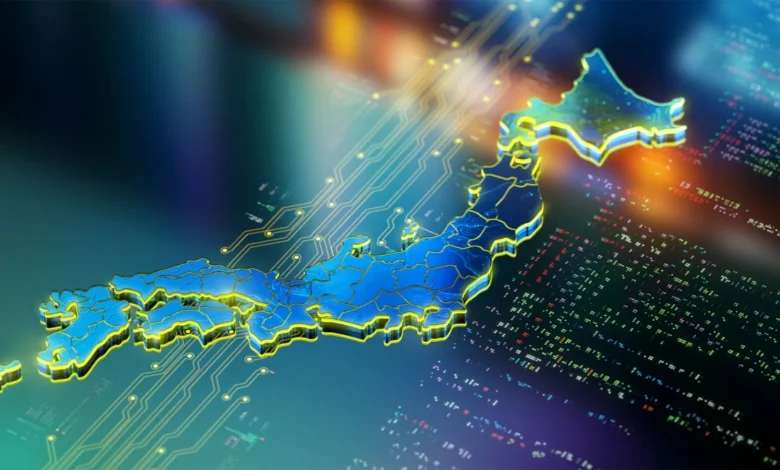
The Japanese government is facing a critical turning point in its national security posture as the ruling Liberal Democratic Party (LDP) demands the immediate formation of a specialized cybersecurity task force. This legislative push follows a harrowing series of sophisticated digital incursions that have compromised major corporations across the transport, retail, and financial sectors. With the rapid proliferation of artificial intelligence in the hands of malicious actors, Tokyo’s political establishment has characterized the current threat landscape as a "state of emergency in cyberspace," signaling a shift toward a more aggressive, AI-integrated defense strategy.
The urgency behind this call to action was crystallized during an emergency meeting of the LDP’s National Cybersecurity Strategy Headquarters (NCSH) on 9 October. Masaaki Taira, the head of the NCSH, underscored the gravity of the situation, noting that the traditional defensive perimeters protecting Japanese industry are no longer sufficient against the relentless pace of modern, automated cyber warfare.
A Chronology of Digital Siege
The escalation of attacks has been both rapid and widespread. Over the past several months, more than 20 major Japanese corporations have fallen victim to data breaches and ransomware campaigns. The impact has been felt across critical infrastructure and consumer-facing services:
- Early 2026: Initial signs of a shift in threat sophistication were observed as attackers began experimenting with automated vulnerability scanning, moving away from manual exploitation techniques.
- July 2026: A notable surge in incidents began, marking the start of a period where the frequency of successful penetrations spiked by 68% compared to the first half of the year.
- Late September 2026: Rail operator JR East confirmed a massive breach involving the theft of 1.67 million customer email addresses, exposing a vulnerability in the digital footprint of the nation’s transport backbone.
- Early October 2026: The crisis reached the financial sector, where it was revealed that at least nine banks had been targeted by AI-powered hacking techniques. Simultaneously, Times Car reported a significant leak of sensitive customer documents, specifically scanned copies of driving licenses.
- 9 October 2026: The LDP held its emergency session, formally declaring the current environment a "state of emergency" and outlining the proposal for a unified task force.
The Financial Services Agency (FSA) of Japan responded to the banking breaches by issuing an urgent directive to financial institutions, mandating that they temporarily suspend or restrict the use of driver’s licenses as primary identification for new account openings until further security protocols are verified.
Data Trends and the AI Threat Multiplier
Statistical analysis provided by Japanese IT firm Macnica paints a sobering picture of this escalation. As of 6 October, Japan had recorded 119 confirmed cyber attacks in 2026. This figure is significantly higher than the 86 attacks reported in the entirety of 2025 and the 62 recorded in 2024. The data suggests that the barrier to entry for cybercriminals has been lowered significantly by the accessibility of AI-driven tools.
The Japan Computer Emergency Response Team Coordination Center (JPCERT) has provided technical insight into this evolution. Their investigations into the servers utilized by these attackers confirm the widespread deployment of AI agents. These tools are being used to autonomously scan for known software vulnerabilities and execute precise, high-speed attacks via Application Programming Interfaces (APIs).
Furthermore, JPCERT experts have identified evidence that attackers are systematically analyzing mobile application packages (APK files) to detect complex security flaws, such as Server-Side Request Forgery (SSRF). By automating the discovery of these flaws, attackers are able to bypass standard security testing, effectively "carpet bombing" Japanese networks with thousands of probes per hour. The scale of this operation has led security analysts to suspect the involvement of organized, state-affiliated, or high-resource criminal syndicates, with reports from GMO Cybersecurity suggesting the use of advanced, China-developed AI software in campaigns targeting Japanese e-commerce and finance.
The Asymmetric Nature of Modern Cyber Conflict
Nobuo Miwa, president of Tokyo-based cybersecurity firm S&J Corp, provided a blunt assessment of the technological imbalance currently plaguing the region. In comments to international media, Miwa highlighted the endurance and speed of AI, noting that while human security teams suffer from fatigue and limited resources, an AI-powered attack vector can operate continuously, 24 hours a day, 365 days a year, with negligible marginal cost.
"Japan is essentially being subjected to carpet bombing," Miwa stated, emphasizing that the traditional human-centric defense model is fundamentally incapable of keeping pace with the algorithmic efficiency of modern threats. The ability of AI to synthesize vast amounts of stolen data—such as the license scans and email databases recently compromised—allows for the creation of high-fidelity phishing campaigns and identity fraud that are nearly indistinguishable from legitimate customer interactions.
Building a Resilient Defense Framework
The LDP’s proposed task force is designed to address the systemic fragmentation that currently hinders Japan’s defensive posture. For years, Japan’s cybersecurity infrastructure has been criticized as aging, with many firms operating in isolated silos that prevent the rapid sharing of threat intelligence.
The proposed plan, which is currently being prepared for formal submission to the Prime Minister’s office, rests on three core pillars:
- AI-Enabled Defensive Infrastructure: The government intends to incentivize, or potentially mandate, the adoption of AI-driven cybersecurity solutions that can match the speed and predictive capabilities of the attackers.
- Regulatory Support for SMBs: Small and medium-sized enterprises (SMBs) are often the weakest links in the national supply chain. The LDP aims to extend government-funded support to help these businesses implement robust detection systems, thereby closing off "backdoor" access points for larger-scale attacks.
- Cross-Sector Integration: The task force would serve as a centralized hub for intelligence sharing between the public sector, private industry, and security research firms, breaking down the bureaucratic barriers that have historically delayed incident response.
Expert Analysis and Future Implications
Mihoko Matsubara, chief cybersecurity strategist at NTT Corporation, suggests that the LDP proposal is as much about psychological reassurance as it is about technical hardening. "The LDP’s recommendations, once formalized, would provide Chief Information Security Officers (CISOs) with the political and financial leverage needed to secure larger budgets for long-overdue security hygiene," Matsubara explained.
She argues that by centralizing the effort, the government can force a shift in mindset. For years, cybersecurity was treated as an IT cost center rather than a core business risk. The current climate of emergency is forcing a re-evaluation of that hierarchy. If the government succeeds in strengthening the supply chain through state-sponsored support for smaller vendors, the overall resilience of the Japanese economy could be significantly bolstered.
However, the path forward is not without challenges. Critics note that the effectiveness of such a task force will depend entirely on its mandate and its ability to act independently of slow-moving regulatory processes. Furthermore, the reliance on AI for defense carries its own risks, including the potential for "algorithmic drift" or the possibility that defensive AI models could themselves be poisoned or manipulated by sophisticated adversaries.
As the Japanese government moves toward finalizing this strategy, the global security community is watching closely. The "state of emergency" in Tokyo serves as a microcosm of a broader, global shift: a transition into an era where national security is defined by the ability to defend against, and deploy, artificial intelligence at scale. Whether the LDP’s proposed task force can successfully turn the tide against the current wave of cyber incursions remains to be seen, but the necessity of a modernized, proactive, and unified defense posture has never been more apparent. For Japan, the race to secure its digital future is no longer an option—it is a requirement for economic and national survival in the 21st century.