How Engineers Can Break the Infinite Re-Google Loop and Master Command-Line Fluency

The modern software engineering workflow is built on a quiet, pervasive illusion of competence. Developers routinely navigate complex systems, deploy multi-container architectures, and debug distributed networks, yet many remain tethered to an invisible crutch: the recurring search engine query for basic command-line syntax. Tools like Linux shell utilities, version control flags, and text manipulation scripts are fundamental to daily operations, yet they are frequently subjected to a repetitive cycle of forgetting and rediscovering. Industry observers note that this phenomenon—often termed the "re-Google loop"—represents a subtle yet significant drain on cognitive productivity across the technology sector.
The Anatomy of the Re-Google Loop
For millions of programmers, system administrators, and DevOps professionals, the friction of daily development rarely stems from complex algorithmic design. Instead, it manifests in the mundane syntax of standard command-line interfaces. Commands such as find, tar, awk, and chmod are invoked with regularity, yet their specific flags, positional arguments, and octal permutations persistently escape long-term memory.
When confronted with a routine task, such as locating files older than thirty days or compressing a directory with specific exclusion parameters, the modern developer’s muscle memory executes a familiar sequence: opening a new browser tab, querying a search engine, navigating to a community-driven Q&A platform, copying a code snippet, and pasting it directly into the terminal. The ticket closes, the immediate problem is resolved, and the workflow continues uninterrupted.
However, cognitive scientists and productivity researchers identify this frictionless retrieval as a trap. Because the task is completed swiftly, the developer experiences a false sense of fluency. The underlying knowledge is never truly consolidated into long-term memory. Instead, the individual remains in a state of perpetual rental, perpetually borrowing the exact same technical parameters from external repositories without ever internalizing them. Over the course of a career, the cumulative time lost to context-switching, tab-management, and redundant searching represents hundreds of hours of fractured attention.

The Failure of Traditional Documentation and Personal Knowledge Bases
Recognizing this inefficiency, technical professionals have historically attempted to document their workflows. Personal knowledge bases, markdown files stored in local repositories, centralized code snippets, and custom documentation wikis are staples of engineering environments. Yet, empirical observation across the software development industry indicates that these resources frequently degrade into static graveyards of information.
The lifecycle of a typical personal bash cheatsheet follows a predictable trajectory. It begins with earnest intent: a developer compiles a comprehensive list of every conceivable terminal flag, configuration command, and utility shortcut they might ever need. As the document grows, the volume of text expands to a point where scrolling through the repository becomes slower than simply performing an online search. Eventually, the document is abandoned.
This failure occurs because traditional static notes violate fundamental principles of cognitive retention. Storing an answer on a page does not require the brain to retrieve it under operational pressure. Reading an already-solved command line, such as find . -name "*.log" -mtime -7, serves merely as evidence of past necessity rather than an active exercise in recall. Conversely, official manual pages often lean toward exhaustive completeness, making them unwieldy for quick verification during high-pressure troubleshooting scenarios, while introductory tutorials are optimized exclusively for initial comprehension rather than long-term operational maintenance.
Emerging Strategies for Knowledge Retention and Workflow Optimization
To address the limitations of static documentation and endless web searches, modern engineering workflows are increasingly adopting a three-stage framework: targeted scrap capture, aggressive compression, and active recall integration.
Rather than bookmarking entire forum threads laden with tangential debates, performance-oriented engineers advocate for capturing micro-scraps of information. This involves isolating the exact command that resolved an issue, accompanied by a single, concise sentence explaining the operational rationale behind each flag. For instance, rather than saving a generic bookmark regarding directory searches, an effective record isolates the specific pattern alongside its functional definition—such as noting that the +30 parameter in a file-age query explicitly designates a temporal threshold older than one month.

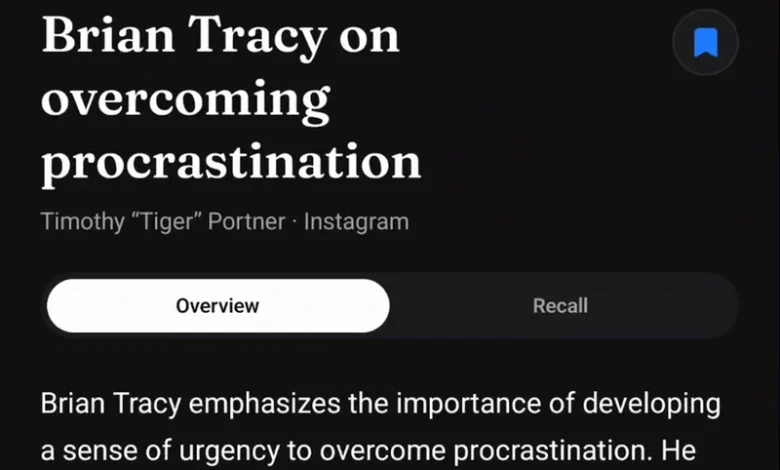
Furthermore, the integration of automated capture and summarization tools has transformed how technical knowledge is curated. Modern utility software—ranging from browser-based extensions to dedicated developer knowledge platforms—allows practitioners to distill exhaustive man pages or multi-comment troubleshooting threads into structured, thirty-second summaries. By stripping away extraneous narrative and preserving only the core syntax, operational gotchas, and deep links to original sources, engineers can build lightweight, searchable libraries that bypass the bloat of traditional wikis.
The Role of Spaced Repetition in Technical Mastery
Information capture, however efficient, remains incomplete without active reinforcement. Without systematic review, even well-curated snippets risk becoming digital hoarding. To combat this, productivity frameworks are increasingly incorporating principles of spaced repetition—a memory technique that introduces increasing intervals of time between subsequent review sessions of previously learned material.
By prompting practitioners with targeted recall challenges—such as asking whether a specific numerical modifier denotes older or newer files before revealing the answer—engineering workflows can bridge the gap between passive reading and active execution. Regular, low-friction review routines, often executed in short weekly intervals, transform abstract terminal flags into internalized cognitive tools.
Industry analysts suggest that minimizing reliance on external search engines for routine operations yields compounding benefits. When an engineer’s fingers hesitate just long enough for their brain to retrieve a command from memory rather than defaulting to an open browser tab, overall system resilience improves, context-switching fatigue diminishes, and the flow state of deep technical work remains unbroken. As software ecosystems grow increasingly complex, reclaiming cognitive bandwidth from the re-Google loop is emerging as an essential discipline for the modern technical workforce.