Ace Combat 8: Wings of Theve Review – Soaring High in Arcade Combat While Grounded by Melodrama

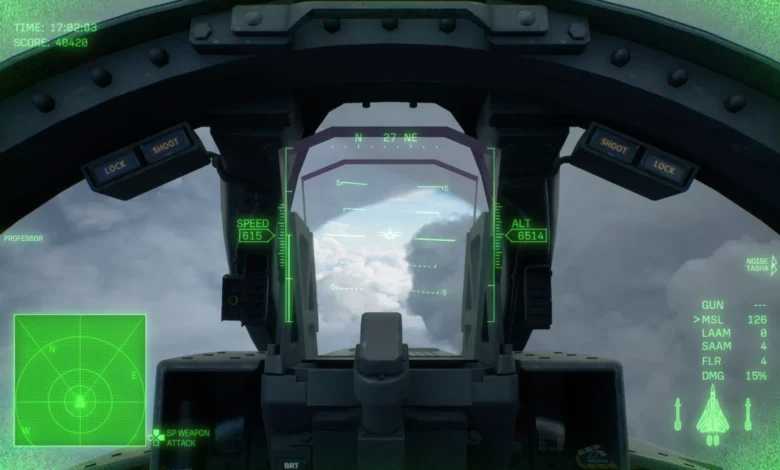
The release of Ace Combat 8: Wings of Theve marks the latest milestone for Project Aces and publisher Bandai Namco Entertainment in their long-running, celebrated arcade flight simulation franchise. Arriving on October 2, 2026, for PC, PlayStation 5, and Xbox Series X|S, the title arrives with substantial anticipation from fans of high-octane aerial combat. While the core gameplay delivers a masterclass in modern arcade flight mechanics—bolstered by groundbreaking atmospheric visuals—the overarching narrative struggles under the weight of excessive cutscenes, uneven pacing, and a convoluted script that detracts from an otherwise stellar aviation experience.
A High-Stakes Narrative Rooted in Modern Warfare Tropes
Ace Combat 8 takes a bold step forward in its cinematic presentation by adopting a fully first-person perspective for all of its narrative cutscenes, a series first. Players assume the role of Rex, a naval aviator serving in the Federation of Central Usea (FCU). The geopolitical landscape at the game’s outset is dire: Sotoa, a nation of former nomads exhibiting expansionist ambitions reminiscent of historical conquests, has nearly completely subjugated the FCU. The campaign begins abruptly on a life raft after Rex’s helicopter is shot down, setting a desperate tone for the trials ahead.
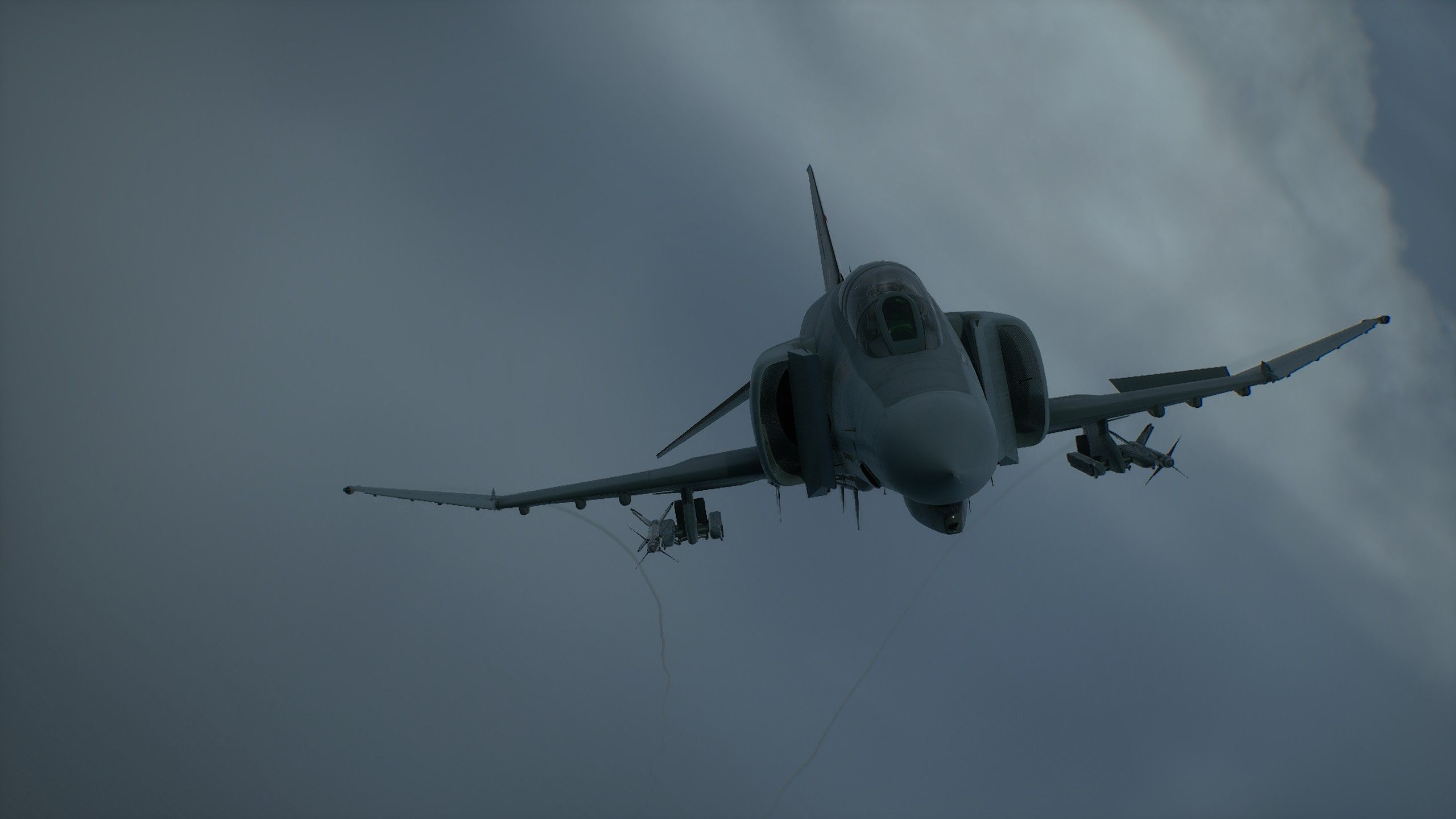
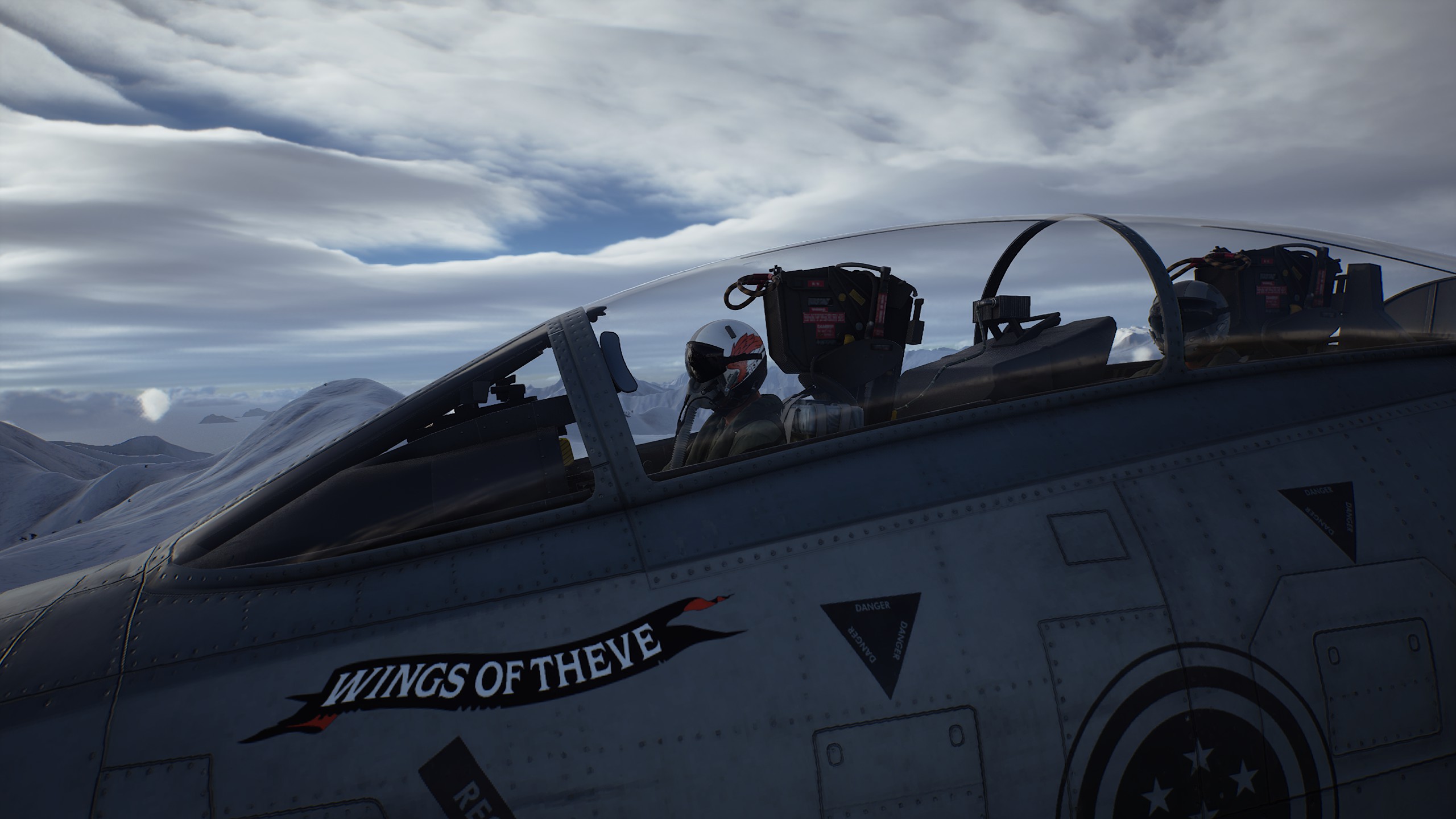
The narrative quickly introduces a mythological layer to modern warfare. Rex assumes the role of a navigator for Jan "Rex" Cope—the original Rex and the legendary "Wings of Theve," a moniker heavily evoking real-world wartime propaganda figures such as the "Ghost of Kyiv" from the ongoing Russo-Ukrainian conflict. When Cope is killed early in the campaign, the player is forced to step into his shoes to lead Joker Flight. However, Cope’s presence remains felt throughout the journey, as his spirit assumes the role of a near-omniscient narrator.
Central to the game’s thematic exploration is the role of digital propaganda and social media in shaping modern military conflicts. The military-industrial complex dictates that a symbol like the "Wings of Theve" cannot be allowed to perish publicly, forcing the protagonist into an uncomfortable role as a manufactured hero backed by shadowy corporate and military interests.
Campaign Scale and Squadron Dynamics
Spanning approximately 18 hours across 30 diverse missions, Ace Combat 8 offers a substantially longer campaign than its predecessor, Ace Combat 7. Players engage in a wide variety of aerial operations, ranging from high-altitude dogfights and close air support to strategic assaults on heavily defended enemy naval armadas.
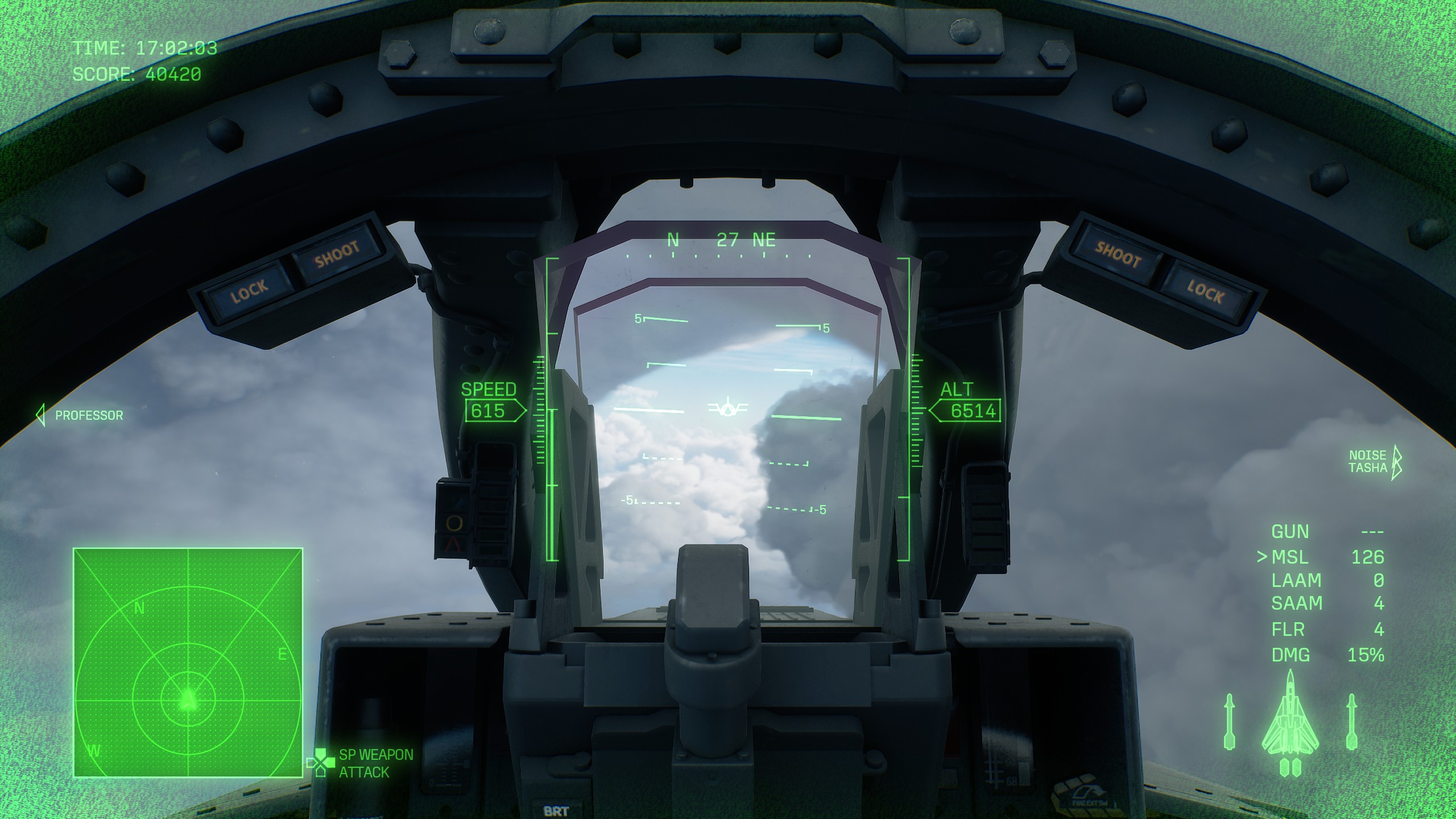
Throughout these operations, players are accompanied by Joker Flight, a squadron featuring well-realized characters with distinct personalities. These include Ellington "Professor" Baxter, a composed former university lecturer; Tasha Severskaya, a daredevil ex-stunt pilot; and William "Noise" Coster, a taciturn musician whose internal rhythm mirrors the tension of the battlefield. The chemistry among Joker Flight grounds the high-stakes missions and provides genuine emotional resonance when squad members face peril.
However, the supporting cast aboard the mobile headquarters, the Carrier Endurance, fails to achieve the same level of engagement. Characters such as the ship’s commander and D.D., a corporate propaganda officer representing the enigmatic Enso Order, lean heavily into established genre clichés, turning downtime aboard the carrier into a tedious chore.
Narrative Pitfalls and Pacing Issues
Despite the strength of its flight mechanics, Ace Combat 8 falters significantly in its storytelling execution. The game is burdened by lengthy, overly dramatic cutscenes that frequently interrupt the momentum of the gameplay. These narrative interludes, paired with awkward Quick Time Events (QTEs)—such as pressing a button to salute or shake hands—echo controversial design choices from past franchise entries like Ace Combat: Assault Horizon.
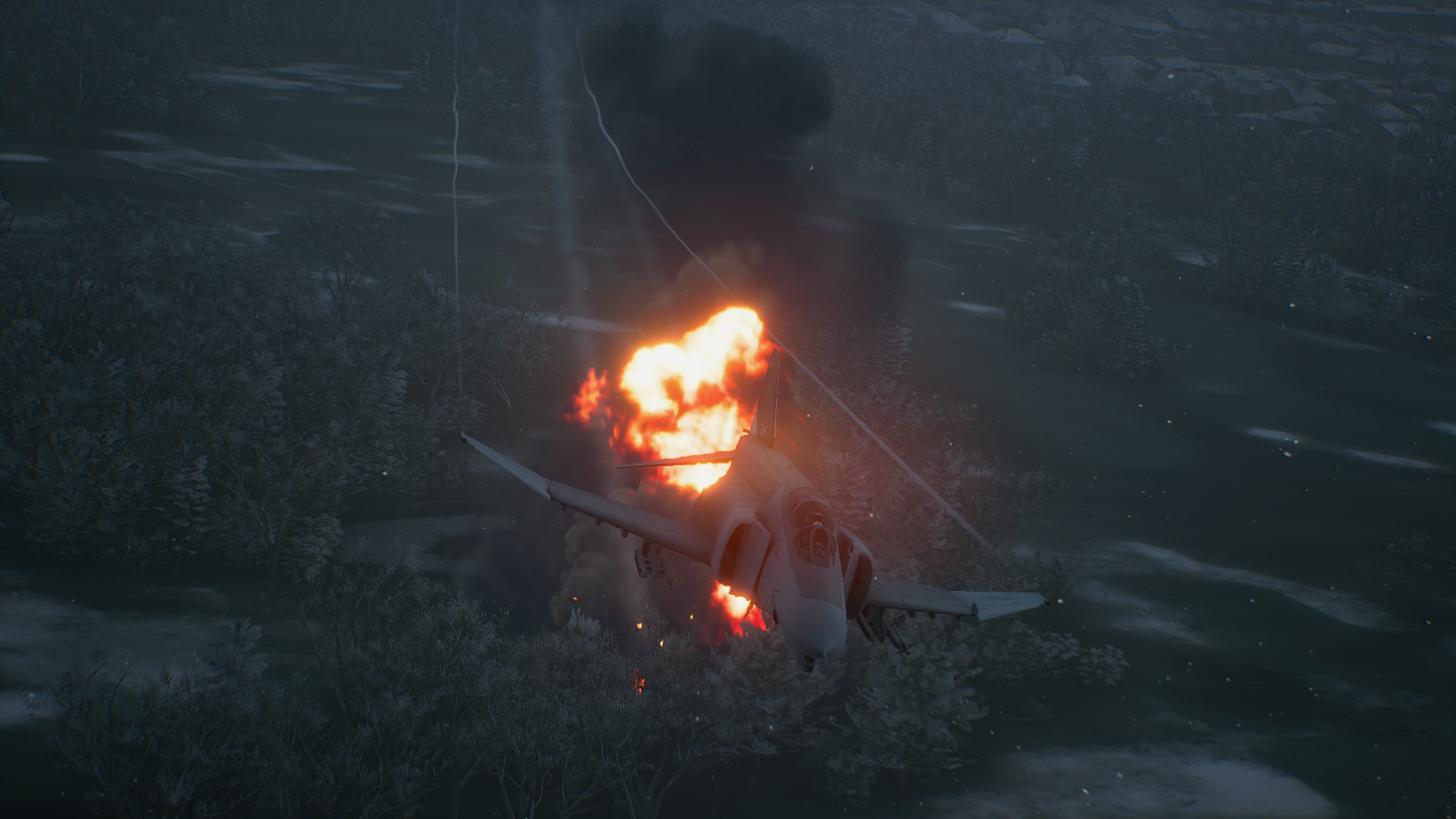
Furthermore, the game’s pacing suffers from structural missteps. Major antagonists are introduced and built up over hours of exposition, only to be neutralized in brief, anti-climactic dogfights. This narrative deflation undercuts the gravity of the overarching conflict, leaving the resolution feeling hollow despite its theatrical buildup.
Technological Marvels: Redefining In-Game Atmosphere
Where Ace Combat 8 achieves undisputed excellence is in its technical presentation and flight physics. Operating on high graphics settings, the title maintains a remarkably stable performance profile, delivering smooth frame rates on modern hardware configurations like the Nvidia RTX 4070.
A standout technical achievement is the implementation of proprietary software known as "Cloudly." This system renders the most visually impressive and realistic clouds seen in contemporary video games. Unlike the static or superficial volumetric clouds of previous titles, these atmospheric formations possess tangible depth, appearing light and wispy on their periphery while dense and formidable at their core. Breaking the sound barrier to punch through these clouds in pursuit of an adversary delivers an unmatched sensory thrill.
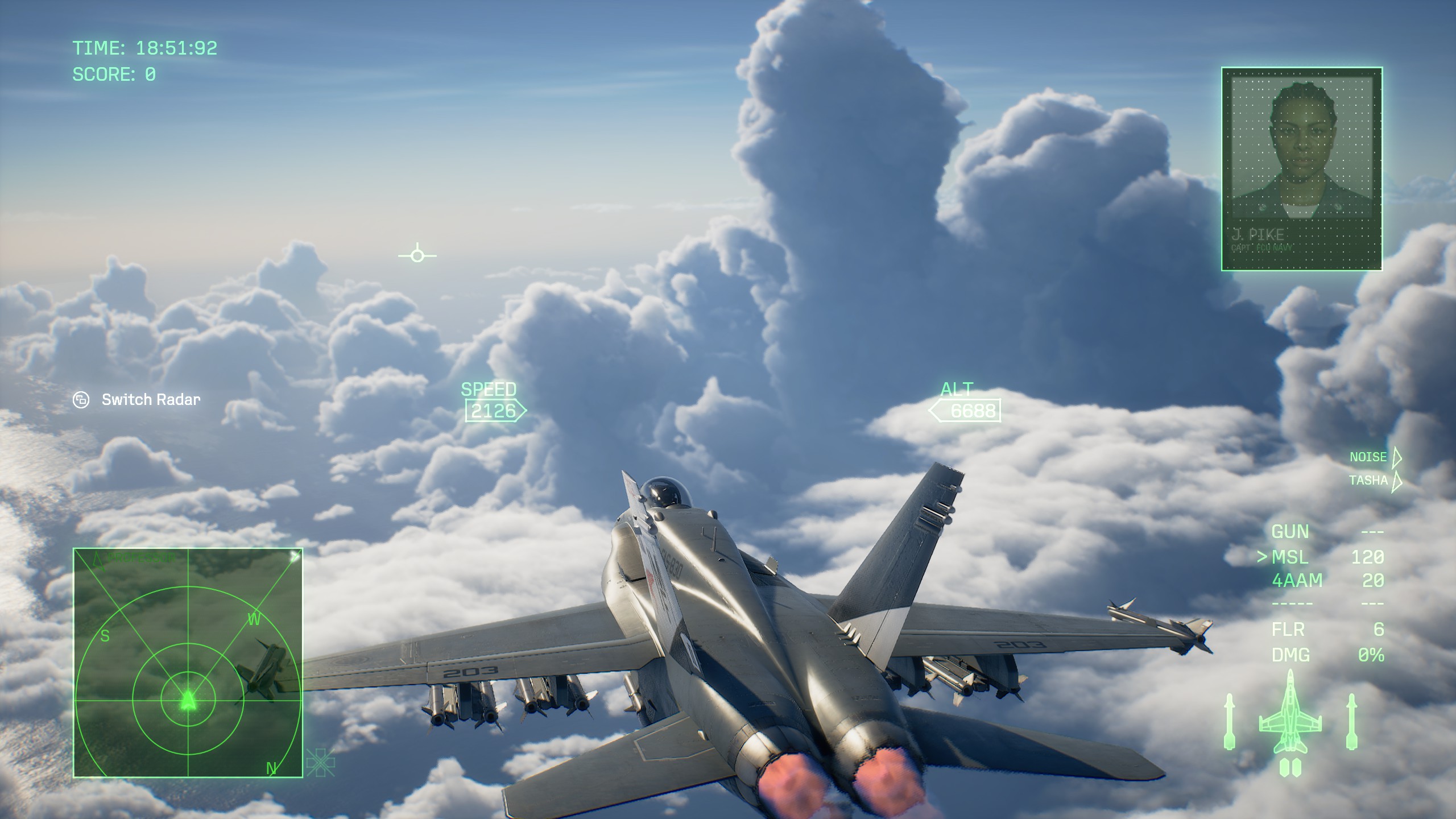
The game expertly captures the fantasy of elite aerial warfare. Maneuvering heavy attack aircraft like the A-10 Thunderbolt through complex canyons, pulling off last-second evasive maneuvers against incoming missile locks, and executing high-g turns evoke the cinematic flair of the Top Gun franchise. Difficulty scaling is finely tuned, with elite enemy units such as Sotoa’s "The Shadows" providing a formidable challenge that tests the limits of veteran players.
Franchise Evolution and Replayability
Comparisons to earlier entries in the franchise are inevitable. While Ace Combat 8 reintroduces features from Ace Combat 5—such as wingman commands and aircraft selection—these mechanics ultimately bear little tangible consequence on mission outcomes. Victory conditions remain largely decoupled from tactical squad management, raising questions about whether the sequel offers enough mechanical innovation over a heavily discounted Ace Combat 7 package.
Nevertheless, once players look past the narrative bloat and embrace the core gameplay loop, Ace Combat 8 shines. The post-campaign experience is robust, encouraging replayability through the extensive Aircraft Tree, where players can unlock new jets and experiment with different loadouts across Free Mission modes. Additionally, a polished online multiplayer suite provides a compelling endgame once public servers are fully populated.
Accessibility and Review Methodology
Recognizing the need for inclusive design, Bandai Namco has included fundamental accessibility options within Ace Combat 8. The title features a dedicated colorblind mode that alters the default green Heads-Up Display (HUD) to violet, alongside functional text-to-speech settings. Furthermore, players can choose between two distinct flight models: a granular simulation mode offering precise control surfaces, and a simplified arcade handling mode reminiscent of classic titles like After Burner.
This review was conducted following the completion of the main campaign on PC utilizing an Xbox Wireless Controller, complemented by extensive exploration of the Free Mission mode.
Conclusion
Ace Combat 8: Wings of Theve is a paradoxical release. It pairs an inflated, melodramatic narrative with some of the finest arcade flight mechanics and atmospheric rendering in gaming history. For enthusiasts of aerial combat willing to navigate or skip its narrative excesses, the title delivers an exhilarating, visually stunning journey that triumphantly recaptures the magic of being an elite ace in the sky.