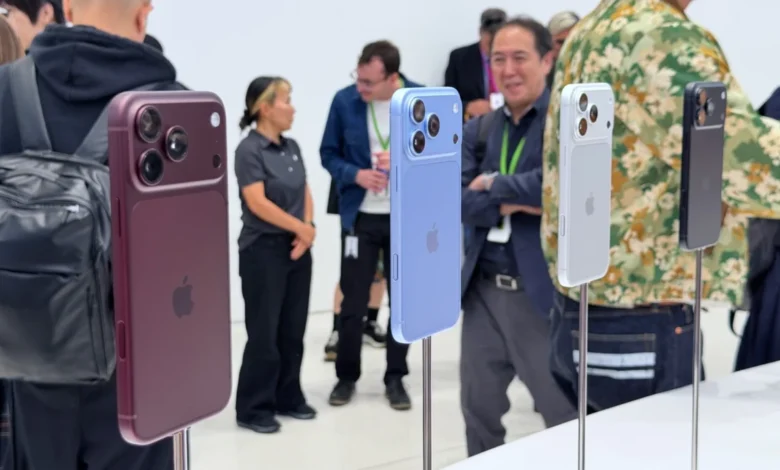
Apple’s annual September product showcase, traditionally hosted at Apple Park in Cupertino, California, serves as the bellwether for the consumer electronics industry. During the heavily anticipated "Surprise and Shine" keynote event on Wednesday, September 9, 2026, technology analysts and consumers alike cast their eyes toward the company’s latest flagship offerings. Among the numerous hardware and software reveals, the spotlight inevitably fell upon the company’s crown jewel: the newly unveiled iPhone 18 Pro Max. Positioned at the absolute apex of Apple’s smartphone lineup, the device represents the culmination of hardware engineering and silicon design for the 2026–2027 product cycle.
However, an immediate visual inspection of the newly minted flagship alongside its predecessor, the iPhone 17 Pro Max, reveals a striking continuity in outward industrial design. To the untrained eye, the iPhone 18 Pro Max appears nearly identical to the previous generation, maintaining the same overall footprint, flat-edge philosophy, and expansive form factor. Yet, as veterans of the tech industry frequently observe, iterations of this magnitude often prioritize internal evolution over dramatic exterior transformations. Beneath the familiar chassis lies a comprehensive overhaul of thermal management, processing capabilities, camera mechanics, and battery efficiency.
To determine whether the new generation warrants an upgrade, consumers must look past the identical exterior shells and examine the substantial engineering shifts implemented beneath the surface. This head-to-head comprehensive analysis breaks down the cost, design nuances, display modifications, camera innovations, battery longevity, and computational architectures distinguishing the iPhone 18 Pro Max from the iPhone 17 Pro Max.

Pricing Realities and Market Positioning
One of the most immediate points of divergence between the two generations involves retail pricing. For the first time in several product cycles, macroeconomic pressures—specifically a sustained global memory crisis affecting semiconductor supply chains—have forced Apple to adjust its pricing strategy upward.
The iPhone 18 Pro launches at a baseline price of $1,199, while the larger-format iPhone 18 Pro Max commands a starting price of $1,299. This represents a definitive $100 price increase across the Pro and Pro Max tiers compared to the launch pricing of the iPhone 17 Pro series a year prior. While price hikes are rarely welcomed by consumers, industry analysts note that the adjustment was widely anticipated given escalating component costs, particularly concerning advanced memory modules and customized silicon architecture. Consequently, this represents a distinct area where the iPhone 17 Pro Max retains a historical cost advantage for budget-conscious buyers looking at discounted remaining stock or trade-in deals.
Color Palettes and Aesthetic Variations
While the physical dimensions and structural geometry of the two devices remain identical, Apple has sought to differentiate the newer model through a completely refreshed color palette.
The iPhone 17 Pro Max famously debuted with a polarizing and viral lineup that included silver, deep blue, and the much-discussed, highly vibrant "cosmic orange"—a striking hue that drew distinct comparisons to autumn and Halloween aesthetics. For consumers who favored that particular tone, options on the newer device require a pivot.

The iPhone 18 Pro Max dispenses with cosmic orange in favor of a more subdued, sophisticated quartet of color options. The device arrives in standard silver (utilizing a subtly adjusted shade profile compared to its predecessor), a classic black model that makes a welcome return after a controversial and conspicuous absence from the iPhone 17 Pro Max lineup, and two brand-new additions: glacier blue and a deep, saturated burgundy. Early hands-on impressions from the "Surprise and Shine" event floor suggest that the burgundy finish, in particular, is positioned to become the signature visual identifier for the iPhone 18 Pro generation.
Display, Dimensions, and Ergonomics
A side-by-side dimensional comparison of the iPhone 18 Pro Max and the iPhone 17 Pro Max highlights Apple’s commitment to maintaining a standardized form factor for its ultra-tier users. Both smartphones feature a sprawling, vibrant 6.9-inch Super Retina XDR display encased within a durable aluminum and titanium-blend body.
The height, width, and depth measurements of the two devices are virtually indistinguishable. However, a closer examination of the spec sheets reveals a minor yet tangible difference in heft. The iPhone 18 Pro Max tips the scales at 8.78 ounces, making it noticeably heavier than the iPhone 17 Pro Max, which weighs in at 8.22 ounces.
This incremental weight gain is not accidental; rather, it is the direct structural result of internal hardware augmentations. Engineers incorporated a significantly larger, high-density battery cell alongside the complex mechanical components required for the new variable aperture camera system, necessitating a marginal increase in overall mass.

The Dynamic Island Redesign and Screen Real Estate
While the exterior display dimensions remain locked at 6.9 inches, the physical cutout housing Apple’s signature Dynamic Island has undergone a notable physical contraction.
On the iPhone 17 Pro Max, the sensor region and TrueDepth camera cutout spanned approximately 20.76mm. Apple has successfully engineered a miniaturization of these sensor components for the iPhone 18 Pro Max, reducing the physical cutout region down to roughly 16.57mm.
This reduction is far more than an aesthetic modification. By reclaiming precious screen real estate at the top of the display, Apple has managed to integrate a functional three-in-one activity display directly within the Dynamic Island framework. Users can now monitor three distinct background processes simultaneously without expanding the interactive bubbles. This advanced 3-in-1 Dynamic Island capability is restricted exclusively to the iPhone 18 Pro and Pro Max tiers, leaving the iPhone 17 Pro Max operating on the older, larger software-hardware interface.
Camera System Evolution: Optical Innovation and Authenticity
Photography and videography enthusiasts will find the most dramatic and consequential upgrades housed within the rear camera array of the iPhone 18 Pro Max.

At a surface glance, both the iPhone 18 Pro Max and the iPhone 17 Pro Max utilize a sophisticated 48MP Pro Fusion camera system, featuring a 48MP Fusion Main lens, a 48MP Fusion Ultra Wide lens, and a 48MP Fusion Telephoto lens. However, the architectural reality of the lenses tells a very different story.
The iPhone 18 Pro Max introduces a groundbreaking physical variable aperture mechanism directly onto its main camera lens. Unlike purely software-driven computational depth effects, a physical variable aperture allows the camera hardware to mechanically adjust the amount of light entering the sensor. This grants professional and amateur creators vastly superior physical control over exposure, lighting conditions, and depth of field, resulting in a qualitative leap in low-light photography and cinematic separation.
Complementing the hardware modification are advanced software suites. The iPhone 18 Pro Max features enhanced smart focus tracking, refined cinematic mode video effects, and upgraded low-light video algorithms. Furthermore, addressing the contemporary anxieties surrounding synthetic media, Apple has introduced "Apple Reference Image"—a built-in cryptographic image authentication feature designed to cryptographically verify that a captured photo originated natively from physical hardware rather than being generated or manipulated by artificial intelligence. Additional granular "Pro Controls" provide manual adjustments for shutter speed, white balance, and aperture parameters directly within the native camera app.
Battery Longevity and Thermal Management
Battery performance has historically been a critical battleground for smartphone flagships, and Apple has leveraged the slight increase in physical mass to drastically overhaul power delivery.

During the keynote presentation, Apple executives claimed that the iPhone 18 Pro Max delivers "the largest increase of battery life ever on iPhone." Real-world implications of this claim are supported by official metrics: the iPhone 18 Pro Max is rated for up to 45 hours of continuous video playback on a single charge. This represents a substantial six-hour improvement over the maximum video playback limits of the iPhone 17 Pro Max.
To sustain this longevity and handle heavy computational workloads, Apple also redesigned the internal thermal architecture of the iPhone 18 Pro Max. The device features an advanced vapor chamber cooling system engineered to dissipate heat rapidly, ensuring that the phone can maintain peak performance during extended gaming sessions, high-resolution video rendering, or intensive AI processing tasks without throttling.
Processing Power and the A20 Pro Chip
Perhaps the most consequential upgrade—and the one least visible to the naked eye—lies at the silicon level. The iPhone 18 Pro Max is powered by the newly minted A20 Pro chip, manufactured on a drastically redesigned Apple Silicon architecture.
While the A19 Pro chipset inside the iPhone 17 Pro Max remains an extraordinarily capable processor by any industry standard, the A20 Pro was conceived with a fundamentally different operational mandate. Developed concurrently with Apple’s aggressive rollout of advanced Apple Intelligence ecosystem features—including the profoundly reimagined, AI-driven Siri assistant—the A20 Pro chip prioritizes both raw computational throughput and extreme energy efficiency. Coupled with the new vapor chamber cooling matrix, the A20 Pro ensures that the iPhone 18 Pro Max operates with thermal headroom to spare, future-proofing the device for upcoming software iterations and machine-learning demands.

Summary and Upgrade Implications
The debate between retaining an iPhone 17 Pro Max and upgrading to the iPhone 18 Pro Max ultimately rests on user priorities. The iPhone 17 Pro Max remains a formidable, highly capable device boasting a striking visual identity, robust performance, and a lower relative cost following the new generation’s $100 price bump.
Conversely, the iPhone 18 Pro Max justifies its premium positioning through foundational engineering advancements. For content creators, photography purists, and power users, the inclusion of a physical variable aperture, a 45-hour battery ceiling, the miniaturized 3-in-1 Dynamic Island, and the thermal efficiency of the A20 Pro chipset represent a generation-defining leap forward. As pre-orders open in the wake of the Apple Park keynote, consumers must weigh whether these powerful internal transformations outweigh the familiarity of an identical exterior shell.