HighScalability Hot Links: From Biological Complexity to the Evolution of Digital Storage

The intersection of biological complexity and digital infrastructure provides a unique window into the rapid evolution of technology, as evidenced by recent breakthroughs in microscopy and the archival history of computing. By examining the most detailed imaging of a human cell alongside the physical footprints of mid-20th-century data storage, researchers and historians are documenting a shift in how humanity processes, stores, and visualizes information. These developments, ranging from the sub-cellular to the multi-petabyte scale, highlight the ongoing challenge of managing data density and the ingenuity required to secure the foundations of the modern internet.
Visualizing the Microscopic Universe
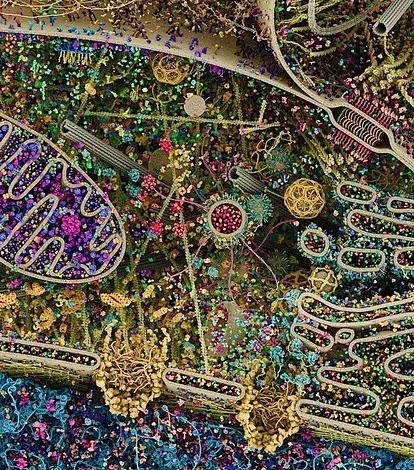
Recent advancements in cryo-electron tomography have allowed scientists to capture the most detailed images of a human cell to date. This achievement marks a significant milestone in molecular biology, providing an unprecedented view of the internal architecture that sustains life. By freezing biological specimens at ultra-low temperatures, researchers can visualize organelles, proteins, and the cytoskeleton in their native state without the artifacts typically introduced by chemical fixatives.
The implications for medical research are substantial. Understanding the precise spatial organization of a cell enables a more granular approach to drug discovery and disease modeling. In the context of computational biology, these high-resolution images represent massive datasets that require significant processing power to render and analyze. This alignment between high-performance computing (HPC) and biological research underscores the symbiotic relationship between data-intensive technologies and scientific discovery.
A Chronology of Storage Density
To understand the trajectory of the modern digital landscape, one must look at the physical limitations faced by early computing pioneers. In 1946, the storage of a single byte of RAM—the fundamental building block of modern digital operations—occupied a physical space that would be considered gargantuan by today’s standards. This era of computing was defined by vacuum tubes and magnetic core memory, where hardware reliability was a constant struggle and data density was measured in bits per square inch rather than gigabits per square millimeter.
By 1966, the industry had moved toward more sophisticated magnetic storage solutions, yet the physical scale remained problematic. Iconic images from this period—such as the IBM 350, which stored 5 megabytes of data on a stack of 50 magnetic disks—serve as a stark reminder of how far storage technology has progressed. When compared to the modern microSD card, which can hold 1 terabyte of data on a surface the size of a fingernail, the progress represents a reduction in physical footprint by a factor of hundreds of thousands. This exponential increase in density is the primary engine behind the global proliferation of smartphones, cloud computing, and real-time data analytics.

Cryptography and Physical Entropy
As data density has increased, so too has the need for robust cryptographic security. One of the more innovative approaches to generating truly random numbers involves the use of physical entropy, as demonstrated by Cloudflare’s use of lava lamps. By pointing cameras at a wall of lava lamps and processing the chaotic, unpredictable motion of the viscous wax, engineers can create cryptographic keys that are statistically impossible to predict.
This method, often referred to as "lava lamp entropy," addresses the inherent weakness in pseudo-random number generators, which rely on mathematical algorithms that can theoretically be reverse-engineered. By grounding digital security in the chaotic physical movement of heat and matter, organizations can provide a level of randomness that is foundational to the Secure Sockets Layer (SSL) and Transport Layer Security (TLS) protocols that encrypt the vast majority of web traffic. This reliance on physical, observable phenomena to secure digital assets serves as a bridge between the physical and virtual worlds.
The Evolution of Cloud Infrastructure
The shift from local hardware management to cloud-based deployments has necessitated a new set of skills for systems engineers. The rise of Kubernetes as the standard for container orchestration has simplified the management of complex, distributed applications, yet it has also introduced a new layer of complexity. Troubleshooting a deployment within a Kubernetes cluster requires an understanding of pod lifecycle management, network policies, and persistent storage volumes.
Industry standards for managing these environments now emphasize observability and automated remediation. As companies move away from monolithic architectures toward microservices, the "visual guide" approach to troubleshooting—which maps out the flow of traffic and potential failure points—has become an essential tool for SREs (Site Reliability Engineers). This evolution in infrastructure management is not merely a technical trend; it is a fundamental shift in how businesses maintain continuity in an environment where uptime is measured in "nines" and any latency can result in significant financial loss.
Broader Implications and Future Outlook
The trajectory from the 1946 RAM module to modern cloud-native infrastructures illustrates a broader trend: the abstraction of physical hardware. As we continue to push the boundaries of data storage and processing, the focus is shifting toward energy efficiency and sustainability. Large-scale data centers now consume a significant percentage of global electricity, prompting a renewed interest in liquid cooling, carbon-neutral power sources, and the development of more efficient semiconductor materials.
Furthermore, the integration of artificial intelligence into infrastructure management suggests that we are entering a new era of "self-healing" systems. By utilizing machine learning models to predict hardware failures before they occur, companies are reducing the need for human intervention in routine maintenance. However, this dependence on automated systems necessitates a higher degree of transparency and auditing, as the complexity of these algorithms can make them difficult to debug when failures do occur.

Analysis: The Challenge of Data Preservation
While we have mastered the art of storing massive amounts of data, the challenge of long-term preservation remains. Digital formats are ephemeral, subject to "bit rot" and the obsolescence of reading hardware. The contrast between the physical permanence of a 1966 hard drive and the volatile, cloud-stored data of today raises questions about the archival history of the 21st century.
Historians and archivists are currently exploring long-term storage media, such as synthetic DNA or glass-based optical storage, which could potentially hold data for thousands of years. These technologies, though still in their infancy, reflect a growing awareness that the digital footprint of the current era must be protected from the inevitable failure of traditional magnetic and flash storage.
Conclusion: A Synthesis of Disciplines
The synthesis of biology, physics, and computer science provides the framework for understanding the modern world. Whether through the lens of a high-resolution microscopic image or the chaotic movement of a lava lamp, the principles of complexity and entropy remain constant. As we look toward the future, the integration of these disciplines will be critical in solving the next generation of challenges, from optimizing global communication networks to decoding the secrets of the human genome.
The ongoing evolution of high-scalability technologies is not just a story of faster processors or larger drives; it is a narrative about the human capacity to manipulate the physical environment to support the growth of knowledge. As we move into an increasingly data-driven future, the lessons learned from the history of storage, security, and infrastructure will serve as the guideposts for the next wave of technological innovation. By maintaining a focus on the fundamental principles of engineering and the complexities of the physical world, the industry will continue to push the boundaries of what is possible, ensuring that the digital universe remains both robust and expansive.