The modern enterprise faces a persistent and paradoxical challenge: while executive leadership demands rapid integration of generative and agentic artificial intelligence to drive business value, the operational backbone of many organizations remains anchored to legacy desktop applications. These mission-critical systems are simultaneously too entrenched to retire and too complex and costly to rewrite. Consequently, they often lack the foundational architecture required to support modern security protocols and productivity enhancements native to the AI era.
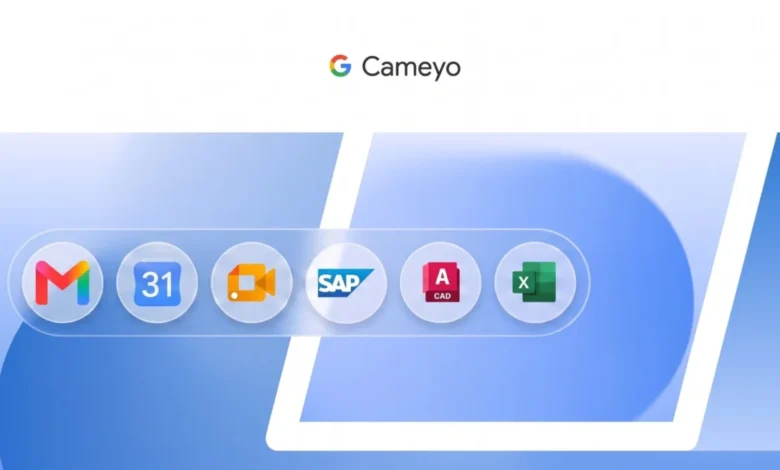
This friction has historically created a bottleneck in enterprise modernization strategies. However, a shift is underway in how organizations approach digital transformation. By delivering Windows and legacy applications directly inside the browser environment, virtualization and cloud delivery models are evolving. A prominent development in this space is Cameyo by Google, a platform designed to connect traditional legacy workflows directly to Chrome Enterprise, ChromeOS, and Gemini without necessitating exhaustive replatforming or code rewrites.
The strategic relevance of this technology is examined in a recent IDC Market Note authored by lead analyst Filippo Vanara. Titled "Cameyo by Google: A Modern Bridge Technology Platform in Digital Workspace Transformation," the report details how browser-based legacy delivery models reduce deployment complexity, strengthen security postures, and lower total cost of ownership (TCO). As enterprises grapple with mounting cloud waste and complex virtualization overhead, platforms that act as a bridge between legacy software and cloud-native ecosystems are becoming central to IT planning.
The Architectural Dilemma of Enterprise Modernization
For decades, organizations have relied on desktop-centric software to manage core business operations, from enterprise resource planning to specialized industry databases. Replatforming these applications—rewriting legacy codebases into cloud-native architectures—requires substantial financial capital, extensive engineering hours, and operational downtime that many IT departments cannot afford. Furthermore, traditional Virtual Desktop Infrastructure (VDI) solutions designed to host these applications often introduce their own set of complications. Traditional VDI architectures frequently depend on open VPNs and public server ports, expanding the corporate attack surface and complicating deployment logistics.
Compounding these technical hurdles is the rapid evolution of workplace technology. The commercialization of generative AI tools like Google’s Gemini has raised expectations for employee productivity. Yet, legacy applications are inherently unequipped to leverage these capabilities. When employees are blocked from using official AI tools within legacy workflows, organizations often face the proliferation of "shadow AI"—unmanaged, third-party AI applications utilized by employees outside of IT oversight, introducing significant data governance and security risks.
To navigate this impasse, the industry is transitioning from desktop-centric virtualization toward application-centric delivery models. Rather than virtualizing an entire desktop operating system, modern bridge technologies isolate and stream individual applications directly to the browser. This architectural shift allows enterprises to preserve their historical software investments while instantly surrounding those applications with modern browser-based security controls and AI integrations.
Strategic Integration: Connecting Legacy Workflows to Gemini and Chrome Enterprise
One of the primary findings highlighted in the IDC Market Note is the capacity of browser-based delivery platforms to instantly upgrade legacy software with modern capabilities. By running legacy Windows applications inside the Chrome browser, organizations can place old workflows side-by-side with built-in enterprise AI tools such as Gemini in Chrome.
This proximity changes how employees interact with legacy systems. Instead of switching contexts or resorting to unmanaged external AI platforms, workers can utilize managed, secure AI assistants that understand and interact with the data presented within the browser environment. From a governance perspective, this mitigates security risks associated with data exfiltration and shadow AI.
Simultaneously, these applications inherit the advanced threat protections and Data Loss Prevention (DLP) policies native to Chrome Enterprise Premium. The IDC report notes that this capability enables organizations to extend granular security controls and AI functionality directly to workflows that were never originally engineered to support them. Rather than retrofitting the underlying legacy code—an often impossible task—IT administrators can secure the delivery layer through browser-based policies.
Redefining Enterprise Security via Zero Trust Architecture
Security remains a primary driver for IT modernization, particularly as cyber threats become more sophisticated and targeted against remote and hybrid workforces. Traditional VDI and Desktop-as-a-Service (DaaS) deployments have historically struggled with vulnerabilities inherent to their network configurations. Standard virtualization setups frequently require open inbound ports and persistent VPN connections, which can serve as entry points for lateral movement by threat actors inside a corporate network.
Cameyo addresses this structural vulnerability by adopting a zero trust architecture. According to the IDC Market Note, the platform isolates users, sessions, and resources from the broader corporate network. By utilizing non-persistent infrastructure and a streamlined architecture, the overall attack surface is significantly reduced. Because the application is delivered via the browser rather than granting direct network access to the underlying virtual machine, potential compromises are contained, preventing unauthorized traversal across corporate environments.
This security model aligns with broader industry movements toward zero trust frameworks, where implicit trust in network perimeters is replaced by continuous verification and strict isolation principles. For organizations managing sensitive financial, healthcare, or proprietary data within legacy systems, browser-based isolation provides a robust defense mechanism without requiring a full application rewrite.
Financial Implications: Slashing Total Cost of Ownership and Cloud Waste
Beyond security and AI readiness, financial considerations heavily influence enterprise technology adoption. In the current economic climate, IT leaders are under pressure to optimize expenditures and eliminate redundancies in their cloud operations.
Data from IDC’s 2025 EMEA CloudOps Survey—which encompassed 509 respondents across Europe—revealed that 89% of organizations believe they are currently wasting a portion of their public cloud spending. Traditional VDI solutions are frequently cited as significant contributors to this waste, owing to their complex infrastructure requirements, expensive licensing fees, and the overhead associated with managing virtual machines.
The IDC Market Note on Cameyo emphasizes its potential to deliver substantial cost savings compared to traditional VDI and DaaS alternatives. Specifically, organizations transitioning from legacy virtualization environments to browser-based application delivery can realize up to a 54% reduction in total cost of ownership (TCO). These savings stem from reduced infrastructure management overhead, simplified deployment pipelines, and the elimination of the need for heavy client-side provisioning.
Furthermore, when paired with operating systems designed for lightweight endpoints, such as ChromeOS Flex, organizations can extend the lifespan of older hardware assets. Instead of purchasing new physical endpoints capable of running resource-intensive desktop virtualization clients, enterprises can utilize existing hardware to access legacy applications securely through the browser, thereby lowering capital expenditures (CapEx).
Phased Modernization and the Evolution of the VCC Market
The IDC Market Note positions Cameyo as an evolution within the broader Virtual Client Computing (VCC) market, marking a decisive shift away from legacy desktop-centric virtualization toward agile, application-centric delivery models. IDC observes that most enterprises prefer phased modernization strategies rather than disruptive, "rip-and-replace" cloud migrations.
A phased approach allows businesses to maintain necessary legacy software while incrementally adopting cloud-native architectures at their own pace. By delivering legacy applications as Progressive Web Apps (PWA), platforms like Cameyo decouple applications from specific operating systems and hardware dependencies. Employees can access their required tools regardless of whether they are operating on Windows, macOS, ChromeOS, or mobile platforms, provided they have a modern browser.
This flexibility supports modern workforce trends, including BYOD (Bring Your Own Device) policies and hybrid work arrangements. IT departments no longer need to manage complex client installations or maintain localized compatibility patches for every end-user device. Instead, management is centralized at the browser and cloud layer, streamlining administrative tasks and ensuring uniform policy enforcement across the enterprise.
Implications for IT Leadership
The convergence of legacy software, artificial intelligence, and cloud security represents a critical inflection point for Chief Information Officers and IT directors. For years, the mandate to modernize has been hindered by the high cost and high risk of rewriting core business applications.
Market analyses, such as the IDC report on Cameyo by Google, suggest that the future of enterprise IT lies not in obliterating legacy investments, but in building intelligent bridges between old and new systems. By leveraging browser-based delivery models, organizations can bypass the traditional barriers of application modernization. They can secure legacy workflows, integrate generative AI tools like Gemini, reduce infrastructure costs, and adopt zero trust security architectures without undertaking multi-year code rewrites.
As enterprises continue to evaluate their digital workspace strategies in the face of evolving security threats and economic pressures, bridge technologies offer a pragmatic path forward. By transforming the browser into a secure, unified workspace ecosystem, organizations can unlock the value of the AI era while preserving the foundational systems that continue to drive their daily operations.