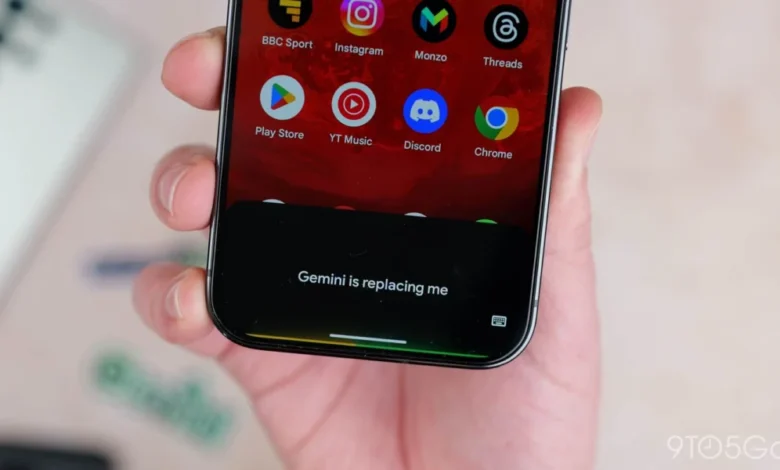
The Google Assistant, a cornerstone of the ambient computing world for over a decade, has officially entered its end-of-life phase as Google pivots its entire ecosystem toward the Gemini artificial intelligence platform. This transition marks one of the most significant shifts in consumer technology since the introduction of the smartphone, signaling the death of the deterministic, command-based voice interface in favor of generative, large language model (LLM) interactions. For millions of users who integrated the Assistant into their homes, cars, and daily routines, this sunset period represents a fundamental change in how they interact with the digital world.
![What is happening with the Google Assistant? [Video]](https://i0.wp.com/9to5google.com/wp-content/uploads/sites/4/2026/04/Google-Assistant-UI-1.jpg?resize=1200%2C628&quality=82&strip=all&ssl=1)
The Evolution and Ceiling of the Hey Google Era
Unveiled at Google I/O in 2016, the Google Assistant was designed to be the "personal Google" for every user. It launched alongside the original Google Home speaker and the first-generation Pixel phone, eventually proliferating into nearly every category of consumer electronics, from smart displays and televisions to headphones and refrigerators. At its peak, the Assistant was lauded for its ability to understand context better than Apple’s Siri and provide more accurate search results than Amazon’s Alexa.
However, the Assistant’s underlying architecture was built on what engineers call "deterministic logic." It relied on a rigid library of "if-this-then-that" sequences. When a user said, "Set a timer for ten minutes," the system recognized the verb "set," the noun "timer," and the variable "ten minutes." While highly efficient for micro-tasks, this architecture had a hard ceiling. It could not engage in true reasoning, summarize complex information, or handle nuances in human conversation. As the industry moved toward the era of Generative AI, the Google Assistant began to appear like a relic of a bygone era—a sophisticated but ultimately limited switchboard.
![What is happening with the Google Assistant? [Video]](https://9to5google.com/wp-content/uploads/sites/4/2026/04/Google-Assistant-UI-1.jpg?quality=82&strip=all&w=1600)
A Chronology of Decline: The Road to March 2026
The transition from Assistant to Gemini has not been an overnight event but rather a calculated, multi-year "feature paring" process. This timeline illustrates the steady decommissioning of the legacy platform:
- January 2024: Google initiated the first major wave of "feature pruning," removing 18 specific functionalities. These included the ability to manage cookbooks by voice, reschedule Google Calendar events via voice command, and use the Assistant to send media, audio, or video messages.
- Late 2024: Integration with third-party hardware began to suffer. Google pulled Assistant support from Fitbit wearables like the Sense 2 and Versa 4, effectively forcing users to migrate to the Pixel Watch or lose voice utility.
- Early 2025: Assistant functionality was removed from LG’s webOS TVs and other third-party smart displays, signaling that Google was no longer interested in maintaining the legacy code on external hardware.
- March 2026: The final deadline for the transition on mobile devices. Google confirmed that from this point forward, the Assistant would no longer be a fallback option on new Android devices, with Gemini becoming the mandatory default interface.
This chronological stripping of features was designed to reduce the "maintenance tax" on the old system while incentivizing users to move to the Gemini app, which offers more advanced reasoning capabilities at the cost of the Assistant’s specialized micro-task reliability.
![What is happening with the Google Assistant? [Video]](https://9to5google.com/wp-content/uploads/sites/4/2021/01/Google-Nest-Mini-Charcoal-3.jpg?quality=82&strip=all&w=1024)
The Impact on Hardware and User Experience
The "Digital Decay" of the Google Assistant has left many consumers feeling a sense of "breach of contract." Smart home enthusiasts who purchased Nest Hubs specifically for features like "Photo Frame" or "Interpreter Mode" found these utilities either removed or buried under layers of manual routines.
The Mobile Ecosystem: Android and ChromeOS
On mobile devices, the change is most jarring. The ChromeOS 134 update began the forced migration for Chromebook users. While "Chromebook Plus" owners received a suite of new AI writing and image generation tools, the basic utility of saying "Hey Google" to control smart home devices from a laptop became more cumbersome. Gemini, being a heavier application, often requires more system resources, leading to a perceived "heaviness" in the user interface compared to the lightweight Assistant overlay.
![What is happening with the Google Assistant? [Video]](https://9to5google.com/wp-content/uploads/sites/4/2022/11/Pixel-Watch-Galaxy-Watch-5-Google-Assistant.jpg?quality=82&strip=all&w=1024)
The Automotive Shift: Android Auto and Automotive
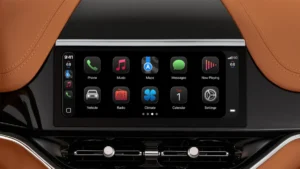
The stakes of this transition are arguably highest in the automotive sector. For years, Google Assistant in the car was a safety feature, allowing for rapid, low-latency execution of commands like "Call home" or "Navigate to the nearest gas station." As Gemini rolls out more widely to Android Auto and Google Built-in (Android Automotive), users have reported increased latency. Because Gemini often processes requests through the cloud to utilize its reasoning capabilities, there is a "thinking" pause that did not exist with the Assistant’s local command processing.
Wearables and Fitbit
The removal of Assistant from Fitbit devices is perhaps the most controversial move in this transition. Despite owning Fitbit, Google has chosen to prioritize the Pixel Watch as the primary vehicle for its AI services. This has effectively "nerfed" high-end fitness trackers that were marketed with voice assistant capabilities, leaving long-time Fitbit users with hardware that is significantly less functional than it was at the time of purchase.
![What is happening with the Google Assistant? [Video]](https://9to5google.com/wp-content/uploads/sites/4/2022/12/Google-Assistant.jpg?quality=82&strip=all&w=1024)
Technical Analysis: Why the Migration is Necessary
From a technical standpoint, Google’s decision to sunset the Assistant is driven by the efficiency of "Unification." Maintaining two separate voice-processing pipelines—one for legacy NLU (Natural Language Understanding) and one for LLMs—is resource-intensive.
Gemini offers several advantages that the Assistant could never achieve:
![What is happening with the Google Assistant? [Video]](https://9to5google.com/wp-content/uploads/sites/4/2026/04/Google-Assistant-UI-7.jpg?quality=82&strip=all&w=1024)
- Macro-Reasoning: Gemini can understand a request like, "Plan a three-day vegan meal plan and add the ingredients to my shopping list," whereas the Assistant would struggle with the multi-step logic required.
- Natural Language Fluidity: Users do not need to remember specific "wake phrases" or rigid command structures. Gemini can infer intent from messy, human-like speech.
- Multimodal Integration: Gemini can "see" what is on a user’s screen or use a device’s camera to understand the physical world, offering a level of proactivity the Assistant lacked.
However, the tradeoff is "Reliability vs. Intelligence." The Assistant was a "no-fuss operator." It was a digital light switch. Gemini, by contrast, is a digital companion. While Gemini is "smarter," it is also prone to the hallucinations and errors inherent in LLMs, which can be frustrating for users who simply want to turn off their lights without a conversation.
The Future: The New Google Home and Beyond
Google is currently preparing a "hard reset" for its smart home division. Reports indicate that an updated Google Home speaker is due for release, which will put Gemini at the center of the household. This new generation of hardware is expected to move away from being a "passive listener" to an "active sensor." Using multimodal capabilities, future Nest devices may use low-power radar (Soli) and AI to sense presence and offer proactive help—such as suggesting a workout when you enter the home gym or automatically dimming lights based on the time of day and your recent habits.
![What is happening with the Google Assistant? [Video]](https://9to5google.com/wp-content/uploads/sites/4/2026/04/Gemini-Live-old-UI.jpg?quality=82&strip=all&w=1024)
This proactive AI model raises significant privacy questions. The old Assistant only "listened" for a specific trigger word. A Gemini-powered home may need to process more data to be truly "helpful," leading to a new paradigm of data collection that Google will need to navigate carefully to maintain consumer trust.
Broader Implications for the Tech Industry
The death of the Google Assistant is a case study in the "Hardware-as-a-Service" era. It highlights a growing trend where the value of a physical product is tied to a cloud-based service that can be altered, diminished, or deleted at the manufacturer’s whim.
![What is happening with the Google Assistant? [Video]](https://9to5google.com/wp-content/themes/ninetofive/dist/images/google-preferred-source-badge-dark.png)
For the broader industry, this move puts pressure on Amazon and Apple. Amazon has already announced a "Smarter Alexa" powered by its own LLMs, likely requiring a monthly subscription. Apple is integrating "Apple Intelligence" into Siri to bridge the gap between its legacy voice commands and modern AI. Google’s aggressive sunsetting of the Assistant suggests that the company believes the "Utility-First" era of voice is over, and the "AI-First" era is the only path forward.
In conclusion, while the Google Assistant’s departure is a loss for those who valued its simplicity and speed, it paves the way for a more integrated and capable digital assistant. The transition to Gemini represents Google’s bet that users will trade the reliability of a digital tool for the intelligence of a digital partner. As the "Hey Google" era ends, the success of this gamble will depend on whether Gemini can eventually match the low-latency, "it just works" experience that made the Assistant a household staple for over a decade.